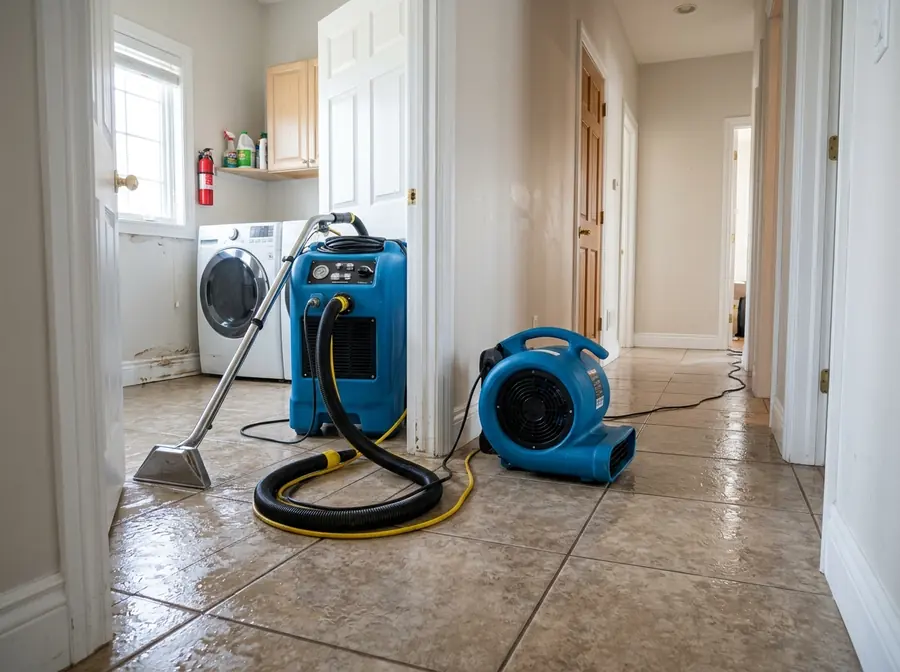
Water damage can travel beyond the room where it began
Water follows gravity, gaps, joints, and the materials it encounters. A supply leak under a sink may soak the cabinet base and nearby flooring. A washing-machine hose failure can send water into a hallway or adjoining room. A leak from an upstairs bathroom can leave a ceiling stain downstairs while moisture remains around the source above. The visible wet area is useful information, but it is not always a reliable boundary for the restoration work.
Different materials respond differently to water. Tile may have water beneath it or inside adjacent wall assemblies. Carpet and padding may retain moisture. Wood products can swell, cup, or change shape. Drywall may soften, discolor, or lose integrity. Insulation can be affected without an obvious surface sign. An evaluation should identify which materials were exposed, how they are constructed, and whether they can be dried or should be removed.
Water category also matters. Water from a clean supply line is not the same as outdoor floodwater, sewage, or water that has contacted contaminants. If water may be contaminated, avoid contact and do not try to clean it with household equipment. Appropriate protective measures and disposal procedures may be needed.
Everman neighborhoods and property-specific considerations
The approved service-area list identifies Everman North, Everman South, Garden Acres, Alta Mesa East, Hanna Ranch, and Royal Crest, with Everman associated with ZIP code 76140. These names help identify the location when requesting help. They are not evidence that a particular street or neighborhood has experienced flooding, plumbing failures, or a specific building condition.
Homes, rental properties, and businesses may have different water-loss patterns. A single-family house might have a leak in a laundry room, kitchen, bathroom, or attic. A rental unit may involve a tenant, property manager, and owner who each need to coordinate access and authorization. A commercial space may have equipment, stock, office furniture, or shared building systems that need to be protected. The restoration scope should reflect the property—not an assumed neighborhood-wide problem.
When you call, provide the street address, type of property, affected room or rooms, approximate time the water was discovered, whether the source is still active, and whether the water is clean or potentially contaminated. If a property manager controls the building, clarify who can approve work and arrange entry. Those details help determine what can be discussed and whether a site visit is appropriate.
Common water damage causes in homes and businesses
Broken or leaking plumbing
Pipe joints, shutoff valves, supply lines, fixtures, and concealed plumbing can leak or fail. A sudden pipe break may release a large amount of water, while a slow leak can remain hidden inside a vanity or wall. If the source is plumbing, arrange a qualified plumber to repair it. Restoration addresses the resulting water damage, not the underlying pipe repair.
Appliance and equipment leaks
Washing machines, dishwashers, refrigerators with water connections, water heaters, and other equipment may leak from hoses, valves, seals, drains, or tanks. A puddle around an appliance is not always the complete affected area. If an appliance is wet, plugged in, or near standing water, do not touch it or operate it until the electrical hazard has been evaluated.
Toilet, sink, and tub overflow
Overflowing fixtures can wet floors, baseboards, cabinets, and nearby rooms. Water that has contacted sewage or other contaminants should be treated cautiously. Keep people and pets away, avoid direct contact, and arrange appropriate cleanup. Do not assume that a bathroom overflow is safe simply because it looks clear.
Rainwater intrusion and roof leaks
Water may enter through roof openings, damaged flashing, window or door seals, or other exterior gaps. It can travel through ceiling assemblies and appear far from the entry point. A restoration technician may help evaluate interior moisture, while a roofer or qualified exterior contractor may be needed to repair the opening and prevent recurrence.
Drainage and exterior water
Water that enters from outside can have a different contamination profile than a plumbing leak. Surface water may contain soil, debris, or other pollutants. Do not enter a flooded area if electrical hazards, unstable materials, or contaminated water are possible. The source and condition should be identified before cleanup decisions are made.
What to do immediately after discovering water damage
- Prioritize safety. If water is near outlets, wiring, appliances, or a breaker panel, keep away. Do not step into standing water where electricity may be present. Contact emergency services or qualified electrical help when there is immediate danger.
- Control the source only if safe. If a shutoff valve is accessible without entering a hazardous area, shutting off water may limit further damage. Otherwise, call a plumber or utility provider for help.
- Keep people out of contaminated areas. Avoid contact with sewage, outdoor floodwater, or water of unknown origin. Keep children and pets away.
- Do not start indiscriminate drying. Household fans, vacuums, and electrical equipment can be unsafe in wet conditions and may spread contaminants. Use them only when the area is confirmed safe and the equipment is appropriate.
- Document safely. If there is no hazard, take photographs of the water source, affected rooms, and visible damage. Record when the leak was noticed and any steps taken to stop it.
- Notify the responsible parties. Contact the owner, landlord, property manager, insurer, plumber, or restoration provider as appropriate. If the property is rented or commercial, confirm who can authorize service.
These actions help preserve information and reduce additional exposure. Do not delay urgent safety steps for photos or paperwork. The first priority is preventing injury and stopping the water source through safe, qualified means.
What a water damage restoration visit may involve
A restoration visit begins by understanding the event and the condition of the building. The technician may ask when the leak started, whether the source has been repaired, which areas are affected, whether water has crossed into other rooms, and whether there are access or occupancy restrictions. An initial discussion is not a substitute for inspection, and a photograph alone may not show concealed moisture.
Inspection and moisture mapping
Depending on the project, the technician may review visible conditions, use moisture-measuring tools, inspect materials, and identify areas that need further evaluation. Readings are interpreted in context, including material type and comparison locations. The scope should describe the areas checked and any limitations where concealed assemblies cannot be evaluated without further work.
Water extraction
If standing water is present and the site is safe, extraction equipment may be used to remove accessible water. The equipment and method depend on the water type, depth, flooring, and access. Contaminated water requires appropriate handling and may change which materials are salvageable.
Drying and dehumidification
Drying equipment may be placed to help move moisture from affected materials and manage humidity. Air movement, dehumidification, and monitoring are selected according to conditions. The goal is not simply to make the room feel comfortable; moisture in materials may need to be tracked over time. The equipment placement, noise, electrical requirements, and access should be explained to the property owner or manager.
Material decisions
Some materials can be dried and retained; others may need removal when they are damaged, contaminated, or not reasonably restorable. Decisions may involve carpet, pad, flooring, baseboards, drywall, insulation, cabinets, or contents. Ask what is proposed for each material, why, and whether the work is included in the restoration scope or requires separate authorization.
Progress checks and completion review
Depending on the loss, technicians may return to check moisture readings, adjust equipment, and review drying progress. Completion criteria should be discussed in relation to the materials and conditions. A short leak and a widespread loss involving multiple assemblies cannot be assigned the same timeline in advance.
Water damage in different property types
Owner-occupied homes: A water loss can affect daily routines, furniture, flooring, and rooms needed for cooking, sleeping, or working. Ask the technician to identify which spaces are affected, which areas should remain off-limits, and what equipment needs access or power. Protecting unaffected belongings should be part of the discussion, but do not move heavy or contaminated items without guidance.
Rental homes and apartments: Tenants should notify the landlord or property manager as soon as possible and keep a record of the report. Management may need to coordinate plumbers, restoration teams, neighboring units, and building access. A tenant should not authorize work beyond their authority or attempt repairs that could create additional risk.
Commercial properties: Offices, shops, workshops, and other businesses may need to protect inventory, records, equipment, customer access, and staff. The restoration scope should clarify whether work can occur while parts of the building remain occupied, how restricted areas will be marked, and who is responsible for communicating changes. Specialized equipment or building systems may require separate qualified contractors.
Multi-unit or shared buildings: Water may move between units or through shared spaces. A property manager may need to coordinate inspection of adjoining areas and communicate with occupants. Restoration in one unit does not necessarily resolve a leak originating in a shared system or neighboring space.
How to understand an estimate and restoration scope
Before authorizing work, request a clear description of the services, affected rooms, equipment, expected monitoring, materials that may be removed, and any tasks excluded. Ask how scope changes will be explained and documented. If reconstruction, plumbing, electrical, roofing, or other trade work is required, determine whether it is included or handled separately. Do not rely on a verbal promise that every repair is covered if the written scope says otherwise.
Costs vary with the amount of water, contamination category, affected materials, accessibility, equipment requirements, monitoring, and whether demolition or contents handling is needed. A reliable estimate requires enough information about the loss. A broad price based only on a neighborhood or a single picture can miss important conditions.
Insurance documentation after a water loss
Contact your insurer or agent to ask how to report the damage and what documentation is needed. Coverage depends on the policy wording, cause of loss, exclusions, limits, endorsements, deductible, and the insurer's decision. A sudden plumbing discharge, rainwater intrusion, surface water, groundwater, and sewer backup may be treated differently. Do not assume that every water loss is covered.
Keep photographs, receipts for reasonable temporary expenses, communications, invoices, and work authorizations. Ask whether damaged materials should be retained for inspection before disposal, unless they pose a safety or sanitation risk. Restoration professionals can document observed conditions and work performed, but they cannot guarantee claim approval or payment. Our insurance claims help guide offers additional general information.
Frequently asked questions: Everman water damage restoration
How soon should I arrange water removal?
Act promptly once people are safe and the source is controlled. The appropriate next step depends on the water type, affected materials, and whether the site is safe to access. Do not enter an electrical hazard or contaminated area to start cleanup.
Can a small leak damage materials behind a wall?
It can. Water may move through gaps and building assemblies, so visible staining does not always show the full extent. Moisture evaluation may be needed to understand the affected area.
Is outdoor floodwater treated like a clean pipe leak?
No. Outdoor water can carry contaminants and debris. Avoid direct contact and let qualified professionals determine appropriate handling and cleanup methods.
Does restoration include fixing the plumbing leak?
Water mitigation and restoration are separate from repairing a failed pipe or fixture. A qualified plumber should address plumbing repairs, while the restoration scope handles resulting moisture and material damage.
Do you serve Garden Acres and Hanna Ranch?
Garden Acres and Hanna Ranch are included in the approved Everman service-area list, along with Everman North, Everman South, Alta Mesa East, and Royal Crest. Confirm current availability for your exact address and situation.
Will insurance pay for the work?
Coverage depends on your policy and the cause of loss. Contact the insurer and keep documentation; a restoration company cannot promise coverage.
Contact Home Mold Water Fire Damage for water damage in Everman
If water has affected your Everman property, share the location, source if known, time discovered, affected rooms, and whether the source is controlled. Home Mold Water Fire Damage has more than 13 years of experience, trained technicians, professional equipment, and 24/7 emergency response. We can discuss water removal, moisture assessment, structural drying, material decisions, and current service availability for your address.
Explore the Everman restoration services page, the main water damage restoration hub, or our contact page to discuss the next step. For fire and mold concerns, see the separate Everman guides to fire and smoke damage restoration and mold removal and remediation.