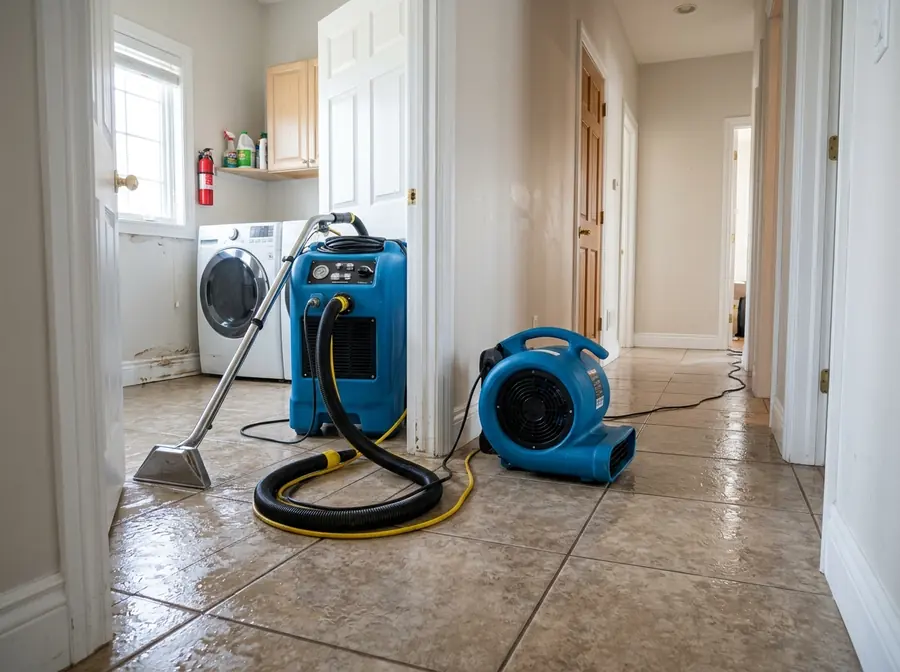
1. Appliance Leak Water Damage in Haltom City, TX
A leaking appliance can release water slowly behind a cabinet or suddenly across a kitchen, laundry room, or utility area. Washing machine hoses, dishwasher connections, refrigerator water lines, water heaters, and other household equipment can all become sources of water damage. The first sign may be a damp cabinet base, swollen flooring, a ceiling mark below an appliance, or a puddle discovered after the cycle has finished. Home Mold Water Fire Damage helps homeowners and businesses in Haltom City and surrounding communities assess the building damage after appliance leaks and plan appropriate water removal and drying.
This page focuses on leaks connected to appliances and their supply, drain, and discharge connections. It does not replace appliance repair or licensed plumbing work. The source must be stopped and repaired by the appropriate professional; restoration then addresses the water that reached the building materials and contents. A small visible puddle does not always reveal how much water has traveled beneath flooring or into adjacent cabinetry.
If water is actively escaping, stop the appliance only if it is safe to do so. Use the appliance's shutoff or nearby water valve only if it can be reached without stepping into water or touching wet electrical equipment. If water is near an outlet, power cord, appliance motor, or electrical panel, stay clear and arrange qualified help. Do not unplug an appliance while standing in water.
- First steps when an appliance is leaking
- Washing machine hose and drain leaks
- Dishwasher leaks beneath cabinets and flooring
- Refrigerator water line and ice maker leaks
- Water heater leaks and utility-room damage
- How restoration professionals assess appliance water damage
- Cabinets, flooring, drywall, and hidden moisture
- Reducing the chance of another appliance leak
Read Full Guide: Appliance Leak Water Damage in Haltom City, TX →
2. Basement & Crawlspace Water Removal in Haltom City, TX
Water in a basement, below-grade room, or crawlspace can be difficult to assess because much of the affected area may be hidden from everyday view. A sump or drain may stop working, a plumbing line may leak, rainwater may enter through a low opening, or moisture may collect beneath the floor. Even when the visible water is shallow, it can affect stored belongings, insulation, floor framing, electrical equipment, and materials that are hard to reach. Home Mold Water Fire Damage helps property owners in Haltom City and nearby communities understand water removal and moisture control for lower and enclosed spaces.
This page focuses on basement and crawlspace conditions. It is not a substitute for a structural inspection, plumbing repair, or electrical assessment. The first step is to determine whether the area is safe to enter and where the water came from. A crawlspace or basement can contain electrical hazards, sewage, low oxygen or poor air conditions, pests, and unstable materials. Do not enter a wet or confined area simply to take a closer look.
Water can reach a basement or crawlspace through several routes. A plumbing leak may occur below a bathroom or kitchen. A water heater, washing machine, or drain connection may release water in a utility area. Rainwater can enter through a window well, foundation opening, garage threshold, or other low point. Ground moisture may affect a crawlspace, while a sump pump or drainage component may fail during a period of heavy rainfall.
- Why lower spaces can hold water and moisture
- Safety before entering a basement or crawlspace
- Identify the source before choosing a water removal method
- What professional water removal may involve
- Drying a crawlspace or basement after extraction
- Protecting stored belongings and building components
- Mold concerns in lower and enclosed spaces
- Basement and crawlspace water in Haltom City
Read Full Guide: Basement & Crawlspace Water Removal in Haltom City, TX →
3. Burst Pipe Water Cleanup in Haltom City, TX
A burst or split pipe can release water into a room before anyone realizes there is a problem. A supply line behind a washing machine, a failed connection beneath a sink, a water heater fitting, or a pipe inside a wall can wet flooring, baseboards, cabinets, ceilings, and insulation. Even after the water is shut off, moisture may remain in places that are not visible. Home Mold Water Fire Damage helps homeowners and businesses in Haltom City and surrounding communities respond to burst-pipe water damage with extraction, moisture assessment, structural drying, and related restoration work.
The first priorities are safety and stopping the water source. A restoration contractor addresses the damage caused by the water; a licensed plumbing professional should repair plumbing components when the work requires a plumbing license. Once the source is controlled, the affected building materials can be assessed and an appropriate cleanup plan discussed. This page focuses specifically on burst-pipe cleanup, rather than every type of water loss.
If water is actively flowing, keep people away from the affected area and shut off the water supply only if the valve is safely accessible. A main shutoff may be located near the meter or where the service enters the building, while individual fixtures and appliances may have their own valves. Do not search through standing water to reach a valve. If water is near outlets, electrical panels, appliances, or wiring, do not enter the area or touch electrical equipment. Contact emergency services or the utility when there is an immediate safety concern.
- What to do when a pipe bursts
- Why a burst pipe can affect more than the visible wet area
- Common reasons pipes and connections fail
- Water extraction after the plumbing repair
- Structural drying: checking what you cannot see
- Damage to floors, walls, ceilings, and belongings
- Residential and commercial burst-pipe cleanup
- Insurance documentation after a burst pipe
Read Full Guide: Burst Pipe Water Cleanup in Haltom City, TX →
4. Carpet & Hardwood Floor Drying in Haltom City, TX
Water on a floor can be deceptive. Carpet may feel damp only at the edges while the pad underneath holds water. Hardwood can look normal at first and later show cupping or gaps. Laminate flooring may trap moisture below its surface, and tile can conceal water in grout joints or the underlayment. Home Mold Water Fire Damage helps homeowners and businesses in Haltom City and surrounding communities assess water-damaged flooring and understand when extraction, controlled drying, cleaning, or removal may be appropriate.
There is no single drying method that works for every floor. The right decision depends on the flooring material, how it was installed, the type of water, how long it remained wet, the condition of the subfloor, and whether moisture can be measured and removed safely. This page focuses on carpet, hardwood, and related floor assemblies rather than general water extraction.
Before deciding what to do with a floor, identify where the water came from. A clean supply-line leak is different from sewage, drain backup, or outdoor floodwater. The water may have contacted soil, waste, chemicals, or other contaminants before reaching the room. That changes the cleaning and salvage decisions, especially for porous materials such as carpet, pad, and unfinished wood.
- Start with the water source and floor construction
- Carpet water damage: pile, backing, and padding
- Hardwood floor drying and moisture changes
- Laminate, vinyl, and tile: why the layers matter
- What professional floor extraction and drying can involve
- When carpet or flooring may need to be removed
- Furniture, rugs, and belongings on a wet floor
- Preventing mold and odor after floor water damage
Read Full Guide: Carpet & Hardwood Floor Drying in Haltom City, TX →
5. Flood Water Extraction in Haltom City, TX
When water enters a home or business from outside, the immediate problem is not just a wet floor. Floodwater can carry soil, debris, sewage, chemicals, and other contaminants. It can move through garages, ground-level rooms, crawlspaces, storage areas, and building cavities, leaving moisture in places that are difficult to inspect. Home Mold Water Fire Damage helps property owners in Haltom City and surrounding communities understand flood water extraction, the safety issues that come with outside water, and the cleanup and drying decisions that may follow.
This page focuses on water that enters a property from a storm, surface runoff, or other outdoor flooding condition. It is different from a clean supply-line leak or a small appliance overflow. The source and water quality determine how the area should be approached, what materials may be salvageable, and what protective measures are appropriate. If water is near electricity or the structure may be unstable, do not enter to begin cleanup.
Water that has flowed across streets, yards, parking areas, drainage channels, or other outdoor surfaces may contain contaminants that are not visible. Even water that looks relatively clear can carry microorganisms or chemicals. Floodwater can also mix with sewage when drainage or wastewater systems are overwhelmed or damaged. Avoid direct contact and keep children and pets away from affected areas.
- Floodwater is not the same as a clean plumbing leak
- First steps when floodwater reaches your property
- What professional flood water extraction may involve
- Why floodwater can affect concealed parts of a building
- Haltom City drainage and property-specific flood considerations
- What happens to household contents after a flood?
- Drying, cleaning, and mold prevention after flood extraction
- Flood damage and insurance documentation
Read Full Guide: Flood Water Extraction in Haltom City, TX →
6. Sewage Backup Cleanup in Haltom City, TX
A sewage backup is more than an unpleasant plumbing problem. Wastewater can contain microorganisms and other contaminants, spread across floors and into porous materials, and create a cleanup situation that should not be handled like an ordinary clean-water leak. A toilet overflow, floor drain backup, blocked sewer line, or wastewater intrusion can affect bathrooms, laundry rooms, garages, lower levels, and adjoining spaces. Home Mold Water Fire Damage helps homeowners and businesses in Haltom City and surrounding communities understand sewage backup cleanup, safe next steps, and the restoration work that may be needed after the plumbing issue is controlled.
The priority is to keep people away from the affected area and stop the source through the appropriate plumbing or utility professional. Do not touch sewage, walk through contaminated water, or run household equipment in the area. The restoration plan must account for the source, the extent of contamination, affected materials, and safe handling and disposal. This page focuses on sewage and wastewater incidents; it is not a general guide to clean supply-line leaks.
Keep children, pets, customers, and employees out of the affected area. Avoid direct contact with wastewater and anything it has soaked. Do not use a household vacuum, mop, fan, or shop vacuum to spread or collect sewage. Do not flush toilets or run water into drains if the system is backing up; additional flow can worsen the overflow. If the backup may involve a public sewer or shared building system, notify the property manager or relevant utility as appropriate.
- What to do immediately after a sewage backup
- Why sewage water requires a different response
- Common causes of sewer and wastewater backups
- What professional sewage cleanup may include
- Why DIY cleanup can make a sewage problem worse
- Which building materials may need removal?
- Drying and preventing a recurring moisture problem
- Sewage backup cleanup in Haltom City homes and businesses
7. Storm & Roof Leak Water Damage in Haltom City, TX
A roof leak can begin as a small ceiling mark and become a much larger water-damage problem if rain continues to enter the building. Wind-driven rain, damaged shingles, flashing failures, clogged gutters, roof penetrations, and storm-related openings can allow moisture into attic insulation, ceilings, walls, and flooring. Home Mold Water Fire Damage helps homeowners and businesses in Haltom City and nearby communities assess interior water damage after storms and roof leaks, remove accessible water, and address moisture in affected building materials.
This page is about the water damage that follows a roof leak or storm intrusion. It is not a roofing inspection or a promise that Home Mold Water Fire Damage performs every roof repair. A qualified roofer or other trade may need to locate and repair the exterior opening, while restoration focuses on the resulting interior damage. The right response depends on whether the roof is safe to access, how water entered, which materials became wet, and whether the event involved contaminated outdoor water.
First, protect people. Keep away from sagging ceilings, bulging drywall, wet light fixtures, and areas where water is near electrical equipment. Do not stand beneath a ceiling that is visibly bowing or dripping heavily. Do not touch a wet switch, outlet, fixture, or electrical panel. If electrical isolation can be performed from a dry and safe location, follow utility guidance; otherwise wait for a qualified electrician or emergency responder.
- What to do when rain starts coming through the roof
- How stormwater travels through a roof and building
- Common storm and roof leak situations
- Attic, ceiling, and insulation damage
- Water extraction and structural drying after a roof leak
- Preventing a repeat leak: the roof repair is a separate decision
- Storm-related water damage and mold concerns
- Haltom City and North Texas storm context
Read Full Guide: Storm & Roof Leak Water Damage in Haltom City, TX →
8. Structural Drying & Dehumidification in Haltom City, TX
Removing standing water is an important first step, but it does not prove that a building is dry. Moisture can remain inside drywall, insulation, subfloors, framing, cabinets, and other materials long after a room looks normal. Structural drying is the controlled process of reducing that moisture and monitoring how the affected materials respond. Home Mold Water Fire Damage helps homeowners and businesses in Haltom City and nearby communities understand the drying stage after leaks, appliance failures, storm intrusion, and other water losses.
This page focuses on moisture control after water has entered the structure. It explains the role of air movement, dehumidification, moisture measurements, and material decisions. Drying is not simply a matter of putting a household fan in a room. The appropriate plan depends on the water source, material construction, access, temperature, humidity, and whether contamination is involved.
Water moves into porous materials and concealed spaces. Carpet may look dry at the surface while the backing or pad remains damp. A hardwood floor may feel dry while moisture remains in the subfloor. Drywall can absorb water at the bottom edge, and insulation behind it may retain moisture. Cabinet bases and wall cavities can hold water that is not visible from the room.
- Why a building can look dry while materials remain wet
- What structural drying is designed to accomplish
- Air movers: what they do and what they do not do
- Dehumidifiers and indoor moisture control
- Moisture meters and monitoring during the drying process
- When materials need removal instead of drying in place
- How the drying approach changes by material
- Drying after different types of water loss
Read Full Guide: Structural Drying & Dehumidification in Haltom City, TX →
Complete Water Damage Restoration Topics & Keywords Covered
Our water damage restoration hub brings together every specialized water-loss guide in this directory—from emergency extraction and burst supply lines to structural drying, flooring preservation, and contaminated water cleanup.
Across our dedicated guides and local service pages, Home Mold Water Fire Damage addresses the full spectrum of property damage scenarios, technical drying and cleanup procedures, material-specific decisions, safety precautions, and insurance documentation requirements. Key topics covered in detail across this directory include:
- Appliance Leak Water Damage in Haltom City, TX
- First steps when an appliance is leaking
- Washing machine hose and drain leaks
- Dishwasher leaks beneath cabinets and flooring
- Refrigerator water line and ice maker leaks
- Water heater leaks and utility-room damage
- How restoration professionals assess appliance water damage
- Cabinets, flooring, drywall, and hidden moisture
- Reducing the chance of another appliance leak
- Haltom City service context
- Insurance and appliance leak documentation
- Get help with appliance water damage
- Basement & Crawlspace Water Removal in Haltom City, TX
- Why lower spaces can hold water and moisture
- Safety before entering a basement or crawlspace
- Identify the source before choosing a water removal method
- What professional water removal may involve
- Drying a crawlspace or basement after extraction
- Protecting stored belongings and building components
- Mold concerns in lower and enclosed spaces
- Basement and crawlspace water in Haltom City
- Insurance considerations for basement and crawlspace water
- Discuss basement or crawlspace water with Home Mold Water Fire Damage
- Plumbing leaks and failed fixtures
- Rainwater and surface runoff
- Sump pump or drain failure
- Ground moisture and condensation
- Can I enter a flooded crawlspace to turn on a pump?
How Our Restoration Process Works from First Call to Final Verification
Every property damage event—whether caused by a sudden supply-line burst, storm intrusion, sewage backup, kitchen fire, smoke migration, or hidden moisture feeding mold growth—requires a structured, documented response. Home Mold Water Fire Damage brings more than 13 years of restoration experience, trained technicians, professional restoration equipment, and 24/7 emergency response to residential and commercial properties across Fort Worth, Haltom City, Bedford, and surrounding North Texas communities.
1. Safety First, Source Control & Initial Assessment
Before restoration equipment is placed, immediate life-safety hazards must be addressed. Active fire, gas leaks, or electrical risks require emergency services or utility shutoff first. For plumbing failures, a licensed plumber should repair the failed pipe or fixture when plumbing licensure is required. Once the property is safe to enter, our technicians inspect affected rooms, trace moisture or smoke migration paths, and document baseline conditions.
2. Containment, Extraction & Residue Removal
Depending on the loss type, early mitigation may involve high-capacity water extraction, selective removal of unsalvageable saturated materials, emergency board-up and weatherproofing, soot and smoke residue cleaning, or physical containment with negative air and HEPA filtration during mold remediation. Addressing the primary source and containing affected zones prevents secondary damage to unaffected rooms and contents.
3. Structural Drying, Dehumidification & Verification
Surfaces that look dry can still trap moisture inside wall cavities, subfloors, carpet padding, framing, or attics. Our team uses commercial air movers, refrigerant or desiccant dehumidifiers, and calibrated moisture meters to track drying progress across affected assemblies until target moisture levels are reached. For smoke odor or mold concerns, proper source removal and air scrubbing are paired with clear documentation of what was cleaned, dried, or removed.
4. Residential, Commercial & Insurance Documentation Support
Whether you are a homeowner, landlord, property manager, or commercial facility operator, clear scope communication and organized records matter. We provide photographs, moisture logs, and mitigation scope documentation to help you coordinate with your insurance carrier, adjuster, or building management. While coverage decisions always depend on your specific policy terms, prompt mitigation and thorough records protect both your property and your claim file.
Water Damage Restoration Across Fort Worth, Haltom City & Bedford
Whether you are dealing with a burst pipe in Haltom City, storm flooding in Fort Worth, or commercial water intrusion in Bedford, rapid extraction and monitored structural drying help limit secondary damage to drywall, subfloors, framing, and contents.
Our primary service hubs include Fort Worth, TX, Haltom City, TX, and Bedford, TX, along with surrounding Tarrant and Johnson County communities listed in our complete service areas directory. When you contact our team, please share your full street address, city, ZIP code, and a brief description of what happened so we can confirm current availability and dispatch the right equipment.
Frequently Asked Questions
Should I unplug a leaking appliance?
Only if the plug and surrounding area are dry and safe to reach. Never touch a plug, outlet, or appliance while standing in water. If electrical equipment is affected, keep clear and arrange qualified help.
Can a small dishwasher leak damage the cabinets?
Yes. Water can collect beneath the appliance and spread into cabinet bases, flooring, and subfloor materials. The extent depends on how long the leak continued and the construction of the kitchen.
Does a washing machine hose leak count as a burst pipe?
It is a plumbing supply or appliance-connection failure, but the exact cause should be described accurately to the plumber and insurer. Our burst-pipe page covers broader pressurized pipe failures.
Will you repair the appliance?
Appliance repair should be handled by a qualified appliance service professional. A licensed plumber should handle plumbing work that requires a plumbing license. Restoration addresses the resulting water damage.
Can I run a dehumidifier after a leak?
Do not place or operate electrical equipment in a wet or unsafe area. Once the area is safe, a professional can determine whether controlled dehumidification and monitoring are appropriate.
Can I enter a flooded crawlspace to turn on a pump?
No. Do not enter a wet or confined space where electrical hazards, sewage, poor air, or structural risks may be present. Arrange qualified assistance.
Does a damp crawlspace always need a dehumidifier?
Not necessarily. The cause may involve drainage, ground moisture, plumbing, ventilation, or other building conditions. Equipment should be selected only after the source and space are assessed.
Can water under the floor cause damage upstairs?
Moisture in a crawlspace can affect subfloor and framing and may contribute to indoor moisture conditions. The actual impact depends on the building assembly and how long materials remain damp.