1. Attic Mold Removal in Haltom City, TX
Attic mold can develop quietly above the living space, often after a roof leak, a ventilation problem, or warm moist air entering the attic and condensing on cooler surfaces. A homeowner may first notice dark spotting on roof sheathing, a musty odor near the ceiling, damp insulation, or staining around a roof penetration. Because an attic is a confined area with electrical wiring, insulation, framing, and limited access, investigating suspected mold is not always a safe do-it-yourself task.
Home Mold Water Fire Damage helps property owners in Haltom City and surrounding communities address mold and moisture damage. Our company has more than 13 years of restoration experience, trained technicians, professional equipment, and 24/7 emergency response. This guide explains common attic moisture sources, what an assessment may consider, and how remediation should be coordinated with roof and ventilation repairs. For broader service information, visit our mold removal and remediation hub .
Mold growth requires moisture. In an attic, moisture can arrive through a roof leak, flashing failure, plumbing vent penetration, damaged roof material, condensation, or humid air that escapes from the living space. A bathroom or laundry exhaust fan that terminates in the attic rather than outdoors can add moisture repeatedly. Gaps around ceiling penetrations, recessed lights, access hatches, and ductwork can also allow warm indoor air to reach cold surfaces.
- Why mold develops in an attic
- Signs that your attic may have a moisture or mold problem
- Why attic mold can be missed during a routine home inspection
- Texas mold assessment and remediation rules
- What professional attic mold remediation may involve
- What homeowners should avoid doing in a mold-affected attic
- Attic mold concerns in Haltom City
- Discuss attic mold and moisture damage
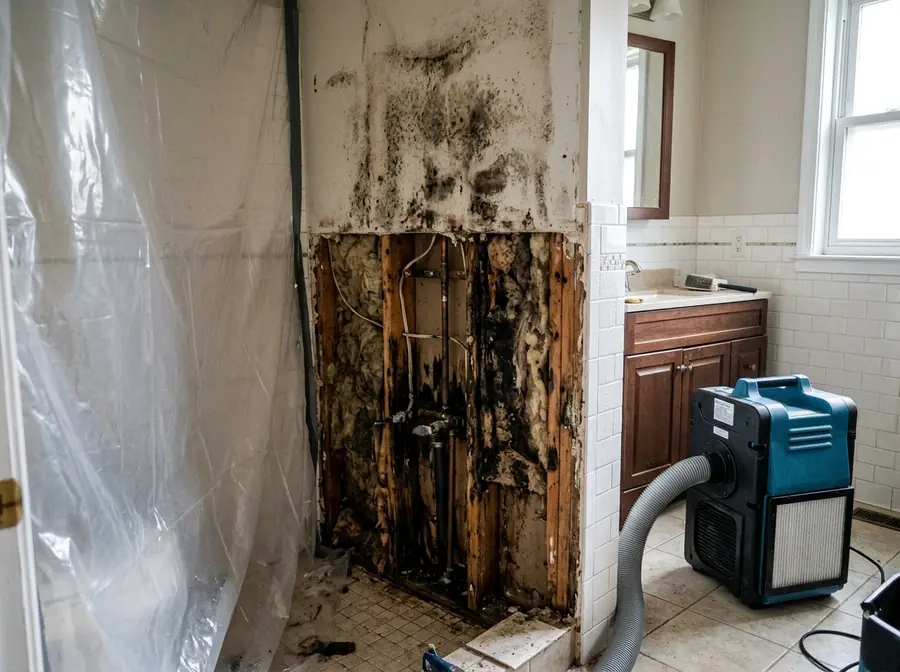
2. Bathroom Mold Removal in Haltom City, TX
Bathrooms produce moisture every day. Showers, baths, sinks, toilets, and damp towels add humidity to a relatively small room, and water can collect around grout, caulk, fixtures, cabinets, and ceiling surfaces. A working exhaust fan and regular cleaning help, but persistent leaks, poor ventilation, failed seals, and hidden plumbing problems can allow mold to develop. When dark spots keep returning, the answer is not simply to apply a stronger cleaner. The moisture condition needs to be understood and corrected.
Home Mold Water Fire Damage helps homeowners and property managers in Haltom City and nearby communities address mold and water-damage concerns. We have more than 13 years of restoration experience, trained technicians, professional equipment, and 24/7 emergency response. This guide covers common bathroom mold locations, moisture sources, safe next steps, and how professional remediation may be planned. For more information about our overall services, visit the mold removal and remediation hub .
Bathroom mold may appear on shower grout, silicone caulk, tile joints, painted drywall, ceiling corners, vanity cabinets, baseboards, and around plumbing penetrations. It may also develop behind a vanity, beneath flooring, or inside a wall where a slow leak has remained unnoticed. A musty odor may be present before a large patch becomes visible.
- Where bathroom mold commonly appears
- Common causes of bathroom mold
- What to do when you notice mold in a bathroom
- How professional bathroom mold remediation is planned
- Preventing bathroom mold from returning
- Bathroom mold removal in Haltom City homes and rentals
- Get help with bathroom mold and moisture
- Insufficient exhaust ventilation
3. Black Mold Removal in Haltom City, TX
Dark patches on a wall, ceiling, cabinet, or other surface can be alarming, especially when they appear after a leak or keep returning after cleaning. But color alone cannot tell you what type of mold is present. Many different molds can look dark, and some non-mold stains can resemble mold. The useful first step is to identify the moisture condition, understand which materials are affected, and decide whether regulated mold assessment or professional remediation is appropriate.
Home Mold Water Fire Damage helps property owners in Haltom City and nearby communities address mold and water-damage concerns. We have more than 13 years of restoration experience, trained technicians, professional equipment, and 24/7 emergency response. This page explains what people commonly mean by black mold, why moisture control matters, and how a responsible remediation project is planned. For broader service details, visit our mold removal and remediation hub .
No. Mold color is not a reliable way to identify a species or determine toxicity. Several types of mold can appear black, dark green, gray, or brown, and appearance can change with the material and growing conditions. A photograph or visual description cannot establish the species or predict a person's health response.
- Does black-colored growth mean toxic black mold?
- Where dark mold-like growth may appear
- Why moisture control is the foundation of mold remediation
- When professional mold remediation may be appropriate
- What a careful black mold remediation project can involve
- What not to do when you find dark mold-like spots
- Black mold concerns in Haltom City homes and businesses
- Talk with Home Mold Water Fire Damage about suspected mold
4. Crawlspace Mold Remediation in Haltom City, TX
A crawl space can hide moisture problems for months because it is rarely part of a homeowner's daily routine. Damp soil, plumbing leaks, poor drainage, humid air, and condensation can affect floor joists, subflooring, insulation, and stored materials beneath the living area. A musty smell indoors, soft flooring, visible staining near the baseboards, or unusually damp conditions under the home may justify a closer look. But entering a confined, damp, or contaminated crawl space without the right precautions can be hazardous.
Home Mold Water Fire Damage helps homeowners and property managers in Haltom City and surrounding communities address moisture damage and mold remediation needs. Our company has more than 13 years of restoration experience, trained technicians, professional equipment, and 24/7 emergency response. This guide explains common crawl-space moisture sources, what a remediation project may involve, and why long-term moisture control matters. For more service information, visit our mold removal and remediation hub .
Crawl spaces sit close to the ground and may have limited access, limited ventilation, and exposed soil. Moisture can move from the ground into the air, enter through foundation openings, or arrive through plumbing leaks and surface water. If humid air contacts cooler framing, pipes, or subfloor surfaces, condensation may form. Insulation can become damp and lose performance, while wood materials may remain wet long enough to support mold growth.
- Why crawl spaces are vulnerable to mold and dampness
- Signs that your crawl space may have a moisture problem
- Why crawl-space mold should not be treated as a simple DIY cleaning job
- Texas mold assessment and remediation requirements
- What a crawl-space remediation project may include
- Why removing visible mold is only one part of the solution
- Crawl-space mold remediation in Haltom City
- Discuss crawl-space moisture and mold concerns
Read Full Guide: Crawlspace Mold Remediation in Haltom City, TX →
5. Mold After Water Damage in Haltom City, TX
Water damage does not always end when the visible water is gone. A plumbing leak, roof opening, appliance failure, overflowing fixture, or storm intrusion can leave moisture inside drywall, insulation, flooring, cabinets, and other materials. If those materials stay damp, mold may begin growing out of sight. A musty odor, new discoloration, bubbling paint, or recurring spots can appear days or weeks after the original leak. The most useful response is to address the water source, understand how far moisture traveled, and dry or remove affected materials appropriately.
Home Mold Water Fire Damage helps property owners in Haltom City and nearby communities with water damage restoration and mold remediation needs. We have more than 13 years of restoration experience, trained technicians, professional equipment, and 24/7 emergency response. This guide explains why mold can follow water damage, what to do when you discover it, and how a remediation project differs from ordinary cleaning. For related service information, visit our mold removal and remediation hub and water damage restoration hub .
Mold spores are part of the normal indoor and outdoor environment. They become a building problem when moisture allows them to grow on suitable materials. Water can remain trapped behind baseboards, beneath flooring, inside cabinet toe-kicks, in wall cavities, under carpet padding, and around plumbing penetrations long after a surface looks dry. A room may feel comfortable while a concealed layer of drywall or insulation remains damp.
- Why mold can develop after a leak or flood
- Common water-damage situations that lead to mold concerns
- Early signs of mold after water damage
- What to do when you suspect mold after a water loss
- How water damage restoration and mold remediation work together
- Why quick drying matters—but should not become a shortcut
- Mold after water damage in Haltom City properties
- Talk with Home Mold Water Fire Damage about water damage and mold
Read Full Guide: Mold After Water Damage in Haltom City, TX →
6. Mold Inspection & Testing in Haltom City, TX
A musty smell, recurring moisture stain, visible growth, or a history of leaks can leave a property owner wondering whether mold is present and what to do next. A careful inspection looks beyond the visible spot. The important questions are where moisture is coming from, which building materials may be affected, whether growth is visible or concealed, and whether a formal mold assessment is appropriate. Testing is not automatically required for every suspected mold problem, and a laboratory result by itself cannot explain the condition of a building.
Home Mold Water Fire Damage helps homeowners and businesses in Haltom City and surrounding communities address moisture damage and mold remediation needs. Our company has more than 13 years of restoration experience, trained technicians, professional equipment, and 24/7 emergency response. This guide explains the difference between a general moisture review, regulated mold assessment, sampling, and remediation. Texas has specific licensing and independence rules, so the roles must be clearly separated. For our broader service information, visit the mold removal and remediation hub .
A useful inspection is not simply a search for black spots. Mold can appear in different colors and textures, and discoloration can also have causes unrelated to mold. A property review should consider the history of leaks, roof or plumbing problems, condensation, ventilation, humidity, building materials, and areas where moisture may be concealed. A musty odor can be a reason to investigate even when visible growth is limited.
- What a mold inspection should help you understand
- Mold inspection, mold assessment, and mold testing are not the same thing
- When mold testing may be useful—and when it may not be
- Common places a property assessment may examine
- What happens after an assessment?
- What property owners can do before professional help arrives
- Mold inspection and testing for Haltom City properties
- Discuss your mold or moisture concern
Read Full Guide: Mold Inspection & Testing in Haltom City, TX →
Complete Mold Removal & Remediation Topics & Keywords Covered
Effective mold remediation starts with identifying and correcting the underlying moisture source alongside proper containment and HEPA filtration. Review the full scope of mold guides summarized below.
Across our dedicated guides and local service pages, Home Mold Water Fire Damage addresses the full spectrum of property damage scenarios, technical drying and cleanup procedures, material-specific decisions, safety precautions, and insurance documentation requirements. Key topics covered in detail across this directory include:
- Attic Mold Removal in Haltom City, TX
- Why mold develops in an attic
- Signs that your attic may have a moisture or mold problem
- Why attic mold can be missed during a routine home inspection
- Texas mold assessment and remediation rules
- What professional attic mold remediation may involve
- What homeowners should avoid doing in a mold-affected attic
- Attic mold concerns in Haltom City
- Discuss attic mold and moisture damage
- Finding and correcting the moisture source
- Assessment and project planning
- Containment and protection
- Removal or cleaning of affected materials
- Drying, repairs, and verification
- Bathroom Mold Removal in Haltom City, TX
- Where bathroom mold commonly appears
- Common causes of bathroom mold
- What to do when you notice mold in a bathroom
- How professional bathroom mold remediation is planned
- Preventing bathroom mold from returning
- Bathroom mold removal in Haltom City homes and rentals
- Get help with bathroom mold and moisture
- Insufficient exhaust ventilation
- Leaking showers, tubs, and plumbing
- Condensation on cold surfaces
- Overflowing fixtures and plumbing failures
- Protecting the work area
- Cleaning hard surfaces and removing porous materials
How Our Restoration Process Works from First Call to Final Verification
Every property damage event—whether caused by a sudden supply-line burst, storm intrusion, sewage backup, kitchen fire, smoke migration, or hidden moisture feeding mold growth—requires a structured, documented response. Home Mold Water Fire Damage brings more than 13 years of restoration experience, trained technicians, professional restoration equipment, and 24/7 emergency response to residential and commercial properties across Fort Worth, Haltom City, Bedford, and surrounding North Texas communities.
1. Safety First, Source Control & Initial Assessment
Before restoration equipment is placed, immediate life-safety hazards must be addressed. Active fire, gas leaks, or electrical risks require emergency services or utility shutoff first. For plumbing failures, a licensed plumber should repair the failed pipe or fixture when plumbing licensure is required. Once the property is safe to enter, our technicians inspect affected rooms, trace moisture or smoke migration paths, and document baseline conditions.
2. Containment, Extraction & Residue Removal
Depending on the loss type, early mitigation may involve high-capacity water extraction, selective removal of unsalvageable saturated materials, emergency board-up and weatherproofing, soot and smoke residue cleaning, or physical containment with negative air and HEPA filtration during mold remediation. Addressing the primary source and containing affected zones prevents secondary damage to unaffected rooms and contents.
3. Structural Drying, Dehumidification & Verification
Surfaces that look dry can still trap moisture inside wall cavities, subfloors, carpet padding, framing, or attics. Our team uses commercial air movers, refrigerant or desiccant dehumidifiers, and calibrated moisture meters to track drying progress across affected assemblies until target moisture levels are reached. For smoke odor or mold concerns, proper source removal and air scrubbing are paired with clear documentation of what was cleaned, dried, or removed.
4. Residential, Commercial & Insurance Documentation Support
Whether you are a homeowner, landlord, property manager, or commercial facility operator, clear scope communication and organized records matter. We provide photographs, moisture logs, and mitigation scope documentation to help you coordinate with your insurance carrier, adjuster, or building management. While coverage decisions always depend on your specific policy terms, prompt mitigation and thorough records protect both your property and your claim file.
Mold Remediation Across Fort Worth, Haltom City & Bedford
North Texas humidity, plumbing leaks, roof intrusion, and post-flood dampness can all support indoor mold growth. We coordinate with Texas-regulated assessment and remediation requirements and help residential and commercial property owners address moisture and affected materials.
Our primary service hubs include Fort Worth, TX, Haltom City, TX, and Bedford, TX, along with surrounding Tarrant and Johnson County communities listed in our complete service areas directory. When you contact our team, please share your full street address, city, ZIP code, and a brief description of what happened so we can confirm current availability and dispatch the right equipment.
Frequently Asked Questions
Can attic mold be caused by a bathroom fan?
Yes. If a bathroom exhaust duct releases humid air into the attic instead of outdoors, repeated moisture can contribute to condensation and mold growth. A qualified professional should correct the duct routing.
Does attic mold always mean the roof is leaking?
No. Roof leaks are one possible source, but condensation, air leakage, poor ventilation, or improperly routed exhaust ducts can also contribute.
Can I spray bleach on attic mold?
Do not rely on bleach as a universal treatment. The affected material, moisture source, and project requirements determine the appropriate cleaning or removal method. Never mix bleach with other cleaners.
Should I replace attic insulation?
It depends on whether insulation is wet, mold-affected, contaminated, or otherwise damaged. A professional assessment can help determine whether it can remain or needs controlled removal and replacement.
Can attic mold spread into bedrooms?
Particles and odors may move through gaps or air pathways, but the extent depends on the building and conditions. Do not operate a suspected contaminated HVAC system until it has been assessed.
Does attic mold removal include roof repair?
Not automatically. Roof repairs may require a qualified roofing contractor. The moisture source must be corrected, whether by roofing, ventilation, plumbing, or another specialist.
Why does mold keep coming back on bathroom caulk?
Persistent moisture, soap residue, damaged caulk, and poor ventilation can contribute. If growth is recurring behind or around the seal, there may be a leak or damp material that needs further investigation.
Can I use bleach to remove bathroom mold?
Bleach is not a universal mold-removal solution, especially on porous materials. Use appropriate cleaning guidance for the surface, never mix bleach with other products, and correct the moisture source.