What counts as water damage in a Forest Hill property?
Water damage is not limited to a flooded room. A slow leak under a kitchen sink can affect cabinet bases and flooring; a washing machine hose failure can send water into a hallway; and a roof leak can wet insulation and ceiling materials before a homeowner notices a stain. A water heater or plumbing failure may affect a utility area and adjacent rooms. The amount of visible water does not reliably indicate how far moisture has traveled.
Building materials respond differently. Carpet and pad may hold water, hardwood can swell or cup, laminate flooring can separate, and drywall may soften or lose strength. Insulation can retain moisture inside a wall or ceiling cavity. Cabinets and built-in furniture can conceal damp surfaces. A restoration review should consider the construction assembly and the path water may have taken rather than focusing only on the wettest visible spot.
The type of water is also important. A clean supply-line leak is different from a toilet overflow involving sewage, a sewer backup, or outdoor floodwater. Water that may contain contaminants requires more protective handling and different material decisions. Tell the restoration provider what is known about the source and do not assume that all water can be treated in the same way.
Immediate steps after a leak or indoor flood
- Protect people first. Keep occupants away from active hazards, unstable ceilings, and contaminated water.
- Do not enter unsafe standing water. If water may be near electrical outlets, wiring, appliances, or a service panel, stay out and contact the appropriate emergency or utility professional.
- Stop the source only when safe. If an accessible shutoff can be reached without entering a hazardous area, use it. Otherwise contact a licensed plumber, utility provider, landlord, or building manager.
- Record what happened. Note when the water was discovered, the suspected source, rooms affected, and any action already taken. Photograph conditions from a safe location.
- Notify the relevant parties. Contact the insurer, property owner, property manager, or facilities representative as appropriate.
- Arrange an appropriate assessment. Explain whether the water came from a clean line, a drain, sewage, or outside, and identify any electrical or structural concerns.
Do not operate electrical equipment in a wet area or use ordinary household fans where wiring, contamination, or hidden hazards have not been considered. Avoid disturbing wet ceiling materials that may be sagging. A ceiling can fail without much warning when saturated.
How professional water extraction and drying work
Source identification and initial review
The first task is to understand whether the source is still active and who is qualified to repair it. A restoration technician may document visible conditions, review affected rooms, and identify materials that need further moisture checks. Plumbing repairs, roof repairs, electrical work, and structural assessments may need separate licensed trades. Water mitigation should not be presented as a substitute for correcting the original leak.
Water extraction
Where standing water is present and the area is safe to enter, extraction equipment may be used to remove accessible water. The method depends on the volume, floor type, water category, and access. Water in a carpeted room, a hard-floor kitchen, and a crawlspace may require different equipment and handling. Contaminated water must be treated with appropriate precautions; it should not be spread into unaffected rooms.
Moisture mapping and material decisions
Moisture checks help identify which materials are wet and whether moisture has moved beyond the visible area. Readings need to be interpreted in context, including material type, baseline conditions, and the location being checked. Some materials may be dried in place; others may be too damaged or contaminated to retain. A clear scope should explain what is being monitored, what may be removed, and why.
Structural drying and dehumidification
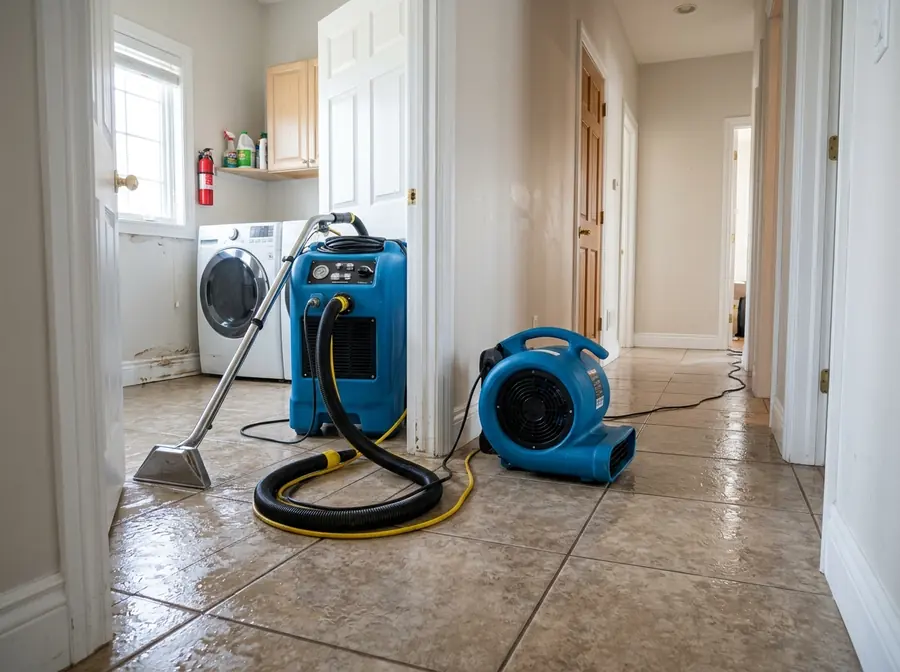
Drying may involve air movement, dehumidification, controlled temperature, and repeated monitoring. Equipment placement should reflect the affected rooms and materials. The goal is not simply to make the air feel dry; the relevant building materials need to reach appropriate moisture conditions. Drying time varies with the amount of water, material thickness, access, weather, indoor conditions, and whether the source has been repaired.
Cleaning, repairs, and completion review
After mitigation, affected surfaces may need cleaning and repairs. Replacing drywall, flooring, cabinets, insulation, or trim may require separate trades and permits depending on the work. The property owner should receive an understandable explanation of completed mitigation, materials removed, remaining repairs, and any unresolved source issue. A restoration project is not complete merely because visible water is gone.
Forest Hill public works and stormwater context
The approved service-area list identifies Forest Hill ZIP code 76119 and areas including Forest Hill Village, Forest Hill East, Forest Hill South, Bluebonnet Hills, Heritage Heights, and Forest Oaks. These names can help describe a general location, but they do not establish a particular property's flood history, elevation, drainage performance, or construction details. The full street address is important when arranging a response.
Forest Hill's Public Works Department describes its responsibilities for water, sewer, and streets. The department also explains that it handles water leaks and sewer-related public works concerns and maintains a stormwater management program. Its published stormwater materials describe municipal efforts to manage stormwater quality, including public education, illicit-discharge detection, construction runoff control, and post-construction management. Those responsibilities concern public infrastructure and stormwater quality; they do not replace mitigation of water damage inside a private building.
If you suspect a public water-main leak, sewer backup in the municipal system, or street drainage issue, contact the appropriate city department. If a pipe, appliance, roof, or fixture inside your property is leaking, a private plumber or building professional may need to correct the source. In some incidents, both public and private parties may need to be notified. Record what you observe and avoid making assumptions about responsibility before the source is identified.
Rainwater exposure varies by parcel, grading, drainage route, foundation openings, roof condition, and the specific storm. A city's stormwater program does not mean that every property is protected from water entry, nor does the presence of a low-lying area prove that a particular home has flooded. Use local weather and emergency alerts, and never drive through flooded streets.
Common causes of water damage in homes and businesses
Plumbing and fixture leaks
Supply lines, shutoff valves, faucets, toilets, tubs, and shower connections can leak slowly or fail suddenly. A small leak may remain hidden behind a vanity or inside a cabinet. Look for unexplained dampness, soft materials, peeling finishes, or a change in water use, but do not open walls or operate equipment in unsafe conditions.
Appliance failures
Washing machines, dishwashers, refrigerators with water connections, and water heaters can release water when hoses, seals, valves, or fittings fail. A leak can travel under nearby flooring and cabinets. Keep appliance maintenance records and replace damaged hoses or fittings through a qualified person when needed.
Roof and exterior openings
Damaged shingles, flashing, vents, windows, doors, and exterior penetrations can allow rainwater to enter. The source may be difficult to identify because water can travel along framing before appearing indoors. A roofer or building-envelope specialist may be needed to correct the exterior issue while the restoration team addresses interior moisture.
Drain and sewer problems
Slow drains, blocked lines, and sewer backups may release contaminated water into bathrooms, utility rooms, or lower areas. Avoid contact and do not use household equipment to move the water. The source may require a licensed plumber or municipal utility investigation, while cleanup requires contamination-aware procedures.
Residential, rental, and commercial restoration planning
In a single-family home, the plan may need to account for bedrooms, kitchens, bathrooms, closets, attached garages, and contents stored at floor level. Homeowners should ask which rooms can be occupied safely and how equipment may affect access, noise, and temperature. Keep children and pets away from work areas and follow instructions about equipment and electrical circuits.
Rental properties require coordination between tenants, landlords, and property managers. Tenants should report leaks promptly and keep a record of when and how the issue was reported. Owners may need to arrange access, source repairs, insurer communication, and temporary accommodation decisions. Responsibility for a repair or expense depends on the lease, facts, and applicable law; a restoration contractor cannot decide those issues for the parties.
Commercial buildings may contain stock, computers, machinery, documents, customer areas, and shared building systems. A business should identify the person authorized to approve work and explain operating constraints. The scope may need to separate affected zones from areas that can remain in use. Food, medical, industrial, and other specialist premises may have additional cleaning or regulatory requirements.
Insurance records and water damage costs
Contact your insurer promptly and ask how to report the loss, what documentation is needed, and whether an adjuster should inspect before materials are removed. Photograph the source and affected rooms when safe. Keep receipts for emergency repairs, copies of contractor scopes, and records of communications. If the property is rented or part of a commercial building, confirm who is authorized to communicate with the insurer.
Coverage depends on the policy wording, cause of loss, exclusions, limits, endorsements, and insurer decision. Sudden plumbing failures, gradual seepage, sewer backup, surface water, and maintenance issues may be treated differently. Do not assume a policy covers every category of water. Restoration cost also varies with water category, affected area, material types, access, extraction needs, drying duration, contents, and repair scope. A site-specific inspection is more useful than a generic online estimate.
Related water, fire, and mold services
- Water damage restoration hub — an overview of extraction, drying, and related services.
- Burst pipe cleanup — response after a failed plumbing line.
- Flood water extraction — water removal and contamination considerations.
- Structural drying and dehumidification — monitoring materials after extraction.
- Forest Hill fire and smoke restoration — cleanup after a fire or smoke event.
- Forest Hill mold removal and remediation — moisture-related growth concerns.
- Contact Home Mold Water Fire Damage — discuss the address and current availability.
Frequently asked questions about water damage in Forest Hill
How quickly should wet materials be dried?
As soon as it is safe and practical. The EPA recommends drying wet or damp materials within 24 to 48 hours where possible to reduce the chance of mold growth. This is a prevention target, not a guarantee. Material type, water source, and site conditions matter.
Can a room look dry while materials remain wet?
Yes. Moisture can remain under flooring, behind baseboards, inside cabinets, or in wall and ceiling cavities. Appropriate moisture checks help determine whether hidden materials need attention.
Should I use fans to dry a flooded room?
Do not use electrical equipment in a wet area or where contamination and wiring hazards have not been assessed. Professional drying decisions should account for safety, water category, and the materials affected.
Who handles a municipal water-main leak?
Contact the city department responsible for public water infrastructure. A private plumbing failure inside a property may require a licensed plumber. The source should be identified rather than assumed.
Does insurance cover every water loss?
No. Coverage depends on policy wording, cause, exclusions, limits, endorsements, and the insurer's decision. Ask the insurer about the specific event.
Does Home Mold Water Fire Damage respond at night?
Home Mold Water Fire Damage offers 24/7 emergency response. Call to discuss the property and current availability; no fixed arrival time is promised.
Arrange water damage help in Forest Hill
If water has entered your Forest Hill home, rental property, or business, contact Home Mold Water Fire Damage to discuss the source, affected rooms, water category, and safety conditions. Our company brings more than 13 years of experience, trained technicians, professional restoration equipment, and 24/7 emergency response. We can explain the restoration scope and identify when a plumber, roofer, electrician, municipal department, or other specialist should be involved.
For local service information, read our Forest Hill fire and smoke restoration page and Forest Hill mold remediation page, or visit the contact page to discuss current availability.