Water damage cleanup for Haltom City homes and businesses
Water damage is not measured only by the amount of water visible on a floor. A small leak can remain active behind a cabinet or appliance and affect materials over time. A sudden plumbing failure can spread into multiple rooms. Water from an upper floor can damage ceilings and finishes below. Restoration begins by identifying the source, checking safety, and understanding where moisture may have moved.
Depending on the project, professional water damage restoration may include water extraction, moisture checks, drying equipment, dehumidification, monitoring, cleaning, and controlled removal of materials that cannot be restored. A plumbing, roofing, electrical, or structural specialist may need to repair the original defect or complete work outside the restoration scope. The work plan should distinguish those responsibilities clearly.
Common causes of water damage in Haltom City
Burst pipes and hidden plumbing leaks
A pipe can fail at a fitting, connection, valve, or concealed section of a supply line. Water may enter a wall, ceiling, utility space, or floor assembly before a stain or swelling becomes visible. If a leak is active, shut off an accessible water supply only if it is safe. A qualified plumbing professional should repair the source; restoration addresses the resulting moisture and building damage.
Washing machine, dishwasher, and appliance leaks
Appliance hoses, drain connections, valves, and internal components can leak. A washing-machine failure may wet a laundry room and adjacent hallway; a dishwasher leak may affect cabinet bases and flooring; a refrigerator connection may leak slowly behind the appliance. Stop using the affected appliance and close its water supply if safely accessible. Do not move heavy equipment through standing water or disconnect electrical connections while wet.
Water heater and bathroom overflows
A water heater leak can affect a closet, garage, utility area, or nearby rooms. Toilet, sink, tub, and shower overflows can damage flooring, baseboards, cabinets, and rooms below. The water category matters. A clean supply leak is different from wastewater or sewage. If contamination may be present, keep people and pets away and arrange appropriate professional handling.
Roof leaks and stormwater intrusion
Damaged shingles, flashing, roof penetrations, gutters, or exterior openings can allow rain into attics, ceilings, and walls. A ceiling stain may appear away from the actual roof entry point because water follows framing and other building paths. Have a qualified roofing professional address the opening. Interior restoration can assess the resulting moisture once the source and safety concerns are controlled.
Outdoor water and localized flooding
Water entering a garage, lower room, or ground-level area may contain soil, debris, sewage, or other contaminants. Do not enter moving or standing floodwater when electrical hazards or contamination may be present. Haltom City's local drainage geography includes Big Fossil Creek, Little Fossil Creek, and White's Branch, but proximity to a waterway does not establish that a specific property has flooded or is in a mapped hazard area. Parcel conditions, elevation, grading, drainage, and rainfall all matter.
What to do first when water enters your property
- Keep people safe. Stay away from standing water if electrical outlets, appliances, wiring, or a breaker panel may be affected. Leave the area if there is a serious hazard and contact emergency services when needed.
- Stop the source only if safe. Use an accessible shutoff only when you can reach it without entering a hazardous area. Contact a qualified plumber for a failed pipe or fixture.
- Keep away from contaminated water. Sewage, drain backups, and outdoor floodwater can contain harmful contaminants. Do not handle affected materials or use household equipment to pump contaminated water.
- Record visible conditions. Take photos from a safe, dry location and note when the problem began, where water appeared, and which rooms are affected.
- Arrange an appropriate assessment. Explain the source, water type if known, affected materials, and any safety concerns when contacting a restoration provider.
Do not turn on electrical equipment in a wet room, cut open walls, remove ceilings, or pull up flooring simply to investigate. Concealed wiring, pipes, sharp materials, contamination, and older building materials can make exploratory work unsafe. If asbestos-containing materials or lead-based paint may be present, do not sand, drill, scrape, or demolish them.
Water extraction and moisture inspection
Water extraction removes accessible standing water from floors and other affected spaces. The appropriate method depends on the source, amount of water, surface, access, and safety conditions. Extraction does not automatically remove moisture held in carpet padding, underlayment, baseboards, drywall, insulation, cabinetry, or subflooring. Those materials may need separate inspection and a drying or removal decision.
Moisture assessment helps identify the areas requiring attention. A technician may use moisture meters or other investigative equipment to compare affected materials and monitor changes. Readings must be interpreted in context: the material, measurement location, baseline condition, and building environment all matter. One reading cannot prove that an entire wall or floor assembly is dry.
Structural drying and dehumidification
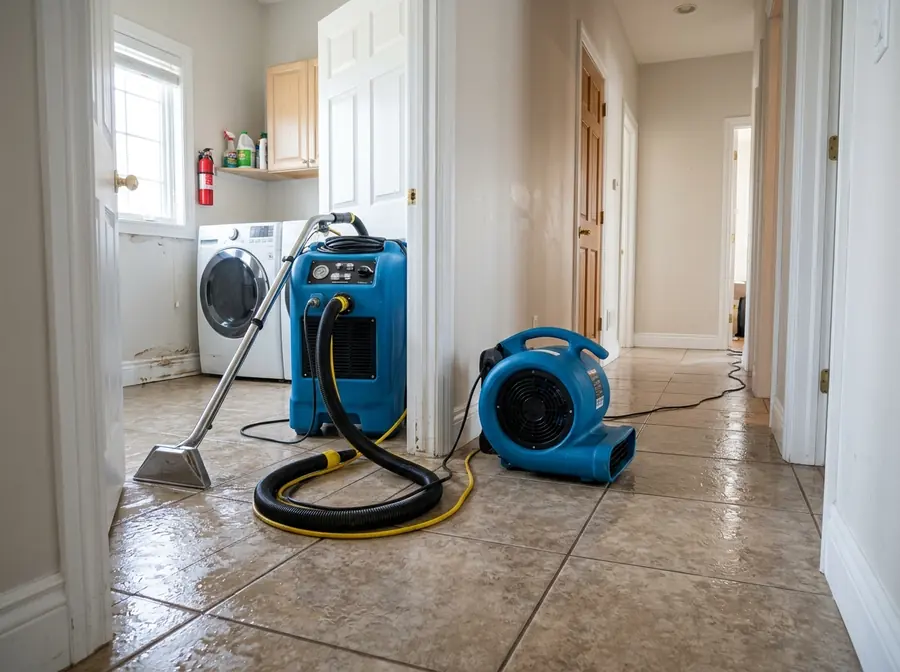
After extraction, controlled air movement and dehumidification may help remove moisture from building materials and indoor air. Equipment placement should reflect the affected rooms and construction, not a one-size-fits-all formula. Drying conditions may change as materials release moisture, so progress checks help determine whether the plan should continue or be adjusted.
Some materials may be suitable for drying in place. Others may need removal because they are saturated, contaminated, damaged, or inaccessible for effective drying. Carpet, padding, drywall, insulation, cabinetry, hardwood, laminate, and subfloor materials each respond differently. The decision should be based on inspection and the specific water loss rather than a blanket promise that everything can be saved or must be discarded.
Drying timelines vary with the extent of the loss, building materials, indoor conditions, and access. A fixed completion date should not be promised before the affected areas have been assessed and monitored.
Haltom City neighborhoods and local property context
Our approved local coverage information identifies ZIP code 76117 and neighborhood or area names including Browning Heights, Browning Heights East, Browning Park, Diamond Oaks, Diamond Oaks East, Diamond Oaks North, Fossil Beach, Fossil Ridge, Fossil Springs, Fossil Village, Haltom Acres, Meadow Oaks, North Eastridge, Oak Knoll, Oakview, Shady Dell, West Browning, Alta Vista Acres, Eastcliff, Eastridge, Golden Gardens, Heritage Village, Park View Hills, Springlake Park, The Trails, and Tri-County Estates. These names help residents describe their general location; they should not be treated as official boundary or flood-risk determinations.
Local routes such as Denton Highway, Broadway Avenue, Beach Street, Haltom Road, and Northeast Loop 820 help orient residents and visitors. Big Fossil Creek, Little Fossil Creek, and White's Branch are part of the wider drainage setting. These geographic references are context only. They do not establish that a home has experienced flooding, that a street is currently affected, or that every parcel nearby shares the same drainage conditions.
Properties in the same neighborhood can have very different water-loss risks. Plumbing layout, roof condition, building maintenance, grading, elevation, drainage paths, and the location of appliances all influence what may happen at an individual address. A home outside a mapped flood hazard area can still experience a burst pipe or roof leak, while a property near a creek is not automatically flood-damaged.
Water damage in houses, rentals, and commercial properties
For a homeowner, water damage may disrupt a kitchen, bathroom, bedroom, garage, or living area. The immediate concerns are occupant safety, stopping the source, protecting belongings where practical, and understanding whether moisture reached concealed materials. Avoid moving heavy furniture or electronics through wet areas if doing so creates a hazard.
Landlords and property managers may need to coordinate access, communicate with tenants, document affected units, and arrange plumbing or building repairs. In multi-unit buildings, water can travel between floors or through shared building systems. The restoration plan should identify the spaces affected and the person authorized to approve work.
Commercial properties may need to protect inventory, records, equipment, customer areas, and employee access. A water-loss plan should consider how to isolate the affected area without creating new safety problems. Restoration and reconstruction are separate scopes, and specialist trades may be required for plumbing, electrical, roofing, or structural repairs.
Water damage and the risk of mold growth
Materials that remain damp can provide conditions for mold growth. Mold may become visible on a surface or remain concealed behind drywall, beneath flooring, or inside cabinets. A musty odor or recurring discoloration can prompt further investigation, but color alone cannot identify a species. Promptly controlling the water source and drying affected materials can reduce the opportunity for growth, but no contractor should guarantee that mold will never develop.
If you suspect extensive or concealed mold, avoid disturbing the affected area. Texas regulates mold assessment and remediation through the Texas Department of Licensing and Regulation. Assessment and remediation roles generally must remain separate on the same project, subject to limited statutory exceptions. Where required, a properly licensed mold assessment professional and a separate remediation contractor should be involved. Learn more on our Haltom City mold removal and remediation page and the mold service hub.
Insurance documentation after water damage
After immediate safety and mitigation needs are addressed, property owners may wish to contact their insurer and ask about policy requirements, documentation, emergency work, and the claims process. Keep records of the date discovered, likely source, affected rooms, visible damage, and work authorized. Photographs can help document conditions when taken safely. Do not assume that all water losses are covered: sudden plumbing leaks, groundwater flooding, sewer backups, long-term seepage, and maintenance-related damage may be treated differently depending on policy language, exclusions, limits, endorsements, and insurer decisions.
Restoration providers can explain the work they observe and perform, but they do not determine insurance coverage. Review the policy and communicate directly with the insurer or its appointed representative about coverage questions.
Frequently asked questions about Haltom City water damage restoration
How quickly should I arrange water damage restoration?
As soon as it is safe. Water can move into concealed materials, and delayed drying may make the project more complicated. The urgency and scope depend on the water source, amount, duration, and affected materials.
Can I clean up a small leak myself?
A small amount of clean water on a non-porous surface may be manageable if the area is safe and no water entered building materials. Wet carpet padding, drywall, insulation, contaminated water, hidden moisture, and electrical hazards call for professional assessment.
Does every water leak cause mold?
No. Mold growth depends on moisture and environmental conditions. Promptly addressing the leak and drying affected materials can reduce the opportunity for growth, but cannot guarantee that mold will not appear.
Will you remove all wet drywall and flooring?
Not necessarily. Material decisions depend on water category, exposure, condition, contamination, construction, and whether effective drying is possible. Some materials may be dried in place; others may require controlled removal.
Do you offer emergency response at night or on weekends?
Home Mold Water Fire Damage offers 24/7 emergency response. Contact the team to describe the situation and confirm the appropriate next step for your property.
What should I tell the restoration team?
Share the property address, where water appeared, when it was discovered, whether the source is still active, which rooms are affected, and whether sewage or outdoor floodwater may be involved. Do not delay urgent contact if you do not know every detail.
Contact Home Mold Water Fire Damage for water damage in Haltom City
Water damage can be stressful when the visible problem does not reveal what is happening behind walls or beneath flooring. Home Mold Water Fire Damage brings more than 13 years of restoration experience, trained technicians, professional equipment, and 24/7 emergency response to water, fire, and mold-related property damage. We serve Haltom City as part of our wider Fort Worth-area coverage.
If water is actively entering your property, protect people first and stop the source only when safe. Contact us when you can do so safely to discuss the address, water source, affected rooms, and next steps. For general enquiries and estimate requests, visit our contact page. You can also read about our wider Fort Worth water damage restoration service, our Haltom City restoration coverage, and our water damage restoration hub.