Understand where the water came from before cleanup
Water may spread along floor edges, under carpet, into cabinets, behind baseboards, or through wall and ceiling assemblies. A leak in an upper-level bathroom may leave a stain downstairs. A water heater failure may wet a utility area and adjoining rooms. A roof opening can allow water into insulation and framing before the interior finish shows damage. The point where you notice water is not necessarily where the full affected area ends.
Material type matters. Carpet and padding can retain moisture. Wood products may swell or change shape. Drywall may soften or lose strength. Insulation can become wet within an assembly. Flooring may look dry on top while moisture remains beneath it. A technician may need to inspect materials and use moisture-measuring tools to understand the affected area and whether drying or removal is appropriate.
Water quality matters too. Water from a clean supply line differs from water that has contacted sewage, outdoor soil, or other contaminants. If the source is unknown or the water may be contaminated, keep away and do not attempt to clean it with household equipment. Appropriate handling, protective measures, and disposal may be necessary.
Lake Worth, ZIP 76135, and property-specific moisture conditions
The approved service-area list identifies Lake Worth with ZIP code 76135 and includes Lake Worth North, Lake Worth South, East Lake Worth, Greenfield Acres, Shady Oaks Manor, and North Lake Worth. These local names help orient service inquiries. They do not establish that any particular street has flooded, that a property is in a flood zone, or that all homes share the same drainage conditions.
Lake Worth is associated with a lake and a broader northwest Tarrant County community, but proximity to water alone does not determine flood exposure. Flood risk varies by parcel, elevation, drainage, nearby channels, surface grading, construction, and maintenance. If you need to know a property's mapped floodplain status, consult official floodplain maps and address-specific information rather than relying on a citywide generalization.
Water damage can also involve a municipal issue or a private property source. City infrastructure and public drainage concerns should be reported to the appropriate public department. A leak inside a home or business may need a plumber, roofer, appliance specialist, or restoration provider. Interior restoration does not repair public infrastructure or replace the source-repair trade.
When you request help, share the complete address, building type, affected rooms, source if known, approximate time the water appeared, and whether the source has been controlled. For rentals and managed buildings, notify the responsible owner or manager and confirm who can approve access and work.
Common causes of water damage
Supply pipes and plumbing connections
Water may escape from a pipe, joint, valve, sink, toilet, shower, or other plumbing connection. A sudden break can release a large amount of water, while a slow leak can wet a cabinet or wall over time. Have a qualified plumber repair the source. Restoration addresses the resulting water damage and drying, not the plumbing repair itself.
Appliances and water heaters
Washing machines, dishwashers, refrigerators with water lines, water heaters, and similar equipment may leak from a hose, valve, seal, tank, or drain. Water may spread behind or beneath the appliance. If electrical components may be wet, do not touch or operate the equipment until qualified help has evaluated the hazard.
Overflow from sinks, tubs, and toilets
Overflow incidents can affect bathrooms, kitchens, floors, cabinets, and nearby rooms. Water that has contacted sewage or other contaminants requires caution. Keep children and pets away, avoid contact, and arrange appropriate cleanup. Clear-looking water may still be unsafe depending on its source.
Roof and exterior intrusion
Rainwater can enter through roof damage, flashing, windows, exterior joints, or other openings. It may travel inside a ceiling or wall before becoming visible. Interior drying may need to be coordinated with roof or exterior repairs by a qualified contractor to prevent the same source from continuing.
Outdoor flooding or surface water
Water entering from outdoors may contain soil, debris, and other pollutants. If the property is flooded, avoid walking through water where electrical hazards, unstable surfaces, or contamination may exist. Leave unsafe areas and contact emergency services or appropriate qualified professionals.
Immediate steps for property owners and occupants
- Keep people safe. Do not enter standing water if electricity may be present. Stay away from wet outlets, wiring, appliances, and breaker panels. Call emergency services for immediate danger.
- Stop water only when safe. Shut off an accessible valve only if you can reach it without entering a hazardous area. Call a plumber or utility for assistance if needed.
- Avoid contaminated water. If the water may be sewage, floodwater, or otherwise contaminated, do not touch it or attempt household cleanup. Keep pets and children away.
- Don't use unsafe equipment. Do not run fans, vacuums, or electrical tools in wet conditions or before safety is established. Unplanned air movement can spread contaminants.
- Document the event. If safe, take photos, note the time discovered, and record the source and actions taken.
- Notify the appropriate contacts. Contact the owner, manager, insurer, plumber, or restoration provider based on the situation and who is authorized to arrange work.
Do not risk injury to save belongings or collect documentation. If water is rising, the building is unstable, or electrical or other hazards are present, leave and contact the appropriate emergency service.
What a restoration assessment may cover
A restoration technician may ask how the water entered, whether the source has been repaired, how long the materials were wet, which rooms are affected, and whether access is restricted. The visit may include reviewing visible damage, identifying materials, using moisture tools, and determining where further inspection may be needed. A photograph cannot reliably show all concealed moisture.
Water extraction
Where standing water is present and the site is safe, suitable extraction equipment may remove accessible water. The approach depends on water depth, flooring, material condition, and contamination. Water that may contain contaminants can change equipment, protective measures, and material decisions.
Structural drying and dehumidification
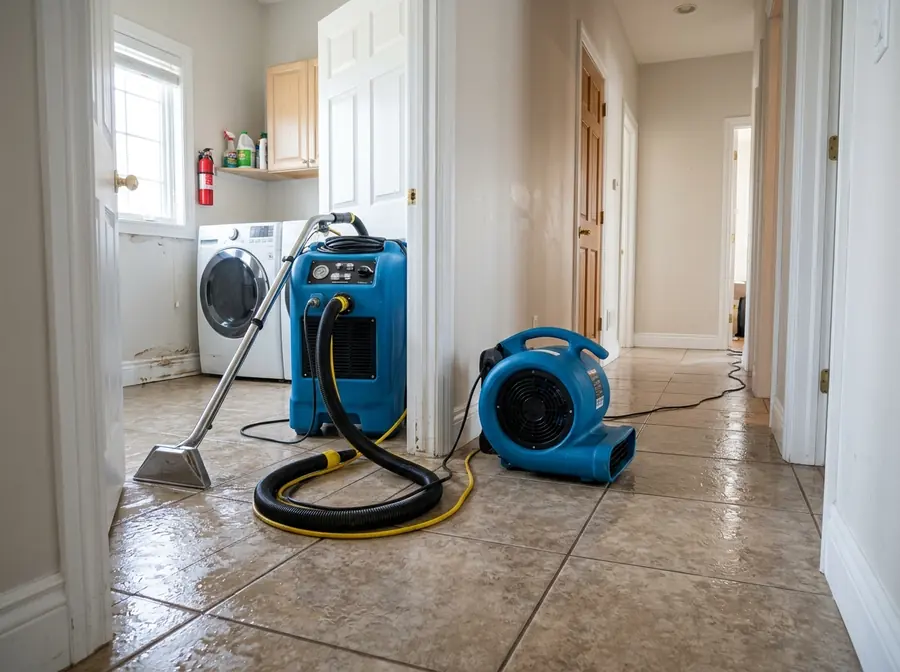
Drying may involve air movement and dehumidification selected for the affected materials and space. Equipment can be noisy and may need power and access. Technicians may monitor moisture and adjust equipment over time. The owner or manager should know what is running, what areas are restricted, and how progress will be checked.
Material decisions
Some materials may be dried and retained, while others may need removal if damaged, contaminated, or not reasonably restorable. The scope may include carpet, pad, flooring, baseboards, drywall, insulation, cabinets, or contents. Ask why the material is being retained or removed and whether demolition, disposal, and replacement are separate from the mitigation scope.
Monitoring and final review
Depending on conditions, technicians may return for moisture checks, equipment adjustments, and documentation. Completion is based on material condition and project criteria rather than an arbitrary number of days. Ask what readings or records will be shared and what repair tasks remain.
How water losses affect different property types
Homes: Water can disrupt kitchens, bathrooms, laundry rooms, hallways, bedrooms, and stored belongings. Ask which rooms are included in the scope and what should remain off-limits. Protecting unaffected contents is important, but do not move heavy or wet items without guidance if contamination or safety risks are possible.
Rental units: Tenants should notify the owner or manager promptly and retain a record of the communication. Management may coordinate source repair, restoration access, adjoining units, and approvals. Confirm who is authorized to arrange work before contractors start.
Commercial properties: Businesses may need to protect stock, equipment, records, employees, and customers. The plan should identify restricted areas, access, contents handling, and how work will be coordinated with building management. Specialized equipment or systems may require a separate qualified professional.
Multi-unit properties: Water can travel between floors or adjoining units. A manager may need to coordinate inspections and communicate with tenants. A restoration scope in one unit does not necessarily address the source if it originates in a shared pipe, roof, or neighboring space.
Estimates, insurance, and work authorization
Request a written scope that identifies affected areas, extraction, drying equipment, monitoring, material removal, contents work, and exclusions. Confirm whether the source repair, electrical evaluation, roofing, plumbing, reconstruction, and finish work are included or handled separately. Ask how additional damage found during the project will be documented and authorized.
Costs depend on water volume, contamination, materials, access, equipment, drying needs, demolition, and contents handling. A site-specific evaluation is more useful than a price based only on a photograph or city name. If insurance is involved, ask the insurer what it needs, how to report the event, and whether damaged items should be retained for inspection. Coverage depends on policy language, cause, exclusions, limits, endorsements, deductible, and insurer determination. No restoration provider can guarantee claim payment.
Keep photographs, invoices, receipts, communications, and work authorizations. Our insurance claims help guide provides additional general information about documenting a loss.
Frequently asked questions about Lake Worth water restoration
Does being near Lake Worth mean my home is flood-prone?
No. Proximity alone does not determine flood risk. Conditions vary by property. Use official floodplain information and address-specific resources if you need to understand mapped risk.
Can a leak cause damage without a large puddle?
Yes. Moisture can travel behind cabinets, baseboards, walls, and beneath flooring. An evaluation may identify affected materials beyond the visible area.
Should I try to dry everything with fans?
Only after safety and the appropriate drying method are established. Electrical equipment may be dangerous in wet areas, and air movement may spread contaminants in some situations.
Is sewage backup handled like clean water?
No. Sewage and other contaminated water require special precautions. Avoid contact and arrange qualified cleanup.
Do you serve Shady Oaks Manor and East Lake Worth?
These areas are included in the approved Lake Worth service-area list, along with Lake Worth North, Lake Worth South, Greenfield Acres, and North Lake Worth. Confirm current availability for your address.
Will insurance cover water damage?
Coverage depends on the policy and cause. Contact your insurer, keep documentation, and ask for instructions. A contractor cannot guarantee the insurer's decision.
Contact Home Mold Water Fire Damage for Lake Worth water damage
If water has affected your Lake Worth home, rental, or business, explain the source, timing, affected rooms, and whether the water is potentially contaminated or still flowing. Home Mold Water Fire Damage has more than 13 years of restoration experience, trained technicians, professional equipment, and 24/7 emergency response. We can discuss extraction, moisture assessment, drying, material decisions, and current availability for your property.
Visit the Lake Worth restoration services page, the main water damage restoration hub, or our contact page. If you need fire or mold information, see the separate Lake Worth pages for fire and smoke damage restoration and mold removal and remediation.