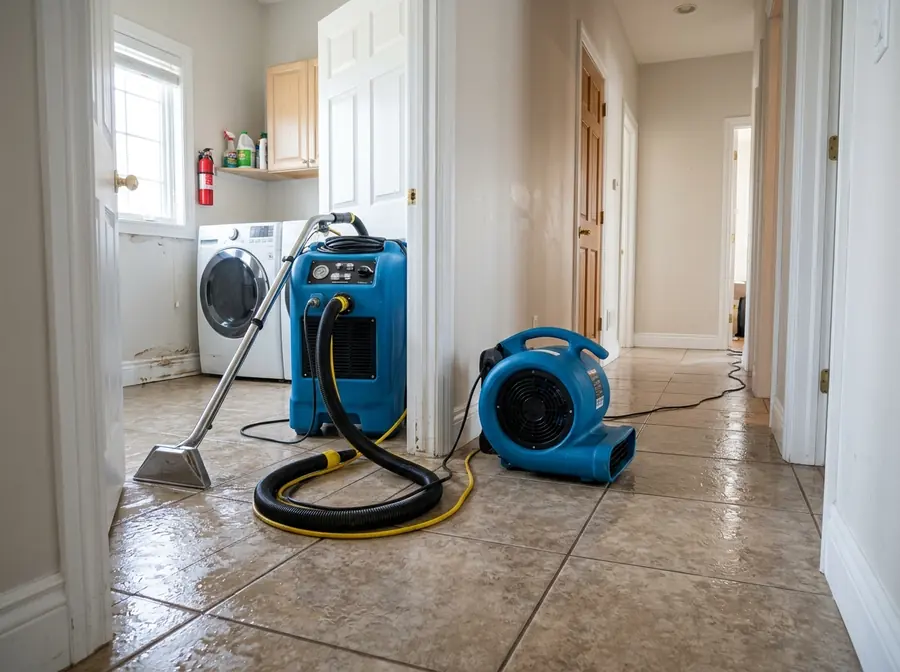
What water damage restoration includes
Water restoration is a process for managing water and moisture in a building, not simply drying the visible floor. It may involve identifying the source, determining whether water could be contaminated, extracting standing water, checking affected materials, setting up controlled drying, monitoring conditions, and deciding whether damaged materials need removal. The right scope depends on the building and the water event.
Some materials can be dried in place when conditions allow. Others may need removal because they are saturated, contaminated, deteriorated, or inaccessible for effective drying. Carpet, padding, drywall, insulation, cabinets, flooring, and trim should not all be treated as if they respond identically. A contractor should explain the reason for each proposed step rather than make blanket promises.
Common causes of water damage in Watauga
Plumbing failures
Supply lines, valves, fittings, drains, and concealed pipes can leak suddenly or gradually. A pipe failure may release water into a utility room or ceiling cavity, while a small connection leak may remain hidden behind a vanity. If a shutoff is safely accessible, turning it off may limit additional water. A licensed plumber should repair the pipe or fixture; restoration addresses the resulting building moisture.
Appliance and fixture leaks
Washing machines, dishwashers, refrigerators with water connections, water heaters, toilets, tubs, and sinks can overflow or leak. Water may travel below a cabinet or across a floor before it becomes visible. After an appliance leak, check nearby rooms and the ceiling below if water reached an upper floor. Do not move a heavy appliance through standing water or operate it before it has been assessed.
Roof and window intrusion
Damaged shingles, flashing, roof penetrations, window seals, and exterior joints may allow rain to enter. Water can follow rafters or wall framing and appear at a point away from the opening. A qualified roofer or building-envelope contractor should correct the exterior defect. Interior drying and repairs should be planned after the source is controlled.
Water and sewer service issues
Watauga's Public Works Department includes responsibilities for streets, storm drains, water, and sewer services. The city provides a Water and Sewer Department contact route for reporting a problem and explains how after-hours or holiday reports are handled. These public utility services are different from private interior restoration. A city utility report may be appropriate for a municipal water or sewer issue, while a leak inside a home may require a plumber and restoration provider.
Immediate steps after water enters a building
- Keep people away from hazards. Do not enter standing water if outlets, wiring, appliances, or an electrical panel may be affected. If there may be an electrical danger, stay clear and contact the appropriate emergency or utility professional.
- Stop the source when safe. Turn off an accessible valve only if you can reach it safely. Contact a licensed plumber for a failed pipe or fixture.
- Do not handle sewage or unknown water. Drain backups and outdoor floodwater may contain contaminants. Avoid contact and do not use household pumps or vacuums.
- Document the event. Take photographs from a safe location, note when the water was discovered, and record what may have caused it.
- Arrange an assessment. A restoration professional can help determine which areas need extraction, moisture checks, or drying. Trade repairs should be handled by appropriately qualified professionals.
Do not turn on electrical equipment in a wet room, cut into walls, or pull up flooring to investigate. Hidden wiring, sharp materials, contaminated water, and weakened building components can create risks. If the source is a public utility issue, contact the appropriate city department as well as arranging private-property help when needed.
Water extraction and moisture mapping
Water extraction removes accessible standing water using methods appropriate to the source and the property. After extraction, technicians may check adjacent rooms, floor edges, baseboards, cabinets, and ceilings below. Water can travel through gaps and concealed layers, so the inspection should not stop at the visible wet line.
Moisture checks help identify materials that need monitoring. Readings should be interpreted in context, including the type of material, room conditions, and comparison with unaffected areas. A single reading does not prove that a wall cavity or floor assembly is dry. Where concealed moisture is suspected, additional inspection may be needed to decide whether drying in place is practical.
Structural drying and dehumidification
Once standing water is removed, controlled airflow and dehumidification may help dry suitable materials. Equipment placement should reflect the affected rooms and the materials involved. Drying conditions may change as the building responds, so monitoring and adjustment are important. There is no universal drying duration that can be promised before the affected materials and conditions are known.
Some materials may be dried in place; others may need removal because they are contaminated or too damaged to restore. The decision can depend on water category, exposure duration, material type, accessibility, and project requirements. A restoration plan should explain the reason for removal and identify which repairs fall outside the restoration scope.
Watauga water, sewer, and storm-drain responsibilities
The City of Watauga identifies water and sewer, streets, and storm-drain utility functions within Public Works. Its Water and Sewer Department provides a route for reporting service problems and notes that reports submitted outside regular hours or during holiday closures may not be processed until the department reopens; the city directs residents with immediate after-hours needs to its non-emergency dispatch contact. Property owners should use the city's current official instructions for municipal utility concerns.
These services do not replace a private plumbing inspection or water restoration visit. A municipal water-main issue, a sewer service concern, a blocked street drain, and a leaking washing-machine hose are different problems. Determine which system is involved before assuming who is responsible. Citywide infrastructure information also cannot establish whether a particular property has flooded or whether its interior materials are dry.
Restoration for Watauga homes and businesses
Residential water losses may affect kitchens, bathrooms, laundry areas, garages, bedrooms, and rooms below a plumbing fixture. In a rental property, tenants and owners may need to coordinate access, maintenance records, and repair decisions. If water has travelled between floors or into shared building components, the inspection should consider the wider affected area.
Commercial properties may include offices, retail spaces, restaurants, and service businesses. A water event can affect stock, workstations, equipment, records, and customer access. Business owners should protect people and important items only when it is safe to do so. A restoration plan may include separating affected areas and coordinating with building management, plumbers, electricians, and other trades.
When water damage leads to a mold concern
Moisture left in building materials can create conditions for mold growth. A musty smell or visible discoloration may justify further evaluation, but appearance does not identify the species or show how far growth extends. The source should be corrected and affected materials assessed. Where Texas mold assessment or remediation rules apply, the appropriate credentials and role separation must be observed.
Do not scrape, sand, or remove extensive suspected mold yourself. Avoid mixing cleaning chemicals or painting over damp materials. Our mold removal and remediation guide explains general moisture-control considerations and Texas regulatory requirements.
Insurance and water-loss documentation
Notify your insurer or agent and ask which records and approvals are needed. Photograph visible damage, record the time and circumstances, keep receipts for reasonable emergency expenses, and retain estimates and invoices. If the water source is known, keep any plumber or utility documentation that helps explain the event.
Coverage depends on policy language and the cause of loss. Sudden plumbing failures, long-term seepage, sewer backup, surface water, and flood losses may be treated differently. Deductibles, limits, exclusions, and endorsements matter. Home Mold Water Fire Damage can explain observed restoration conditions and work performed, but cannot guarantee payment. Read our insurance claims help guide for general documentation suggestions.
How Home Mold Water Fire Damage approaches a Watauga water loss
We begin by discussing the event and whether the source has been controlled. After safe access is confirmed, the team can inspect affected areas, identify likely moisture pathways, and explain the extraction and drying options. If a licensed plumber, electrician, roofer, or municipal utility department needs to address the source, that responsibility should be clear in the project plan.
Our company has more than 13 years of restoration experience, trained technicians, professional equipment, and 24/7 emergency response. The scope and duration depend on the property and the materials involved. We aim to communicate what is known, what remains uncertain, and how progress will be checked.
Frequently asked questions about Watauga water damage
Who should I contact for a water-main or sewer service problem?
Use the City of Watauga's current Water and Sewer Department instructions for municipal service issues. A private interior leak may also require a licensed plumber and restoration assessment.
Can water travel behind a wall?
Yes. Water can move through gaps, floor layers, and wall cavities. Moisture checks help identify areas that may need drying or further inspection.
Can I use a household fan to dry a wet room?
Do not operate electrical equipment in a wet or potentially contaminated area. Safety and the water source should be assessed first.
How long will drying take?
It depends on the water volume, material type, environment, and whether concealed areas can be accessed. A fixed timeline cannot be promised before inspection.
Will my insurance cover the loss?
Coverage depends on the cause and policy terms. Ask your insurer and keep the restoration records.
Arrange water damage restoration in Watauga
If water has entered your Watauga property, protect people first, stop the source when safe, and document the visible conditions. Home Mold Water Fire Damage can discuss water extraction, moisture assessment, structural drying, and related restoration needs. Read our water damage restoration service guide, learn about burst pipe cleanup or appliance leak damage, and visit the Watauga service-area page.
For service questions, use our contact page. For an immediate threat to life or safety, call 911.