Start with the water source and floor construction
Before deciding what to do with a floor, identify where the water came from. A clean supply-line leak is different from sewage, drain backup, or outdoor floodwater. The water may have contacted soil, waste, chemicals, or other contaminants before reaching the room. That changes the cleaning and salvage decisions, especially for porous materials such as carpet, pad, and unfinished wood.
Floor construction matters too. Carpet may be installed over pad and a wood or concrete subfloor. Hardwood may be solid or engineered and may be nailed, glued, or floated. Laminate and vinyl products can have different cores and underlayments. Tile may sit over a cement board or other underlayment. The surface is only one layer of the assembly.
A technician should ask about the source, timing, room layout, previous repairs, and any recurring leaks. The assessment should identify whether water reached the pad, subfloor, adhesive, underlayment, baseboards, or adjacent walls. A visible puddle does not tell the whole story.
Carpet water damage: pile, backing, and padding
Carpet can absorb water through its fibers and backing. The pad beneath it can hold moisture and may remain wet after the visible surface begins to feel dry. Water can also travel to the tack strip, baseboard, and subfloor. A professional evaluation considers the type of carpet, water category, amount of water, exposure time, and whether the full assembly can be cleaned and dried appropriately.
In some clean-water situations, extraction and controlled drying may be considered. The ability to retain carpet depends on the material, backing, pad, contamination, and how quickly the area can be addressed. If the carpet or pad has been exposed to sewage or contaminated floodwater, removal may be necessary. Surface cleaning alone may not address contamination inside porous layers.
Do not pull up carpet or move heavy furniture across a wet floor without understanding the risks. Tack strips can cause injury, wet backing can tear, and contaminated water can be spread to clean areas. Ask which parts of the carpet assembly are included in the proposed work and why.
Hardwood floor drying and moisture changes
Wood responds to changes in moisture. After a leak, hardwood boards may swell, cup, crown, buckle, or develop gaps as conditions change. The visible symptoms can develop over time rather than immediately. Solid hardwood and engineered wood have different construction, and the finish, installation method, subfloor, and exposure all affect the outcome.
Drying decisions should consider moisture in both the flooring and the subfloor. A floor may appear dry at the surface while moisture remains below. Excessive or uneven drying can also affect wood, so the objective is controlled moisture reduction and monitoring rather than simply applying as much heat or airflow as possible. A flooring specialist may need to advise whether the floor can be retained, refinished, or replaced.
Do not sand, refinish, or install new flooring while the underlying moisture condition is unknown. Ask the restoration provider what measurements are being taken, where they are located, and how the results affect the next step. If boards are buckled or the subfloor is damaged, a qualified flooring or structural professional may need to inspect the assembly.
Laminate, vinyl, and tile: why the layers matter
Laminate flooring can swell at edges and seams when water reaches its core. Some products are designed to resist surface moisture for a limited time, but that does not mean the entire floor assembly is waterproof. Water can remain beneath a floating floor or in the underlayment. A floor that looks intact may still conceal dampness below.
Vinyl products vary by construction and installation. Water may travel under loose edges, seams, or around cabinets and transitions. Adhesives and underlayment can be affected depending on the product. Tile and stone surfaces may tolerate water, but grout, joints, substrate, and adjacent wall materials can still retain moisture. The condition of the complete assembly matters more than the surface finish alone.
Before removing flooring, determine whether the work could disturb hazardous materials or affect plumbing and electrical components. Older adhesives, underlayments, or previous renovations may require specialist evaluation. Do not begin demolition until the work area and materials are understood.
What professional floor extraction and drying can involve
If water remains on the surface, extraction can remove accessible water. The equipment and approach depend on the material and the water source. A carpet may require specialized extraction; a hard floor may need a different method. Contaminated water requires additional precautions and may make some porous materials unsuitable to retain.
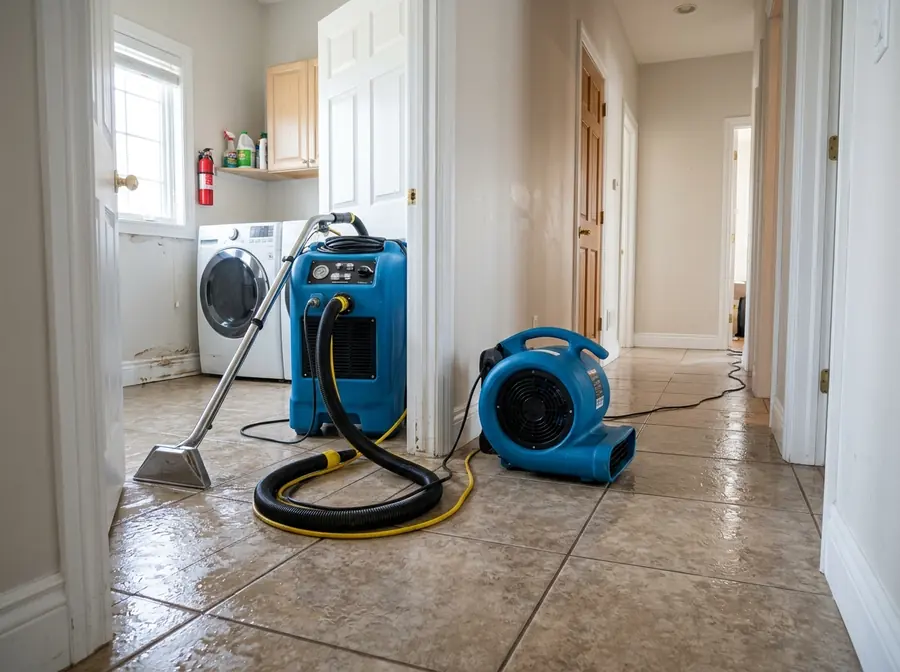
After extraction, technicians may check the flooring, baseboards, subfloor, and adjacent walls for moisture. Air movers and dehumidifiers can support drying when appropriate. Equipment placement should account for room size, material, airflow, and safe access. A technician may need to lift an edge or inspect an accessible cavity if the assembly cannot be assessed from the surface, but that decision should be explained and authorized.
Moisture readings should be material-specific and repeated as conditions change. A single reading cannot necessarily establish that an entire floor is dry. Ask what points are being checked, whether the subfloor is included, and what criteria guide the completion decision.
When carpet or flooring may need to be removed
Removal may be appropriate when the material is contaminated, delaminated, swollen, structurally damaged, or unable to be dried and cleaned adequately. Carpet pad may need removal even when carpet face fibers appear salvageable. Some laminate products swell and lose their original shape. Hardwood may be salvageable in certain circumstances but not in others. Tile may remain intact while the underlayment or subfloor beneath it requires repair.
The decision should not be based on a blanket rule such as “all wet carpet must go” or “hardwood can always be saved.” The water category, time, material, installation, moisture readings, and project requirements matter. Ask the contractor to identify the affected layer and explain why removal is proposed. If the insurer needs to inspect damaged flooring, photograph the condition and ask before disposal unless contamination or safety requires immediate action.
Reconstruction is a separate stage from mitigation. New pad, carpet, hardwood, laminate, tile, baseboards, and paint may require separate estimates or specialist trades. The restoration scope should be clear about what is included and what remains.
Furniture, rugs, and belongings on a wet floor
Furniture legs can absorb water or leave stains on flooring. Area rugs may retain moisture and transfer color or backing residue. Books, boxes, electronics, and stored belongings can become wet even when the floor is only partly covered. Move items only if they can be handled safely and will not spread contaminated water. Do not operate wet electrical devices.
Photograph damaged items and create an inventory with descriptions and locations. Ask your insurer whether it wants to inspect belongings before disposal. Rugs, antiques, upholstered furniture, and sentimental items may need specialist cleaning advice. Items that contacted sewage or contaminated floodwater should not be treated like ordinary damp household goods.
For commercial premises, consider stock, displays, computers, office furniture, and customer access. A retail floor may need a safe temporary route or a restricted zone. A warehouse may have stored goods on pallets or directly on the floor. The restoration plan should consider the business's use of the space as well as the flooring itself.
Preventing mold and odor after floor water damage
Moisture trapped below flooring can create conditions for mold growth and persistent odor. The EPA explains that moisture control is central to mold prevention and that hidden moisture can remain beneath carpets, behind walls, and in other concealed areas. Drying should begin promptly after the source is controlled, but the appropriate method depends on water type and materials.
Do not apply fragrance, deodorizer, or paint to conceal a musty odor while the moisture source remains. Odor may indicate retained moisture or contaminated material, but it is not a diagnosis. If mold growth is visible or suspected, avoid disturbing extensive or hidden areas. Texas has licensing rules for regulated mold assessment and remediation; see the mold removal and remediation hub for details.
Haltom City flooring and water-loss context
Home Mold Water Fire Damage's local focus includes Haltom City ZIP code 76117 and the neighborhoods listed in the service-area source, including Browning Heights, Browning Heights East, Browning Park, Diamond Oaks, Diamond Oaks East, Diamond Oaks North, Fossil Beach, Fossil Ridge, Fossil Springs, Fossil Village, Haltom Acres, Meadow Oaks, North Eastridge, Oak Knoll, Oakview, Shady Dell, West Browning, Alta Vista Acres, Eastcliff, Eastridge, Golden Gardens, Heritage Village, Park View Hills, Springlake Park, The Trails, and Tri-County Estates.
Water damage to flooring can occur in any of these areas and in nearby communities such as North Richland Hills, Hurst, Bedford, Fort Worth, Arlington, Burleson, Roanoke, and Haslet. The exact property address and floor construction are more useful to the assessment than a neighborhood name. See our service areas for the full list of communities.
Local roads including Denton Highway, Broadway Avenue, Beach Street, Haltom Road, and Northeast Loop 820 can help identify the general area, but we do not infer a specific water event or flood history from location alone.
Insurance and documentation for wet flooring
Coverage depends on the source of water and the policy. A sudden accidental pipe or appliance leak may be treated differently from floodwater, gradual seepage, wear, or maintenance-related damage. Some policies have special limitations for flooring, matching, or water backup. Ask your insurer to explain the provisions that apply to your loss.
Photograph the floor before moving or removing materials when safe. Include room-wide images, close-ups of swelling or staining, and pictures of the source if available. Keep repair invoices, restoration records, and receipts for reasonable temporary measures. Ask whether damaged flooring or rugs should be retained for inspection. Our insurance claims help page covers documentation and claim communication.
Frequently asked questions about carpet and hardwood drying
Can wet carpet be dried without removing it?
Sometimes, depending on the water source, carpet and pad construction, exposure time, and whether the full assembly can be cleaned and dried. Contaminated water may make removal necessary.
Will hardwood floors return to normal after drying?
Not always. Some boards may recover, while others may remain cupped, warped, or damaged. A flooring professional may need to assess the floor after moisture conditions stabilize.
Is tile flooring waterproof?
The tile surface may resist water, but grout, joints, underlayment, and subfloor materials can still be affected. The complete floor assembly should be assessed.
Can I run a fan over a wet carpet?
Do not use electrical equipment in an area that may be unsafe or contaminated. Once the source and safety conditions are understood, a professional can determine whether controlled air movement is appropriate.
How do you know if water is under the floor?
Technicians consider the water path, floor construction, visible symptoms, and appropriate moisture measurements. Additional inspection may be needed where the assembly cannot be checked from the surface.
Discuss water-damaged flooring with Home Mold Water Fire Damage
If carpet, hardwood, laminate, vinyl, or tile has been affected by a leak in your Haltom City home or business, contact Home Mold Water Fire Damage to discuss the source and floor construction. Our team has more than 13 years of restoration experience, trained technicians, professional equipment, and 24/7 emergency response.
For the wider service, visit the water damage restoration hub. You can also review structural drying and dehumidification, learn about our restoration process, or use the contact page.