Floodwater is not the same as a clean plumbing leak
Water that has flowed across streets, yards, parking areas, drainage channels, or other outdoor surfaces may contain contaminants that are not visible. Even water that looks relatively clear can carry microorganisms or chemicals. Floodwater can also mix with sewage when drainage or wastewater systems are overwhelmed or damaged. Avoid direct contact and keep children and pets away from affected areas.
Different sources create different cleanup requirements. A stormwater intrusion through a door or garage is not automatically identical to a sewer backup, and water that has entered from a known clean source is not automatically safe once it has contacted contaminated surfaces. A qualified assessment should consider where the water came from, what it contacted, how long it remained, and which materials absorbed it.
The Centers for Disease Control and Prevention advises people to avoid contact with floodwater that may be contaminated with sewage. The CDC's guidance on re-entering a flooded home also highlights hazards that may remain after flooding. Follow local emergency instructions and do not enter a property until authorities say it is safe.
First steps when floodwater reaches your property
- Stay out of unsafe water. Do not walk through standing water if electrical outlets, wiring, appliances, or service equipment may be affected. Never touch electrical equipment while standing on a wet surface.
- Follow emergency instructions. If local officials issue an evacuation or re-entry notice, follow it. Do not drive or walk through moving floodwater.
- Isolate utilities only from a safe location. If the main power or gas shutoff is in a dry, accessible place and you know how to operate it safely, follow the relevant utility guidance. Otherwise wait for qualified help.
- Document conditions when safe. Photograph water lines, affected rooms, damaged contents, and the exterior before moving items. Do not delay urgent safety measures to take pictures.
- Contact the appropriate professionals. Floodwater, sewage, structural damage, electrical issues, and hazardous materials may require different specialists.
If the building has shifted, a foundation wall is damaged, the floor is unstable, or the ceiling is sagging, keep away and obtain an appropriate structural assessment. Flooding can also affect gas appliances, electrical systems, and mechanical equipment. Do not turn systems back on simply because the water has receded.
What professional flood water extraction may involve
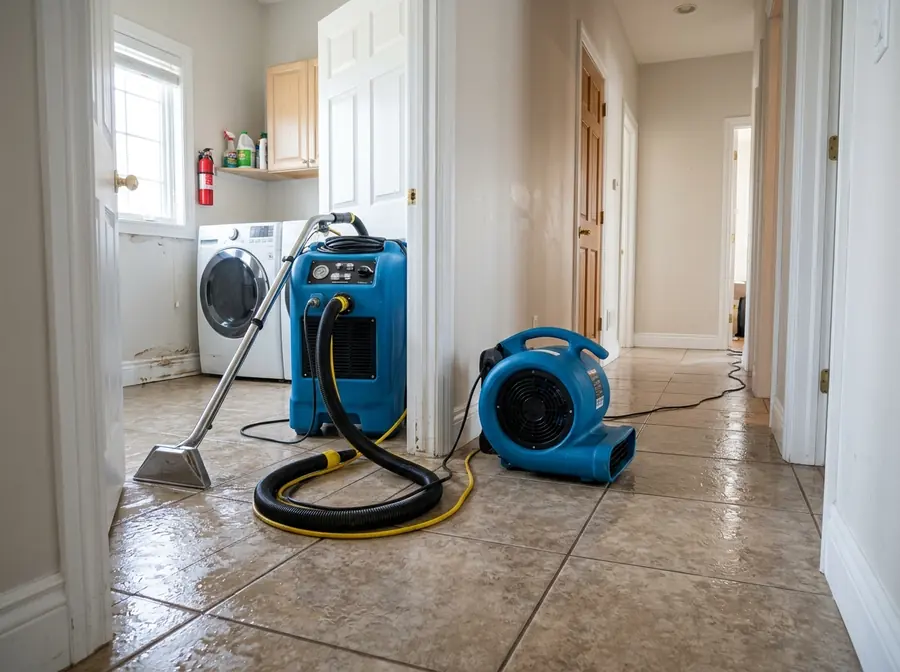
Extraction begins only when access is safe and the water condition is understood. The method depends on the amount of water, depth, building layout, access, and contamination. Pumps or extraction equipment may be used to remove accessible standing water. In some situations, debris or damaged contents must be cleared before the full affected area can be assessed. Contaminated water requires suitable protective measures, handling, and disposal.
Removing visible water is only one stage. Moisture can remain beneath flooring, inside wall cavities, behind baseboards, under cabinets, in insulation, and within crawlspaces. A professional assessment considers the affected assembly and identifies where additional inspection or removal may be needed. Some porous materials that have contacted contaminated floodwater may not be appropriate to retain. The decision depends on water category, material, exposure, and applicable guidance.
After extraction, drying and cleaning may be necessary. Equipment placement and monitoring should reflect the building's materials and the type of water involved. If the water was contaminated, cleaning and sanitation requirements differ from ordinary drying after a clean pipe leak. Learn more about the wider service at our water damage restoration hub.
Why floodwater can affect concealed parts of a building
Water can enter through doors, garage openings, foundation penetrations, damaged windows, roof openings, and other low points. It can move beneath flooring, wick into drywall, soak insulation, and travel through service penetrations. A water line on a wall provides useful information, but it does not show every place moisture reached. A room may look mostly dry after water is removed while moisture remains trapped under a floor or in a wall assembly.
Flooding can also affect materials that are not normally visible. Carpet pad, particleboard cabinet bases, paper-faced drywall, insulation, and some composite flooring may absorb water. Wood framing and subfloors may need monitoring. The ability to clean and retain a material depends on its condition and whether contamination can be addressed appropriately. Do not cover wet assemblies with new flooring, paint, or trim before the condition is understood.
Where the building has a crawlspace, below-grade room, or enclosed utility area, access may be limited. These areas can contain electrical equipment, pests, debris, and poor air conditions. Do not enter a confined or unsafe space to inspect or operate equipment. A trained professional can determine whether additional precautions or specialist support are needed.
Haltom City drainage and property-specific flood considerations
Haltom City is in northeast Tarrant County. Big Fossil Creek, Little Fossil Creek, White's Branch, and local drainage infrastructure are part of the area's geographic context. Their presence does not establish that a particular property has flooded or that every nearby parcel has the same risk. Flood exposure varies with elevation, parcel grading, drainage design, nearby infrastructure, rainfall intensity, and the path water takes across the site.
Roads such as Denton Highway, Broadway Avenue, Beach Street, Haltom Road, and Northeast Loop 820 can help a caller describe a general location. The approved local area list includes ZIP code 76117 and neighborhoods such as Browning Heights, Browning Heights East, Browning Park, Diamond Oaks, Diamond Oaks East, Diamond Oaks North, Fossil Beach, Fossil Ridge, Fossil Springs, Fossil Village, Haltom Acres, Meadow Oaks, North Eastridge, Oak Knoll, Oakview, Shady Dell, West Browning, Alta Vista Acres, Eastcliff, Eastridge, Golden Gardens, Heritage Village, Park View Hills, Springlake Park, The Trails, and Tri-County Estates.
A property may experience water intrusion from a local storm even when the owner has never seen water inside before. Conversely, living near a creek or low-lying road does not prove that a building is in a mapped flood hazard area. For parcel-specific flood information, consult official mapping and local authorities rather than relying on a neighborhood label. The service-area list also includes North Richland Hills, Hurst, Bedford, Fort Worth, Arlington, and other nearby communities; see areas we serve for the complete coverage list.
What happens to household contents after a flood?
Floodwater can affect furniture, mattresses, clothing, rugs, books, documents, electronics, toys, food, and stored items. The material and water source matter. Items that have contacted sewage or contaminated floodwater may not be safe to keep, even if they look intact. Food and medicine exposed to floodwater should not be consumed. Ask the appropriate public-health or emergency authority for disposal guidance where needed.
Photograph belongings before disposal if it is safe and practical, and make an inventory for your records and insurer. Separate damaged items from unaffected property when possible without carrying contamination into clean areas. Some hard, non-porous items may be cleanable; porous materials may be difficult or impossible to restore after contamination. Electronics should not be powered on while wet. Important documents and sentimental objects may need specialist advice.
Do not move wet, contaminated furniture into an unaffected bedroom or garage without a plan. That can spread debris and moisture. If the property is a rental or commercial unit, coordinate with the owner or manager before disposing of items that belong to someone else.
Drying, cleaning, and mold prevention after flood extraction
Once standing water is removed and contaminated materials are handled, the building may need controlled drying. The approach depends on the water source and the materials that remain. Air movement and dehumidification can help reduce moisture in appropriate circumstances, but equipment alone does not make a contaminated area safe. Cleaning and sanitation must be addressed before the space is returned to normal use.
Mold can begin to grow on damp materials when moisture remains. The U.S. Environmental Protection Agency emphasizes correcting moisture problems and drying wet materials promptly. The often-cited 24-to-48-hour window is a useful target, not a guarantee; flood conditions, temperature, material type, and contamination can change the response. Porous materials that have been saturated or contaminated may need removal rather than surface cleaning.
If mold growth is present or suspected, Texas mold assessment and remediation rules may apply. The regulated assessment and remediation roles must be separated on the same project where required. See our mold removal and remediation hub and the TDLR program guidance for more information.
Flood damage and insurance documentation
Standard homeowners policies generally treat flood damage differently from sudden water damage caused by a plumbing failure. Many policies do not cover flood damage unless separate flood insurance applies, but the exact policy and circumstances matter. Do not assume that a storm-related loss is covered or excluded without reviewing the contract and speaking with the insurer.
Report the loss promptly and ask what documentation is needed. Photograph the water line, affected rooms, damaged contents, and exterior conditions when safe. Keep receipts for reasonable temporary measures and record communications with the insurer. Ask before discarding items that may need inspection, unless they pose an immediate health or safety risk. FEMA's general guidance on documenting and cleaning damaged property is available at Don't Wait to Clean Up or Make Repairs. Our insurance claims help page offers a practical documentation checklist.
Flood water extraction for homes and commercial properties
For a residence, the project may involve ground-floor rooms, garages, utility spaces, storage areas, and lower wall sections. The family may need to remain away until utilities and affected areas are safe. If a landlord or property manager is responsible for the building, notify them and clarify who can authorize work. Keep children and pets away from contaminated materials and equipment.
For a business, flooding can affect stock, loading areas, customer entrances, electrical rooms, records, machinery, and employee access. The facility manager should identify critical systems, restricted zones, and the people who can authorize mitigation. A warehouse or retail property may need an inventory record and a plan to separate salvageable goods from contaminated stock. Commercial work may also require coordination with the building owner, tenants, and specialist vendors.
Frequently asked questions about flood water extraction
Can I pump the water out myself?
Do not enter standing water where electrical hazards, contamination, or structural instability may exist. Large volumes, moving water, sewage, and unknown contamination require appropriate expertise and equipment. Follow emergency authority instructions.
Is floodwater safe if it looks clear?
No. Appearance does not establish safety. Outdoor water can carry sewage, microorganisms, chemicals, and debris. Avoid contact and keep children and pets away.
Will carpet and drywall always need to be removed?
Not every material has the same outcome. The water source, contamination, saturation, exposure time, and material construction guide the decision. Porous items that have contacted contaminated water may not be suitable to retain.
Does flood insurance cover the cleanup?
Coverage depends on the flood policy, definitions, exclusions, limits, and claim circumstances. Contact the insurer or agent and review the policy. A restoration contractor cannot guarantee payment.
Can you help if water has entered a crawlspace?
Yes, we can discuss the situation and assess whether the work fits the service scope. Crawlspaces can present access and safety hazards, so do not enter one that is wet, confined, or unsafe.
Arrange flood damage cleanup with Home Mold Water Fire Damage
If outside water has entered your Haltom City home or business, first follow emergency safety instructions and stay clear of electrical or structural hazards. When the property is safe to assess, contact Home Mold Water Fire Damage to discuss the source, affected rooms, and current conditions. Our team has more than 13 years of restoration experience, trained technicians, professional equipment, and 24/7 emergency response.
For water-related service information, visit the water damage restoration hub. For broader project stages, read our restoration process, or use the contact page to discuss the next step.