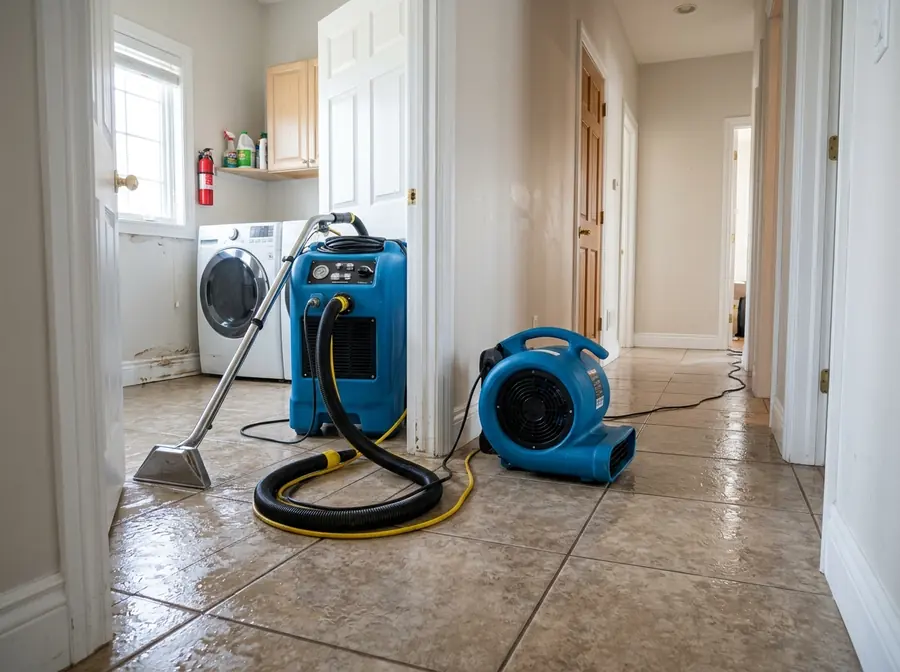
What to do immediately after a sewage backup
Keep children, pets, customers, and employees out of the affected area. Avoid direct contact with wastewater and anything it has soaked. Do not use a household vacuum, mop, fan, or shop vacuum to spread or collect sewage. Do not flush toilets or run water into drains if the system is backing up; additional flow can worsen the overflow. If the backup may involve a public sewer or shared building system, notify the property manager or relevant utility as appropriate.
Do not enter standing water if electrical outlets, wiring, appliances, or panels may be affected. Never touch electrical equipment while standing on a wet surface. If you can isolate a utility from a dry, safe location, follow the utility's instructions; otherwise wait for qualified help. If the water is rising rapidly, the building is unsafe, or anyone is in immediate danger, contact emergency services.
Arrange for a licensed plumber or the appropriate wastewater professional to identify and correct the cause. A restoration contractor can address the resulting contamination and building damage, but should not be treated as a substitute for a licensed plumbing professional where plumbing work requires a license. Once the source is controlled and safe access is established, a qualified cleanup team can assess the affected area.
Why sewage water requires a different response
Wastewater may contain bacteria, viruses, parasites, organic waste, and other contaminants. The precise hazard cannot be judged by color or odor. Even a relatively small backup can spread contamination onto floors, baseboards, stored items, and the lower parts of walls. If wastewater has entered carpet, upholstery, drywall, insulation, or other absorbent materials, surface cleaning may not be enough to make those materials suitable for retention.
Different incidents can involve different wastewater sources. A toilet overflow that contains only clean supply water is not the same as a toilet backup containing sewage. A drain that backs up from a sewer line may carry a mixture of wastewater and debris. A storm event can also overwhelm drainage or wastewater systems. The source and what the water contacted should be established before the cleanup plan is selected.
The CDC advises people to avoid contact with floodwater that may be contaminated with sewage. Its guidance on sewage and onsite wastewater systems notes that heavy rain and flooding can damage systems and lead to wastewater overflow. The same caution is relevant when a building experiences a sewage backup: avoid contact and let appropriate professionals assess the condition.
Common causes of sewer and wastewater backups
Blocked or damaged drain lines
Grease, wipes, paper products, foreign objects, scale, roots, and damaged pipe sections can restrict wastewater flow. A blockage may first appear as a slow drain or repeated gurgling before wastewater returns through a low fixture. Repeated backups should be investigated rather than treated as isolated messes. A plumber may use appropriate diagnostic tools to locate the restriction or damage.
Municipal or shared sewer problems
A building may be affected by a problem beyond an individual fixture, such as a shared line or public sewer issue. Property owners and managers should contact the appropriate utility or municipal department when the circumstances suggest a public system problem. In multi-unit properties, identify whether the affected drain serves one unit or multiple units and notify building management.
Septic system or onsite wastewater failure
Properties with septic or onsite wastewater systems can experience backups when components fail, the system is overloaded, or heavy rain and high groundwater affect operation. Do not open or enter a septic tank. A qualified septic professional should inspect and service the system. The restoration team can address the resulting indoor damage once the source has been controlled.
Heavy rain and drainage conditions
Heavy rainfall can affect drainage systems and contribute to backups in some circumstances. That does not mean every storm causes a sewer overflow or that a particular neighborhood has a documented history of one. If wastewater appears after a rain event, the source should be confirmed rather than assumed.
What professional sewage cleanup may include
The first stage is a site assessment that identifies the affected rooms, water source, contamination pathway, building materials, and safety concerns. The work area may need to be isolated to reduce the spread of contaminated debris. Technicians use appropriate protective equipment and procedures for the specific site. The cleanup plan should explain what materials will be removed, what surfaces can be cleaned, and how waste will be handled.
Standing wastewater may need to be removed using suitable extraction equipment. Porous materials that have absorbed sewage may require removal because contamination can penetrate beyond the visible surface. Examples can include carpet pad, some carpet, drywall, insulation, particleboard, and other absorbent items. Whether a material can be retained depends on its type, exposure, contamination, and applicable guidance; do not assume a single rule covers every building component.
After removal, remaining surfaces may require cleaning and disinfection with products and methods suitable for the material and contamination. Disinfection is not a substitute for removing debris or cleaning organic matter first. The area may then require drying, moisture monitoring, and repair. Ask the contractor to explain the work sequence, affected materials, and any limits on re-entry.
Why DIY cleanup can make a sewage problem worse
Ordinary household cleaning tools and protective items may not be appropriate for sewage. Walking through contaminated water can spread it to other rooms. Using a fan may disperse droplets or contaminated dust. A vacuum not designed for the task can aerosolize material or become contaminated. Mixing cleaning chemicals can create dangerous reactions. Never mix bleach with ammonia, acids, toilet cleaners, or other products.
Do not remove contaminated drywall or flooring without considering electrical wiring, plumbing, structural components, asbestos-containing materials, or lead-based paint. Older homes and previous renovations can contain hazardous materials that require specialist assessment before disturbance. If you are not sure what a material contains, do not cut, sand, scrape, or demolish it as a DIY task.
For a small and clearly limited incident, a qualified professional can help determine what precautions and cleaning are appropriate. For sewage contamination, extensive water intrusion, or affected porous materials, professional handling is the safer course. Follow public-health guidance and keep occupants away until the area is appropriately cleaned and safe to use.
Which building materials may need removal?
Carpet and padding can absorb wastewater and may be difficult to clean thoroughly. Upholstered furniture and mattresses can also retain contamination. Drywall can wick liquid upward from the floor, while insulation behind it may become contaminated. Particleboard cabinetry and some composite materials can swell or absorb wastewater. Items with deep seams, cavities, or porous surfaces may not be suitable for restoration after sewage exposure.
Hard, non-porous materials such as certain tile, metal, glass, or sealed surfaces may be cleanable, depending on the condition and whether the surface can be accessed fully. Grout, cracks, joints, and unfinished edges can retain contaminants. A professional should assess the complete assembly rather than only the visible face. If materials are removed, the work should protect unaffected rooms and account for safe debris handling.
Contents should be inventoried and photographed when possible. Do not move contaminated belongings into clean storage. Ask your insurer whether it needs to inspect items before disposal, unless the items pose an immediate sanitation risk. Food, medicine, cosmetics, and other items exposed to sewage should not be used.
Drying and preventing a recurring moisture problem
After contaminated materials are removed and surfaces are appropriately cleaned, the remaining building may need drying. Moisture can remain in subfloors, framing, wall cavities, and adjacent spaces. Air movers and dehumidifiers may be used where suitable, with monitoring to determine how materials respond. Drying should not begin in a way that spreads contamination. The sequence matters: control the source, remove contaminated material, clean appropriately, and then dry the remaining structure.
Once the immediate cleanup is complete, the cause of the backup must be addressed. A plumber or wastewater specialist may recommend drain repair, clearing a blockage, pipe replacement, septic service, or other corrective work. If the cause is not corrected, the same area may be exposed again. Restoration does not guarantee that a sewer line or septic system will remain problem-free.
If dampness remains or mold growth develops after the event, a separate mold assessment and remediation process may be appropriate. Texas mold licensing requirements may apply to regulated activities. Read the mold removal and remediation hub for details about assessment and remediation roles.
Sewage backup cleanup in Haltom City homes and businesses
In a home, a backup may affect a bathroom, laundry room, garage, utility area, or lower-level space. Keep household members away and avoid carrying contaminated items through clean parts of the home. If the home is rented, notify the landlord or property manager promptly and keep a record of the issue. If multiple units share a line, building management may need to coordinate plumbing access and restoration scope.
In a commercial property, sewage can affect customer areas, restrooms, food preparation spaces, employee facilities, stockrooms, and service corridors. The business may need to restrict access or suspend use of affected areas until the condition is addressed. Restaurants and other regulated businesses should follow applicable health-department instructions before reopening. Do not assume that a surface wipe or deodorizer is enough to return an affected space to normal operation.
For property managers, document which suites or floors are affected, who has authority to approve work, and what plumbing contractor is handling the source. A shared building loss may require coordination between the owner, tenants, insurer, plumber, and restoration provider.
Haltom City location context and service area
Home Mold Water Fire Damage's primary local focus includes Haltom City ZIP code 76117 and the approved neighborhoods of Browning Heights, Browning Heights East, Browning Park, Diamond Oaks, Diamond Oaks East, Diamond Oaks North, Fossil Beach, Fossil Ridge, Fossil Springs, Fossil Village, Haltom Acres, Meadow Oaks, North Eastridge, Oak Knoll, Oakview, Shady Dell, West Browning, Alta Vista Acres, Eastcliff, Eastridge, Golden Gardens, Heritage Village, Park View Hills, Springlake Park, The Trails, and Tri-County Estates.
Nearby coverage communities include North Richland Hills, Hurst, Bedford, Colleyville, Fort Worth, Arlington, Burleson, Roanoke, Haslet, and additional locations listed in the service area directory. Denton Highway, Broadway Avenue, Beach Street, Haltom Road, and Northeast Loop 820 are useful general location references, but the exact street address is needed to confirm current service availability. We do not infer that a particular area has experienced a sewer event from its proximity to a road, creek, or drainage feature.
Insurance and records after a sewage backup
Coverage for sewer backup, drain overflow, and water damage varies by policy. Some policies exclude sewer or drain backup unless an endorsement is added; other policies may have a separate sublimit or specific conditions. The cause, point of origin, maintenance history, and policy wording can affect the claim. Contact your insurer and ask which provisions apply before assuming the cleanup is covered.
Take photographs from a safe location, record the date and time, preserve plumber reports and invoices, and keep receipts for reasonable emergency measures. Ask whether the adjuster needs to inspect damaged contents before disposal. A restoration provider can document the physical conditions and work performed, but cannot promise claim approval. Visit our insurance claims help page for a checklist.
Frequently asked questions about sewage backup cleanup
Can I clean sewage with bleach?
Do not begin by pouring bleach over sewage or mixing cleaning chemicals. Organic matter and debris must be handled appropriately, and the product and method must be suitable for the surface and situation. Never mix bleach with ammonia, acids, or other cleaners. For a sewage backup, professional assessment is recommended.
Can I use a fan to dry the room?
Do not run ordinary fans in a contaminated area before the cleanup plan is established. Air movement can spread droplets or contaminated dust. Drying should follow appropriate removal and cleaning.
Does a toilet overflow always count as sewage?
Not necessarily. A clean-water supply overflow is different from a backup containing wastewater. The source and contents must be established before choosing precautions and cleanup methods.
Should contaminated carpet be saved?
Carpet and padding can absorb wastewater. Whether any portion can be retained depends on the source, exposure, material, and applicable guidance. Do not assume it can be safely restored through surface cleaning alone.
Who fixes the sewer line?
A licensed plumber or appropriate wastewater specialist should diagnose and repair the plumbing or sewer source. Restoration addresses the resulting contamination and building damage within the agreed scope.
Contact Home Mold Water Fire Damage about sewage backup cleanup
If sewage or wastewater has backed up into your Haltom City property, keep people away, avoid contact, and arrange for the source to be controlled by the appropriate professional. Once the site can be safely assessed, contact Home Mold Water Fire Damage to discuss cleanup and restoration. Our team has more than 13 years of experience, trained technicians, professional equipment, and 24/7 emergency response.
For related water services, visit the water damage restoration hub. To learn how we approach a project, read our restoration process, or use the contact page to discuss the next step.