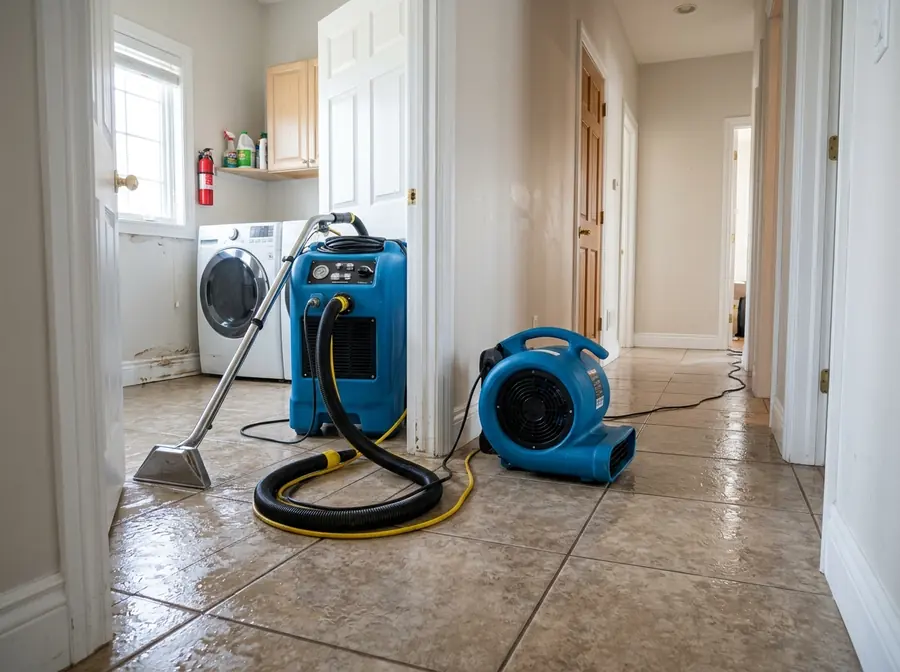
What to do when rain starts coming through the roof
First, protect people. Keep away from sagging ceilings, bulging drywall, wet light fixtures, and areas where water is near electrical equipment. Do not stand beneath a ceiling that is visibly bowing or dripping heavily. Do not touch a wet switch, outlet, fixture, or electrical panel. If electrical isolation can be performed from a dry and safe location, follow utility guidance; otherwise wait for a qualified electrician or emergency responder.
If it is safe, move furniture and valuables away from the leak, place a container under a controlled drip, and use towels only where they do not create a slip or electrical hazard. Do not climb onto a wet roof during a storm. Roof surfaces can be slippery, wind can make ladders unstable, and storm damage may weaken roof components. Temporary roof covering should be handled by qualified people when conditions permit.
Photograph the ceiling, walls, floors, and visible roof opening from safe locations. Record when the leak was first noticed and whether it changes with rainfall. If the property is rented or part of a managed building, notify the owner or property manager. A roofer may be needed to stop the water source; a restoration professional can assess the wet interior once access is safe.
How stormwater travels through a roof and building
Water does not always drip directly below the roof opening. It can run along roof decking, rafters, trusses, insulation, wiring routes, pipes, and ceiling framing before becoming visible. A ceiling stain near a wall may originate from a roof penetration some distance away. Water can also move into an attic and remain in insulation before appearing in the living space.
Wind-driven rain can enter around damaged flashing, vents, skylights, chimneys, roof edges, or other transitions. A missing shingle may be visible, but a leak can also result from a less obvious failure in a roof assembly. Gutters and downspouts that are blocked or disconnected can contribute to water collecting near the building or entering at vulnerable points. The visible drip is a clue, not a complete map of the moisture.
Once water reaches a ceiling, it may soak drywall, plaster, insulation, framing, and nearby wall finishes. If the ceiling is below an attic, moisture may spread through a wider section than the stain suggests. A professional assessment should consider both the apparent entry point and the materials along the water path.
Common storm and roof leak situations
Damaged shingles and roof covering
Wind, falling branches, aging materials, and previous repairs can affect roof coverings. A missing or damaged shingle may allow water to reach the underlayment or roof deck. The extent depends on the roof design and the weather event. A qualified roofer should inspect and repair the roof covering; restoration should address the interior materials affected by water.
Flashing and roof penetrations
Transitions around vents, pipes, chimneys, skylights, and wall intersections rely on properly installed flashing and seals. A small opening can admit water during repeated rain. Do not apply an improvised sealant to an unknown roof detail and assume the problem is solved. The appropriate repair depends on the roof material and assembly.
Gutter and downspout overflow
Leaves, debris, damaged hangers, and blocked downspouts can interfere with drainage. Overflow may wet fascia, exterior walls, and areas near the foundation. Keep gutters maintained from safe access, but do not climb a ladder during wet or windy conditions. If water has entered the structure, the interior moisture still needs to be assessed.
Storm debris and tree impact
A branch or other debris can puncture or damage roof materials. If a tree or heavy object has affected the roof, do not enter a potentially unstable area. Structural assessment may be necessary before temporary protection or interior cleanup. Do not attempt to move heavy debris from a roof yourself.
Attic, ceiling, and insulation damage
Attic insulation can hold moisture and may conceal the path of a leak. Some insulation types can be dried under suitable conditions, while others may need removal because of saturation, contamination, or loss of performance. Do not walk across an attic without safe access and a clear understanding of the framing; stepping between joists can cause a fall through the ceiling.
Ceiling materials may stain, soften, sag, or separate from framing. A water-loaded ceiling can become unstable. Avoid puncturing it or trying to remove a bulging section unless a qualified professional has established a safe method. The area above the ceiling may contain electrical wiring, plumbing, or hazardous materials. If the property is older, suspected asbestos-containing materials or lead-based paint should be assessed before disturbance.
Wall materials below the leak may also absorb moisture. Baseboards, drywall, insulation, cabinets, and flooring can be affected by water that has run down the wall or entered at a roof-to-wall junction. A restoration assessment should consider the entire path, not only the ceiling stain.
Water extraction and structural drying after a roof leak
If water has pooled indoors, extraction may be appropriate once the area is safe and the water source is understood. The method depends on the amount of water, affected surfaces, access, and whether the water is clean or has contacted outdoor contaminants. After extraction, moisture checks help identify wet materials that may need controlled drying or removal.
Structural drying can involve air movers, dehumidifiers, and repeated monitoring. Air movement helps moisture leave wet surfaces; dehumidification removes water vapor from the air. Equipment should be selected and positioned for the building and material conditions. A room can look dry while moisture remains in insulation, ceiling cavities, or subfloor layers.
Some materials can be dried and retained; others may be too damaged or inaccessible. Ask which materials are being monitored, where readings are taken, and what criteria guide the decision to dry or remove. Our structural drying and dehumidification page explains the process in more detail.
Preventing a repeat leak: the roof repair is a separate decision
Interior restoration cannot prevent another leak if the exterior opening remains. A qualified roofing contractor should inspect the roof, identify the cause, and explain the repair. Depending on the situation, the work may involve shingles, flashing, roof decking, underlayment, gutters, or a damaged penetration. A large storm loss may also require a structural professional or local permit for certain repairs.
Ask the roofer to explain whether the proposed repair addresses the actual source or is only a temporary measure. Keep copies of inspection findings, photographs, estimates, invoices, and any permit documentation. If multiple contractors are involved, clarify who is responsible for temporary protection, permanent roof repair, interior drying, and reconstruction.
After the leak is stopped, continue to watch for recurring stains, damp insulation, or musty odor. A repaired roof does not automatically mean all interior materials are dry. The affected structure should be assessed before new ceiling finishes or paint are installed.
Storm-related water damage and mold concerns
Wet materials that remain damp can support mold growth. The EPA recommends acting quickly after leaks and spills, and notes that drying wet or damp areas within 24 to 48 hours can prevent mold growth in many cases. That is a practical prevention target, not a guarantee. Material type, temperature, moisture level, and the duration of wetting all matter.
Do not paint or caulk over a damp ceiling or visible mold. Porous materials that have mold growth may need removal, while hard surfaces may be cleaned using appropriate methods. Extensive or concealed mold growth should not be disturbed as a DIY project. In Texas, regulated mold assessment and remediation have separate licensing and role requirements. Visit our mold removal and remediation hub for an explanation of those roles.
Haltom City and North Texas storm context
Haltom City is in northeast Tarrant County, with local routes including Denton Highway, Broadway Avenue, Beach Street, Haltom Road, and Northeast Loop 820. These roads help orient a caller, but do not indicate that a particular block has experienced storm damage. Roof conditions are property-specific: roof design, maintenance, nearby trees, openings, and the path of a storm all influence the result.
The approved Haltom City coverage list includes ZIP code 76117 and neighborhoods such as Browning Heights, Browning Heights East, Browning Park, Diamond Oaks, Diamond Oaks East, Diamond Oaks North, Fossil Beach, Fossil Ridge, Fossil Springs, Fossil Village, Haltom Acres, Meadow Oaks, North Eastridge, Oak Knoll, Oakview, Shady Dell, West Browning, Alta Vista Acres, Eastcliff, Eastridge, Golden Gardens, Heritage Village, Park View Hills, Springlake Park, The Trails, and Tri-County Estates. The company also lists North Richland Hills, Hurst, Bedford, Fort Worth, Arlington, and other nearby communities. See the service area directory for the full list.
Do not assume that every property in the area has the same storm exposure or that a named creek or road proves flood risk. The condition of the individual roof and site should guide the assessment.
Insurance records after a roof leak
Coverage depends on the policy, cause of loss, maintenance exclusions, storm provisions, and the insurer's assessment. Sudden damage from a covered event may be treated differently from long-term seepage or deterioration. Review your policy and ask the insurer which provisions apply. Do not assume that the roof repair, interior water damage, temporary protection, and personal property are all covered in the same way.
Photograph visible damage when safe, record the date and weather circumstances, keep roofing and restoration estimates, and save receipts for reasonable temporary measures. Ask before disposing of damaged belongings if the insurer needs to inspect them, unless they pose a safety risk. A restoration contractor can document mitigation work but cannot guarantee claim approval. Our insurance claims help guide explains the documentation process.
Questions about storm and roof leak water damage
Should I put a bucket under a ceiling leak?
Only if the ceiling is stable and you can do so without standing under a sagging area or approaching electrical hazards. Keep away from bulging or heavily saturated ceiling materials.
Can I climb onto the roof to cover the leak?
No. Wet roofs, wind, storm debris, and structural damage create serious fall and injury risks. Arrange qualified temporary protection when conditions allow.
Does a roof leak always mean the ceiling must be replaced?
No. The material condition, saturation, contamination, and ability to dry and inspect the assembly determine the next step. Ask for the reason behind any removal recommendation.
Can a roof leak cause mold?
Persistent moisture can support mold growth. Promptly stopping the leak and drying affected materials helps reduce that opportunity, but no one can promise that mold will never appear.
Who repairs the roof?
A qualified roofing contractor should assess and repair the roof covering, flashing, and related exterior components. Restoration addresses interior water damage within the agreed scope.
Contact Home Mold Water Fire Damage after a storm or roof leak
If rainwater has entered your Haltom City property, first keep clear of unstable ceilings and electrical hazards. Contact Home Mold Water Fire Damage to discuss the interior damage, affected rooms, and whether water extraction or drying may be needed. Our team has more than 13 years of restoration experience, trained technicians, professional equipment, and 24/7 emergency response.
For broader water services, visit the water damage restoration hub. To understand the stages of mitigation and restoration, read our restoration process, or use the contact page to discuss the next step.