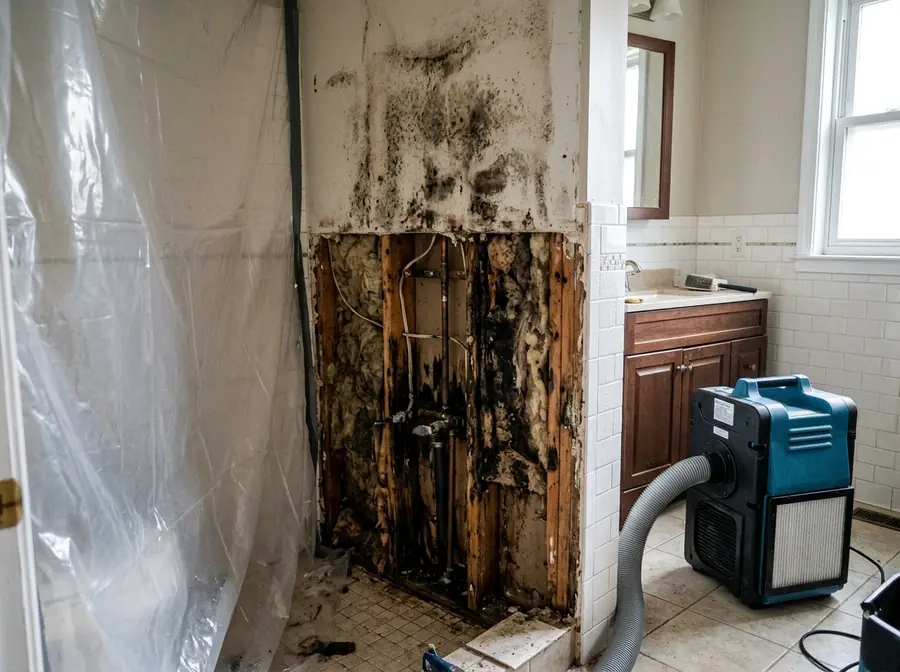
Why mold develops in an attic
Mold growth requires moisture. In an attic, moisture can arrive through a roof leak, flashing failure, plumbing vent penetration, damaged roof material, condensation, or humid air that escapes from the living space. A bathroom or laundry exhaust fan that terminates in the attic rather than outdoors can add moisture repeatedly. Gaps around ceiling penetrations, recessed lights, access hatches, and ductwork can also allow warm indoor air to reach cold surfaces.
Ventilation and insulation interact. Poorly balanced ventilation, blocked soffit openings, compressed insulation, air leakage, and roof design can contribute to condensation under some conditions. Simply adding a fan or more insulation without understanding the source can leave the underlying problem unresolved. Roof leaks require appropriate roof repairs; exhaust duct defects require correction by a qualified professional; and electrical work should be handled by an electrician.
Not every dark mark on roof sheathing is mold. Dust, staining, old water marks, and other materials can look similar. A careful review considers the appearance, moisture conditions, history of leaks, and surrounding materials rather than assuming that color confirms mold.
Signs that your attic may have a moisture or mold problem
- Persistent musty odor near an attic hatch or upper-floor ceiling.
- Visible spotting or fuzzy growth on roof sheathing, rafters, or stored materials.
- Wet, matted, compressed, or discolored insulation.
- Water stains around chimneys, vents, skylights, or roof penetrations.
- Condensation or moisture droplets on roof framing or fasteners.
- Peeling paint or recurring ceiling stains below the attic.
- Bathroom or dryer exhaust ducts that appear to discharge into the attic.
- Evidence of an older roof leak that may not have been fully dried.
These signs indicate that moisture deserves attention, but they do not establish the extent of mold or identify a species. If the attic is difficult to access, has damaged flooring, exposed wiring, or extensive contamination, do not enter to investigate. A qualified professional can determine whether a formal mold assessment is needed.
Why attic mold can be missed during a routine home inspection
Attics are often used for storage and may be visited only occasionally. Growth can develop on the underside of roof sheathing or around framing while the finished rooms below appear normal. Insulation can conceal the top of ceiling drywall, and a small roof leak may travel along a rafter before becoming visible elsewhere. A stain on a bedroom ceiling does not always sit directly below the roof opening that caused it.
Air movement can also distribute moisture. When indoor air leaks into a cooler attic, condensation may form on wood or metal surfaces. This is different from a direct roof leak and may require a different repair strategy. A restoration contractor should not guess at the source based only on a visible patch; the roof assembly, ventilation, duct routing, insulation, and air leakage paths may all need consideration.
Texas mold assessment and remediation rules
Texas regulates mold assessment and remediation through the Texas Department of Licensing and Regulation. Depending on the scope and applicable exemptions, a formal mold assessment may need to be performed by a licensed mold assessment professional or company. The assessment may document affected areas and establish a remediation protocol for the project.
Assessment and remediation are separate regulated activities. Texas generally prohibits the same licensee from conducting both mold assessment and remediation on the same project, subject to a narrow school-district exception. A licensee may hold credentials in both fields but must respect the project-specific separation requirement. Ask who will conduct the assessment, who will perform remediation, and who is responsible for any post-remediation assessment. Current requirements are explained in the TDLR Mold Assessors and Remediators FAQ.
What professional attic mold remediation may involve
Finding and correcting the moisture source
The project should identify whether moisture came from a roof leak, condensation, duct discharge, plumbing issue, or another source. A roofer may need to repair flashing, shingles, underlayment, or roof penetrations. A ventilation or HVAC specialist may need to correct exhaust routing or mechanical issues. The attic should not be considered ready for restoration while the moisture source remains active.
Assessment and project planning
Where required, a separate licensed mold assessor evaluates the condition and prepares a protocol. The protocol may define affected areas, work practices, containment, removal requirements, cleaning steps, and post-remediation criteria. The remediation contractor then carries out the work within its licensed scope and applicable Texas requirements.
Containment and protection
Attic access is often through a ceiling hatch or pull-down stair. Work planning should account for the route through occupied rooms, protection of flooring and contents, and control of dust. Containment may be appropriate to reduce movement of debris and particles into the living space. Occupants should stay away from the work area and follow site instructions.
Removal or cleaning of affected materials
Some solid surfaces may be cleaned using suitable methods. Heavily affected insulation and other porous materials may need removal because mold can penetrate their structure. Removal should be controlled and should avoid unnecessary damage to framing, wiring, and other building components. If older insulation or other materials may contain asbestos or other hazards, do not disturb them until appropriately assessed.
Drying, repairs, and verification
After the affected materials are addressed, the attic must be returned to appropriate dry conditions. Roof, ventilation, and air-leakage defects should be corrected by the relevant specialists. Where required, an independent licensed assessor may perform a post-remediation assessment against the project criteria. Replacing insulation or closing access panels before moisture and remediation concerns are resolved can hide an ongoing problem.
What homeowners should avoid doing in a mold-affected attic
Do not dry-brush or sweep suspected growth. Avoid using a household fan or vacuum that could distribute particles into the home. Do not spray chemicals onto roof sheathing and assume the problem is solved. Do not cover dark areas with paint, and do not install new insulation over damp or contaminated materials. Never step between ceiling joists or onto drywall; the ceiling below may not support your weight.
Attics can contain electrical wiring, junction boxes, sharp fasteners, nails, low headroom, unstable decking, and heat stress. If the roof has leaked, there may also be slippery surfaces or damaged framing. Leave the investigation and removal to qualified professionals when access or contamination is uncertain. If you have health concerns, consult a healthcare professional.
Attic mold concerns in Haltom City
Haltom City properties experience seasonal weather changes, roof exposure, air-conditioning use, and indoor humidity conditions that can affect attic moisture. The cause of an attic problem varies by building, roof condition, ventilation arrangement, insulation, and maintenance history. A solution that works for one attic may not address the source in another.
Home Mold Water Fire Damage serves Haltom City, including the 76117 area, and nearby communities listed on our service areas page. We can discuss the remediation side of a project and help identify when an independent licensed mold assessor, roofer, HVAC professional, or electrician should be involved.
Frequently asked questions about attic mold
Can attic mold be caused by a bathroom fan?
Yes. If a bathroom exhaust duct releases humid air into the attic instead of outdoors, repeated moisture can contribute to condensation and mold growth. A qualified professional should correct the duct routing.
Does attic mold always mean the roof is leaking?
No. Roof leaks are one possible source, but condensation, air leakage, poor ventilation, or improperly routed exhaust ducts can also contribute.
Can I spray bleach on attic mold?
Do not rely on bleach as a universal treatment. The affected material, moisture source, and project requirements determine the appropriate cleaning or removal method. Never mix bleach with other cleaners.
Should I replace attic insulation?
It depends on whether insulation is wet, mold-affected, contaminated, or otherwise damaged. A professional assessment can help determine whether it can remain or needs controlled removal and replacement.
Can attic mold spread into bedrooms?
Particles and odors may move through gaps or air pathways, but the extent depends on the building and conditions. Do not operate a suspected contaminated HVAC system until it has been assessed.
Does attic mold removal include roof repair?
Not automatically. Roof repairs may require a qualified roofing contractor. The moisture source must be corrected, whether by roofing, ventilation, plumbing, or another specialist.
Discuss attic mold and moisture damage
If you have a musty odor, visible growth, or recurring ceiling stains at your Haltom City property, contact Home Mold Water Fire Damage to discuss the next step. Our team offers 24/7 emergency response and more than 13 years of restoration experience. We can help you understand remediation needs and the specialist work that may be required to correct the source of moisture.
Visit our contact page or explore our mold removal and remediation services.