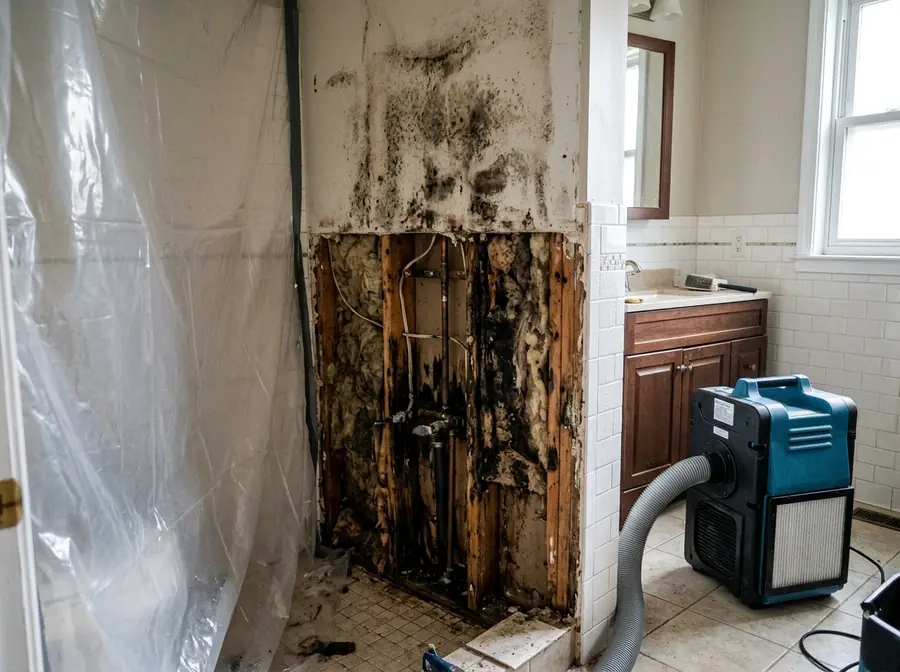
Why crawl spaces are vulnerable to mold and dampness
Crawl spaces sit close to the ground and may have limited access, limited ventilation, and exposed soil. Moisture can move from the ground into the air, enter through foundation openings, or arrive through plumbing leaks and surface water. If humid air contacts cooler framing, pipes, or subfloor surfaces, condensation may form. Insulation can become damp and lose performance, while wood materials may remain wet long enough to support mold growth.
EPA guidance notes that crawl spaces with high relative humidity can be common locations for hidden mold, particularly where the floor is bare earth. Moisture from soil can evaporate into the crawl-space air and contribute to elevated humidity. This is one reason that a crawl-space mold problem should be approached as a moisture-management issue rather than simply a surface-cleaning task. See the EPA's mold course guidance on crawl spaces.
Other contributors may include leaking supply or drain lines, disconnected downspouts, poor grading, plumbing condensation, foundation seepage, damaged vapor barriers, and air-conditioning condensate problems. The actual cause can vary from one property to another.
Signs that your crawl space may have a moisture problem
- A persistent musty odor near floor registers, closets, or lower-level rooms.
- Visible spotting, discoloration, or fuzzy growth on joists or subflooring.
- Damp or fallen insulation beneath the floor.
- Standing water, wet soil, or a damaged ground vapor barrier.
- Corrosion on metal fasteners, ducts, or plumbing components.
- Wood that appears stained, swollen, or deteriorated.
- Recurring indoor humidity or condensation concerns.
- Evidence of plumbing leaks, drainage intrusion, or past flooding.
These observations do not by themselves prove that mold is present or show how far it extends. A musty odor can indicate moisture even when growth is concealed. A qualified inspection can help determine whether the issue is mold, water intrusion, condensation, or another building condition.
Why crawl-space mold should not be treated as a simple DIY cleaning job
Crawl spaces can contain low clearance, exposed nails, sharp debris, pests, damaged wiring, plumbing, and areas where the ground is unstable or wet. Access may require moving insulation or crawling beneath framing. If moldy materials are disturbed, particles and debris can be released into the space and potentially move toward the occupied building. Standing water can also conceal electrical hazards or contaminated materials.
Do not enter a crawl space if you see standing water near electrical equipment, smell gas, suspect structural damage, or cannot identify a safe access route. Do not use a household fan or vacuum to blow or spread dust. Avoid spraying chemicals into a confined area without understanding the product, ventilation, and safety requirements. If the crawl space is extensively contaminated or has a sewage or floodwater history, seek qualified professional help.
Texas mold assessment and remediation requirements
Texas regulates mold assessment and remediation through the Texas Department of Licensing and Regulation. Depending on the scope of work and applicable exemptions, a licensed mold assessor may need to evaluate the affected area and prepare a remediation protocol. A licensed mold remediation contractor or company then performs the remediation work within its authorized scope and applicable rules.
Texas generally prohibits a licensee from performing both mold assessment and remediation activities on the same project, subject to a narrow school-district exception. A licensee may hold credentials in both areas but must keep the roles separate for an individual project. Ask the property professionals to explain who is assessing, who is remediating, and who may conduct post-remediation assessment. Verify current credentials using TDLR's resources and consult its mold assessor and remediator FAQ.
What a crawl-space remediation project may include
Identify the water or humidity source
The first priority is to determine why the crawl space is damp. A plumber may need to repair leaking pipes. Drainage or grading work may be needed to manage surface water. A foundation or building professional may need to review seepage or structural conditions. HVAC specialists may need to evaluate condensate lines or duct insulation. The appropriate repair depends on the source.
Assessment and a project-specific protocol
Where required, an independent licensed mold assessor evaluates the condition and prepares a protocol. The protocol may define the affected areas, containment, removal, cleaning, and post-remediation criteria. The remediation contractor follows the applicable requirements and does not substitute a generic chemical treatment for the work specified.
Containment and access protection
Work planning should consider the crawl-space entry, the route through the home, nearby HVAC returns, and openings that could allow dust or debris to enter living areas. Containment or other controls may be used where appropriate. Occupants should keep clear of the work area and follow any instructions from the project team.
Removal of contaminated or damaged materials
Some affected materials may be cleaned, while mold-affected insulation and other porous materials may require removal. Damaged vapor barriers, wet debris, and contaminated contents may also need attention. Removal should avoid unnecessary damage to joists, subflooring, plumbing, wiring, and other building components. If older materials may contain asbestos or lead, do not disturb them without appropriate assessment and controls.
Cleaning and drying
Remaining suitable surfaces may be cleaned according to the project protocol. The space may require moisture reduction, drying, and monitoring. Applying a coating or encapsulant before correcting moisture and removing contamination is not a substitute for remediation. Any coating should be considered only after the underlying conditions have been addressed and in accordance with the project requirements.
Long-term moisture management
Depending on the building, moisture control may involve ground vapor management, drainage improvements, plumbing repairs, duct insulation, ventilation changes, or a properly designed conditioning strategy. There is no universal solution for every crawl space. The plan should match the construction, climate exposure, and source of moisture.
Why removing visible mold is only one part of the solution
Even if visible growth is cleaned, the crawl space may remain humid or wet. If the ground continues to release moisture, a pipe continues to leak, or rainwater continues to enter, the conditions that supported growth remain. The problem may recur or affect additional materials. A durable plan combines appropriate removal and cleaning with correction of the moisture source.
It is also important to distinguish mold remediation from structural repair. If floor joists, beams, posts, or subflooring show deterioration, a qualified building professional or structural engineer may need to evaluate their condition. Restoration cleaning should not be represented as a structural repair or a certification of load-bearing capacity.
Crawl-space mold remediation in Haltom City
Properties in Haltom City vary in foundation design, crawl-space access, drainage, plumbing layout, and ventilation. Some homes may have a crawl space beneath part of the building, while others use a slab foundation. The inspection should be based on the actual property rather than assuming that all homes have the same under-floor construction.
Home Mold Water Fire Damage serves Haltom City, including the 76117 area, and nearby communities listed on our service areas page. We can discuss remediation needs and help identify when an independent licensed assessor, plumber, drainage specialist, HVAC contractor, or structural professional should be involved. The scope and schedule depend on safe access and site conditions.
Frequently asked questions about crawl-space mold
Can crawl-space mold affect the smell inside my home?
Musty odors may move through gaps, penetrations, or air pathways between the crawl space and living areas. The extent depends on the building's air movement and construction. Odor alone does not identify the source, so the crawl space and moisture conditions may need inspection.
Does a crawl space need a vapor barrier?
Ground moisture management is important, but the appropriate design depends on the foundation, soil, drainage, ventilation, and local building conditions. A qualified building or crawl-space professional can recommend a suitable system.
Can I spray mold on floor joists and cover it with paint?
Do not rely on spraying or coating as a substitute for removing contamination and correcting moisture. The appropriate cleaning or removal method depends on the material and project requirements.
Will a dehumidifier solve crawl-space mold?
A dehumidifier may be one part of a moisture-control plan, but it cannot repair plumbing leaks, drainage intrusion, or a failed vapor barrier. Equipment must be selected and installed for the specific space and conditions.
Can wet crawl-space insulation be saved?
It depends on the type of insulation, the source and duration of moisture, contamination, and its condition. Mold-affected or damaged porous insulation may need controlled removal and replacement.
Does Texas require a licensed mold remediator?
Requirements depend on the project, building type, area, and applicable exemptions. Texas regulates mold assessment and remediation through TDLR. Verify the requirements and license status for the actual project.
Discuss crawl-space moisture and mold concerns
If your Haltom City property has a musty odor, damp crawl space, or suspected mold on under-floor materials, contact Home Mold Water Fire Damage to discuss the next step. Our team offers 24/7 emergency response and more than 13 years of restoration experience. We can help you understand remediation needs and the specialist work that may be required to correct the source of moisture.
Visit our contact page or explore our mold removal and remediation services.