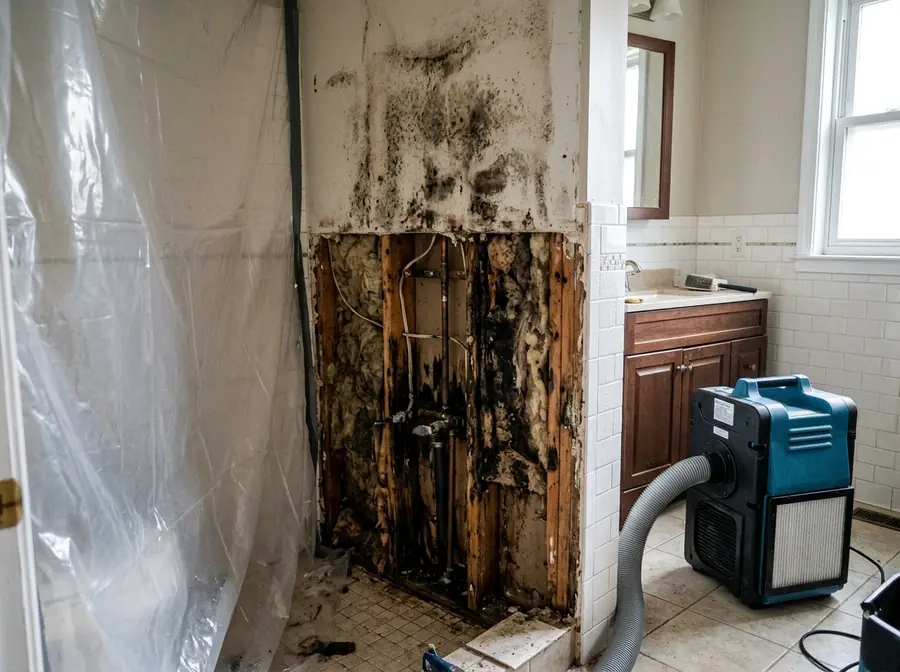
Where bathroom mold commonly appears
Bathroom mold may appear on shower grout, silicone caulk, tile joints, painted drywall, ceiling corners, vanity cabinets, baseboards, and around plumbing penetrations. It may also develop behind a vanity, beneath flooring, or inside a wall where a slow leak has remained unnoticed. A musty odor may be present before a large patch becomes visible.
Not every dark mark is mold. Soap residue, mineral deposits, dirt, and staining can look similar. A surface's color does not identify a mold species. If growth is suspected, the important questions are whether the area stays damp, whether there is a leak, and whether the affected material is porous or concealed.
Bathroom mold is often a symptom of excess moisture rather than a problem that can be solved with a single cleaning product. EPA guidance notes that bathrooms may be difficult to keep completely free of mold when they are frequently damp; improved ventilation and regular cleaning can help reduce recurrence. Read the EPA's guide to mold, moisture, and your home.
Common causes of bathroom mold
Insufficient exhaust ventilation
After a shower, warm moist air needs a route out of the room. An exhaust fan that is undersized, blocked, disconnected, or vented into an attic may not remove moisture effectively. A fan that makes noise is not necessarily moving enough air. A qualified HVAC or electrical professional can assess the fan, duct, controls, and termination point.
Leaking showers, tubs, and plumbing
Failed grout, cracked tile, deteriorated caulk, damaged shower pans, leaking supply lines, and loose drain connections can allow water to reach wall cavities or flooring. A small leak may continue for weeks before staining appears. Repeatedly sealing the visible surface without finding the source may leave hidden materials damp.
Condensation on cold surfaces
Humid bathroom air can condense on cooler windows, exterior walls, pipes, or poorly insulated surfaces. Repeated condensation can keep paint, trim, and nearby materials damp. Ventilation, temperature, insulation, and humidity control may all be relevant.
Overflowing fixtures and plumbing failures
A toilet overflow, sink leak, or supply-line failure can wet flooring, baseboards, vanity cabinets, and drywall. If water is contaminated or has affected a large area, professional cleanup may be appropriate. For broader water damage, see our water damage restoration service.
What to do when you notice mold in a bathroom
Start by identifying whether there is an active leak or another immediate source of water. If a fixture or pipe is leaking and it is safe to shut off the supply, do so; otherwise contact a qualified plumber. Keep the area as dry as practical without disturbing suspected growth. Photograph the affected surface and note whether the patch returns after cleaning or whether there is a musty odor nearby.
Do not scrape, sand, or dry-brush suspected mold. Avoid mixing cleaning products, especially bleach with ammonia or acids. Do not paint over a stained or moldy surface. If you suspect mold inside a wall, under flooring, or in a ventilation system, avoid opening the assembly or running equipment that may spread contamination. Extensive growth, water-damaged drywall, contaminated water, or repeated recurrence deserves professional evaluation.
Small routine surface-cleaning tasks are different from a regulated remediation project. Texas mold rules include exemptions, but they also impose requirements on licensed mold remediation companies and contractors even for small jobs. If a licensed remediator is hired, the applicable rules and project protocol must be followed. Ask the provider to explain which requirements apply to your specific project.
How professional bathroom mold remediation is planned
The first step is to understand the affected area and the moisture source. Depending on the project, a licensed mold assessor may need to inspect the property and prepare a remediation protocol. Texas requires separation between mold assessment and remediation on the same project, subject to a narrow school-district exception. The same licensee cannot perform both roles on one project. Review the TDLR mold licensing FAQ for current rules.
Protecting the work area
If materials must be disturbed or removed, the work area may need protection or containment to limit dust and debris movement. The plan should consider adjacent bedrooms, hallways, closets, and ventilation pathways. Occupants should follow site instructions and keep children and pets away from the work zone.
Cleaning hard surfaces and removing porous materials
Some hard, nonporous surfaces may be cleaned using an appropriate method and dried thoroughly. Mold-affected porous materials, such as drywall, ceiling materials, carpet, and some insulation, may need removal if growth has penetrated the material. The decision depends on the material, extent, and project criteria. Removing every item in a bathroom is not automatically necessary, and leaving contaminated porous material in place is not a reliable solution.
Correcting the source of moisture
Plumbing leaks, failed shower assemblies, exhaust duct defects, and other building issues must be repaired. Those tasks may require a plumber, tile professional, HVAC technician, electrician, or general contractor. Restoration cleaning cannot compensate for a leak that continues after the work is complete.
Drying and post-remediation review
After removal and cleaning, affected materials need to reach appropriate dry conditions. Where required by the project, an independent licensed assessor may conduct a post-remediation assessment against the established criteria. Any report or certificate should be issued by an authorized professional, not promised in advance.
Preventing bathroom mold from returning
- Use an exhaust fan during bathing and allow it to run afterward according to the equipment guidance.
- Confirm that exhaust air is discharged outdoors, not into an attic or another enclosed space.
- Repair leaking faucets, supply lines, drains, shower pans, and toilet seals promptly.
- Keep shower surfaces and bathroom fixtures clean and allow them to dry between uses.
- Address recurring condensation on windows, pipes, and exterior walls.
- Check vanity cabinets and plumbing access areas for signs of leaks.
- Do not cover damp materials with paint, caulk, or new finishes.
Ventilation and cleaning can reduce everyday moisture, but they do not replace repair of a concealed leak or remediation of affected building materials. If mold keeps returning in the same location, investigate the underlying condition rather than repeatedly treating the visible spot.
Bathroom mold removal in Haltom City homes and rentals
Bathrooms vary in size, construction, exhaust design, and finish materials. An upstairs bathroom may have different leak pathways from a ground-floor bath, while a rental unit or commercial restroom may involve shared plumbing and property-management responsibilities. The right plan depends on the actual source and materials affected.
Home Mold Water Fire Damage serves Haltom City, including the 76117 area, and nearby communities listed on our service areas page. We can discuss remediation needs and help identify when a separate licensed assessor or specialist trade should be involved. If you rent, report the moisture problem promptly to your landlord or property manager and keep a record of the communication.
Frequently asked questions about bathroom mold
Why does mold keep coming back on bathroom caulk?
Persistent moisture, soap residue, damaged caulk, and poor ventilation can contribute. If growth is recurring behind or around the seal, there may be a leak or damp material that needs further investigation.
Can I use bleach to remove bathroom mold?
Bleach is not a universal mold-removal solution, especially on porous materials. Use appropriate cleaning guidance for the surface, never mix bleach with other products, and correct the moisture source.
Does a bathroom fan prevent all mold?
No. A properly working fan helps remove humid air, but leaks, condensation, poor duct routing, and damp materials can still cause problems.
Can mold be growing behind bathroom tile?
Yes. Failed grout, waterproofing defects, plumbing leaks, or damaged shower assemblies can allow moisture behind tile. A visible surface clean may not address hidden damage.
Does every bathroom mold job require a licensed contractor?
Texas rules include exemptions, but requirements depend on the project, building type, area, and whether a licensed professional is hired. Check current TDLR requirements rather than relying on a general size statement.
Will bathroom mold damage be covered by insurance?
Coverage depends on policy language, the cause and duration of the moisture, exclusions, limits, and the insurer's decision. Document the damage and contact your insurer for policy-specific guidance.
Get help with bathroom mold and moisture
If mold keeps returning in your Haltom City bathroom or you suspect a leak behind a wall, vanity, or shower, contact Home Mold Water Fire Damage to discuss the condition. Our team offers 24/7 emergency response and more than 13 years of restoration experience. We can help you understand the remediation side of the project and when a separate licensed assessor or plumbing and ventilation specialist may be needed.
Visit our contact page or learn more about our mold removal and remediation services.