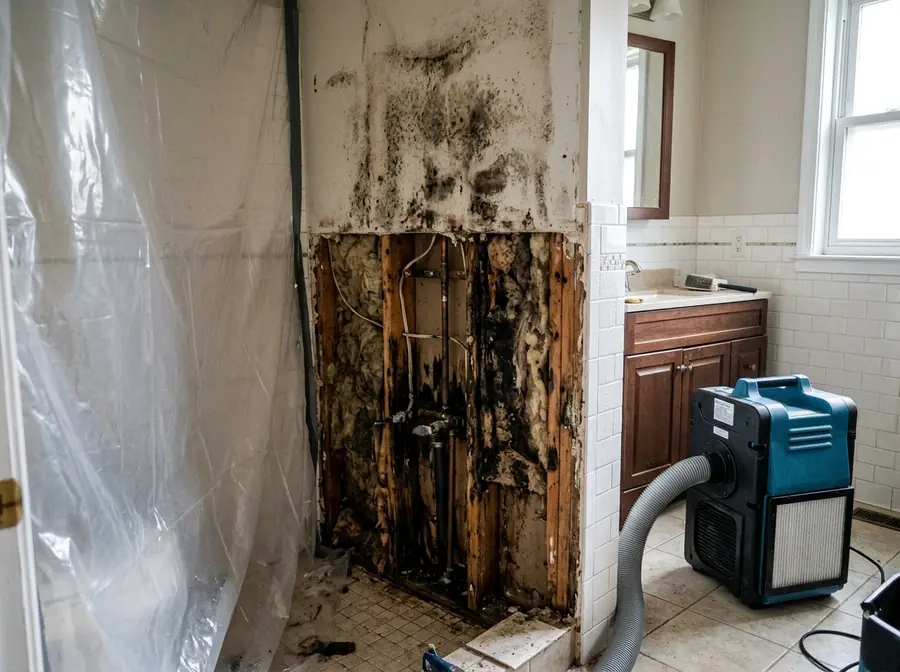
Why mold can develop after a leak or flood
Mold spores are part of the normal indoor and outdoor environment. They become a building problem when moisture allows them to grow on suitable materials. Water can remain trapped behind baseboards, beneath flooring, inside cabinet toe-kicks, in wall cavities, under carpet padding, and around plumbing penetrations long after a surface looks dry. A room may feel comfortable while a concealed layer of drywall or insulation remains damp.
The U.S. Environmental Protection Agency advises drying wet or damp materials within 24 to 48 hours when possible because prompt drying can prevent mold growth in many situations. That is a practical prevention target, not a guarantee that mold will or will not develop at an exact hour. The material, water source, temperature, humidity, and prior condition all matter. See the EPA's guide to mold, moisture, and your home.
Water damage can also change indoor humidity. Wet carpet, soaked furnishings, damp framing, and saturated insulation release moisture into the air as they dry. If the building is closed up or ventilation is poor, humidity may stay elevated. A complete response therefore considers both moisture inside materials and the wider room conditions.
Common water-damage situations that lead to mold concerns
Plumbing and appliance leaks
A slow leak below a sink, behind a refrigerator, at a washing machine hose, or around a water heater may go unnoticed. Water can travel along framing and flooring before appearing as a stain in another room. Even after the plumbing repair, damp cabinet panels, wallboard, and underlayment may need attention. See our appliance leak water damage and burst pipe cleanup guides.
Roof leaks and storm intrusion
Rainwater entering through damaged shingles, flashing, vents, or roof penetrations can affect attic insulation, ceiling cavities, and upper-floor finishes. A ceiling stain may be far from the actual entry point because water follows framing or other surfaces. The roof opening must be repaired and affected materials assessed before finishes are replaced.
Floodwater and drainage intrusion
Water entering from outdoors can carry soil, debris, sewage, or other contaminants. The source and category of water affect the safety precautions and materials that can be retained. Do not treat floodwater as clean tap water. CDC guidance warns that floodwater can contain harmful bacteria and waste. For contaminated water, extensive damage, or uncertain conditions, keep people away and arrange qualified cleanup.
Bathroom and kitchen overflows
Toilet overflows, tub overflows, sink failures, and dishwasher leaks may wet adjacent rooms and hidden spaces. Water can move beneath cabinets and flooring, then remain trapped. If the water may contain sewage or other contaminants, avoid direct contact and do not attempt to clean extensive affected areas yourself.
Early signs of mold after water damage
Look for changes that appear after the original event, including a persistent musty smell, small patches of discoloration, bubbling or peeling paint, swollen baseboards, warped flooring, damp carpet edges, recurring condensation, or cabinet materials that feel soft. A room may smell musty even if visible growth is not obvious. These signs do not identify a mold species, and discoloration alone is not proof of mold, but they are reasons to investigate the moisture history.
Pay attention to adjoining spaces. Water from a bathroom can affect a closet or hallway. A kitchen appliance leak can reach the room below. Roof moisture can affect insulation and ceiling framing. If an area was dried superficially without checking the layers beneath it, a later odor or stain may signal that the original drying was incomplete.
Do not rely on smell, color, or a single consumer test to establish the full extent of a problem. A qualified professional can review visible conditions, moisture readings, building materials, and the source of the water. A formal mold assessment may be appropriate depending on the project and Texas requirements.
What to do when you suspect mold after a water loss
- Address active water first. If it is safe, shut off the source or arrange a qualified plumber, roofer, or other trade to repair it. Never enter standing water where electrical hazards may be present.
- Keep people away from unsafe areas. Avoid disturbing suspected mold, damaged ceilings, unstable flooring, or contaminated materials. Keep children and pets out of affected rooms.
- Document what happened. Photograph visible damage, record when the leak or flood occurred, and note any repairs or drying already attempted.
- Protect belongings where practical. Move unaffected items away only when doing so is safe. Do not carry wet or contaminated belongings through clean areas unnecessarily.
- Arrange a suitable inspection. A restoration professional can discuss water damage and drying needs. A separate licensed mold assessor may be needed for a regulated assessment.
- Do not cover the problem. Painting, caulking, or installing new flooring over damp or mold-affected materials can hide an unresolved condition.
CDC guidance recommends caution around floodwater and mold cleanup, including protective measures and appropriate handling of materials that cannot be cleaned and dried. People with certain health conditions should not take part in mold cleanup. Consult a healthcare professional about personal health concerns rather than relying on a restoration contractor for diagnosis.
How water damage restoration and mold remediation work together
Water damage restoration focuses on stopping the source, removing excess water, assessing affected materials, and drying the structure. Mold remediation focuses on addressing mold-affected materials and controlling contamination during the work. A project may need one or both services depending on the condition and how long materials remained wet.
Moisture mapping and material review
Technicians may use moisture meters and other suitable tools to identify areas that need further drying or investigation. Readings are interpreted according to the material and location; one reading does not tell the entire story. The team may inspect flooring edges, wall bases, cabinets, ceilings, and adjoining rooms to understand how water traveled.
Water extraction and structural drying
Where water remains, extraction equipment may be used to remove it from accessible surfaces and materials. Air movers and dehumidifiers can support drying when conditions and electrical safety allow. Drying plans vary with the building, materials, weather, and source of water. A machine being present does not by itself prove that the structure is dry; progress should be monitored.
Removal of materials that cannot be restored
Some porous materials may be dried and retained if their condition and contamination allow. Others, such as certain wet insulation, carpet padding, or damaged drywall, may need removal. Floodwater or sewage contamination changes the decision. Removal should be controlled, and older materials that may contain asbestos or lead should not be disturbed without appropriate assessment.
Separate mold assessment and remediation roles
Texas regulates mold assessment and remediation through the Texas Department of Licensing and Regulation (TDLR). A formal assessment may be required depending on the size, scope, and circumstances of the project. Texas generally prohibits the same licensee from performing both assessment and remediation activities on the same project, subject to a narrow school-district exception. Ask who is responsible for each role and verify current credentials through the TDLR mold FAQ.
Cleaning, drying, and follow-up
Appropriate surfaces may be cleaned, affected materials removed, and the moisture source corrected. Where required, an independent licensed assessor may perform post-remediation assessment against the project criteria. The goal is to address active growth and moisture conditions, not to promise a building completely free of ordinary environmental mold spores.
Why quick drying matters—but should not become a shortcut
EPA's 24-to-48-hour guidance is useful because it highlights the importance of acting promptly. However, a rushed response can miss hidden water. Carpet may feel dry while its pad or subfloor remains damp. A wall surface may look normal while the back of the drywall is wet. A dehumidifier may reduce room humidity without resolving water trapped behind a cabinet. Drying needs to be verified in the materials that were affected.
At the same time, not every wet item must automatically be discarded. The decision depends on the material, duration, water category, contamination, and whether the item can be cleaned and dried thoroughly. A qualified assessment helps avoid both unnecessary disposal and unsafe retention.
Mold after water damage in Haltom City properties
Haltom City homes and businesses can experience water losses from plumbing failures, appliance connections, roof leaks, stormwater entry, and fixture overflows. The layout of the property, type of flooring, wall construction, ventilation, and time before discovery all influence the drying and remediation plan. The city's ZIP code 76117 includes areas such as Browning Heights, Diamond Oaks, Fossil Ridge, Haltom Acres, Meadow Oaks, Oakview, and Springlake Park; the presence of a neighborhood name does not establish that every property there has the same water risk.
Home Mold Water Fire Damage serves Haltom City and nearby communities listed on our service areas page. We can discuss water extraction, structural drying, and mold remediation needs and help clarify when an independent licensed mold assessor or specialist trade should be involved. For active damage, visit our contact page to discuss the property and current service availability.
Frequently asked questions about mold after water damage
How soon can mold grow after a leak?
Mold may begin growing when materials remain damp. EPA recommends drying wet materials within 24 to 48 hours when possible, but the exact timing depends on conditions. Do not wait for visible mold before addressing water damage.
Can mold grow behind drywall after a small leak?
Yes. Water can enter a wall cavity through a plumbing connection or other opening. A small surface stain does not always show the full area affected.
Does every water-damaged home need mold testing?
No. Testing is not automatically necessary. A qualified licensed assessor can explain whether sampling would answer a specific question for the project.
Can I paint over a water stain if it has dried?
Only after the cause is corrected and the affected material is confirmed suitable for repair. Paint does not remove mold or correct hidden moisture.
Will homeowners insurance cover mold after a leak?
Coverage depends on the policy, cause and duration of the water loss, exclusions, limits, endorsements, and insurer decision. Document the damage and ask your insurer about your specific policy.
What if the water came from sewage or outdoor flooding?
Keep away from contaminated water and affected materials. Floodwater may contain harmful organisms and waste. Professional cleanup and appropriate disposal may be needed.
Talk with Home Mold Water Fire Damage about water damage and mold
If you notice a musty odor or new growth after a leak, do not assume the problem is limited to the visible surface. Contact Home Mold Water Fire Damage to discuss the water source, affected materials, and the next appropriate step. Our team offers 24/7 emergency response and more than 13 years of restoration experience in Haltom City and surrounding communities.
Explore our water damage restoration services, mold removal and remediation services, or contact Home Mold Water Fire Damage.