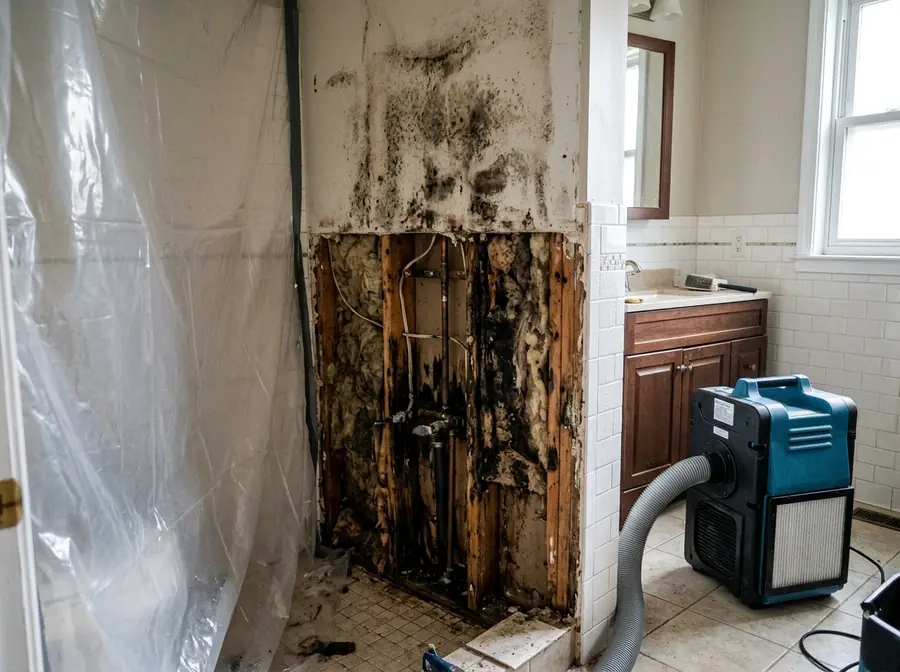
Start with the moisture condition, not the visible spot
Mold is associated with moisture. Spores are common in the environment and can enter a building through ordinary air movement, open doors, windows, belongings, and dust. Indoor growth becomes a concern when damp materials remain wet long enough to support it. The visible patch may be only one part of the problem, while the moisture source may be hidden behind a wall, above a ceiling, beneath flooring, or around a window or roof assembly.
For this reason, a useful response begins by asking what happened before the growth appeared. Was there a supply-line leak, a drain overflow, a roof opening, a failed appliance hose, condensation, poor ventilation, or water left behind after a previous loss? Has the source been repaired? Did the affected materials dry completely? Are there connected rooms or cavities that could share the same moisture pathway? These questions help distinguish a surface-cleaning issue from a wider building-material concern.
Do not rely on color, smell, or a photograph to identify a mold species or determine a health effect. Different growths can look similar, and appearance alone does not establish the extent of contamination. If a large area is affected, materials are deteriorating, or the moisture source is unclear, avoid disturbing the area and seek qualified guidance.
Common moisture pathways in Arlington homes and buildings
Arlington includes a wide range of single-family homes, apartments, townhomes, offices, retail spaces, schools, hospitality properties, and other commercial buildings. Their construction and mechanical systems differ, so there is no single mold-removal method suitable for every property. A detached home may have a roof or plumbing issue; an apartment may have a leak that crosses a shared wall or affects a unit below; a business may have moisture around a rooftop unit, supply line, or storage-room wall.
Plumbing and appliance leaks
Small leaks can continue unnoticed inside vanity cabinets, behind refrigerators, near washing machines, around water heaters, or at fixture connections. A slow leak may wet particleboard, drywall, trim, flooring underlayment, or insulation. The visible floor can appear dry after a quick wipe even though moisture remains in a concealed space. A plumber or appliance technician should correct the failed connection when the repair falls within that trade's scope. Restoration work addresses the resulting wet materials and drying needs; it should not be confused with a plumbing repair.
Roof, window, and exterior openings
Rainwater may enter through damaged flashing, roof penetrations, poorly sealed openings, or other exterior defects. Water can travel along framing and appear some distance from the entry point. Repeated wetting is especially important to investigate because drying one patch without correcting the opening can leave the building vulnerable to another event. A qualified roofing or building-envelope professional may be needed to identify and repair the exterior defect.
Bathrooms, laundry rooms, and mechanical spaces
Bathrooms and laundry rooms combine water use, plumbing, ventilation, and frequent temperature changes. Exhaust fans that do not move enough air, leaking fixtures, failed seals, and wet materials around tubs or showers can all contribute to moisture. Mechanical rooms and air-conditioning systems may also develop condensation or drainage problems. The correct response depends on whether moisture is coming from a leak, condensation, drainage failure, or another condition.
Stormwater and site drainage
Heavy rain can expose weaknesses in grading, gutters, downspouts, exterior doors, window wells, or drainage paths. A city storm-drain system and a private building's gutters, foundation drainage, and yard grading are different systems with different responsibilities. Arlington's stormwater information describes the municipal system and flood-related resources, but it does not determine whether a particular property has experienced water intrusion. A parcel-specific assessment is needed; do not assume that a neighborhood or ZIP code is uniformly at risk.
What to do when you discover suspected mold
- Protect people and keep the area undisturbed. Keep children, pets, and occupants away from a visibly affected area when disturbance could release dust or fragments. Do not scrape, sand, cut, or dry-brush extensive growth.
- Look for immediate hazards. If water is near outlets, appliances, wiring, or an electrical panel, do not enter the wet area or operate equipment. Leave and contact the appropriate emergency service or qualified electrician if there may be an electrical danger.
- Control an accessible water source only if safe. A reachable shutoff may help limit damage, but do not enter a hazardous space or attempt plumbing work beyond your training.
- Record what you can observe without disturbing it. Note when the issue was noticed, any known leak or storm, rooms involved, and whether the source has been repaired. Photographs taken from a safe distance can help explain the initial condition.
- Arrange appropriate assessment. A qualified, properly licensed Texas mold assessment professional can determine whether a regulated assessment is required and prepare the relevant protocol where applicable.
Do not mix bleach with ammonia, acids, or other cleaners. Avoid spraying unknown chemicals into wall cavities or ventilation systems. Household cleaning is not a substitute for regulated remediation where the project falls under Texas requirements. If the affected material may contain asbestos or lead-based paint, do not disturb it; arrange evaluation by the appropriately qualified professional.
Texas mold rules: assessment and remediation are distinct roles
Texas regulates mold assessment and mold remediation through the Texas Department of Licensing and Regulation (TDLR). The rules distinguish the professional who assesses a mold condition and develops an assessment report or remediation protocol from the company and personnel carrying out regulated remediation work. A property owner should verify current license status and understand which professional is responsible for each stage.
Assessment and remediation are not interchangeable labels. Texas rules generally restrict a person or company from performing both regulated assessment and remediation on the same project, subject to a narrow statutory exception involving certain school-district projects. A contractor should not present its own remediation estimate as an independent mold assessment when the law requires a separate licensed assessment role. Ask who prepared the assessment, who is responsible for remediation, and how the project will be documented.
Home Mold Water Fire Damage's supplied company background includes TDLR mold remediation company and contractor credentials, worker registrations, and mold assessment consultant and technician credentials. Project assignments must still comply with current TDLR requirements and role-separation rules. Credentials should be checked against the state licensing records for the specific company and individuals involved. No license number is stated on this page because a number should be published only after it has been verified against the current official record.
For current information, consult the TDLR mold licensing frequently asked questions and the Texas mold licensing laws and rules. Requirements can change, and the applicable scope depends on the project and the activity being performed.
How a professional mold remediation project may proceed
1. Review the reported history and property access
The first discussion should cover the rooms involved, known leaks, previous repairs, occupancy, access restrictions, and any sensitive contents or business operations. In a multi-unit building, the property manager may need to coordinate access to adjacent units, common areas, or service spaces. A clear record of what is known—and what is still uncertain—helps prevent assumptions from becoming part of the work plan.
2. Confirm the assessment and work scope
Where regulated assessment is required, the assessment professional's findings and remediation protocol guide the remediation scope. The remediation contractor should understand the boundaries, affected materials, containment needs, and clearance or post-remediation verification requirements, if applicable. If the assessment identifies a moisture source outside the remediation contractor's trade scope, the owner may need a plumber, roofer, HVAC technician, or other qualified specialist.
3. Establish containment and protect unaffected spaces
Depending on the project, the plan may call for barriers, controlled access, protective coverings, and other measures to reduce migration of dust or debris. The appropriate controls depend on the affected area, building layout, materials, and protocol. Occupants should follow access instructions and avoid moving materials through a contained work zone.
4. Remove or clean affected materials as directed
Some nonporous materials may be suitable for cleaning, while damaged porous materials may need controlled removal. The decision should follow the assessment and remediation protocol, not a guess based on surface appearance. Work may include careful removal of affected drywall, insulation, trim, or other materials where specified. Contents that can be retained may require a separate cleaning approach.
5. Address the moisture source and dry the building
Remediation is not complete in practical terms if the moisture condition that supported growth remains unresolved. Source correction may involve a licensed plumber, roofing contractor, HVAC professional, or building specialist. Drying and moisture control should be appropriate for the materials and building conditions. A dehumidifier alone does not repair a leak or prove that concealed materials are dry.
6. Document the work and complete any required verification
Project documentation may include photographs, work records, moisture observations, waste handling details, and records of required verification. Where a protocol specifies post-remediation assessment or clearance, the independent professional role must be respected. Owners should retain reports, invoices, authorizations, and relevant communications for property records and any insurance discussion.
Residential, rental, and commercial mold concerns
In a single-family home, the owner may coordinate the assessment, source repair, remediation, and restoration. In a rental, the tenant should notify the landlord or property manager promptly and keep a written record of the notice. The person responsible for the plumbing, roof, shared wall, or common-area repair may not be the same person responsible for authorizing remediation. Tenants should not remove building materials or undertake extensive cleanup without authorization.
Apartment and condominium properties need attention to shared systems. A leak from an upper unit can affect a ceiling below; a common plumbing chase can connect multiple units; and ventilation systems may serve more than one space. A building manager should coordinate the appropriate inspection and communicate access arrangements. Avoid assuming that visible growth in one unit proves the condition of another unit.
Commercial property owners should consider employees, customers, stock, equipment, operating hours, and access control. A remediation plan may need to separate the work area from occupied offices or sales floors. A restaurant, clinic, warehouse, or office may have different operational constraints. The property manager should confirm any required notifications, safety controls, and specialist involvement before work begins.
Insurance documentation and cost considerations
There is no reliable flat price for mold remediation without understanding the source, extent, materials, access, containment, and required professional roles. A small isolated area with a corrected leak is different from a concealed condition involving multiple rooms or a shared building system. The written scope should identify the work area, assumptions, exclusions, material removal, cleaning, drying, and any separate trade work.
Insurance coverage depends on the policy wording, cause of loss, exclusions, limits, endorsements, maintenance history, and the insurer's decision. A sudden covered water event may be treated differently from long-term seepage or neglected maintenance. Do not assume that every mold-related cost is covered. Notify the insurer as required by the policy, preserve relevant records, and ask the adjuster what documentation is needed. Home Mold Water Fire Damage can explain the restoration scope, but cannot guarantee claim approval.
For related information, review our insurance claims help guide, mold removal and remediation service hub, and water damage restoration services.
Arlington service-area context
Arlington's approved service-area coverage includes ZIP codes 76001, 76002, 76005, 76006, 76010, 76011, 76012, 76013, 76014, 76015, 76016, 76017, and 76018. The city is large and varied, so a property's ZIP code alone does not establish its construction, moisture history, drainage conditions, or risk. Whether a property is in North Arlington, central areas, East Arlington, South Arlington, or near Lake Arlington, the assessment should focus on the actual building and source of moisture.
For official local information, Arlington provides resources through its public works, stormwater, and emergency-management functions. Those agencies address public infrastructure, community preparedness, and emergency response; they do not replace a private property's licensed mold assessment or remediation contractor. For details about our coverage and other communities, visit the service areas hub.
Frequently asked questions about mold remediation in Arlington
Can I tell whether mold is dangerous by its color?
No. Color and appearance do not reliably identify a species or establish a health risk. A qualified assessment should consider the building condition and applicable project requirements.
Does every small patch require a licensed mold assessment?
Not every situation is identical. Texas rules define regulated assessment and remediation activities and include thresholds and other requirements. Ask a properly qualified Texas professional whether the specific project falls under the licensing rules.
Can the same contractor assess and remediate the same project?
Texas generally separates regulated assessment and remediation roles on the same project, subject to a narrow exception. Confirm the arrangement against current TDLR rules before work begins.
Will insurance pay for mold removal?
Coverage depends on the policy and the cause of moisture. The insurer makes the coverage decision. Keep records and ask what documentation is required.
What if mold appears after a water leak?
Have the source repaired, determine which materials remained damp, and arrange appropriate assessment. The mold after water damage guide explains the relationship between water losses and later mold concerns.
Arrange mold remediation guidance for an Arlington property
If you have discovered suspected mold in an Arlington home, rental, or business, describe the affected rooms, any known water event, and whether the source has been repaired. Home Mold Water Fire Damage has more than 13 years of restoration experience, trained technicians, professional equipment, and 24/7 emergency response. We can discuss the restoration services that may apply and help clarify when a separately licensed assessment professional or specialist trade is needed. Confirm availability for the exact property address before arranging a visit.
For service questions, use the contact page. You can also review our Arlington service-area page and the Arlington water damage restoration page.