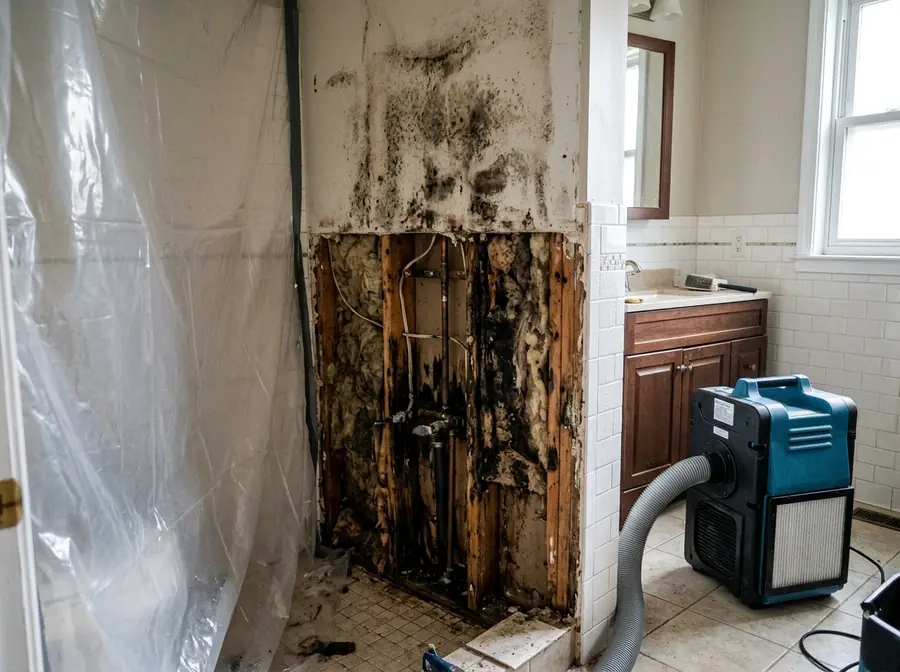
Why moisture control is central to mold remediation
Mold spores are present in the normal environment and can enter buildings through air movement, doors, windows, belongings, and dust. Their presence does not by itself show that a building has an active mold problem. Growth becomes more likely when materials stay damp and conditions support it. Removing visible growth without addressing the source of moisture can leave the underlying problem unresolved.
Moisture may come from a leaking supply line, drain, fixture, water heater, roof, window, appliance hose, condensation, poor ventilation, or water that remained after a previous event. In some properties, water can move through a shared wall or floor assembly before it appears in a different room. A visible spot may be a clue, but it is not a complete map of the affected area.
For that reason, avoid deciding the work scope from a photograph or from color. A musty odor can justify further investigation, but it does not identify a particular species. A small visible area may be connected to a hidden leak, while a larger surface stain may have a more limited cause. Qualified assessment should consider the building, moisture history, materials, and applicable Texas requirements.
Common moisture sources in Burleson homes and commercial buildings
Plumbing and fixture leaks
Leaks around sinks, toilets, tubs, showers, water heaters, and concealed supply lines can keep cabinets, drywall, baseboards, and flooring damp. A slow leak may be hidden by stored items or cabinetry. A sudden pipe failure may spread water across several rooms. A licensed plumber should repair plumbing defects that require a plumbing license; the remediation contractor's role is to address the resulting building-material and moisture conditions within its authorized scope.
Roof and exterior water entry
Roof penetrations, flashing defects, damaged shingles, windows, siding, and exterior joints can allow rainwater into a building. Water may travel along framing and appear far from the entry point. Repeated wetting can complicate repairs because materials may not have had enough time to dry between events. A qualified roofing or building-envelope contractor may be needed to correct the opening.
Bathrooms, laundry rooms, and indoor humidity
Bathrooms and laundry areas produce moisture through ordinary use. Poor exhaust ventilation, failed seals, leaking hoses, or damp materials can contribute to persistent wetness. Mechanical systems can also create condensation when drainage or insulation is not functioning as intended. The correct solution depends on whether the source is a plumbing leak, ventilation issue, condensate drain, or another building condition.
Stormwater and drainage around the property
Rainwater runoff can move across roofs, driveways, streets, and yards. Gutters, downspouts, grading, private drains, and public stormwater infrastructure all play different roles. Burleson's Public Works and stormwater program address municipal infrastructure and stormwater management, but the city's drainage responsibilities do not automatically include every private gutter, yard drain, foundation condition, or interior leak. A property-specific inspection should determine where water entered and who is responsible for correcting the source.
The City of Burleson explains that stormwater runoff can carry debris and pollutants into the drainage network and that clogged culverts may contribute to flooding. This is general municipal information, not proof that any particular street or property has flooded. Property owners should avoid assumptions based on a ZIP code or nearby drainage feature.
What to do when you suspect mold
- Keep the affected area undisturbed. Do not scrape, sand, cut, or dry-brush extensive growth. Avoid moving contaminated items through clean areas.
- Protect people from immediate hazards. Keep children and pets away from damaged materials. If water is near electrical equipment, do not enter the area or operate appliances.
- Address an accessible water source safely. A shutoff valve may help if it can be reached without risk. Arrange the appropriate plumber, roofer, or appliance specialist for source repair.
- Record the history. Note when the issue was found, any known leak or storm, previous repairs, rooms involved, and whether the source has been corrected.
- Arrange qualified assessment when required. Ask whether the project is subject to Texas mold licensing rules and who will perform the assessment and remediation roles.
Do not mix bleach with ammonia, acids, or other cleaning products. Do not apply household chemicals to unknown residues or spray into wall cavities. Avoid disturbing materials that may contain asbestos or lead-based paint; those materials require appropriately qualified evaluation and handling.
Texas licensing: know who assesses and who remediates
The Texas Department of Licensing and Regulation regulates mold assessment and mold remediation. These are distinct activities with separate professional responsibilities. A mold assessment professional evaluates the condition and, where required, prepares the relevant assessment report and remediation protocol. A licensed remediation company and its properly registered personnel carry out the regulated remediation work according to the applicable rules and project documents.
Texas generally restricts the same person or company from performing both regulated mold assessment and remediation on the same project, subject to a narrow statutory exception for certain school-district projects. This separation is intended to preserve the independence of the assessment and the work verification process. Property owners should ask who is responsible for each stage and should not treat a remediation contractor's sales visit as an independent assessment when a separate licensed assessment is required.
The business background supplied for Home Mold Water Fire Damage includes TDLR mold remediation company and contractor credentials, worker registrations, and mold assessment consultant and technician credentials. Each project must still be staffed and organized in compliance with the current rules, including any required role separation. Do not rely on an unverified license number or a general statement that a company has credentials; check the specific company and individual records through TDLR.
For current requirements, review the TDLR mold licensing FAQ and mold licensing laws and rules. The applicable requirements depend on the nature and size of the project and the regulated activity being performed.
What a mold remediation project may include
Project review and assessment coordination
Before work begins, the owner should understand the reported condition, affected rooms, known moisture history, access limits, and any assessment protocol. If regulated assessment is required, the assessment professional's findings should guide the remediation scope. The remediation company should not substitute its own unsupported assumptions for the project documents.
Containment and protection
Depending on the scope, work may require barriers, controlled access, protective coverings, and measures to reduce the movement of dust or debris. The controls should fit the area, materials, building layout, and protocol. Occupants should follow instructions about entry, pets, belongings, and movement around the work zone.
Cleaning or removal of affected materials
Nonporous materials may be suitable for cleaning in some circumstances, while damaged porous materials may require controlled removal. Drywall, insulation, trim, flooring, and cabinetry should not all be treated as interchangeable. The decision depends on the material, condition, contamination, and protocol. Removing too much material can create unnecessary cost; removing too little can leave the underlying issue unresolved.
Moisture-source correction and drying
Remediation should be coordinated with repair of the source. A plumber may need to fix a supply or drain leak; a roofer may need to correct flashing; an HVAC specialist may need to address condensate or ventilation. Drying and moisture control should be based on the building materials and observed conditions. A portable dehumidifier cannot repair a leak or prove that concealed framing is dry.
Project records and verification
Keep records of the assessment, protocol, work performed, materials removed, moisture observations, and any required post-remediation verification. If independent assessment or clearance is required, the appropriate separate professional should perform that role. Owners should retain reports and invoices for future maintenance, property transactions, and insurance discussions.
Residential, rental, and commercial properties
In a single-family home, a mold concern may involve a bathroom, kitchen, attic, laundry room, or a wall affected by a plumbing leak. The owner should coordinate source repair, assessment, remediation, and any rebuilding. If the cause is not corrected, new moisture may affect replacement materials after the project is finished.
In rental housing, the tenant should notify the landlord or property manager promptly and keep a written record. The owner or manager may need to arrange access to adjoining units, shared plumbing, roof spaces, or common areas. Tenants should not remove drywall or perform extensive remediation without authorization. Where several units are affected, the work plan should account for occupant communication and access coordination.
Commercial properties may contain inventory, computers, food, records, equipment, and occupied workspaces. A remediation plan may need to separate the work zone from employees and customers, protect contents, and coordinate work around business operations. The appropriate approach differs for a warehouse, restaurant, office, retail store, or medical facility. A property manager should confirm any operational restrictions and specialist requirements before work begins.
Costs, insurance, and project documentation
Mold remediation cost depends on the extent of affected materials, location, access, containment, assessment requirements, cleaning or removal methods, contents handling, drying, and source repair. A small accessible area is different from a concealed condition involving several rooms or shared building systems. A written estimate should explain what is included, what is excluded, and which work requires a separate trade or professional.
Insurance coverage depends on the policy, cause of moisture, exclusions, limits, endorsements, maintenance history, and the insurer's decision. A sudden covered water event may be treated differently from long-term seepage, repeated condensation, or deferred maintenance. Do not assume that mold work is automatically covered. Notify the carrier as required, preserve records, and ask what documentation is needed. Home Mold Water Fire Damage can describe the restoration scope but cannot guarantee a coverage decision.
Our insurance claims help page explains general documentation practices. For water-related concerns, see the water damage restoration hub and mold after water damage guide.
Burleson service-area context
Home Mold Water Fire Damage's approved service-area information lists Burleson with ZIP code 76028. The city includes a mix of residential areas, newer development, commercial properties, and community facilities. The building's own construction, plumbing, roof, drainage, and ventilation conditions matter more to a mold investigation than a broad assumption about the city. A nearby creek, storm drain, or road does not establish that a particular parcel has a moisture problem.
Burleson's Public Works Department lists water and wastewater, streets, drainage, and traffic services among its responsibilities. Its stormwater program focuses on runoff management and water quality. Residents can consult official city resources for municipal matters, while private building moisture requires a property-specific review and the appropriate licensed professional. See the city's Public Works and Stormwater pages for local infrastructure information.
Frequently asked questions about mold removal in Burleson
Can I identify black mold by looking at it?
No. Color alone cannot reliably identify a mold species or establish its significance. Do not diagnose the material by appearance.
Does every mold concern need a licensed assessment?
Texas rules define regulated assessment and remediation activities and include specific requirements and thresholds. Ask a qualified Texas professional whether your project is covered by those rules.
Can one company assess and remediate the same property?
Texas generally separates the regulated assessment and remediation roles on the same project, subject to a narrow statutory exception. Confirm the current rules and the project arrangement before authorizing work.
Will a dehumidifier solve a mold problem?
Not by itself. The moisture source must be identified and corrected, and affected materials may require cleaning or removal according to the project scope.
Does homeowners insurance pay for mold remediation?
Coverage depends on the policy and cause of moisture. The insurer makes the decision. Keep records and ask what documentation is required.
Discuss mold remediation for a Burleson property
If you have discovered suspected mold in a Burleson home, rental, or business, describe the rooms involved, any known leak, and whether the source has been repaired. Home Mold Water Fire Damage brings more than 13 years of restoration experience, trained technicians, professional equipment, and 24/7 emergency response. We can discuss the restoration work that may apply and help clarify when a separately licensed assessment professional or specialist trade is required. Confirm availability for the exact property address before arranging a visit.
Review the Burleson service-area guide, our mold removal and remediation hub, and Burleson water damage restoration page. For service questions, visit Contact Home Mold Water Fire Damage.