Make the property safe before trying to remove water
Do not walk into standing water if outlets, appliances, extension cords, wiring, or the electrical panel may be affected. Do not operate a wet vacuum, fan, pump, or other electrical equipment in a wet area unless a qualified professional has confirmed that it is safe. Never touch a downed wire. If you smell gas, see structural movement, or suspect an electrical hazard, leave the area and contact the appropriate emergency service or utility.
If a shutoff valve is accessible without entering a dangerous area, closing it may reduce additional water loss. Do not attempt to reach a valve through a flooded room or remove plumbing fixtures yourself. A licensed plumber should repair plumbing defects that require a plumbing license. If the source is an appliance, arrange qualified appliance service. Restoration work addresses the water and affected materials after the source is controlled; it does not replace the trade that repairs the failure.
Keep children and pets away from wet floors, sagging ceilings, contaminated water, and damaged electrical equipment. If water may contain sewage or outdoor contaminants, avoid contact and do not treat it as a routine clean-water leak. Contaminated water can require specialized handling and protective measures.
Common causes of water damage in Burleson properties
Burst pipes and plumbing leaks
A pipe can fail at a fitting, valve, supply line, or concealed connection. Water may run inside a cabinet, behind a wall, or below a floor before it becomes visible. A sudden leak can saturate several rooms, while a slow leak may remain hidden until trim, drywall, flooring, or stored belongings show signs of moisture. The restoration inspection should consider the route water may have taken, not just the room where it was first noticed.
Appliance and water-heater failures
Washing machines, dishwashers, refrigerators with water connections, and water heaters can release enough water to affect adjacent rooms. Flexible hoses and connectors deserve attention, but replacing a hose does not establish that the floor assembly or wall cavity is dry. Water can spread under cabinets and appliances, and it may reach adjoining rooms through small openings or changes in floor level.
Roof leaks and storm-related entry
Rainwater can enter through damaged shingles, flashing, roof penetrations, siding, windows, or other exterior openings. Water may follow framing and appear as a ceiling stain far from the point of entry. A storm can also damage gutters or downspouts, changing where runoff collects around a building. The roof or exterior defect should be repaired by an appropriately qualified contractor, while the interior restoration scope addresses wet materials and moisture migration.
Overflowing fixtures and drainage problems
A sink, bathtub, toilet, or other fixture can overflow because of a blockage, a failed valve, or an unattended flow. Water from a sewer backup is different from a clean supply-line leak and should be treated as potentially contaminated. Outdoor runoff may also enter through low openings or damaged drainage features. Do not assume that every water event is a municipal utility problem; the source and ownership of the affected system matter.
Burleson public infrastructure and private-property water damage
The City of Burleson Public Works Department describes responsibilities that include water and wastewater services, streets, drainage, traffic control, and infrastructure maintenance. Its stormwater program addresses runoff, drainage infrastructure, and water-quality requirements. These municipal systems are important to community operation, but a city-maintained water main or storm drain is not the same thing as a private property's plumbing, roof drainage, foundation, or interior finishes.
When a water problem appears, identify where it begins. A leak at a city water main, meter, or public sewer connection may require contact with the relevant utility or city department. A leaking interior supply line, toilet connection, washing machine hose, or water heater is generally a private plumbing or appliance issue. A blocked public storm drain is different from a clogged private gutter or yard drain. If you are unsure, report the concern to the appropriate public agency and arrange a qualified inspection of the building itself.
Burleson's stormwater information explains that rainfall runoff moves across roofs, streets, driveways, and yards and can carry debris into the drainage network. The city also provides information about its stormwater management program and drainage maintenance. This context is useful when considering how runoff travels, but it does not prove that a specific property has flooded or establish a parcel's flood risk. Elevation, grading, drainage condition, building openings, and local conditions all matter.
Useful official resources include the city's Public Works Department, Stormwater information, and Emergency Management page. For a private building, a restoration inspection and the relevant licensed trade are still needed to determine the cause and repair scope.
What water extraction and structural drying involve
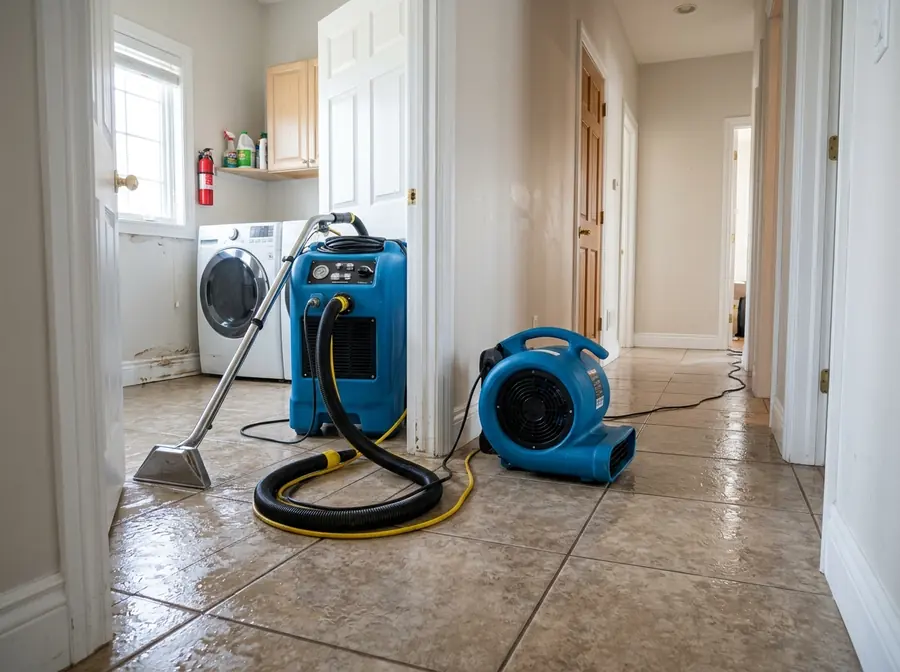
Water extraction is the removal of standing or pooled water from accessible areas. It may involve extraction equipment suited to the floor covering and water category. Removing visible water is only the first part of the process. Moisture can remain in carpet backing, pad, wood flooring, subfloor, drywall, insulation, baseboards, cabinetry, and framing. A room may look dry while concealed materials remain damp.
Structural drying focuses on reducing moisture in building materials and monitoring whether conditions are improving. The equipment and approach depend on the material, extent of water, temperature, humidity, airflow, and the source of the water. Professional equipment may include air movers and dehumidification systems, but the number, placement, and duration should be based on the site rather than a fixed formula. Drying conditions should be monitored and adjusted as the project progresses.
Not every wet material can or should be dried in place. Some porous or contaminated materials may need controlled removal. Wood flooring may respond differently from laminate, carpet, tile, or engineered products. Cabinets can trap moisture behind toe kicks or within particleboard. Insulation and drywall may require different decisions depending on water category, duration, and condition. The work plan should explain why materials are retained, cleaned, or removed.
A practical sequence after a Burleson water loss
- Address immediate safety. Keep away from electrical hazards, unstable ceilings, contaminated water, and unsafe structures. Call 911 for an emergency that threatens life or safety.
- Stop the water source safely. Use an accessible shutoff only when it can be reached safely. Arrange the correct plumber, appliance technician, roofer, or other specialist to repair the cause.
- Document the initial condition. Take photographs from safe locations, record when the water was discovered, and list the rooms and belongings affected. Do not delay urgent safety actions for photographs.
- Contact the insurer if appropriate. Follow the notice requirements in your policy and ask what records the carrier needs. Coverage is not automatic and depends on the cause and policy language.
- Arrange a restoration inspection. Explain the source, water type, affected rooms, and any prior repairs. The inspection should consider hidden moisture pathways and the need for specialist work.
- Review the proposed scope. Ask what will be extracted, what will be monitored, which materials may need removal, and how progress will be documented.
- Coordinate repairs and drying. Source repair, extraction, drying, cleaning, and reconstruction may involve different trades and may occur in stages.
Different property types need different restoration plans
In a single-family home, water may affect a kitchen, laundry room, bathroom, garage, or rooms below a second-floor fixture. The restoration plan should consider cabinetry, flooring transitions, wall cavities, insulation, and the route water may have taken. A visible ceiling stain may be connected to a bathroom or roof problem above it, so the source should be confirmed before repairs are closed in.
In an apartment or rental property, a leak can affect more than one unit. Water from an upper floor may enter a ceiling below, and shared plumbing or mechanical spaces can complicate access. Tenants should notify the property manager promptly and keep a written record. Owners and managers should coordinate access, source repair, restoration, and communication with affected occupants. A tenant should not remove drywall or perform extensive remediation without authorization.
Commercial premises may contain inventory, computers, production equipment, documents, customer areas, and specialized flooring. A water loss can disrupt operations even when the wet area is relatively small. The owner or facility manager should identify critical equipment, access rules, and any areas that must remain operational. Restoration work should separate affected areas from occupied spaces where appropriate and should account for the building's use.
Insurance, estimates, and restoration costs
There is no single water damage restoration price that applies to every Burleson property. Cost depends on the source, water category, area affected, materials, accessibility, extraction requirements, drying complexity, containment, contents handling, and repair work. A small appliance leak on a hard surface is not comparable to a multi-room loss involving wet insulation, flooring, and ceiling materials.
A written scope should describe the observed damage, proposed extraction, drying approach, monitoring, material removal, cleaning, and any separate repairs. Ask which work is mitigation and which is reconstruction. If a plumber, roofer, electrician, or structural professional is needed, clarify whether that trade is separately engaged. Avoid accepting a guaranteed completion date before the source, materials, and drying conditions are understood.
Insurance coverage depends on the policy, cause of loss, exclusions, limits, endorsements, and the insurer's decision. Sudden accidental water discharge may be treated differently from floodwater, sewer backup, long-term seepage, or neglected maintenance. Do not assume that every water-related loss is covered. Keep photographs, invoices, reports, and communications, and review our insurance claims help guide for general documentation tips.
Water damage and later mold concerns
When building materials remain damp, mold may become a later concern. Drying and moisture-source correction are therefore important parts of a water restoration plan. A musty odor or visible growth should not be diagnosed by color or treated by simply painting over the surface. If mold is suspected, consult the appropriate qualified professional and follow Texas requirements for regulated assessment and remediation. Assessment and remediation roles are generally separate under Texas law, subject to a narrow statutory exception.
Learn more through our mold removal and remediation hub and mold after water damage guide. If the water came from a sewage backup, use the dedicated sewage backup cleanup information because contaminated water requires different precautions.
Frequently asked questions about water damage restoration in Burleson
Should I use a household fan to dry a flooded room?
Not if electrical safety is uncertain or the water may be contaminated. Do not operate electrical equipment in a wet area. A professional can determine what equipment and controls are appropriate.
Does the city repair a leak inside my house?
Municipal Public Works handles public infrastructure and utility responsibilities. A private interior pipe, fixture, appliance, or roof issue generally requires the relevant property owner and qualified trade. Confirm the exact source and service-line responsibility.
Can carpet and hardwood be saved after water damage?
It depends on water category, exposure time, materials, installation, and condition. Some materials may be dried or cleaned; others may need removal. A site-specific inspection is needed.
How quickly should I arrange an inspection?
As soon as the property is safe and the source is controlled. Delay can allow moisture to affect additional materials, but no fixed response or drying time should be assumed.
Will my insurance cover water damage?
Coverage depends on the cause and policy. Contact the insurer and keep records; the carrier makes the coverage decision.
Arrange water damage restoration in Burleson
If water has entered a Burleson home, rental, or business, describe the source, the affected rooms, and whether the leak has been stopped. Home Mold Water Fire Damage brings more than 13 years of restoration experience, trained technicians, professional equipment, and 24/7 emergency response. We can discuss water extraction, moisture assessment, structural drying, and the specialist trades that may be needed to repair the cause. Confirm availability for the exact property address before arranging service.
Explore our Burleson service-area page, the main water damage restoration hub, and related guides for burst pipe cleanup, appliance leak water damage, and structural drying and dehumidification. For a project discussion, visit the contact page.