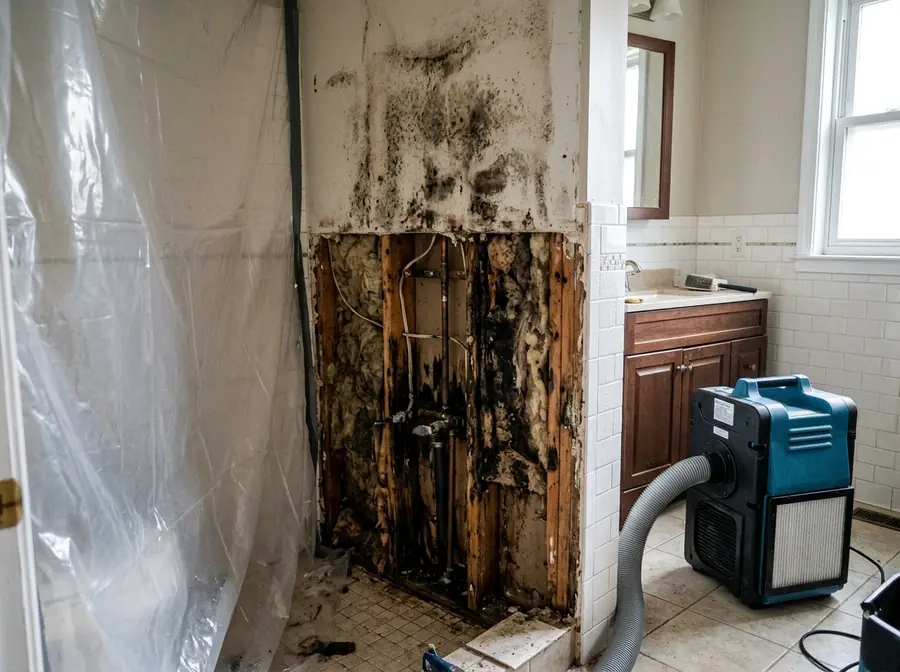
Understanding mold removal and remediation
Mold is part of the natural environment. Spores can enter buildings through ordinary air movement, doors, windows, and materials brought indoors. The practical concern is not the mere presence of spores but whether moisture conditions allow growth on building materials or belongings. Mold can appear on drywall, wood, insulation, carpet, paper products, furnishings, and other surfaces when they remain damp.
Removal and remediation involve more than applying a cleaner to visible discoloration. A sound project considers the source of moisture, the extent of affected materials, containment needs, safe removal or cleaning, handling of debris, and the steps needed to prevent recurrence. The correct approach depends on the building, the amount and location of visible growth, material porosity, and any applicable Texas regulatory requirements.
Common moisture sources in Fort Worth buildings
Plumbing and fixture leaks
Leaks behind sinks, around toilets, beneath tubs, and inside wall cavities can remain unnoticed until materials soften, finishes change, or an odor develops. Supply lines and drain connections may leak intermittently, so a surface can dry between events while the underlying source continues. Plumbing repairs should be handled by a qualified plumbing professional. Mold-related work should not begin until the source has been identified and controlled as far as practicable.
Roof and window intrusion
Roof penetrations, damaged flashing, poorly sealed openings, and window leaks can wet insulation, framing, drywall, and trim. Water may travel along a framing member before appearing indoors, so the location of visible growth may not be the entry point. A qualified roofer or building-envelope professional may be needed to correct the exterior defect, while the restoration scope addresses the affected interior materials.
Air-conditioning and condensation
Condensate drainage problems, sweating ducts, poorly insulated surfaces, and persistent humidity can create recurring dampness. HVAC equipment should be assessed by an appropriately qualified technician. Cleaning a visible patch without correcting condensation or drainage can leave the conditions that allowed growth in place.
Stormwater and exterior drainage
Fort Worth's Stormwater Management Program addresses public drainage systems, runoff, erosion, flood warnings, and related planning. It is useful for residents to understand the city's public resources, but a citywide stormwater page does not establish the condition of a particular property. Private grading, roof drainage, foundation details, plumbing, and maintenance can all influence moisture around a building. A property-specific inspection is necessary to understand the actual source.
Signs that deserve a closer look
- Visible growth or repeated discoloration on drywall, trim, ceilings, or other materials.
- A persistent musty odor that returns after ordinary cleaning.
- Paint that bubbles, wallpaper that lifts, or flooring that changes after a leak.
- Condensation or dampness that repeatedly appears around windows, ducts, or plumbing fixtures.
- Previous water damage where the drying status of concealed materials is unknown.
- Recurring dampness in a crawlspace, attic, utility closet, or other poorly ventilated area.
These signs do not identify a mold species or establish the extent of contamination. Color and appearance are not reliable ways for an occupant to determine whether a particular mold is more dangerous than another. If the area is extensive, hidden, recurring, or associated with a larger water event, avoid disturbing it and arrange an appropriate assessment.
What to do if you suspect mold
- Address immediate safety concerns. Keep children, pets, and occupants away from visibly damaged or damp areas where materials may be unstable or contaminated.
- Do not disturb extensive growth. Avoid scraping, sanding, dry brushing, or pulling apart affected materials. These actions can spread particles and may expose hidden building components.
- Look for the moisture source without opening the assembly. Note nearby plumbing, roof, window, appliance, or condensation issues. Do not enter unsafe attic, crawlspace, or electrical areas.
- Document visible conditions. Photograph the area from a safe position and record when moisture was first noticed, previous leaks, and any repairs already attempted.
- Ask about the correct regulatory pathway. If the project falls within Texas mold-assessment or remediation rules, verify that the professionals performing each regulated activity hold the appropriate current credentials.
Do not mix cleaning chemicals, and never combine bleach with ammonia, acids, or other products. Avoid painting over growth or applying a household spray as a substitute for moisture correction and appropriate remediation. Porous materials may need a different decision from nonporous surfaces, and a professional should explain the basis for any proposed removal or cleaning.
Texas mold assessment and remediation requirements
The Texas Department of Licensing and Regulation (TDLR) regulates mold assessment and mold remediation. Assessment can include inspecting or surveying a structure to provide information about mold or develop a remediation plan. Remediation involves removing, cleaning, sanitizing, or otherwise treating mold or mold-contaminated matter. TDLR identifies separate licenses and registrations for companies and individuals involved in these activities.
TDLR states that a person or company may hold both assessment and remediation credentials if they meet the requirements, but they generally may not conduct both regulated activities on the same project. The school-district exception is narrow and should not be treated as a general commercial or residential exemption. Property owners should ask which independent professional is responsible for assessment and which licensed professional is responsible for remediation.
Depending on the project and applicable rules, the process may involve a written assessment, remediation protocol, work plan, required notices, containment, and post-remediation evaluation. A Certificate of Mold Damage Remediation may be relevant when the statutory requirements are met. Ask the professionals involved which documents apply to your property and retain copies with your project records. Do not rely on a contractor's general statement that it is “licensed” without confirming the relevant company and individual credentials through TDLR.
Why assessment and remediation are different tasks
An assessment is intended to evaluate the mold condition and define the scope or protocol. Remediation is the work that follows that scope, including containment, cleaning, removal, and treatment as appropriate. Keeping the roles independent helps reduce conflicts when the assessment is meant to guide the contractor's work and later verification. A single company may have people with different credentials, but the rules about who can perform each activity on the same project still apply.
Before work begins, ask for the name and credential category of the assessor and remediator, the proposed scope, the affected areas, the materials expected to be cleaned or removed, and the clearance or completion criteria. If a project changes after concealed conditions are found, ask how the revised scope will be documented and whether additional assessment is needed. The project record should make clear what was observed, what was done, and what remains outside the agreed scope.
Containment, removal, and cleaning decisions
Containment may be used to limit the movement of dust and debris from a work area into occupied parts of the building. The design depends on the project and the materials being disturbed. Workers may use protective equipment, controlled removal methods, and appropriate debris packaging. Occupants should follow instructions about access and should not enter a containment area simply to inspect progress.
Nonporous materials may sometimes be cleaned when the surface and condition allow. Porous or absorbent materials such as damaged drywall, insulation, carpet padding, and some composite products may not be suitable for cleaning if growth or contamination has penetrated them. The decision should be based on the project protocol and material condition, not on a blanket promise that everything can be saved or that everything must be discarded.
Residential, rental, and commercial mold concerns
Fort Worth properties include detached houses, apartments, condominiums, rental homes, offices, retail premises, and larger facilities. In a home, a bathroom leak may affect the wall cavity behind a vanity. In a rental property, the tenant, owner, and property manager may need to coordinate access, records, and repairs. In a commercial building, the work plan may need to account for shared ventilation, neighbouring suites, inventory, and continued operations.
Property managers should document the reported location, known moisture events, maintenance actions, and access arrangements. Building owners should avoid making assumptions based only on a musty smell or a photograph. If multiple units or shared building systems may be involved, a qualified professional should consider the wider building context rather than treating one visible patch as an isolated issue.
Preventing recurring moisture problems
Prevention begins with repairing the source. Fix plumbing leaks, maintain roof and window details, keep condensate lines clear, and address drainage or grading concerns through the appropriate professional. After a water event, arrange timely drying and verify concealed materials where necessary. Keep records of repairs and any assessment or remediation work so future occupants and contractors understand the property's history.
Ventilation and humidity management can help reduce condensation in some rooms, but they do not solve an active plumbing leak, roof opening, or water intrusion problem. A dehumidifier is not a substitute for correcting a source that continues to wet building materials. If dampness returns, investigate the underlying condition instead of repeatedly treating the visible surface.
Insurance and documentation for mold remediation
Contact your insurer to ask whether the suspected cause and proposed work fall within your policy. Keep photographs, invoices, repair records, moisture documentation, assessment reports, work plans, and any completion certificate that applies. Coverage may differ for sudden water damage, long-term seepage, maintenance issues, floodwater, and mold-related costs. The policy language, endorsements, exclusions, limits, and insurer's decision control the claim.
Home Mold Water Fire Damage can explain the observed restoration conditions and the work within its scope, but cannot guarantee insurance payment. For general documentation suggestions, read our insurance claims help guide.
How Home Mold Water Fire Damage approaches mold concerns in Fort Worth
We begin by discussing the history of the moisture problem and the visible areas of concern. The next step is to determine what type of professional assessment is appropriate and whether the project is subject to Texas mold rules. Where remediation is required, the work should follow the applicable protocol and be performed by appropriately licensed professionals. The exact sequence depends on the building, the materials, and the project requirements.
Our company has more than 13 years of restoration experience, trained technicians, professional equipment, and 24/7 emergency response. We aim to explain the moisture issue, the limits of what can be seen, the need for any independent assessment, and the work that may be required. We do not diagnose medical conditions, identify species by colour, or promise that mold can never return.
Frequently asked questions about Fort Worth mold remediation
Does every visible patch require a licensed mold contractor?
Texas has exemptions and thresholds, and the applicable requirements depend on the project and property. Ask TDLR or a qualified Texas mold professional about the rules that apply before work begins.
Can the same company assess and remediate my property?
A company may hold both types of credentials, but TDLR generally prohibits conducting both regulated activities on the same project, subject to a narrow school-district exception. Confirm who performs each role.
Can I tell whether mold is dangerous by its colour?
No. Colour is not a reliable way to identify mold species or determine health risk. Do not attempt to diagnose the material by appearance.
Will a dehumidifier solve the problem?
Only if excess humidity is the relevant moisture condition. A leak or water intrusion source must be repaired, and affected materials may need professional evaluation.
Will insurance cover mold removal?
That depends on the cause, policy wording, exclusions, limits, and insurer decision. Ask your insurer for a coverage determination.
Arrange mold removal and remediation in Fort Worth
If you have recurring dampness, visible growth, or a mold concern after water damage, avoid disturbing the affected materials and arrange an appropriate assessment. Home Mold Water Fire Damage can discuss restoration needs and the next steps for Fort Worth properties. Read our mold removal and remediation service guide, learn about mold after water damage, or visit the Fort Worth service-area page.
For service questions, use our contact page. For regulated mold assessment or remediation, verify the relevant current Texas credentials and role separation before authorizing work.