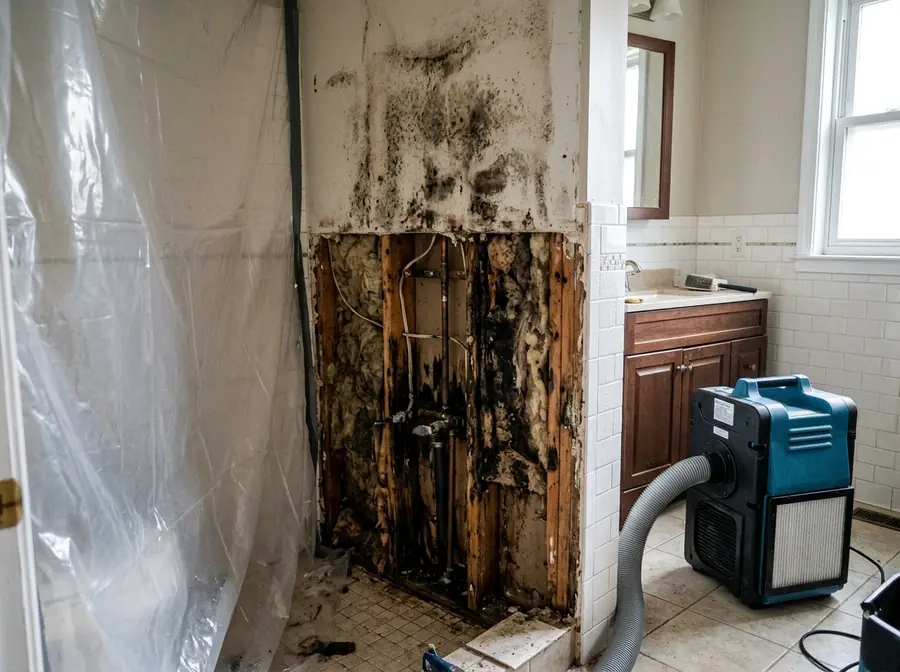
Why mold concerns start with moisture
Mold is a natural part of the environment. Spores can enter indoor spaces through ordinary air movement, open windows, doors, clothing, and dust. Indoor growth may develop when moisture remains on suitable materials. Drywall paper, wood, dust, some insulation, furnishings, and other building materials can support growth under damp conditions. A mark on a wall is not automatically mold; staining may have different causes, and appearance alone does not confirm the condition.
When mold is suspected, the goal is to understand the affected materials and correct the moisture source. A leak may be inside a cabinet, behind a wall, above a ceiling, below flooring, or associated with an air-conditioning component. Repeatedly wiping the visible patch without investigating why it stays damp may not resolve the issue. The scope should reflect the location, material, extent, access, occupancy, and any applicable remediation protocol.
Extensive growth, concealed contamination, or mold associated with contaminated water should not be treated as a casual DIY project. Avoid disturbing the materials, running fans that may spread dust, or opening cavities without appropriate guidance. The cleanup method should be chosen for the project, not assumed from a household cleaning tip.
Lake Worth neighborhoods and property-specific context
The service-area list identifies Lake Worth North, Lake Worth South, East Lake Worth, Greenfield Acres, Shady Oaks Manor, and North Lake Worth and associates Lake Worth with ZIP code 76135. These names help residents describe their location when arranging a service discussion. They are not evidence that any neighborhood has a documented mold problem or particular moisture risk.
Properties differ in construction, plumbing, exterior condition, ventilation, access, and repair history. A home may have dampness around a bathroom or kitchen fixture. A rental may involve coordination between tenant and property manager. A commercial building may have roof, shared plumbing, HVAC, storage, or tenant-access considerations. The cause should be investigated at the property, not inferred from the city or ZIP code.
If you contact a restoration provider, share the address, property type, where growth or odor is noticed, whether materials are wet, any history of water damage, and what repairs have been made. If you rent or occupy a managed property, notify the owner or property manager and clarify who can authorize inspection and remediation. Do not cut into walls or move affected materials just to show the problem.
Common sources of moisture in buildings
Plumbing and fixture leaks
Leaks may develop at supply lines, valves, drains, sinks, toilets, tubs, showers, or appliance connections. Moisture can remain inside a cabinet or wall while the surface appears normal. A qualified plumber should repair plumbing sources. Remediation can address the affected materials but does not replace pipe or fixture repairs.
Roof and exterior openings
Water can enter through damaged roof materials, flashing, windows, exterior joints, or other openings. It may travel along framing and show up away from the entry point. A roofer or qualified exterior contractor may need to repair the opening. Interior cleanup should be coordinated with source repair so that the same moisture is not continuing.
Condensation in kitchens, bathrooms, and laundry areas
Steam and condensation can contribute to damp surfaces when ventilation or moisture management is insufficient. Recurring condensation deserves investigation, particularly if finishes remain wet or growth repeatedly returns. Do not assume that surface cleaning or a single ventilation adjustment will address every possible source.
Air-conditioning and mechanical equipment
Condensate drains, pans, coils, and insulation can be sources of moisture if they are obstructed, damaged, or not operating correctly. HVAC-related problems should be assessed by a qualified HVAC professional. Do not operate equipment suspected of moving moisture or debris into occupied spaces until its condition is understood.
Previous water damage
A past leak or water intrusion may leave moisture in flooring, wall cavities, ceilings, or insulation. A surface patch, new paint, or flooring replacement does not necessarily confirm that concealed materials were dried. If musty odor, dampness, or discoloration returns, an inspection may help identify whether residual moisture or a new source is involved.
Signs to observe without disturbing the area
Visible growth, persistent musty odor, recurring stains, peeling paint, bubbling finishes, soft drywall, warped trim, damp carpet, or repeated condensation may warrant further investigation. These signs do not prove mold or show how far it extends. Record where the concern appears, whether it changes after rain or plumbing use, and whether there is a known history of leaks or repairs.
Keep observations non-invasive. If safe, take photographs and make notes. Do not scrape, sand, dry-brush, cut into walls, or move potentially affected belongings through clean rooms. Avoid running household fans through a suspected work area, which may spread dust or debris. Keep children and pets away. This article is general property information, not medical advice; occupants with health concerns should consult a qualified healthcare professional.
Steps to take before mold assessment or remediation
- Protect occupants. Keep away from unsafe areas, especially if wet materials may involve electrical hazards. Do not enter standing water where electricity could be present.
- Address the moisture source. Arrange a plumber, roofer, HVAC technician, or other qualified trade as appropriate. Only shut off a water source if it can be done safely.
- Avoid disturbing suspected growth. Do not scrape, sand, cut, demolish, or use fans that may spread dust. Do not attempt extensive mold removal yourself.
- Restrict access. Keep children, pets, and unnecessary occupants away from the affected area.
- Document what is known. Photograph the condition when safe, note the date, and record previous leaks or repairs.
- Clarify the regulated roles. Ask whether a licensed mold assessment consultant is required, who prepares any protocol, who performs remediation, and how independence requirements will be followed.
Never mix bleach with ammonia, acids, or other cleaners. Household chemicals should not be used as a substitute for an appropriate project plan, particularly where growth is extensive, concealed, or associated with sewage or floodwater.
Texas mold regulation and role separation
Texas regulates mold assessment and mold remediation. Assessment and remediation are distinct activities; a mold assessment consultant may evaluate conditions and prepare a protocol where required, while remediation contractors carry out the work under applicable rules. Independence requirements apply to certain projects, so the same person or company should not be represented as performing both regulated roles on the same project where prohibited. Do not assume that a general restoration credential covers all mold activities.
Ask who is responsible for assessment, protocol preparation, remediation, and any required post-work review. Verify the relevant credentials through the Texas Department of Licensing and Regulation (TDLR). Specific requirements can depend on project circumstances and exceptions, so confirm the rule for the particular property rather than relying on a general claim.
Official references include the TDLR mold licensing FAQ, the mold laws and rules, and the Texas Attorney General's consumer guide to mold remediation. These resources explain licensing and consumer information. A restoration company should clearly describe its role and coordinate with required independent professionals.
What a remediation scope may include
Where applicable, work should follow the assessment and written protocol. A project scope may describe the affected materials, containment, work methods, cleaning or removal, debris handling, moisture control, and review. Ask for a written explanation of what is included, what remains outside the scope, and how any changes will be authorized. Plumbing, roofing, HVAC, electrical, structural, and reconstruction work may require separate qualified trades.
Containment
Containment may be used to limit movement of dust and debris into adjoining spaces. The setup depends on the location, materials, extent, building layout, occupancy, and protocol. The plan should identify the restricted area and explain how occupants can avoid it. The presence of containment does not mean adjacent areas are automatically unaffected; any needed evaluation should be clarified.
Material cleaning or removal
Some surfaces may be cleaned with methods appropriate to their condition and material. Others may require controlled removal if affected beyond practical restoration. Decisions involving drywall, insulation, carpet, flooring, trim, cabinetry, or contents should be based on the project conditions. Ask the provider to explain why materials are being retained or removed and whether disposal is included.
Moisture control and drying
Drying or moisture monitoring may be part of the project. Equipment and measurements should be selected based on the materials and conditions. The moisture source should be repaired or otherwise controlled with the responsible trade. Remediation does not guarantee that mold will never return if new moisture develops.
Cleaning and project review
Closeout may include cleaning within the scope, debris removal, and review of completed tasks. If independent assessment or post-remediation verification is required or specified, clarify who performs it and what documentation will be provided. Reconstruction and finish work should be coordinated after the appropriate review.
Residential, rental, and commercial remediation planning
For a homeowner, mold may be found near a bathroom, kitchen, laundry area, closet, attic, crawlspace, or a previous leak. The owner should provide the relevant history and clarify access. In a rental, notify the landlord or property manager promptly, keep a record of the report, and ask how source repair, inspection, and remediation will be authorized.
Multi-unit properties may have shared plumbing, roofs, mechanical equipment, or adjoining units. Management may need to coordinate inspection and communicate access restrictions. Do not move affected materials into hallways or other units without guidance and permission.
Commercial properties may need to coordinate work around stock, records, equipment, employees, customers, and restricted spaces. A scope should identify access, containment, contents handling, and whether a separate professional is required for building systems or regulated operations. Facilities with specialized requirements should consult the appropriate authority. A restoration provider should not guarantee a health outcome or reopening date.
Costs and insurance
Mold remediation cost can vary with the affected area, material type, concealed moisture, access, containment, contents handling, disposal, drying, and source repair. Estimates should distinguish assessment or protocol services from remediation and reconstruction. Ask whether cleaning, removal, drying, debris handling, and verification are included or separate. A photo-only estimate may not account for concealed conditions.
If the concern follows a water loss, contact your insurer to ask how to report the event and what records are required. Coverage depends on policy wording, the cause, exclusions, limits, endorsements, and insurer determination. Mold-related coverage may be different from the original water damage. Keep photographs, invoices, receipts, communications, and work authorizations. No restoration contractor can guarantee claim approval or payment.
Frequently asked questions about Lake Worth mold remediation
Can I clean mold with a household spray?
Do not treat household sprays as a universal solution. Material, extent, source, and safety matter. Avoid disturbing extensive or concealed growth and never mix bleach with other cleaning products.
Does mold always mean a leak?
Moisture may come from plumbing, roof or exterior openings, condensation, HVAC equipment, or a previous water event. The source should be investigated.
Will mold remediation keep growth from returning?
Remediation addresses the affected conditions within its scope. If moisture returns, new growth may occur. No service can guarantee mold will never recur.
Do I need a separate assessment professional?
Texas requirements depend on the project. Confirm whether a licensed mold assessment consultant and written protocol are required and who will perform each role. Verify credentials with TDLR.
Do you serve Greenfield Acres and Shady Oaks Manor?
These areas are listed in the approved Lake Worth coverage list, along with Lake Worth North, Lake Worth South, East Lake Worth, and North Lake Worth. Confirm availability for the specific address.
Is mold remediation automatically covered by insurance?
No. Coverage depends on the policy, cause, exclusions, limits, and insurer decision. Contact your insurer and retain documentation.
Arrange mold removal and remediation in Lake Worth
If you have visible mold, a persistent musty odor, recurring moisture, or concerns after water damage in Lake Worth, explain what you have noticed and whether the moisture source has been repaired. Home Mold Water Fire Damage has more than 13 years of experience, trained technicians, professional equipment, and 24/7 emergency response. We can discuss the appropriate roles, current availability, and scope of work for your address.
Explore the Lake Worth restoration services page, the main mold removal and remediation hub, or our contact page. For related water or fire concerns, see the separate Lake Worth guides to water damage restoration and fire and smoke damage restoration.