Confirm property location and access before dispatch
Naval Air Station Joint Reserve Base Fort Worth is an active military installation. A property inside a controlled installation is not the same as a home or business in the surrounding civilian community. Entry requirements, visitor sponsorship, identification, escort rules, contractor authorization, work permissions, and security procedures may apply. A service-area listing does not grant access or imply that a contractor can enter the installation without approval.
When requesting help, identify whether the affected property is inside the installation, in nearby civilian housing, or in another part of the wider 76127 area. If the address is on the installation, ask the authorized resident, housing office, property manager, or sponsoring contact what approval is required for outside contractors. Confirm any required documentation and appointment procedures before arranging dispatch.
The official Navy installation and housing information should be treated as the authority for installation-specific access and housing procedures. Restoration work must follow the rules set by the installation and the property owner. If access is not approved, the visit must wait until the proper authorization is in place.
Make the area safe before water cleanup
Do not enter standing water if electrical outlets, wiring, appliances, or a service panel may be affected. Do not touch electrical equipment or operate household fans, vacuums, or pumps in a wet area. If there is a gas odor, structural instability, or immediate danger, leave the building and contact emergency services or the appropriate utility provider.
If a plumbing supply leak is active and a shutoff valve is safely accessible, closing it may limit additional water. Do not enter an unsafe room to reach a valve or attempt repairs beyond your training. Contact a qualified plumber or the responsible property maintenance team. If the water may contain sewage, outdoor floodwater, or another contaminant, avoid contact and keep children and pets away.
Water can weaken ceilings and flooring, especially when it collects above a finished ceiling or beneath a floor assembly. Stay clear of sagging materials, damaged stairs, and unstable areas. If a ceiling is bulging or dripping heavily, do not stand beneath it or puncture it. Arrange an appropriate professional evaluation.
Common causes of water damage in the NAS JRB area
Plumbing failures can affect homes, apartments, offices, and other facilities. A burst supply line, failed valve, leaking fixture, water heater connection, or drain problem can release water into a room or concealed cavity. Slow leaks may remain unnoticed behind cabinets or appliances until flooring, drywall, or baseboards show changes.
Appliance connections are another possible source. Washing machines, dishwashers, refrigerators with water lines, and water heaters rely on hoses, fittings, valves, and drains that can wear or fail. When an appliance leaks, the source should be isolated safely and the unit inspected by a qualified service professional. Water may spread beneath the appliance or into an adjacent room.
Rain and severe weather can expose roof, flashing, window, siding, or exterior-opening defects. Water may travel along framing before it becomes visible inside. A ceiling stain may be offset from the point where water entered. Do not climb onto a wet roof or unstable ladder to investigate. Have a qualified roofing professional assess and repair the exterior source.
Drainage and surface-water concerns vary with property layout, elevation, grading, and surrounding infrastructure. The fact that a property is near an installation, lake, roadway, or other landmark does not establish its flood exposure. Use official floodplain and installation information for address-specific questions; do not rely on broad neighborhood assumptions.
Water extraction: removing more than visible puddles
When the area is safe and access is authorized, water extraction may be an early restoration step. The equipment and method depend on the amount of water, the affected surface, access conditions, and whether the water is clean or contaminated. Water from a plumbing supply line should not automatically be treated the same way as sewage or outdoor floodwater. The source and exposure history determine the appropriate precautions.
Water can remain below carpet, in underlay, beneath floating floors, inside cabinet bases, and behind baseboards. A restoration evaluation may check nearby rooms and concealed spaces rather than limiting attention to the visible wet area. Some materials may be suitable for drying; others may need removal because of contamination, swelling, delamination, or other damage.
Do not use a household vacuum or ordinary electrical equipment to remove water from an unsafe area. Do not handle sewage or contaminated water without appropriate training and protective equipment. If the property is part of a managed or controlled facility, follow the responsible authority's instructions about where equipment can be placed and how waste or damaged materials must be handled.
For more detail, see our guides to flood water extraction, burst pipe cleanup, and appliance leak water damage.
Moisture checks and structural drying
Removing standing water does not necessarily dry the building. Drywall, framing, insulation, flooring, and cabinetry can retain moisture internally. A surface may feel dry while moisture remains beneath it. A property-specific evaluation may use appropriate moisture-measurement tools to identify affected materials and decide whether drying, removal, or further inspection is appropriate.
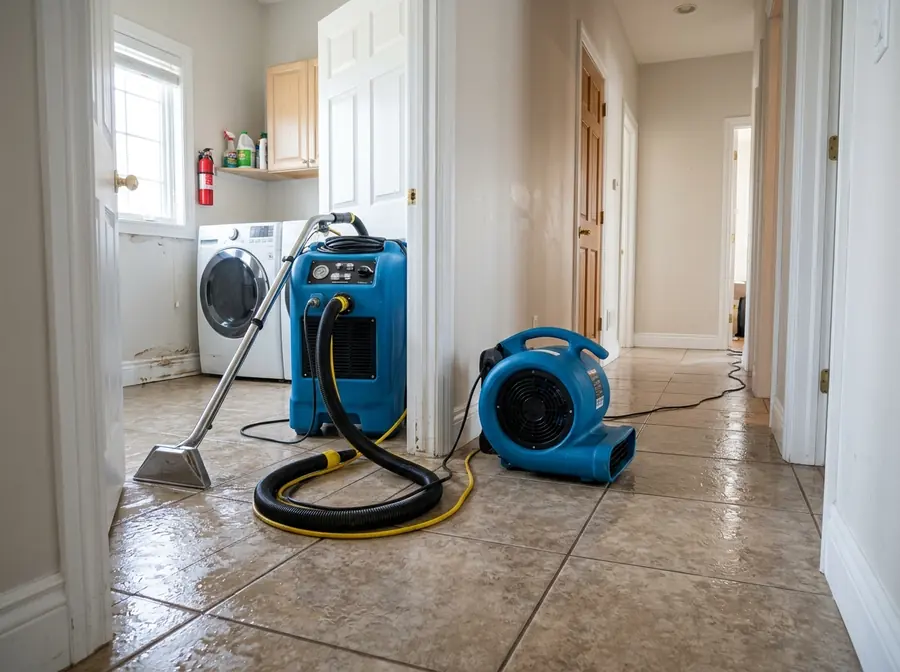
Structural drying may involve controlled air movement and dehumidification. Equipment placement depends on the room layout, materials, temperature, humidity, and the extent of saturation. A drying plan should take account of occupied areas, access restrictions, electrical safety, and any installation or property rules. Equipment should not obstruct required exits or create avoidable hazards.
Monitoring helps determine whether materials are drying as expected. Readings at selected locations may guide adjustments to equipment and the drying plan. The time required varies by project and should not be promised before the property is evaluated. If additional moisture or damage is discovered, the owner or authorized representative should be informed and the scope updated as appropriate.
Our structural drying and dehumidification guide explains this stage in more detail. The carpet and hardwood floor drying guide covers material-specific considerations.
Residential, housing, and facility coordination
Properties connected with an active military installation may have housing, access, and maintenance procedures that differ from those in a typical civilian neighborhood. A resident may need to notify a housing office, property manager, facilities team, or sponsoring contact before an outside restoration provider can enter. Shared buildings may require coordination with neighboring occupants or building maintenance staff.
For a leak in a multi-unit building, determine whether the source is inside one unit or part of a shared plumbing or building system. Water from an upper unit may affect a lower ceiling. A common-area pipe or roof assembly may require the property manager to arrange the repair. Restoration inside an affected unit should be coordinated with whoever is responsible for the source and the building envelope.
Commercial or administrative facilities may have additional controls for work permits, security escorts, equipment, waste removal, photography, and restricted spaces. The restoration provider should follow the facility's directions and should not assume that permission to enter one part of a site applies to every building or room.
What to do before arranging a restoration visit
- Protect people. Leave areas with electrical danger, structural instability, gas odor, or contaminated water.
- Stop the source if safe. Use an accessible shutoff only when you can reach it without entering a hazardous area.
- Notify the responsible party. Contact housing, property management, facilities, or the installation sponsor where required.
- Confirm access requirements. Establish whether the address is inside a controlled installation and what contractor authorization is needed.
- Record the event. Note the source, time discovered, affected rooms, and any repairs already attempted.
- Document safely. Take photographs only where permitted and without entering a dangerous area or violating site rules.
- Arrange qualified trades. A plumber, roofer, appliance technician, or utility provider may need to stop the source.
- Discuss restoration scope. Explain access limitations and ask what inspection, extraction, drying, and monitoring may be needed.
How a water damage project may proceed
The first conversation establishes the property location, access requirements, water source, approximate time of loss, and any safety restrictions. The team may ask whether the source has been stopped, whether the property is occupied, whether the water is potentially contaminated, and who can authorize work. For a controlled installation or managed facility, the visit should not be arranged until access and work permissions are clear.
An on-site evaluation, once authorized, may document visible conditions, inspect adjoining areas, check moisture in suitable materials, and identify work that may be required. Depending on the loss, the plan may include extraction, removal of unsalvageable materials, structural drying, dehumidification, cleaning, and monitoring. The scope should distinguish restoration from plumbing, electrical, roofing, or other specialist repairs.
During the work, equipment may be adjusted as materials dry. If hidden damage or additional moisture is found, the provider should explain the issue and discuss any proposed change before proceeding. Once drying is complete, the property may still need reconstruction or finish repairs. Those tasks should be identified separately and assigned to appropriately qualified trades.
Mold concerns after a water loss
Moisture left in building materials can create conditions for mold growth. Not every leak results in mold, but a property should not be considered dry simply because standing water has disappeared. Drywall, insulation, wood, carpet backing, and flooring assemblies can retain moisture beyond the surface.
If visible growth or a persistent musty odor develops after a leak, further assessment may be appropriate. Avoid disturbing extensive suspected mold or removing large areas of material yourself. Texas regulates mold assessment and remediation as separate activities and imposes role and credential requirements. Ask who will perform each regulated role and verify current credentials through TDLR.
For a wider explanation, visit the mold removal and remediation hub and the guide to mold after water damage.
Insurance, responsibility, and documentation
Coverage for water damage depends on the policy and cause of loss. Sudden plumbing discharge, surface water, groundwater, roof leaks, sewer backup, floodwater, and long-term seepage may be treated differently. Contact the insurer or responsible property authority for instructions. If the property is government-owned, leased, privatized housing, or subject to another arrangement, the responsible party and claim process may differ from an individually owned home.
Keep records of the event, photographs where permitted, repair invoices, inspection notes, communications, and work authorizations. Ask the restoration provider to explain its proposed scope and how any changes will be documented. A restoration estimate is not a guarantee of insurance payment or a determination of who is legally responsible for the loss.
Frequently asked questions about NAS JRB water damage restoration
Can a restoration company enter the military installation automatically?
No. Installation access and contractor authorization may be required. Confirm the current procedures with the responsible installation, housing, property-management, or sponsoring contact before arranging a visit.
Does the service-area listing include ZIP code 76127?
The approved service-area information for this website identifies the Naval Air Station JRB Fort Worth area with ZIP code 76127. The exact address, access requirements, project scope, and current availability must be confirmed.
Can a small leak require professional drying?
It can, depending on how long the leak continued and which materials became wet. Moisture may remain under flooring or behind cabinets even when the visible water is limited.
Should I use a fan to dry the room?
Do not operate electrical equipment in a wet or unsafe area. Follow professional instructions, especially if water may be contaminated or if the building has access and safety controls.
Will insurance cover the damage?
Coverage depends on the policy, property arrangement, cause of loss, and insurer or responsible authority decision. Keep documentation and request instructions before authorizing work when required.
Can you repair the plumbing or roof that caused the leak?
Those repairs may require a licensed plumber, roofer, or other qualified trade. The restoration scope should make clear which work is included and which specialist must address the source.
Discuss water damage restoration for the NAS JRB Fort Worth area
If water has affected a property connected with Naval Air Station Joint Reserve Base Fort Worth, first protect occupants and confirm the source and access conditions. When contacting Home Mold Water Fire Damage, explain whether the address is inside the controlled installation or in the surrounding community, what caused the water loss, which areas are affected, and what permissions may be required. Our team has more than 13 years of restoration experience, trained technicians, professional equipment, local operations serving communities across our coverage area, and 24/7 emergency response. We can discuss the next step and confirm whether the address and project can be accommodated.
Explore our NAS JRB Fort Worth restoration services page, the water damage restoration hub, and the contact page. For installation-specific questions, use official Navy channels and the responsible property contact.