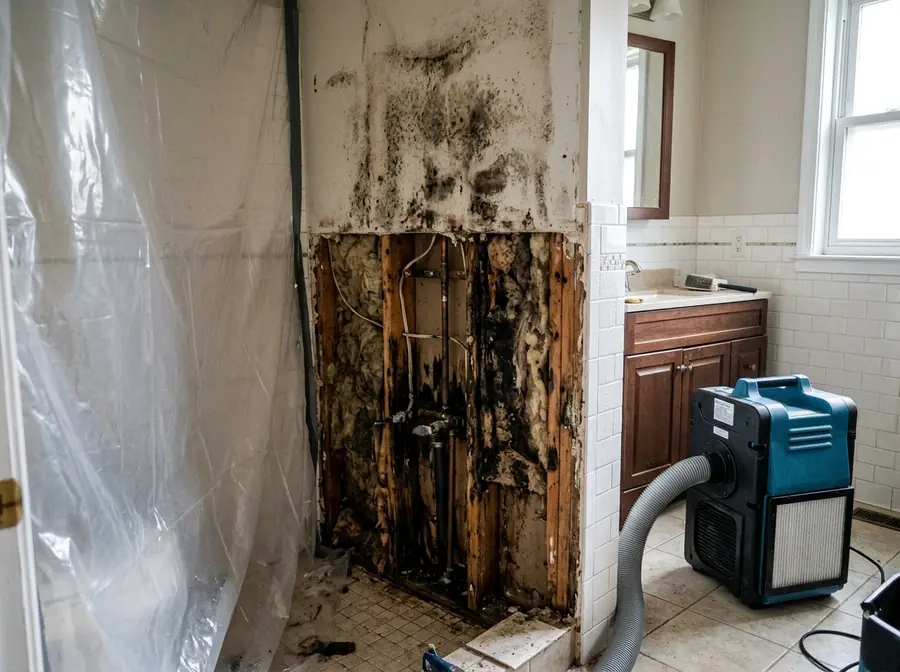
Mold is linked to moisture, not just a visible stain
Mold spores are present in the wider environment and can enter buildings through normal air movement, open doors and windows, clothing, and dust. Their presence alone does not establish that a building has an active mold problem. Growth is more likely when spores land on a material that stays damp and provides suitable conditions. A leak, condensation, water intrusion, or incomplete drying can create those conditions.
Moisture can remain hidden. A plumbing connection may leak behind a cabinet, a roof opening may wet insulation above a ceiling, or a bathroom exhaust fan may fail to remove enough humidity. A floor may feel dry while water remains in underlayment or subflooring. Cleaning only the visible surface without correcting the source may leave the underlying condition unchanged.
A musty odor can be a reason to investigate, but it does not identify the source or prove how far growth extends. Likewise, the color of a patch does not reliably identify a mold species or establish its health significance. Assessment should focus on the building conditions, moisture pathways, affected materials, and the questions that need to be answered for the property.
Common moisture sources in North Richland Hills homes
Bathrooms can experience repeated moisture from showers, tubs, sinks, plumbing connections, and condensation. Poorly functioning exhaust fans or limited ventilation may allow humidity to linger on ceilings and walls. A leak at a toilet connection, tub drain, or shower enclosure can affect concealed materials before the room shows obvious damage.
Kitchens and laundry spaces contain several water connections. Dishwasher supply lines, sink traps, refrigerator water lines, washing-machine hoses, and water heaters can leak. Slow drips may collect beneath appliances or inside cabinets. If a leak is repaired but the surrounding materials are not properly evaluated and dried, moisture may remain in the assembly.
Attics and roof spaces may be affected by damaged shingles, flashing, roof penetrations, condensation, or ventilation issues. Water can follow rafters or other building components before appearing as a ceiling stain. Do not climb onto a wet roof or enter an unsafe attic to investigate. A qualified roofing or building professional may be needed to identify the source.
Garages, crawlspaces, utility rooms, and exterior wall assemblies can also develop moisture concerns. Groundwater, surface drainage, plumbing failures, and humid air affect properties differently. These are general building considerations, not a claim that every North Richland Hills neighborhood or property has the same mold exposure.
When to arrange a professional assessment
Professional advice is appropriate when growth is extensive, appears to be concealed behind walls or ceilings, returns after cleaning, follows a significant water loss, affects HVAC equipment, or occurs in a building with complex occupancy and property-management needs. It may also be needed when the moisture source is uncertain or when Texas rules require a regulated assessment and remediation protocol.
Testing is not automatically necessary in every situation. The usefulness of sampling depends on the building conditions and the question being asked. A qualified assessment professional can explain whether sampling is appropriate, what it may reveal, and what it cannot establish. A single air sample should not be treated as a universal pass-or-fail certificate for an entire property.
Do not use color or appearance to identify a mold species. Avoid medical claims based on a visual inspection. If occupants have health concerns, they should consult a healthcare professional. A restoration provider can describe building conditions and the work within its scope, but should not diagnose illness or promise a health outcome.
Texas rules distinguish mold assessment from remediation
The Texas Department of Licensing and Regulation (TDLR) regulates mold assessment and mold remediation as separate activities. A mold assessment consultant evaluates conditions and may prepare a remediation protocol when required. A mold remediation contractor carries out the regulated remediation work under the applicable rules. Workers may also need the appropriate license or registration for the tasks they perform.
Texas rules include independence and conflict-of-interest restrictions. In general, the same person or company should not perform both regulated assessment and remediation on the same project where prohibited. This is an important distinction when selecting providers. Ask who will assess the property, who will prepare any protocol, who will perform the remediation, and how those roles comply with current TDLR requirements.
Credentials are not interchangeable. A mold assessment consultant license, mold remediation contractor license, and worker registration relate to different roles. A plumbing, electrical, building, or other trade license covers a different scope. Ask for the relevant credentials and verify their current status through official TDLR resources rather than relying only on a marketing statement.
For official details, review the TDLR mold licensing FAQs and the Texas mold-related laws and rules. Project requirements depend on the facts and applicable exceptions. This page is general information, not legal advice.
What a mold remediation project may include
The process begins by understanding the moisture source, the visible conditions, the materials involved, and any access or occupancy restrictions. Where a regulated assessment is required, the appropriate independent professional may inspect the property and prepare a written protocol. That document may set out the work area, containment, removal or cleaning approach, and verification requirements relevant to the project.
Remediation may include protecting unaffected spaces, establishing containment, using appropriate dust and debris controls, removing materials that cannot be cleaned effectively, and cleaning remaining surfaces with suitable methods. The work varies with the building layout, the extent and location of growth, the type of material, and the protocol where one applies. There is no single equipment setup or sequence that fits every property.
Some porous materials, including certain drywall, insulation, ceiling tiles, or carpet backing, may need removal if they cannot be adequately cleaned. Other materials may be suitable for cleaning. Decisions should be based on the material's condition and the project requirements rather than a blanket promise that everything can be saved or that everything must be discarded.
Containment helps limit movement of dust and debris from the work zone to occupied parts of the building. Depending on the project, controls may include barriers, controlled access, and filtration equipment. Occupants should follow instructions about restricted areas and re-entry. Do not remove barriers, move equipment, or enter the work area without authorization.
Correcting the moisture source is essential. A plumber may repair a leaking line, a roofer may address flashing, an HVAC professional may evaluate condensation or ventilation, and a qualified building contractor may replace damaged assemblies. Mold remediation does not automatically include every trade repair.
North Richland Hills properties and shared-building concerns
North Richland Hills includes single-family homes, apartments, rental communities, commercial properties, offices, and public facilities. Different buildings create different access and authorization needs. A tenant may need to notify a landlord; an apartment manager may coordinate entry across units; a commercial tenant may need approval from a property owner or facilities manager; and an owner-occupied home may have a single decision-maker.
In multi-unit properties, moisture may cross unit boundaries. A leak from an upstairs bathroom can affect a ceiling below. A shared plumbing line or roof assembly can create a problem that cannot be resolved by treating only the room where growth first appears. Property managers may need to coordinate with plumbing, roofing, HVAC, and restoration professionals to identify and correct the source.
The city provides an interactive mapping resource that can display municipal information such as streets, parks, zoning, and floodplain layers. It is useful for public information and address-specific research, but it does not identify mold inside a building. Floodplain status also does not determine whether an individual home has a moisture or mold problem. A property-specific assessment is needed.
Local park and trail areas such as Cross Timbers Park, Fossil Creek Park, Green Valley Park, Northfield Park, Richfield Park, and Walker's Creek Park are familiar geographic reference points in the city. Their presence is not evidence of a mold condition in nearby homes. The actual source may be a private plumbing, roof, ventilation, or maintenance issue within the building.
What you can do before a professional arrives
Keep people away from extensive suspected growth and avoid disturbing the affected material. Do not dry brush, sand, scrape, or aggressively scrub large areas. These actions may spread dust and debris. Avoid using household fans in a way that blows air from the affected area into occupied rooms. Never mix bleach with ammonia, acids, or other cleaners.
If there is an active leak, shut off an accessible valve only if you can do so safely. Do not enter standing water where electrical equipment may be involved. Do not climb onto a wet roof or enter an unsafe attic. Contact a qualified plumber, roofer, or other trade to correct the source.
When safe, record when the condition was noticed, whether a leak or water event occurred, which rooms are affected, and whether repairs have already been attempted. Photographs from a safe distance may help explain the situation. Do not expose yourself or delay urgent repairs to collect images.
Mold concerns after water damage
After a leak or water loss, building materials may retain moisture after the visible water is gone. Drywall, wood framing, insulation, carpet padding, and flooring assemblies can hold moisture internally. A surface that feels dry is not proof that the whole assembly is dry. Water extraction, moisture measurement, structural drying, and dehumidification may be appropriate depending on the event.
Not every water loss leads to mold, but leaving wet materials unaddressed can create conditions for growth. If a musty odor or visible growth develops after an earlier leak, the property may need further assessment. Do not assume that painting over a stain or using a household spray will resolve the underlying issue.
Our water damage restoration hub explains extraction and drying. For the specific relationship between a prior leak and later mold concerns, see mold after water damage. The mold removal and remediation hub provides the broader service overview.
Insurance and documentation
Coverage for mold-related work depends on the cause of the moisture, the policy wording, exclusions, limits, endorsements, notice requirements, and the insurer's decision. Some policies may address mold associated with a covered sudden water event, while long-term seepage, maintenance issues, groundwater, or floodwater may be treated differently. Review your policy and contact your insurer or agent.
Keep records of the original leak, repair invoices, photographs, assessment findings, communications, and work authorizations. Ask the assessment and remediation professionals to explain their roles and provide relevant project documentation. If an insurer requests information, provide factual records rather than relying on a contractor's prediction of coverage.
No restoration provider can guarantee claim approval or reimbursement. The insurer makes its coverage decision under the policy. A contractor can explain the work it proposes and performs within its scope, but should not promise that every service will be paid.
Frequently asked questions about mold removal in North Richland Hills
Does every mold concern require laboratory testing?
No. Sampling is not automatically required for every visible condition. A qualified assessment professional can explain whether testing is useful for the building and the specific question being investigated.
Can I paint over a mold stain?
Painting does not correct the moisture source or establish that the material is suitable to keep. The underlying condition should be evaluated and addressed before finishes are replaced.
Can the same company perform assessment and remediation?
Texas rules distinguish the activities and include independence requirements. The roles must be arranged in compliance with current TDLR rules. Ask who will perform each regulated activity and verify credentials.
Does a musty smell always mean there is mold?
A musty odor can indicate a moisture concern, but it does not identify the source or prove the extent of growth. Further investigation may be appropriate if the odor persists or follows a known leak.
How long does remediation take?
Timing depends on the affected area, materials, containment, drying, assessment requirements, and repairs. A reliable schedule can be discussed after the project conditions are understood.
Will insurance pay for mold remediation?
Coverage depends on the cause of moisture and the policy terms. Contact your insurer and keep records of the event, repairs, and professional findings.
Arrange mold removal and remediation in North Richland Hills
If you have visible growth, a persistent musty odor, or moisture damage in North Richland Hills, explain when the issue began, whether a leak has been repaired, and which rooms or materials appear affected. Home Mold Water Fire Damage has more than 13 years of restoration experience, trained technicians, professional equipment, local operations serving communities across our coverage area, and 24/7 emergency response. We can discuss the next step, clarify the separate assessment and remediation roles, and confirm current availability for your property.
Explore our North Richland Hills restoration services page, the mold removal and remediation hub, and the contact page. For regulatory questions, consult TDLR and verify the credentials relevant to your project before authorizing regulated work.