Why quick, safe action matters after water enters a building
Water can affect more than the surface that first becomes wet. It may move through carpet and padding, soak the subfloor, wick into drywall, enter cabinet bases, and collect inside wall or ceiling cavities. A leak on an upper floor can damage the ceiling and finishes below. Water around a water heater or washing machine may remain hidden behind stored belongings or appliances. The longer materials remain wet, the more complicated the drying and repair decisions may become.
Speed should never come at the expense of safety. Do not walk into standing water if electrical outlets, wiring, appliances, or a damaged electrical panel may be involved. Do not touch downed wires or operate equipment in a wet area. If there is a gas odor, structural instability, or immediate danger, leave and contact emergency services or the appropriate utility provider. Children and pets should be kept away from affected rooms.
If a plumbing supply leak is active and the shutoff is safely accessible, turning off the relevant valve may limit additional water. If you cannot reach it safely, contact a plumber or the appropriate utility provider. Do not attempt repairs beyond your training. For sewage, floodwater, or water of uncertain quality, avoid contact and arrange qualified handling.
Common causes of water damage in North Richland Hills properties
Plumbing failures are a frequent source of indoor water loss. A burst pipe, loose fitting, failed shutoff valve, leaking toilet connection, or damaged supply line can release water into a room or wall cavity. A slow leak may leave staining or swelling before the source is discovered. In multi-story buildings, water can travel downward and affect rooms or units that are not directly above the failed fitting.
Appliances also create water risks. Washing machines, dishwashers, refrigerators with water dispensers, and water heaters depend on hoses, valves, drains, and connections that can wear or fail. A small leak behind an appliance may go unnoticed until flooring or cabinetry begins to change. When an appliance is involved, the source should be isolated safely and the unit inspected or repaired by a qualified service professional.
Rain and storm conditions can expose roof, flashing, window, siding, and drainage weaknesses. Water may enter through damaged shingles, roof penetrations, failed seals, or openings created by wind. A ceiling stain may not be directly below the entry point because water can follow framing before appearing indoors. Do not climb onto a wet or damaged roof to investigate; arrange qualified roofing assistance.
Drainage and exterior grading can also influence how water behaves around a property. North Richland Hills maintains a stormwater drainage program and provides information for residents about drainage concerns. The city describes Public Works staff as available to discuss drainage problems and offer suggestions. That public service is relevant when a concern involves a public drainage system or local runoff issue, but it does not determine the condition of a particular home or replace an interior moisture inspection.
Water extraction and removal
When standing water is present and the area is safe to enter, extraction may be an early part of restoration. The appropriate equipment depends on the amount of water, the surface, the access available, and whether the water is clean, contaminated, or of uncertain category. Water from a broken supply line is not automatically equivalent to sewage or outdoor floodwater. The source and exposure history matter.
Extraction is more than removing visible puddles. Water can remain in carpet backing, underlayment, floor joints, cabinet voids, and other concealed areas. A technician may inspect adjoining rooms and check materials beyond the obvious wet area. The goal is to understand the extent of the loss and decide which materials can be dried, which need removal, and which require a specialist.
Do not use household vacuums or ordinary electrical appliances to remove water from an unsafe area. Do not pump or handle contaminated water without suitable training and equipment. If the property contains sewage or outdoor floodwater, exposure can involve biological and chemical hazards. Keep away until qualified personnel have assessed the situation.
Related information is available in our guides to flood water extraction, burst pipe cleanup, and appliance leak water damage.
Moisture assessment and structural drying
Once standing water has been removed, the property may still contain moisture in materials that cannot be judged by touch alone. Drywall, framing, insulation, subflooring, carpet padding, and cabinetry can retain water internally. A restoration evaluation may use appropriate moisture-measurement tools to identify affected areas and establish a drying plan.
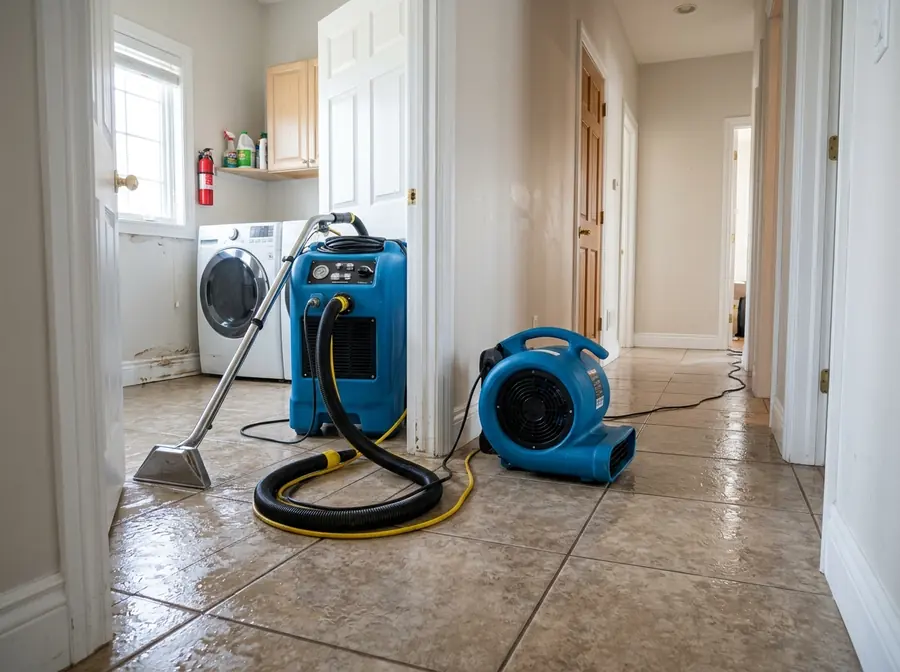
Structural drying may combine controlled air movement with dehumidification. The arrangement depends on the materials, room layout, temperature, humidity, and the extent of saturation. Equipment should be placed and operated with attention to safety, access, and the property's occupants. A drying plan is not simply a matter of placing fans in the wettest room and waiting.
Monitoring is important because moisture levels can change as water moves out of building materials. A surface that feels dry may conceal moisture below. A technician may take readings at selected locations and adjust equipment based on the observed conditions. The duration varies by project; it is not responsible to promise the same drying time for every property.
For more information, see the structural drying and dehumidification guide and the carpet and hardwood floor drying guide.
North Richland Hills homes, apartments, and commercial properties
North Richland Hills includes established residential neighborhoods, newer housing, apartments, retail and office properties, and community facilities. The type of building can influence how water travels and how a project is coordinated. A single-family home may have an accessible shutoff and one owner making decisions. A multi-unit property may require coordination between a tenant, property manager, building maintenance team, and neighboring units. Commercial properties may have operating hours, inventory, equipment, and shared building systems to consider.
The city's official parks and trails information describes a network of community and neighborhood parks, including places such as Cross Timbers Park, Fossil Creek Park, Green Valley Park, Northfield Park, Richfield Park, and Walker's Creek Park. These are useful local reference points, but their presence does not establish a flood condition for nearby properties. Flood exposure and drainage vary by parcel, elevation, topography, surface grading, channels, and the condition of public and private infrastructure.
North Richland Hills also provides interactive city mapping that can display streets, municipal facilities, parks, zoning, and floodplain information. Residents who need to understand a property's mapped floodplain status should consult the city's official mapping resources and relevant public agencies for an address-specific review. A general service-area page cannot determine whether a particular parcel is in a regulated flood zone or predict whether it will flood.
Where a property is part of an association or managed development, follow the established process for reporting common-area drainage, roof, or plumbing concerns. Restoration inside a private unit may need to be coordinated with building management if the source or affected materials involve shared systems.
What to do before the restoration team arrives
- Check for immediate hazards. Leave if water is near electrical systems, the structure appears unstable, or there is a gas or sewage concern.
- Stop the source if safe. Use an accessible plumbing shutoff only when you can reach it without entering a hazardous area; otherwise call a qualified professional.
- Keep people away. Restrict access to wet floors, contaminated water, damaged ceilings, and rooms with electrical concerns.
- Protect records. When safe, note when the leak began, what caused it, and which rooms or units appear affected.
- Take photographs only when safe. Images may help explain the loss, but do not delay emergency action or enter an unsafe area to obtain them.
- Contact the relevant trade. A plumber, roofer, appliance technician, or drainage professional may need to stop or repair the source.
- Arrange a restoration assessment. Explain the water source, affected materials, access restrictions, and any previous repair work.
How a water damage restoration project may proceed
The initial conversation helps establish what happened and whether the source has been controlled. The team may ask about the type of water, how long it has been present, the rooms affected, whether the property is occupied, and whether any electrical or structural hazards have been identified. For apartments and commercial buildings, the person authorizing work may need to arrange access with management or other tenants.
An on-site assessment may document visible conditions, inspect adjacent spaces, check moisture in appropriate materials, and outline the work that may be needed. Depending on the loss, this could include water extraction, removal of unsalvageable materials, drying equipment, dehumidification, cleaning, and monitoring. The scope should distinguish restoration tasks from repairs that require a plumber, electrician, roofer, or other qualified trade.
During drying, equipment placement and monitoring may change as the materials respond. If hidden moisture or additional damage is found, the scope may need to be discussed and documented before further work is authorized. At the end of the drying phase, the property may still require reconstruction or finish repairs. Restoration and rebuilding are related but not identical stages.
When water damage may lead to mold concerns
Mold growth becomes more likely when building materials remain damp. Not every water loss results in mold, but a property should not be assumed dry merely because visible water has disappeared. Moisture can remain inside drywall, insulation, wood, and flooring assemblies. Correcting the source and drying affected materials are important steps in managing moisture.
If visible growth or a persistent musty odor appears after a water event, further assessment may be appropriate. Avoid disturbing extensive suspected mold or removing large areas of material yourself. Texas regulates mold assessment and remediation as separate activities, with specific credential and independence requirements. Ask who will perform each regulated role and verify current credentials with TDLR.
For more detail, visit our mold removal and remediation hub and the focused guide to mold after water damage.
Insurance, estimates, and records
Water damage coverage depends on the policy and the cause of the loss. Sudden accidental plumbing discharge, roof leaks, surface water, groundwater, sewer backup, floodwater, and long-term seepage may be treated differently. Review your policy and contact your insurer or agent for instructions. Do not assume that every source of water or every resulting repair is covered.
Keep photographs, invoices, plumber or roofer reports, inspection notes, communications, and work authorizations. Ask the restoration provider to explain the proposed scope, what equipment may be used, which materials may need removal, and how changes will be documented. An estimate is not a guarantee of insurance payment, and a restoration provider cannot make the insurer's coverage decision.
Frequently asked questions about water damage in North Richland Hills
Does Home Mold Water Fire Damage serve both 76180 and 76182?
Both ZIP codes are included in the approved service-area information for North Richland Hills on this website. Confirm availability for your exact address, the type of loss, and the requested timing when you contact the team.
Can the city help with a drainage problem?
North Richland Hills Public Works provides information and assistance for residents with drainage concerns. Contact the city about public drainage issues. If water has entered your home or business, arrange a separate property assessment and have the source addressed by the appropriate trade.
Is a wet carpet always removable?
Not necessarily. The water source, contamination category, carpet and backing condition, underlay, subfloor, and time wet all influence the decision. A property-specific evaluation is needed to decide whether cleaning and drying are suitable or removal is necessary.
How long does structural drying take?
Timing varies with the amount of water, building materials, room conditions, and the drying plan. Monitoring helps determine progress; no single timeline applies to every property.
Should I run fans after a leak?
Do not operate electrical equipment in a wet or unsafe area. If the area is safe, follow professional instructions rather than directing household fans into concealed or potentially contaminated spaces. Improper airflow can spread debris or fail to address moisture inside materials.
Will insurance pay for the restoration?
Coverage depends on the cause of loss and the policy wording, limits, exclusions, and insurer's decision. Contact your insurer and keep documentation.
Arrange water damage restoration in North Richland Hills
If water has entered your North Richland Hills home, apartment, or business, explain the source, when it happened, whether it has been stopped, and which areas appear affected. Home Mold Water Fire Damage has more than 13 years of restoration experience, trained technicians, professional equipment, local operations serving communities across our coverage area, and 24/7 emergency response. We can discuss the appropriate next step and confirm availability for your address and project.
Explore our North Richland Hills restoration services page, the wider water damage restoration hub, and the contact page. If the water source is a burst pipe, appliance leak, or storm-related opening, the related service guides can help you understand the specific work involved.