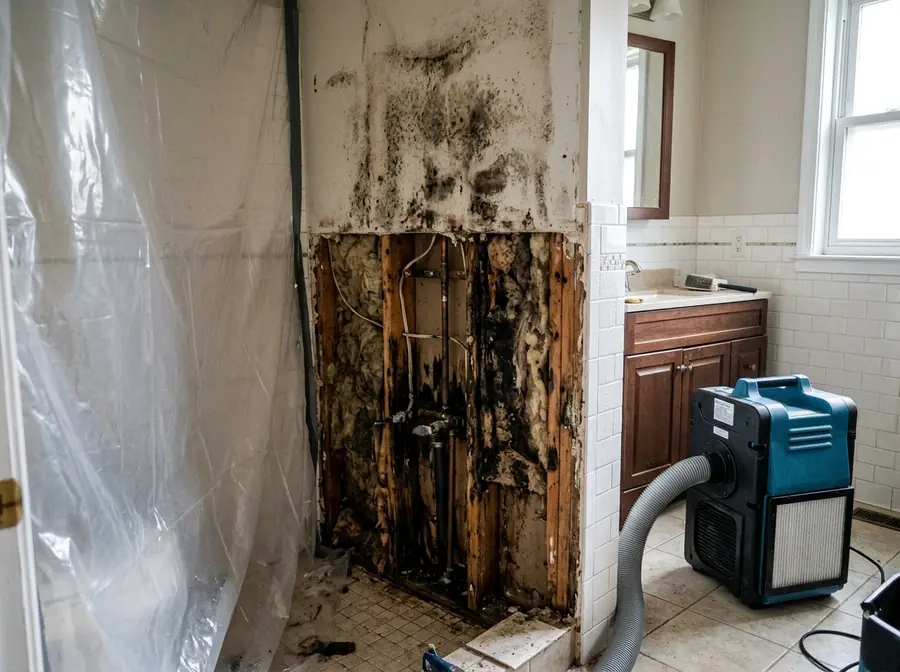
How indoor moisture can lead to mold growth
Mold is part of the natural environment. Indoor growth can develop when moisture remains on or inside materials that provide a suitable surface. A plumbing leak, appliance failure, roof opening, overflowing fixture, condensation issue, or water intrusion may leave drywall, wood, insulation, carpet, ceiling tile, or contents damp. If the source is not corrected, growth may become visible or remain hidden behind a finished surface.
Not every dark or discolored mark is mold. Staining can have several causes, and appearance alone cannot determine species or health risk. A musty odor may justify further investigation, but it does not show where growth is located or how far it extends. The building history, moisture conditions, and affected materials are important parts of a useful evaluation.
Richland Hills homes and commercial buildings differ in plumbing layouts, roof assemblies, ventilation, and maintenance history. A bathroom concern may involve a slow leak around a fixture; an attic issue may follow a roof leak or condensation; and a business property may have shared plumbing or HVAC equipment. A site-specific review is more useful than assuming that every property in the same ZIP code has the same risk.
Texas rules for mold assessment and remediation
Texas regulates certain mold assessment and remediation activities through the Texas Department of Licensing and Regulation (TDLR). The roles are distinct. A licensed mold assessment professional may inspect and, where required, prepare a written remediation protocol. A licensed mold remediation contractor carries out the remediation work within the applicable scope.
As a general rule, the same licensee cannot perform both regulated assessment and remediation on the same project, subject to a narrow statutory exception involving certain school districts. A person or company may hold credentials in both areas, but that does not authorize the same licensee to perform both roles on one project where the separation requirement applies. Ask who will assess the property, who will perform remediation, and who will conduct any required post-remediation assessment.
Whether a project is regulated or exempt can depend on the affected area, property type, owner involvement, and other statutory conditions. Do not assume an exemption applies based only on a quick visual estimate. Review current TDLR information at Mold Assessors and Remediators, the mold program FAQ, and the laws and rules. This page is general information, not a legal determination for a specific project.
When an assessment can help
An assessment may be useful when a property owner needs to understand the extent of visible or suspected growth, investigate a recurring moisture condition, identify materials that may require remediation, or obtain a written protocol for regulated work. Sampling is not automatically required in every situation. A qualified assessor should explain the question that a sample is intended to answer and how the result will influence the project.
Laboratory results without a building inspection and moisture history may be difficult to interpret. A useful evaluation considers where water entered, how long materials may have remained damp, whether the source was repaired, what surfaces are affected, and whether concealed growth is suspected. Where a written protocol is required, it should identify work areas, containment, materials to be removed or cleaned, protective measures, and completion criteria.
Do not cut open walls, pull up flooring, remove ceiling material, or disturb suspected growth to investigate on your own. Concealed wiring, plumbing, insulation, and potentially hazardous building materials may be present. A qualified professional can determine an appropriate method of investigation.
What a mold remediation project may involve
Correct the moisture source
Removing visible growth without fixing the moisture source can lead to recurrence. A plumbing leak may require a licensed plumber; a roof opening may need a roofer; and condensation may require an HVAC or building-envelope specialist. Drainage, failed sealant, and appliance connections may also need attention. The project scope should identify which source repairs are included and which require another trade.
Set up the work area
Where the project protocol requires containment, the plan should describe the work-zone boundary, access route, protective equipment, and steps intended to limit the movement of dust and debris. The appropriate approach depends on the affected area, materials, building occupancy, and project conditions. Occupants should follow instructions about which spaces may be used while work is underway.
Remove or clean affected materials
Some non-porous materials may be cleaned using an appropriate method. Porous materials with established growth may need removal because contamination can extend into the material. Drywall, insulation, carpet, ceiling tile, wood, and contents have different limitations. Decisions should follow the assessment and protocol rather than a blanket promise that every surface can be treated in place.
Dry and coordinate repairs
Remaining materials may need drying and moisture monitoring after remediation. Reconstruction can include replacement of drywall, insulation, flooring, cabinets, or trim. Plumbing, roofing, electrical, HVAC, and structural work may require separate qualified professionals and permits. A clear scope should identify who is responsible for each task.
Complete any required post-remediation review
Some projects require a post-remediation assessment or clearance process under Texas rules and the project protocol. Where required, it must be performed by an appropriately licensed professional independent of the remediation role as required by law. Ask for the reports and any applicable Certificate of Mold Damage Remediation documentation.
Common places to investigate moisture
Bathrooms and laundry areas
Showers, tubs, sinks, and cleaning create regular moisture. Failed caulk, damaged grout, leaking fixture connections, or a slow drip beneath a vanity can keep materials damp. Laundry rooms contain washer hoses, drain connections, and sometimes water heaters. Recurring staining or odor should prompt attention to the source rather than repeated surface wiping.
Attics and roof spaces
Roof leaks can affect decking, insulation, framing, and ceiling materials. Condensation may occur when warm indoor air reaches cooler surfaces or when ventilation and air sealing are inadequate. Do not walk on ceiling joists or disturb insulation without understanding the hazards. A qualified roofer may need to assess an exterior opening.
Walls, ceilings, and cabinets
Water from plumbing, windows, roofs, and appliances can move behind finished surfaces. A ceiling stain may be below a roof penetration or an upstairs plumbing issue. Cabinets can hide leaks around sinks, dishwashers, and refrigerator lines. A surface that feels dry does not prove that the material behind it is dry.
Flooring and enclosed lower spaces
Water may travel under carpet, laminate, hardwood, or resilient flooring and affect the subfloor. Crawlspaces and other enclosed lower areas may have plumbing leaks, ground moisture, or drainage problems. Do not enter a confined or unsafe area to investigate, especially where electrical equipment or contaminated water may be present.
Richland Hills public works and emergency preparedness
The approved service-area inventory identifies Richland Hills ZIP code 76118 and areas including Richland Hills West, Richland Hills East, Richland Hills North, Richland Hills South, and Richland Meadows. These names help identify a general area but do not establish a property's moisture history, drainage, or building materials.
Richland Hills Public Works describes its responsibility for municipal infrastructure and utilities and provides an after-hours contact for public water-main and sewer problems. If a suspected mold concern follows a public water or sewer issue, contact the appropriate city department about the public system. A private plumbing leak inside a property may require a licensed plumber and a separate moisture assessment.
The city's Emergency Management program addresses mitigation, preparedness, response, and recovery. This public planning role supports community readiness, but it does not determine whether a specific property has experienced water intrusion or mold growth. Parcel conditions vary with grading, drainage, roof condition, plumbing, ventilation, and maintenance.
When a moisture event occurs, record what happened and identify whether the source is public or private where possible. The remediation plan should distinguish a municipal infrastructure concern from damage to private drywall, flooring, cabinets, insulation, and contents. Do not assume a public utility problem has been corrected merely because the water is no longer visible inside the building.
Safe steps while you arrange professional guidance
- Keep children, pets, and occupants away from extensive or disturbed growth.
- Do not enter standing water where electrical wiring or equipment may be affected.
- Do not dry-brush, sand, scrape, or aggressively disturb extensive mold growth.
- Never mix bleach with ammonia, acids, or other cleaning products.
- Do not paint over visible growth or use fragrance to mask a musty odor.
- Do not disturb materials that may contain asbestos or lead-based paint.
- Photograph visible conditions from a safe location and record the moisture history.
- Notify a landlord, property manager, insurer, or repair professional as appropriate.
The U.S. Environmental Protection Agency emphasizes moisture control as the key to mold control and recommends drying wet or damp materials within 24 to 48 hours where possible. This is a prevention target, not a guarantee. The water source, material type, temperature, and duration of dampness all affect the situation.
Residential, rental, and commercial projects
A home project may involve a bathroom, attic, bedroom wall, kitchen cabinet, or multiple rooms after a water event. Occupants may need guidance about access, belongings, pets, and whether unaffected spaces can remain in use. Tenants should report the condition promptly and keep a record of notices. Landlords and property managers may need to coordinate access, source repair, and communication with occupants.
Commercial buildings may have shared plumbing, roof assemblies, HVAC equipment, storage areas, tenant spaces, and common corridors. Building managers should identify who can authorize work, which areas must remain open, and how affected occupants will be informed. The project should be coordinated with facility operations while following the applicable Texas assessment and remediation requirements.
Complex work may involve a licensed mold assessment consultant, licensed remediation contractor, plumber, roofer, HVAC professional, electrician, and reconstruction contractor. Ask for a written scope that explains the responsibilities, work sequence, affected materials, and tasks outside the remediation contract. This helps ensure that the original moisture source is not overlooked.
Insurance and mold project costs
Ask your insurer how to report the loss and what documentation is required. Keep photographs, maintenance records, repair invoices, professional reports, and copies of communications. If mold followed a plumbing leak, roof issue, appliance failure, or storm event, provide the known facts and ask whether the insurer wants to inspect before materials are removed.
Coverage depends on policy wording, cause of moisture, exclusions, limits, endorsements, and the insurer's decision. Sudden leaks, gradual seepage, maintenance issues, and floodwater may be treated differently. A contractor cannot guarantee approval. Project cost varies with the area affected, materials, access, containment, assessment needs, contents, source repair, and reconstruction. A site-specific written scope is more useful than a generic price-per-square-foot estimate.
Related Richland Hills restoration pages
- Richland Hills water damage restoration — extraction and drying after leaks or water intrusion.
- Richland Hills fire and smoke restoration — soot, odor, and firefighting-water concerns.
- Mold removal and remediation hub — broader service information and related topics.
- Mold inspection and testing — when an assessment or sampling question needs to be answered.
- Mold after water damage — moisture control after a leak or water event.
- Contact Home Mold Water Fire Damage — discuss the property and current availability.
Frequently asked questions about mold in Richland Hills
Does a dark stain mean black mold?
No. Color alone cannot identify a mold species. A qualified assessment considers the material, moisture history, and building conditions.
Does every project need mold testing?
No. Sampling is not automatically necessary in every situation. An assessor can explain whether testing answers a specific question and how the results will be used.
Can I paint over mold?
Painting does not remove growth or correct moisture. The affected material and moisture source need to be addressed before finishes are restored.
Can the same licensee assess and remediate a project?
Texas generally separates regulated mold assessment and remediation roles on the same project, subject to a narrow school-district exception. Confirm current requirements and the responsible professionals.
Will mold come back?
It can if moisture returns or the original source remains. Correcting plumbing, roof, ventilation, drainage, or condensation issues is central to reducing recurrence.
Will insurance cover mold remediation?
Coverage depends on the policy and cause of moisture. Ask the insurer about exclusions, limits, endorsements, and the specific event.
Discuss mold removal and remediation in Richland Hills
If you have noticed recurring growth, a musty odor, damp building materials, or a mold concern after water damage in Richland Hills, contact Home Mold Water Fire Damage to discuss the property and the appropriate next step. Our company brings more than 13 years of restoration experience, trained technicians, professional equipment, and 24/7 emergency response. Where Texas rules apply, the project must use appropriately licensed professionals and keep assessment and remediation responsibilities separate as required.
For related local guidance, read our Richland Hills water damage service and fire and smoke restoration page, or use the contact page.