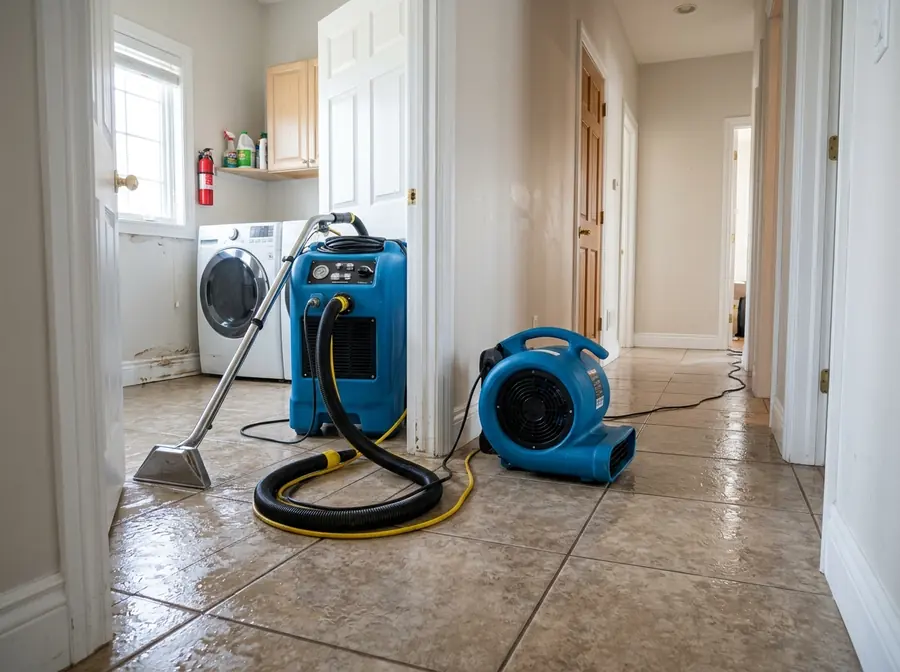
How water damage affects a building
Water may affect more materials than the surface where it first appears. Carpet and pad can hold moisture, hardwood may swell or cup, laminate can separate, and drywall may soften. Water can also travel behind baseboards, into cabinets, beneath flooring, and through insulation or framing. A stain on a ceiling may appear away from the roof opening or plumbing line that caused it. A dry-looking surface does not establish that concealed materials are dry.
Common sources include supply-line failures, plumbing leaks, washing machines, dishwashers, refrigerators with water connections, water heaters, toilets, sinks, tubs, roof leaks, and rain entering through exterior openings. A slow leak may remain hidden for some time, while a sudden pipe failure can affect several rooms quickly. The source and duration help determine the appropriate assessment and repair plan.
Water category matters. Water from a clean supply line is different from sewage, drain backup, or outdoor floodwater. Contaminated water can carry biological or chemical hazards and may affect which materials can be retained. Tell the restoration provider what is known about the source. Do not walk through or attempt to remove potentially contaminated water with ordinary household equipment.
What to do immediately after water enters
- Keep occupants away from hazards. Move people and pets away from active leaks, sagging ceilings, and contaminated water.
- Stay out of electrically unsafe areas. If water may have reached wiring, outlets, appliances, or an electrical panel, do not enter or touch equipment. Contact emergency services or a qualified electrical professional as appropriate.
- Stop the source only if safe. Use an accessible water shutoff only when it can be reached without risk. Otherwise contact a licensed plumber, landlord, building manager, or utility provider.
- Record the conditions. Note when the leak was discovered, the suspected source, affected rooms, and any steps already taken. Photograph the damage from a safe location.
- Notify the responsible parties. Contact your insurer, landlord, property manager, or facilities representative as appropriate.
- Describe the water source. Explain whether it came from a supply line, appliance, drain, sewer, or outside, and whether the source is still active.
Do not operate electrical equipment in a wet area. Do not use an ordinary vacuum or fan before hazards and contamination have been considered. A sagging ceiling can contain trapped water and may collapse; keep people clear and seek qualified help.
What professional water restoration may involve
Initial review and source repair
The first discussion should establish the address, building type, suspected source, time since discovery, rooms affected, and current safety conditions. The source must be stopped or repaired by the appropriate professional. A restoration contractor may handle mitigation, but plumbing, roofing, electrical, HVAC, and structural repairs may require separate licensed trades. The scope should identify which work is included and which is not.
Water extraction
If standing water is present and the area is safe to enter, suitable extraction equipment may be used to remove accessible water. The approach depends on the volume, flooring, water category, and access. A carpeted living area, a tiled kitchen, and a lower-level storage space may need different methods. Contaminated water requires appropriate protective handling and should not be carried into unaffected rooms.
Moisture checks and affected-material decisions
Moisture checks help identify which materials are wet and whether moisture has moved beyond visible surfaces. Readings need to be interpreted in context because different materials respond differently. The review may include flooring, baseboards, drywall, cabinets, framing, insulation, and contents. Some materials may be suitable for drying; others may need removal because of damage, contamination, or inability to dry effectively.
Structural drying and dehumidification
Drying may use air movement, dehumidification, and repeated monitoring. Equipment placement should reflect the affected rooms and materials. The goal is to return building components to appropriate moisture conditions, not merely to make the air feel dry. Duration varies with water volume, material thickness, access, indoor conditions, and whether the source has been repaired.
Cleaning, repairs, and closeout
After mitigation, affected areas may need cleaning and repairs. Replacing drywall, flooring, insulation, cabinets, or trim may require separate trades and permits depending on the work. The property owner should understand what was extracted, what was dried, what was removed, and which repairs remain. A clear closeout review helps distinguish completed mitigation from reconstruction that is still outstanding.
River Oaks local context: public works, water, and emergency services
The approved service-area inventory identifies River Oaks ZIP code 76114 and areas including River Oaks North, River Oaks South, Brookside, Churchill Gardens, Westside Acres, and Shady Oaks. These names help residents describe a general location. They do not establish a property's flood history, drainage condition, elevation, plumbing layout, or building materials. Provide the full address when discussing service availability.
The City of River Oaks publishes contacts for Public Works and its Water Department, alongside its Fire Department and Emergency Management contacts. These public services are relevant when a water event may involve municipal infrastructure or an emergency. A suspected public water or sewer issue should be reported to the appropriate city department. A private supply line, appliance, fixture, roof, or interior building component may require a licensed plumber or other qualified property professional.
The River Oaks Fire Department describes its public role as including fire suppression, emergency medical services, hazardous-material response, and rescue. For an immediate threat to life or safety, call 911. A private restoration provider is not an emergency service and cannot replace the fire department, EMS, or municipal utility staff.
Water intrusion from rain depends on parcel grading, drainage paths, roof condition, exterior openings, foundation details, and the specific weather event. A city service directory or public utility program does not establish that a particular street or property has flooded. If water enters the building, document where it appeared and whether the source has been corrected before deciding what restoration is needed.
Common causes of water damage
Plumbing leaks
Supply lines, shutoff valves, faucets, toilets, tubs, and shower connections can leak slowly or fail suddenly. A leak beneath a sink may affect cabinet bases and flooring; a concealed pipe leak can wet a wall cavity before a stain appears. A licensed plumber should correct the source, while the restoration review determines what materials became wet.
Appliance and water-heater failures
Washing machines, dishwashers, refrigerators with water lines, and water heaters can release water when hoses, valves, fittings, or internal parts fail. Water may travel beneath nearby flooring or cabinets. Tell the restoration provider which appliance was involved and whether the supply has been isolated.
Roof and exterior leaks
Damaged roofing, flashing, vents, windows, doors, and exterior penetrations can allow rainwater to enter. Water may travel along framing before appearing on an interior surface. A roofer or building-envelope specialist may need to correct the exterior opening while the restoration team addresses the interior moisture.
Drain and sewer problems
Blocked drains and sewer backups can introduce contaminated water into bathrooms, utility rooms, or lower spaces. Keep people away and avoid contact. A plumber or municipal utility investigation may be needed to identify the source, while cleanup requires contamination-aware procedures.
Water restoration in homes, rentals, and businesses
For a homeowner, the plan may need to consider bedrooms, bathrooms, kitchens, closets, attached garages, and stored belongings. Ask which rooms can be occupied safely while equipment is operating. Keep children and pets away from work areas and follow instructions about access, electrical circuits, and ventilation. If the property has more than one level, explain whether water reached a floor below the source.
Tenants should report active leaks promptly to the landlord or property manager and keep a record of the notice. Property managers may need to coordinate access, source repair, insurer communication, and communication with other residents. Water from one unit can affect a neighboring unit or common area, so the building review should consider the likely path of moisture.
Commercial properties may contain stock, computers, machinery, documents, customer areas, and shared systems. A business should identify the person authorized to approve work and explain operating constraints. The scope may need to separate affected areas from spaces that can remain open. Food, medical, industrial, and other specialist premises may have additional sanitation or regulatory requirements.
Insurance and water damage cost questions
Contact your insurer promptly and ask how to report the event, what documentation is required, and whether an adjuster needs to inspect before materials are removed. Photograph the source and affected rooms when safe. Keep repair invoices, restoration scopes, receipts, and communications. If the property is rented or commercial, confirm who is authorized to communicate with the insurer.
Coverage depends on policy wording, cause of loss, exclusions, limits, endorsements, and the insurer's decision. Sudden plumbing failures, gradual seepage, sewer backup, surface water, and maintenance issues may be treated differently. No contractor can guarantee coverage. Restoration cost varies with the water category, affected area, materials, access, extraction needs, drying duration, contents, and repair scope. A site-specific review is more useful than a generic online price.
Related River Oaks restoration services
- Fire and smoke damage restoration in River Oaks — soot, odor, and firefighting-water concerns.
- Mold removal and remediation hub — general information about moisture-related growth and the regulated remediation process.
- Water damage restoration hub — extraction, drying, and related services.
- Burst pipe cleanup — response after a failed plumbing line.
- Structural drying and dehumidification — monitoring building materials after extraction.
- Contact Home Mold Water Fire Damage — discuss the property and current availability.
Frequently asked questions about water damage in River Oaks
Who should I contact for a public water or sewer problem?
Contact the relevant City of River Oaks department for a suspected municipal water or sewer issue. A private plumbing failure inside a property may require a licensed plumber. The source should be identified rather than assumed.
Can water travel beneath flooring?
Yes. Water can move under carpet, laminate, hardwood, and other floor coverings and may affect the subfloor, baseboards, and adjacent wall materials. A surface inspection alone may not reveal the full extent.
How quickly should wet materials be dried?
As soon as it is safe and practical. The EPA recommends drying wet or damp materials within 24 to 48 hours where possible to reduce mold risk. This is a prevention target, not a guarantee.
Is water from a sewer backup treated like a clean pipe leak?
No. Sewage and other contaminated water require different protective measures and material decisions. Keep people away and arrange appropriate professional handling.
Will insurance cover the water damage?
Coverage depends on policy wording, cause, exclusions, limits, endorsements, and the insurer's decision. Ask about the specific event and do not assume every type of water loss is covered.
Does Home Mold Water Fire Damage respond 24/7?
Home Mold Water Fire Damage offers 24/7 emergency response. Contact the team to discuss the property and current availability. No fixed arrival time is guaranteed.
Arrange water damage help in River Oaks
If water has entered your River Oaks home, rental property, or business, contact Home Mold Water Fire Damage to discuss the source, affected rooms, water category, and safety conditions. Our company brings more than 13 years of experience, trained technicians, professional restoration equipment, and 24/7 emergency response. We can explain the mitigation scope and identify when a plumber, roofer, electrician, municipal department, or other specialist should be involved.
For related local guidance, read our River Oaks fire and smoke restoration page when available, or visit the contact page to discuss current service availability.