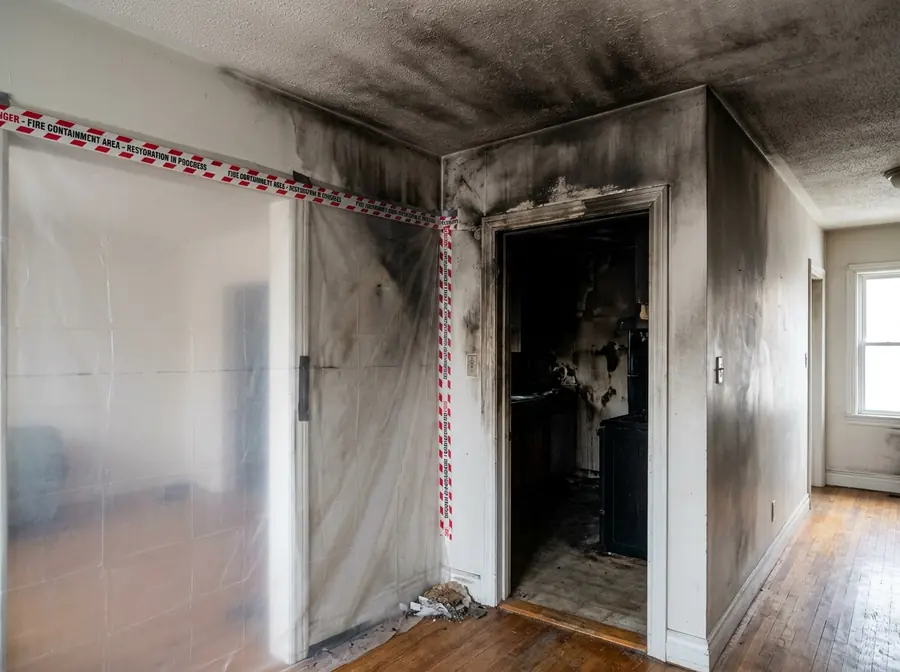
What fire, smoke, and soot can do to a property
Fire damage may include burned materials, heat exposure, smoke migration, soot deposits, odor, and water from firefighting. A cooking fire can leave visible charring around an appliance while smoke residue affects nearby cabinets, ceilings, hallways, and soft furnishings. A garage fire may affect stored belongings, connecting walls, roof spaces, and items that were not directly burned. The actual scope depends on the incident and the building layout.
Soot is not always the same from one loss to another. Its texture and behavior depend on what burned and the conditions of combustion. Some deposits are dry and powdery; others are oily, sticky, or difficult to remove. A method suitable for one painted surface may smear residue on another material or damage an unsealed finish. Avoid wiping every surface with household products before the residue and material have been considered.
Smoke odor may remain in porous contents and concealed spaces after visible deposits have been removed. Furniture, textiles, insulation, wall cavities, and other materials can retain odor. Effective odor management begins with source removal and appropriate cleaning. A treatment product alone cannot replace removal of heavily damaged material or correction of the conditions that retain smoke.
Wait for fire officials to release the property
Do not enter a fire-damaged building until the fire department or other responsible authority confirms that entry is permitted and safe for the proposed activity. Fire may weaken floors, ceilings, stairs, roof framing, and structural connections. Electrical systems, gas lines, damaged appliances, sharp debris, hot spots, and smoke residues may also create hazards. A property can remain unsafe after the flames have been extinguished.
For an active emergency, injury, or immediate danger, call 911. Follow emergency personnel instructions and do not re-enter to retrieve belongings. Do not operate switches, appliances, electrical panels, or gas equipment if they may have been affected. Structural, electrical, and utility concerns should be evaluated by qualified professionals before restoration work begins.
The River Oaks Fire Department describes its public responsibilities as including fire suppression, emergency medical services, hazardous-material response, and rescue. Its role is emergency response and public protection. A private restoration provider does not replace the fire department, EMS, fire investigator, or building official and cannot authorize entry where official restrictions remain.
First steps once access is authorized
- Confirm access conditions. Ask whether any rooms, floors, or exterior areas remain restricted and whether an investigation is ongoing.
- Document the damage. Photograph overall conditions and details of fire, smoke, soot, and water damage when safe to do so.
- Notify the insurer. Ask how to report the loss, whether an adjuster needs to inspect, and what temporary protection or mitigation is authorized.
- Secure openings safely. Broken doors, windows, and roof openings may need temporary protection, but do not climb onto a damaged structure or interfere with official instructions.
- Inventory belongings. List furniture, clothing, electronics, documents, tools, and business stock. Keep receipts and communications.
- Share known hazards. Explain the fire location, smoke spread, firefighting water, structural concerns, and any access restrictions to the restoration provider.
Do not discard items that may be needed for an investigation or insurance inspection unless they present an immediate safety or sanitation risk. Photograph items before removal where practical and follow the instructions of the responsible authority.
How professional fire and smoke restoration is planned
Initial assessment and work scope
The first discussion should establish the address, building type, incident details, safety status, affected rooms, and access restrictions. The property review may consider visible charring, heat effects, soot deposits, smoke odor, contents, and water from firefighting. A clear scope should distinguish mitigation and cleaning from permanent structural repair, electrical work, roofing, plumbing, and reconstruction, which may require separate qualified trades, permits, or inspections.
Soot cleanup
Cleaning methods depend on the type of residue and the surface. Some materials may be suitable for specialist dry or wet cleaning; others may be too damaged or porous to restore. The plan should identify which surfaces are included, what methods are proposed, and which materials may need removal or replacement. A single cleaning method should not be assumed appropriate for painted drywall, timber, stone, textiles, electronics, and metal equipment.
Smoke odor management
Odor can remain in porous contents and concealed spaces after visible soot is gone. Effective treatment starts with removing the source of odor and cleaning affected materials. The method depends on the building and the items involved. Ask the contractor to explain the proposed treatment, its limitations, and any areas that may need further work. A guarantee of complete odor elimination before inspection would not be reliable.
Contents cleaning and handling
Furniture, clothing, documents, electronics, and personal belongings may need individual evaluation. Some can be cleaned on site, some may require specialist contents restoration, and others may not be salvageable. Ask how belongings will be inventoried, packed, stored, transported, and returned if those services are part of the project. Identify sentimental, financial, and business-critical items before handling decisions are made.
Firefighting water and drying
Water used to extinguish a fire can affect flooring, wall cavities, insulation, cabinets, and contents. Depending on the amount and path of water, mitigation may include extraction, moisture checks, drying equipment, dehumidification, and monitoring. Water that has mixed with soot or debris requires appropriate precautions and should not be treated as an ordinary clean-water leak.
River Oaks emergency services and local property context
The approved service-area inventory identifies River Oaks ZIP code 76114 and areas including River Oaks North, River Oaks South, Brookside, Churchill Gardens, Westside Acres, and Shady Oaks. These names help identify a general location but do not establish that a particular neighborhood has experienced a fire or that every property has the same building characteristics.
The River Oaks Fire Department provides fire suppression, emergency medical, hazardous-material, and rescue services. Residents should use 911 for active emergencies and follow official instructions about scene access. The city also publishes contacts for Public Works, Water Department, and Emergency Management. These municipal services may become relevant if an incident also affects public utilities or requires local emergency coordination.
After a fire, a property may have broken windows, damaged doors, or an exposed roof. Later rain can enter through these openings and create additional water damage. Temporary protection should be considered only after the structure is safe and the relevant authority allows the work. Do not climb onto a damaged roof, move unstable debris, or attempt electrical repairs yourself.
If the incident involves a public utility problem, contact the appropriate city department. If the property needs structural repair, electrical inspection, plumbing work, roofing, or reconstruction, those tasks may require separate qualified professionals. The restoration plan should make clear which work is included and which requires another contractor.
Residential, rental, and commercial fire restoration
Homeowners may need to arrange temporary accommodation, access to medication and documents, pet care, and decisions about belongings. Do not assume that rooms away from the fire are safe to occupy. Smoke may have moved through the building, and structural or electrical hazards can extend beyond the visible burn area. Ask which spaces remain restricted and whether any portion of the home can be occupied during restoration.
In a rental or multi-unit property, tenants should follow emergency instructions and notify the landlord or property manager after the site is safe. A fire in one unit can affect shared corridors, neighboring units, roof spaces, and common systems. Management may need to coordinate inspections, access, utilities, security, temporary relocation, and communication with residents.
Businesses may need to protect inventory, machinery, computers, records, customer areas, and employee access. A retail property, office, restaurant, or warehouse has different contents and operating needs. The restoration plan should identify restricted zones, the parties authorized to approve work, specialist cleaning requirements, and whether any areas can safely remain open.
Insurance records after a fire
Report the loss promptly and ask the insurer what documentation is required. Photograph the property after it is safe to enter, prepare an inventory of affected belongings, and keep receipts for temporary repairs and emergency expenses. Ask whether damaged items should remain available for inspection before disposal. For a commercial property, confirm who is authorized to communicate with the insurer and approve work.
Coverage depends on the policy wording, cause of loss, exclusions, limits, endorsements, and the insurer's investigation and decision. Fire, smoke, contents, temporary accommodation, debris removal, and water from firefighting may be treated under different provisions. Home Mold Water Fire Damage can explain the restoration scope it proposes but cannot guarantee that a claim or expense will be approved. Our insurance claims help guide explains useful records and questions to ask.
Related River Oaks restoration services
- River Oaks water damage restoration — extraction and drying after firefighting water or a separate leak.
- Mold removal and remediation hub — general information about moisture-related growth and the regulated remediation process.
- Fire and smoke restoration hub — broader information about soot, odor, and contents.
- Smoke odor removal — source removal and odor-treatment planning.
- Soot cleanup — surface-specific residue decisions.
- Contact Home Mold Water Fire Damage — discuss the property and current availability.
Frequently asked questions about fire restoration in River Oaks
Can I enter after the fire is out?
Only after the fire department or other responsible authority confirms that entry is permitted and safe for the activity proposed. Hidden structural, electrical, and gas hazards may remain.
Can smoke affect rooms beyond the fire area?
Yes. Smoke can travel through openings and building pathways, leaving residue and odor in adjoining rooms and contents. The affected area should be assessed rather than judged only by visible charring.
Should I wipe soot from walls or furniture?
Do not assume wiping is safe. Some residues smear or damage finishes when treated incorrectly. Photograph the condition and ask about suitable cleaning methods.
Does firefighting water need separate drying?
Often, yes. Water can affect floors, wall cavities, insulation, and contents. Moisture checks help determine what needs extraction, drying, removal, or repair.
Will insurance pay for all fire cleanup?
Coverage depends on policy terms, cause, exclusions, limits, endorsements, and the insurer's decision. Ask about the specific claim before assuming an expense is covered.
Does Home Mold Water Fire Damage offer 24/7 emergency response?
Home Mold Water Fire Damage offers 24/7 emergency response. Contact the team to discuss the property, safety status, and current availability. No fixed arrival time is guaranteed.
Discuss River Oaks fire and smoke damage with Home Mold Water Fire Damage
If a fire, smoke, soot, odor, or firefighting-water incident has affected your River Oaks home, rental property, or business, contact Home Mold Water Fire Damage after emergency authorities have released the site for the proposed work. Share the address, building type, affected areas, known hazards, and any access restrictions. Our company brings more than 13 years of experience, trained technicians, professional restoration equipment, and 24/7 emergency response.
For related local information, read our River Oaks water damage restoration page, or use the contact page to discuss the next step and current availability.