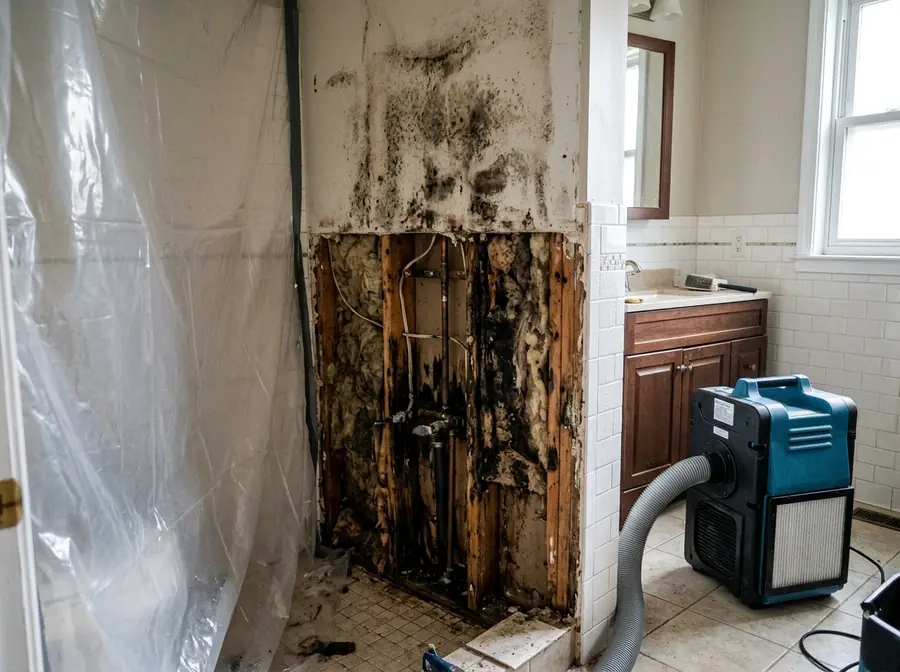
Mold growth is linked to building moisture
Mold spores are part of the normal environment and can enter a building through air movement, doors, windows, belongings, and dust. Their presence alone does not prove an indoor mold problem. Growth becomes more likely when materials remain damp and conditions support it. Cleaning a visible patch without finding and correcting the moisture source may leave the underlying condition unresolved.
Moisture can come from a leaking pipe, drain, fixture, water heater, appliance hose, roof opening, window, condensation, poor ventilation, or water that remained after an earlier loss. It can also travel through wall cavities, floor assemblies, and shared building spaces before appearing somewhere else. The first visible sign is not always located at the source.
Do not identify mold by color or assume that a photograph can establish species, extent, or health effects. Different materials can show similar discoloration, and the correct response depends on the building condition, moisture history, materials, and applicable requirements. Extensive growth, damaged materials, recurring moisture, or an unclear source are reasons to avoid disturbing the area and seek qualified guidance.
Common moisture sources in Roanoke properties
Plumbing and appliance connections
Leaks at sinks, toilets, showers, tubs, water heaters, washing machines, and dishwashers can wet cabinets, flooring, drywall, and trim. A slow leak may be hidden by stored items or an appliance. A sudden failure may spread water into adjoining rooms. The source should be repaired by the appropriate qualified trade; a licensed plumber should handle plumbing work that requires a license.
Roof and exterior openings
Damaged shingles, flashing, roof penetrations, windows, siding, and exterior joints can allow rainwater inside. Water may follow framing before it appears on a ceiling or wall. If the exterior defect remains, replacement materials can become wet again. A qualified roofer or building-envelope specialist may be needed to repair the entry point.
Bathrooms, laundry rooms, and ventilation
Bathrooms and laundry areas combine water use, humidity, plumbing, and ventilation. Failed seals, leaking hoses, inadequate exhaust, and condensation can contribute to persistent dampness. Mechanical systems can also develop moisture issues around condensate drains or poorly insulated components. The correct solution depends on whether the source is a leak, ventilation problem, or mechanical defect.
Stormwater and drainage
Rainwater moves across roofs, driveways, streets, and yards. Gutters, downspouts, grading, private drains, and public drainage infrastructure have different responsibilities. Roanoke residents should use official city alerts and local government resources for public-safety or municipal information, but a public alert does not determine the moisture condition inside a private building. A property-specific review is needed to identify how water entered and whether the issue belongs to a private building component or a public system.
What to do when you find suspected mold
- Leave extensive growth undisturbed. Do not scrape, sand, cut, or dry-brush large affected areas. Avoid moving dusty or damaged materials through unaffected rooms.
- Keep people away from immediate hazards. Keep children and pets away from the work area. If water is near outlets, wiring, appliances, or an electrical panel, do not enter or operate equipment.
- Control the water source only when safe. Use an accessible shutoff only if it can be reached without risk. Arrange a qualified plumber, roofer, or appliance specialist for repairs.
- Record the history. Note when the issue appeared, any known leak or storm, rooms affected, prior repairs, and whether the source has been corrected.
- Ask about the assessment process. Determine whether the project falls under Texas mold licensing rules and who will perform each regulated role.
Do not mix bleach with ammonia, acids, or other cleaners. Avoid spraying household chemicals into wall cavities or ventilation systems. Do not disturb materials that may contain asbestos or lead-based paint; arrange evaluation and handling by appropriately qualified professionals.
Texas mold assessment and remediation requirements
The Texas Department of Licensing and Regulation (TDLR) regulates mold assessment and mold remediation. Assessment and remediation are distinct activities. A properly licensed mold assessment professional evaluates the condition and, where required, prepares the relevant assessment report and remediation protocol. A licensed remediation company and properly registered personnel perform the regulated remediation work according to applicable rules and project documents.
Texas generally restricts the same person or company from performing both regulated assessment and remediation on the same project, subject to a narrow statutory exception involving certain school-district projects. The distinction matters because a property owner should understand who is independently assessing the condition and who is performing the cleanup. A contractor's estimate should not be represented as an independent assessment when a separate licensed assessment role is required.
Home Mold Water Fire Damage's supplied company background includes TDLR mold remediation company and contractor credentials, worker registrations, and mold assessment consultant and technician credentials. Every project must still comply with current TDLR requirements, including role separation where required. Verify the current license status of the specific company and individuals involved through the official state records rather than relying on an unverified license number or a broad marketing statement.
For current requirements, consult the TDLR mold licensing FAQ and Texas mold licensing laws and rules. The applicable requirements depend on the project and the activities being performed.
What a professional remediation project may involve
Review the building history and scope
The project discussion should cover affected rooms, known leaks, previous repairs, building occupancy, access limits, and contents. If regulated assessment is required, the assessment report and remediation protocol should guide the work. The remediation contractor should understand the boundaries and conditions rather than making unsupported assumptions based on a brief visual visit.
Plan containment and access
Depending on the project, containment may involve barriers, controlled access, protective coverings, and measures intended to reduce movement of dust or debris. The controls should match the area, building layout, materials, and protocol. Occupants should follow instructions about entering the work zone, moving belongings, and keeping pets away.
Clean or remove affected materials
Some nonporous materials may be suitable for cleaning, while damaged porous materials may need controlled removal. Drywall, insulation, trim, flooring, and cabinetry respond differently to moisture and contamination. The decision should follow the assessment and remediation protocol. A clear scope should explain what will be cleaned, what may be removed, and why.
Correct the source and dry the building
Remediation should be coordinated with correction of the moisture source. A plumber may need to repair a pipe; a roofer may need to correct flashing; an HVAC specialist may need to address condensation or ventilation. Drying should be appropriate for the materials and observed conditions. A dehumidifier does not repair a leak or prove that concealed framing is dry.
Keep records and arrange required verification
Project records may include photographs, assessment documents, the remediation protocol, work logs, material removal details, moisture observations, and any required post-remediation verification. If an independent assessment or clearance is required, the correct professional role must be respected. Keep the records for property maintenance, future transactions, and any insurance discussion.
Residential, rental, and commercial mold concerns
In a single-family home, suspected mold may involve a bathroom, kitchen, attic, laundry area, closet, or wall affected by a leak. The owner should coordinate source repair, assessment, remediation, and rebuilding. Replacing a stained finish without correcting the moisture source can lead to another problem after the repair.
Rental and multi-family properties may have shared plumbing, common walls, upper-floor leaks, and common mechanical spaces. Tenants should notify the landlord or property manager promptly and keep a written record. Owners and managers may need to coordinate access to adjoining units and shared spaces. Tenants should not remove drywall or undertake extensive remediation without authorization.
Commercial buildings can contain inventory, computers, records, food, equipment, and occupied workspaces. The work plan may need to separate the remediation area from employees and customers and coordinate access around operating hours. A warehouse, office, restaurant, and retail space have different contents and operational needs. Managers should identify critical equipment and confirm any specialist or regulatory requirements before work begins.
Costs and insurance considerations
Mold remediation cost depends on the area involved, material type, access, containment, assessment requirements, cleaning or removal methods, contents handling, drying, and source repair. A small accessible area is different from a concealed condition involving several rooms or shared building systems. Ask for a written scope that identifies the work area, assumptions, exclusions, and any separate trade services.
Insurance coverage depends on policy wording, cause of moisture, exclusions, limits, endorsements, maintenance history, and the insurer's decision. A sudden covered water event may be treated differently from long-term seepage, recurring condensation, or deferred maintenance. Do not assume that all mold-related work is covered. Notify the carrier as required, keep reports and photographs, and ask what documentation is needed.
Home Mold Water Fire Damage can explain the restoration scope but cannot guarantee coverage or claim approval. For general documentation information, read our insurance claims help guide. If the concern followed a leak, see our water damage restoration hub and mold after water damage guide.
Roanoke local context and property-specific decisions
Roanoke's official Alert Roanoke system provides opt-in notifications for public-safety alerts, weather events, service emergencies, and other community messages. These notifications can help residents stay informed, but they do not establish whether a private building has a mold condition or identify the source of moisture. A property inspection should focus on the building itself and the history of the affected materials.
Roanoke's approved service-area information lists ZIP code 76262. The city includes homes, rental properties, businesses, and buildings with different plumbing, roof, ventilation, and drainage systems. Do not assume that a particular neighborhood, street, or ZIP code has a mold problem. The moisture source and the building's actual condition should guide the work.
For municipal alerts, visit Alert Roanoke. For broader coverage information, see the service areas hub and our Roanoke service-area page.
Frequently asked questions about mold remediation in Roanoke
Can I identify mold by its color?
No. Color and appearance do not reliably identify a species or establish the extent of the condition. A qualified assessment should consider the building and applicable requirements.
Does every small patch require a licensed assessment?
Texas rules define regulated activities and include specific requirements and thresholds. Ask a qualified Texas professional whether the particular project falls under the licensing rules.
Can the same company assess and remediate the property?
Texas generally separates regulated assessment and remediation roles on the same project, subject to a narrow statutory exception. Confirm the arrangement against current TDLR requirements.
Will a dehumidifier remove mold?
A dehumidifier may help control humidity, but it does not correct a leak or replace appropriate assessment and remediation when required.
Does insurance cover mold remediation?
Coverage depends on the policy and cause of moisture. The insurer makes the coverage decision. Keep records and ask what documents are needed.
Discuss mold removal and remediation in Roanoke
If you have discovered suspected mold in a Roanoke home, rental, or business, describe the affected rooms, any known water event, and whether the source has been repaired. Home Mold Water Fire Damage has more than 13 years of restoration experience, trained technicians, professional equipment, and 24/7 emergency response. We can discuss the restoration work that may apply and clarify when a separately licensed assessment professional or specialist trade is needed. Confirm availability for the exact property address before arranging service.
Read our Roanoke service-area guide, the mold removal and remediation hub, and Roanoke water damage restoration page. For service questions, visit Contact Home Mold Water Fire Damage.