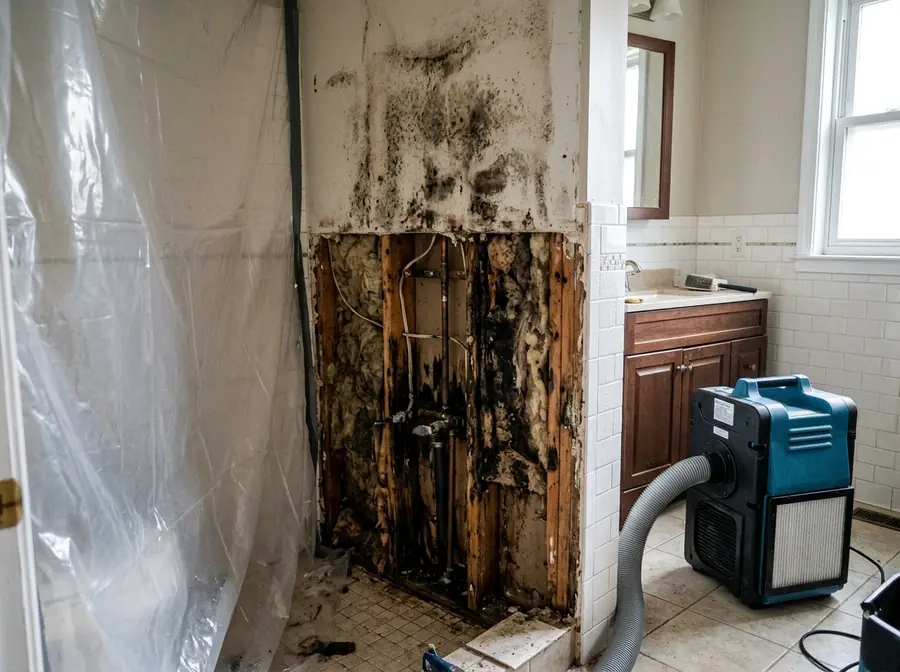
Mold is a moisture-related building concern
Mold occurs naturally in the environment, and spores can enter a building through normal air movement, open windows, doors, clothing, and dust. Indoor growth can develop when moisture persists on suitable materials. Paper-faced drywall, wood, dust, some insulation, furnishings, and other building materials may support growth when damp. A discolored patch is not automatically mold; stains can result from dirt, previous water marks, or other conditions. An assessment should identify the actual concern rather than assume from color or smell alone.
Cleanup should address the affected material and the conditions that allowed moisture to remain. A visible patch may be connected to a leak behind a wall, under flooring, above a ceiling, or around a mechanical component. Repeatedly cleaning a surface without correcting the moisture source may not resolve the underlying problem. The right approach depends on the area, materials, access, occupancy, and the applicable remediation requirements.
Do not disturb extensive suspected growth, remove large sections of material, or use ordinary fans to spread air through an affected space. Dry brushing, sanding, scraping, or demolition may release dust and debris. If the affected area is concealed, extensive, or associated with contaminated water, seek appropriate professional guidance.
Sansom Park neighborhoods and service-area context
The service-area list includes Sansom Park North, Sansom Park South, North Beverly Hills, and the Lake Worth Drive area, and identifies ZIP code 76114 for Sansom Park. These local labels are useful for identifying an address when discussing service. They do not document mold conditions, water damage, or a specific building defect in a neighborhood.
Properties in this area can differ in construction, roof condition, plumbing, ventilation, access, and prior maintenance. Moisture may develop in a bathroom cabinet, utility closet, attic, crawlspace, wall, ceiling, or around HVAC equipment. A rental or managed property may require the owner or property manager to authorize inspection and remediation. A business may need to coordinate work around stock, employees, customers, or restricted spaces.
When contacting a provider, share the property address, building type, where the concern is visible or noticeable, whether the area is wet, any history of leaks or repairs, and whether there are access restrictions. Do not open walls or move suspected contaminated materials just to provide a better view. Safe observations and photographs may help explain the concern, but they do not replace assessment.
Common causes of indoor moisture and mold
Hidden plumbing leaks
Leaks from supply pipes, drains, valves, showers, tubs, sinks, and appliance connections may damp materials over time. A cabinet base may be wet without an obvious puddle, or a wall may show staining from a concealed pipe. Plumbing repairs should be handled by a qualified plumber. Remediation addresses the resulting building conditions and does not replace the plumbing work.
Roof and exterior water intrusion
Rain may enter through roof penetrations, flashing, windows, exterior joints, or other openings. Water can travel along framing and show up away from the entry point. A roofer or qualified exterior professional may be needed to repair the opening. Interior remediation should be coordinated with source repair to avoid recurring moisture.
Bathroom, kitchen, and laundry humidity
Steam and condensation can contribute to dampness on surfaces, particularly where ventilation is inadequate or moisture is not managed. Recurring condensation or mold-like growth should not automatically be treated as a simple cleaning issue. Investigate whether ventilation, leaks, cold surfaces, or another moisture source is involved.
Air-conditioning condensation
Condensate drains, pans, coils, and insulation may become moisture sources if obstructed, damaged, or improperly functioning. HVAC components should be evaluated by a qualified HVAC professional when the source may involve the mechanical system. Avoid operating equipment that may be spreading moisture or debris until its condition is understood.
Past water losses
A previous leak, overflow, or storm intrusion can leave moisture in flooring, wall cavities, ceilings, or insulation. Surface repair alone does not confirm that the assembly was adequately dried. If odor, discoloration, or dampness returns, an investigation may help determine whether the original moisture remains or a new problem has developed.
Warning signs and safe observations
Potential clues include visible growth, persistent musty odor, recurring stains, peeling paint, bubbling finish, soft drywall, warped trim, damp carpet, or condensation that does not clear. These signs do not confirm mold or identify the extent. Consider where they appear, whether they follow rain or plumbing use, and whether the area has a known history of water damage.
Keep observations simple and avoid disturbing the material. If the area is safe, photograph what is visible and record when you noticed it. Do not scrape, sand, dry-brush, cut into walls, or move affected items through clean rooms. Do not run fans that may spread dust or debris from the suspected area. Keep children and pets away from the affected space.
This article is general property information, not medical advice or a diagnosis. If occupants have health concerns, speak with a qualified healthcare professional rather than relying on a property restoration guide to evaluate symptoms.
Practical steps before a mold service visit
- Protect people. Stay away from unsafe areas, especially if materials are wet and electrical hazards may be present. Do not enter standing water where electricity could be involved.
- Address the source. Arrange a qualified plumber, roofer, HVAC professional, or other trade as appropriate. If it is safe, an accessible shutoff may help stop active water; do not enter a hazardous area to operate it.
- Leave materials undisturbed. Avoid cleaning, scraping, sanding, or demolition of suspected growth. Do not use household fans to spread air through the area.
- Keep the space restricted. Prevent unnecessary entry and avoid moving contaminated materials into other rooms.
- Record the history. Note where you observed the issue, any leak or condensation, and previous repairs. Photograph only if safe.
- Ask about assessment and remediation. Clarify whether an independent licensed mold assessment is required, who will prepare any protocol, who will perform remediation, and how roles are separated.
Never mix bleach with ammonia, acids, or other cleaners. Household products are not a substitute for appropriate remediation, particularly for extensive growth, concealed contamination, or areas affected by sewage or floodwater.
Texas licensing: assessment is not the same as remediation
Texas regulates mold assessment and mold remediation. A licensed mold assessment consultant may evaluate conditions and prepare a remediation protocol when required; a licensed remediation contractor performs the remediation work under applicable requirements. The rules include independence provisions for certain projects. Do not assume that one person or company can perform every regulated role on the same project where prohibited, or that a general restoration credential automatically covers mold activities.
Before authorizing work, ask who is responsible for assessment, protocol preparation, remediation, and any required review. Verify the applicable credentials through the Texas Department of Licensing and Regulation (TDLR). Requirements and exceptions can depend on project circumstances, so confirm the rules for your particular loss instead of relying on a generic description.
Official information is available in the TDLR mold licensing FAQ, mold laws and rules, and the Texas Attorney General's consumer guide to mold remediation. These are useful sources for understanding licensing and consumer responsibilities. A contractor should be transparent about its role and scope.
What a remediation plan may specify
Where required, the project should follow the assessment and protocol. The written scope may describe affected materials, containment, work practices, cleaning or removal, debris handling, moisture control, and review. Ask for a clear explanation of the included tasks, limitations, and how changes will be authorized. Plumbing, roofing, HVAC, electrical, structural, and reconstruction tasks may need separate qualified professionals.
Containment and work-area boundaries
Containment may be used to limit dust or debris movement into adjoining areas. Its configuration depends on the work size, location, materials, building layout, occupancy, and applicable protocol. The plan should explain access restrictions and how occupants should move around the work area. Do not assume that an adjacent room is unaffected solely because it is outside the visible growth.
Cleaning or removing materials
Some materials may be cleaned with suitable methods; others may require removal if they are affected beyond practical restoration. The decision may involve drywall, insulation, carpet, flooring, trim, cabinetry, or contents. Material selection, extent, condition, and protocol guide the approach. Ask why a material is being retained or removed and whether disposal is included.
Drying and source correction
Moisture control may involve drying equipment, measurements, and monitoring of affected materials. The source repair should be coordinated with the plumber, roofer, HVAC professional, or other responsible trade. Remediation cannot responsibly guarantee that future growth will not occur if moisture returns.
Cleaning and project review
The project may include cleaning within the scope, removal of debris, and review of completed work. If independent assessment or post-remediation verification is required or specified, clarify who will perform it and what documentation will be supplied. Reconstruction or new finishes should follow appropriate review and coordination.
Residential, rental, and commercial property needs
In a home, suspected mold may be near a bathroom, kitchen, laundry area, closet, attic, crawlspace, or previous water-loss location. Owners should provide the relevant history and confirm the work area. If the property is rented, notify the landlord or property manager promptly, keep a record of the communication, and ask how inspection, source repair, and remediation will be authorized.
Apartment or multi-unit buildings may have shared plumbing, roofs, mechanical systems, or adjoining spaces. A manager may need to coordinate with neighboring units or inspect common areas to find the source. Access, communication, and temporary restrictions should be clear before contractors begin.
Commercial properties may have stock, records, mechanical rooms, employees, customers, or specialized operations. The plan should describe access, containment, contents handling, restricted zones, and any separate specialist work. Facilities with specific regulatory or operational requirements should consult the appropriate authority or qualified specialist. A restoration company should not promise health outcomes or a reopening schedule.
Costs, estimates, and insurance questions
Mold-remediation cost depends on the affected area, materials, concealed moisture, access, containment, contents handling, disposal, drying, and source repair. A written estimate should distinguish assessment, protocol preparation, remediation, and reconstruction. Ask whether cleaning, removal, drying, disposal, and any verification are included or handled separately. An estimate based on a photo may not reflect concealed conditions.
If the mold concern follows a water loss, contact your insurer to ask how to document the event. Coverage depends on policy wording, cause, exclusions, limits, endorsements, and insurer determination. Mold-related coverage may differ from the original water event. Keep photographs, invoices, receipts, communications, and work authorizations. A restoration provider cannot guarantee claim approval or payment.
Frequently asked questions about mold in Sansom Park
Is every dark spot mold?
No. Staining can have different causes. A professional evaluation may be needed to identify the condition and extent.
Should I spray and wipe the area?
Avoid disturbing suspected growth, especially if it is extensive, concealed, or associated with contaminated water. The correct approach depends on material, source, extent, and safety.
Can mold return after remediation?
New growth may occur if moisture returns. Remediation addresses the affected conditions within its scope, but ongoing source control and moisture management are important. No service can guarantee mold will never recur.
Does Texas require a licensed mold assessment?
Requirements depend on the project and applicable rules. Confirm whether assessment and a protocol are required, who performs those roles, and which credentials apply.
Do you cover Lake Worth Drive area and North Beverly Hills?
These names appear in the Sansom Park service-area list. Confirm current availability for your exact address and the project type.
Will insurance pay for remediation?
Coverage is determined by policy wording, the cause, exclusions, limits, and the insurer. Ask your insurer and keep records.
Discuss mold removal and remediation in Sansom Park
If you notice visible growth, persistent musty odor, recurring dampness, or a concern after a leak in Sansom Park, describe the conditions and whether the moisture source has been repaired. Home Mold Water Fire Damage has more than 13 years of experience, trained technicians, professional equipment, and 24/7 emergency response. We can discuss current availability and help clarify how the appropriate assessment and remediation roles should be arranged.
Learn more through the Sansom Park restoration services page, the main mold removal and remediation hub, or our contact page. For related water or fire concerns, visit the local guides to water damage restoration and fire and smoke damage restoration.