First steps when an appliance is leaking
If water is actively escaping, stop the appliance only if it is safe to do so. Use the appliance's shutoff or nearby water valve only if it can be reached without stepping into water or touching wet electrical equipment. If water is near an outlet, power cord, appliance motor, or electrical panel, stay clear and arrange qualified help. Do not unplug an appliance while standing in water.
Keep children and pets away from the wet area. If safe, move small valuables and items stored in nearby cabinets away from the leak. Do not pull a heavy appliance across a wet floor or attempt to tilt a water heater. A damaged appliance may be heavy, hot, electrically connected, or attached to gas or water lines. Contact the appliance service provider or a licensed plumber as appropriate.
Photograph the appliance, connection, puddle, and affected floor or cabinets where safe. Note when the leak was discovered, whether the appliance was operating, and whether it has leaked before. This information may help the repair professional and insurer understand the event. Once the source is controlled, arrange an assessment of the building materials that became wet.
Washing machine hose and drain leaks
Washing machines use pressurized supply hoses and a drain connection. A hose can split, a fitting can loosen, a valve can fail, or a drain hose can become displaced or obstructed. A supply hose failure may continue releasing water even when the wash cycle is not running, while a drain problem may release water only during discharge. The distinction matters when identifying the source.
Water can travel under the washer, into the laundry-room floor, behind baseboards, and through gaps into an adjacent room. If the laundry area is upstairs, water may reach the ceiling below. A floor covering can hide moisture in the underlayment or subfloor. A quick mop may remove the visible water but does not establish that the floor assembly is dry.
Have the hose, valve, drain, and appliance checked by an appropriate professional. Follow the appliance manufacturer's installation and maintenance guidance. Avoid reusing a visibly damaged hose or forcing a connection that does not fit correctly. Our burst-pipe cleanup page also explains why a pressurized supply failure can release water beyond the immediate fixture area.
Dishwasher leaks beneath cabinets and flooring
A dishwasher can leak at a supply connection, drain hose, door seal, pump, or internal component. Some leaks appear only while the appliance fills or drains. Others escape slowly and collect beneath the unit or adjacent cabinets. Because the dishwasher is often installed between cabinets, water can remain hidden until flooring begins to swell or a cabinet base changes shape.
Do not assume that a leak is limited to the area immediately in front of the appliance. Water may travel beneath a floating floor, into a cabinet toe kick, or along the subfloor. If the kitchen is above another occupied space, check for signs of water below without entering an area where a ceiling is sagging or electrical equipment is wet.
Appliance repair and restoration are separate tasks. The service technician or plumber should determine why the dishwasher leaked. A restoration assessment can check the floor, cabinets, adjacent wall, and any ceiling below for moisture. Cabinet material, floor construction, and exposure time help determine whether drying or removal is appropriate.
Refrigerator water line and ice maker leaks
Refrigerators with water dispensers or ice makers may have a supply line, filter housing, valve, or connection that leaks. Because the refrigerator is often pushed against a wall, a slow leak can go unnoticed. Water may spread under nearby flooring and cabinets before a visible puddle appears at the front of the appliance.
If you suspect a refrigerator line is leaking, do not pull the appliance out forcefully. The line can be damaged further, and the refrigerator may be heavy. Shut off the supply only if the valve is safely accessible. Ask an appliance technician or plumber to inspect the line and connection. If the floor is wet, avoid powering the refrigerator back on until the electrical and appliance safety questions are resolved.
Look for swelling at nearby baseboards, soft spots, discoloration, and changes in flooring seams. These clues can help identify a wider affected area, but they do not replace moisture measurement or a material assessment.
Water heater leaks and utility-room damage
A water heater may leak from a connection, valve, tank, drain, or other component. A failing tank can release a substantial amount of water, while a small fitting leak may cause ongoing dampness. Water heaters can be connected to electrical or gas systems and may be located in closets, garages, utility rooms, or other enclosed spaces. Do not attempt to move, drain, or disconnect the unit yourself if the area is wet or the system is not safe.
Contact a qualified plumbing or appliance professional to determine the cause and make the repair or replacement decision. If water has reached nearby drywall, insulation, flooring, stored belongings, or a ceiling below, those materials may need assessment. A water heater closet can hide damage behind the unit or at the base of the surrounding walls.
Restoration work may involve extraction, drying, and removal of materials that cannot be restored appropriately. The scope should distinguish water mitigation from replacement of the water heater or plumbing connections.
How restoration professionals assess appliance water damage
The assessment begins with the source and the building layout. The technician needs to know which appliance leaked, whether the water was from a clean supply or a drain, how long it may have been flowing, and which rooms or floors appear affected. Water from an appliance drain or a backed-up fixture may require different handling from a clean supply-line leak. If the water source is uncertain, it should not be assumed clean.
Moisture checks may include flooring, subfloor, cabinet bases, baseboards, drywall, insulation, and the ceiling below. The visible wet area may be smaller than the affected assembly. The technician should explain where moisture is suspected, which materials can be accessed, and whether further inspection is needed. Some materials can be dried in place; others may need removal because of damage, contamination, or inability to dry safely.
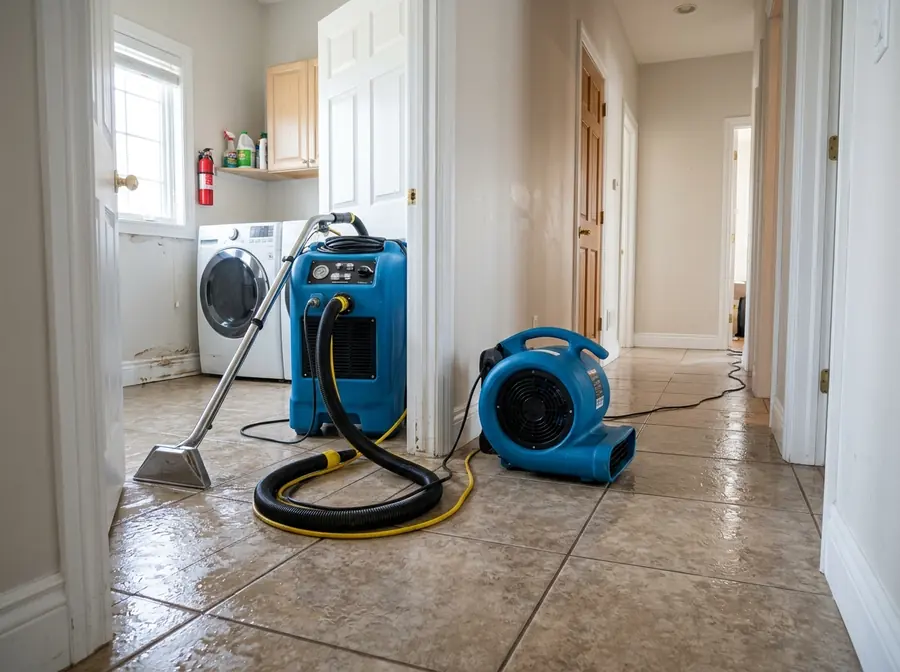
If water is still pooled, extraction may be appropriate. After that, air movers and dehumidifiers may support drying when used in a controlled and monitored way. Our structural drying and dehumidification page explains why monitoring matters more than simply leaving a fan running.
Cabinets, flooring, drywall, and hidden moisture
Kitchen and laundry cabinetry can absorb water at the base, seams, and unsealed edges. Particleboard and some composite materials can swell and lose strength. Solid wood may respond differently, but joints and finishes can still be affected. A cabinet's visible face may look normal while the toe kick or underside has absorbed water.
Flooring outcomes depend on the material and installation. Laminate and some floating floors can trap moisture underneath. Hardwood may cup or buckle as moisture levels change. Tile itself may resist water, but grout, underlayment, and subfloor assemblies can still be affected. Carpet and pad can hold moisture and require a separate evaluation. Read our carpet and hardwood drying guide for more on floor materials.
Drywall can wick water from the floor or absorb moisture from a leak behind the wall. Insulation may remain wet inside the cavity. Do not cut or drill into a wall without considering wiring, plumbing, asbestos-containing materials, or lead-based paint. A qualified professional should determine whether selective opening is necessary and safe.
Reducing the chance of another appliance leak
Follow manufacturer guidance for hose inspection, appliance installation, filters, and maintenance. Look for kinks, corrosion, bulges, loose connections, or signs of wear, and have questionable parts replaced by a qualified professional. Keep the appliance area accessible enough to notice leaks. If a refrigerator or washing machine has a shutoff valve, know where it is and make sure it can be reached safely.
Do not overload appliances or ignore repeated error messages, unusual sounds, slow drainage, or recurring dampness. A small recurring leak deserves attention before it affects cabinetry or flooring. When leaving a property vacant for an extended period, ask a qualified plumber or property professional about appropriate water shutoff precautions for that building.
These precautions reduce avoidable risk but cannot guarantee that an appliance or connection will never fail. If a leak occurs, stop the source safely and address the resulting moisture rather than relying only on surface cleanup.
Haltom City service context
Home Mold Water Fire Damage's Haltom City coverage centers on ZIP code 76117 and includes Browning Heights, Browning Heights East, Browning Park, Diamond Oaks, Diamond Oaks East, Diamond Oaks North, Fossil Beach, Fossil Ridge, Fossil Springs, Fossil Village, Haltom Acres, Meadow Oaks, North Eastridge, Oak Knoll, Oakview, Shady Dell, West Browning, Alta Vista Acres, Eastcliff, Eastridge, Golden Gardens, Heritage Village, Park View Hills, Springlake Park, The Trails, and Tri-County Estates. An appliance leak can occur in any property type; the exact address and affected building materials guide the response.
The supplied service-area list also includes North Richland Hills, Hurst, Bedford, Colleyville, Fort Worth, Arlington, Burleson, Roanoke, Haslet, and additional communities. Use the service areas directory to review the broader list. Roads such as Denton Highway, Broadway Avenue, Beach Street, Haltom Road, and Northeast Loop 820 can help identify a general area, but they do not establish a response-time promise.
Insurance and appliance leak documentation
Insurance coverage depends on the policy and the cause of the leak. A sudden accidental hose failure may be treated differently from a long-term leak, wear, corrosion, or a maintenance issue. The policy may also distinguish damage to the appliance itself from damage to the surrounding building. Contact your insurer and ask which provisions apply before assuming the repair or restoration is covered.
Photograph the appliance, hose or connection, water path, and affected rooms when safe. Keep the appliance service report, plumber invoice, and receipts for reasonable temporary measures. Make an inventory of damaged contents and ask whether the adjuster wants to inspect them before disposal. A restoration contractor can document the mitigation work but cannot guarantee a claim outcome. Our insurance claims help page explains how to organize the information.
Frequently asked questions about appliance leak water damage
Should I unplug a leaking appliance?
Only if the plug and surrounding area are dry and safe to reach. Never touch a plug, outlet, or appliance while standing in water. If electrical equipment is affected, keep clear and arrange qualified help.
Can a small dishwasher leak damage the cabinets?
Yes. Water can collect beneath the appliance and spread into cabinet bases, flooring, and subfloor materials. The extent depends on how long the leak continued and the construction of the kitchen.
Does a washing machine hose leak count as a burst pipe?
It is a plumbing supply or appliance-connection failure, but the exact cause should be described accurately to the plumber and insurer. Our burst-pipe page covers broader pressurized pipe failures.
Will you repair the appliance?
Appliance repair should be handled by a qualified appliance service professional. A licensed plumber should handle plumbing work that requires a plumbing license. Restoration addresses the resulting water damage.
Can I run a dehumidifier after a leak?
Do not place or operate electrical equipment in a wet or unsafe area. Once the area is safe, a professional can determine whether controlled dehumidification and monitoring are appropriate.
Get help with appliance water damage
If a washing machine, dishwasher, refrigerator, or water heater leak has affected your Haltom City property, contact Home Mold Water Fire Damage after addressing immediate safety and source-repair needs. Our team brings more than 13 years of experience, trained technicians, professional restoration equipment, and 24/7 emergency response. Tell us which appliance leaked, whether the source has been stopped, and which rooms or materials are wet.
For the full range of water services, visit the water damage restoration hub. Learn how projects are managed on our restoration process page, or use the contact page to discuss the next step.