What to do when a pipe bursts
If water is actively flowing, keep people away from the affected area and shut off the water supply only if the valve is safely accessible. A main shutoff may be located near the meter or where the service enters the building, while individual fixtures and appliances may have their own valves. Do not search through standing water to reach a valve. If water is near outlets, electrical panels, appliances, or wiring, do not enter the area or touch electrical equipment. Contact emergency services or the utility when there is an immediate safety concern.
Move people, pets, and valuables away from the wet area if it is safe to do so. Do not lift heavy furniture or move electrical equipment through standing water. If the ceiling is bulging, sagging, or dripping heavily, keep clear; a water-loaded ceiling can fail. Avoid puncturing it yourself. Photograph the damage from a safe location and record when the leak was discovered and what action was taken.
Call a licensed plumber or other qualified professional to identify and repair the failed pipe. If the break is part of a building system, the property owner or manager may need to coordinate with a plumber, landlord, utility, or building maintenance team. Once the water source has been controlled and the area can be accessed safely, contact a restoration provider to discuss the resulting moisture damage.
Why a burst pipe can affect more than the visible wet area
Water follows gravity, gaps, seams, and the paths of least resistance. A pipe inside a wall can wet insulation and framing before water appears at a baseboard. A leak above a ceiling may travel along joists or around penetrations and show up several feet away. Water from an upper floor can reach a lower ceiling, wall cavity, or floor assembly. The location of the stain is therefore not always the location of the pipe failure.
Floor coverings can conceal water in carpet pad, underlayment, or subfloor. Cabinet bases and toe kicks may absorb moisture. Drywall edges can wick water upward, while insulation may retain moisture within a closed cavity. A quick surface wipe cannot confirm that these materials are dry. A professional assessment should consider the source, duration, water category, construction, and accessible evidence of moisture migration.
For a multi-unit building, water can cross property boundaries. A pipe serving one apartment may affect another unit or a shared corridor. Property managers should document the source and affected areas and clarify who can authorize access and restoration work. Do not assume the unit where the water first appeared is the only area involved.
Common reasons pipes and connections fail
Supply-line and fitting failures
Flexible appliance hoses, shutoff valves, threaded connections, and fittings can deteriorate, loosen, or fail. A small connection can release a significant amount of water if it remains pressurized. When replacing a hose or fixture, use components suitable for the appliance and installation, and have plumbing work completed by a qualified professional where required.
Corrosion, wear, and hidden leaks
Pipe material, installation quality, water conditions, movement, and age can all affect plumbing performance. A slow leak may weaken nearby materials before it becomes obvious. Water stains, peeling finishes, unexplained dampness, or a persistent musty odor can be signs that a leak deserves investigation. Do not assume a stain is harmless because the surface feels dry today.
Cold-weather exposure
Although the Dallas–Fort Worth region has a generally warm climate, North Texas can experience freezing weather. Pipes in unheated spaces, exterior walls, garages, and exposed areas can be vulnerable during a hard freeze. Insulation, sealing air leaks, maintaining appropriate indoor temperatures, and preparing outdoor plumbing can reduce risk, but no precaution eliminates every failure. If a pipe freezes, do not use an open flame to thaw it. A plumber can advise on safe steps.
Construction movement or accidental damage
Renovation, drilling, fastening, landscaping, and other work can accidentally damage concealed plumbing. Before drilling or cutting into a wall or floor, identify the location of utilities where possible. If a pipe is struck, stop work, isolate the supply only if safe, and arrange a proper repair.
Water extraction after the plumbing repair
Once the leak is controlled, accessible standing water may need to be extracted. The appropriate equipment and method depend on the volume of water, the surface, access, and whether the water is considered clean or contaminated. Water from a potable supply line is generally different from a sewage backup or outdoor floodwater, but the specific circumstances still matter. If the source or water quality is uncertain, keep people away until it is assessed.
Extraction can reduce the amount of water available to soak into building materials, but it does not complete the restoration. The next step is to identify materials that have absorbed moisture and determine whether they can be dried in place or need removal. Carpets, pads, laminate, hardwood, drywall, insulation, and cabinet components respond differently. The plan should be based on material condition and the water event, not a blanket promise that everything can be saved.
Our broader water damage restoration service hub explains extraction and cleanup across different water-loss scenarios. For a property affected by a plumbing leak, the structural drying and dehumidification page describes the moisture-control stage.
Structural drying: checking what you cannot see
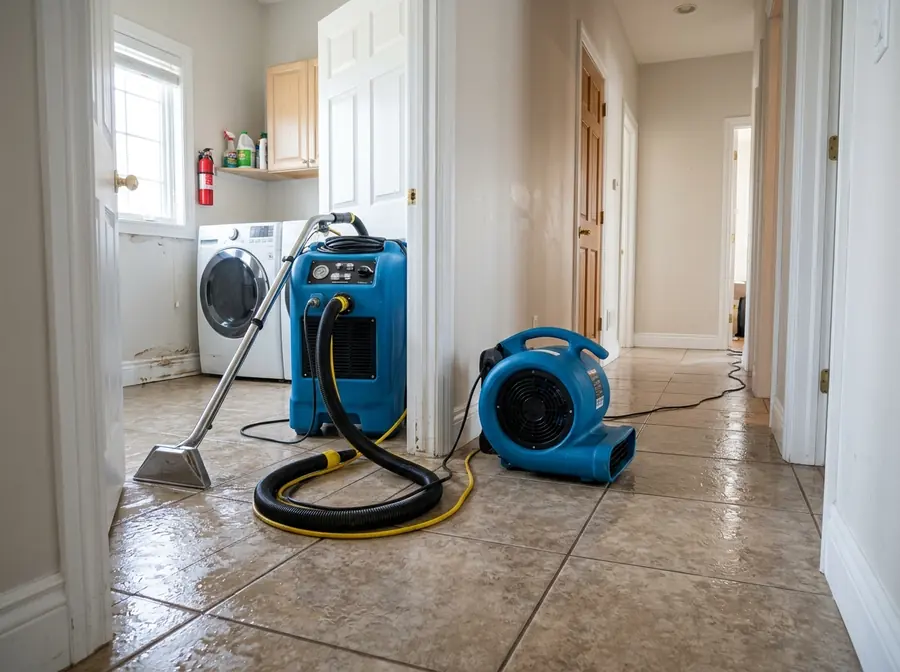
Drying may involve air movers, dehumidifiers, moisture meters, and repeated monitoring. Air movement helps moisture leave wet surfaces; dehumidification removes water vapor from the air. Neither process is a substitute for checking the affected materials. A wall cavity, subfloor, or insulation layer may need separate attention, and some assemblies may require selective opening to inspect or dry them safely.
Technicians should explain what materials are being monitored and why. Readings should be considered in context: material type, baseline conditions, temperature, and the location of each measurement can affect interpretation. Equipment placement may change as the work progresses. A room that looks dry is not necessarily dry inside a wall, while one material may be ready for the next stage before another.
Some wet materials can be dried and retained; others may be too damaged, contaminated, or inaccessible to restore appropriately. If removal is proposed, ask which material is affected, what evidence supports the decision, and whether the work is included in the agreed scope. If the property contains suspected asbestos or lead-based paint, do not disturb it without the appropriate specialist assessment.
Damage to floors, walls, ceilings, and belongings
Flooring can show swelling, cupping, buckling, seam separation, or staining after a leak. Carpet may hold water in the backing and pad. A floating floor can trap moisture underneath. Hardwood may respond to moisture changes over time, and the ability to dry it depends on the floor construction and exposure. Our carpet and hardwood drying guide covers those material-specific decisions.
Drywall may soften, swell, stain, or lose integrity. Insulation can retain water and may be difficult to inspect without opening the wall. Cabinets may absorb water along their base and joints. Ceiling materials may sag or separate. Do not assume that every stained material needs replacement, but do not cover it up before its condition is understood.
For personal belongings, photograph affected items and make a basic inventory. Move only items that can be handled safely and will not spread contaminated water. Ask your insurer whether it wants to inspect belongings before disposal. Documents, photographs, electronics, and sentimental items may need specialist restoration advice.
Residential and commercial burst-pipe cleanup
In a house, a burst pipe can disrupt kitchens, bathrooms, laundry rooms, utility closets, bedrooms, and living spaces. The restoration plan should identify which rooms can remain in use, where equipment will be placed, and whether occupants need to stay out of an affected area. Families should keep children and pets away from wet work zones. If the leak affects a rental home, notify the property manager or landlord promptly and keep a record of the communication.
In an office, store, warehouse, or multi-tenant building, a plumbing failure can affect inventory, computers, electrical equipment, records, and business access. The facility contact should identify restricted areas, critical operations, and who can authorize work. Water can move through shared ceilings and service penetrations, so adjacent suites may need inspection. A commercial project may also require coordination with building management and separate trades.
Insurance documentation after a burst pipe
Many policies distinguish sudden and accidental water discharge from gradual leakage, wear, maintenance issues, or flood damage. The exact language matters. Report the loss to your insurer promptly and ask what information it needs. Take photographs or video of the source and affected rooms where safe, keep receipts for reasonable temporary measures, and record the plumber's findings and repair invoice. Do not assume the insurer will cover every damaged material or every part of the plumbing repair.
Keep damaged items available for inspection if the insurer requests it, unless they pose a safety or sanitation risk. Ask before discarding expensive contents. A restoration contractor can explain the mitigation work and provide available documentation, but cannot guarantee claim approval or coverage. Our insurance claims help guide explains how to organize the paperwork.
Burst-pipe response in Haltom City and nearby areas
This page focuses on Haltom City, including ZIP code 76117 and the approved neighborhood list: Browning Heights, Browning Heights East, Browning Park, Diamond Oaks, Diamond Oaks East, Diamond Oaks North, Fossil Beach, Fossil Ridge, Fossil Springs, Fossil Village, Haltom Acres, Meadow Oaks, North Eastridge, Oak Knoll, Oakview, Shady Dell, West Browning, Alta Vista Acres, Eastcliff, Eastridge, Golden Gardens, Heritage Village, Park View Hills, Springlake Park, The Trails, and Tri-County Estates. The exact building and plumbing system matter more than the neighborhood name when assessing a burst-pipe loss.
Nearby communities in the supplied coverage include North Richland Hills, Hurst, Bedford, Colleyville, Fort Worth, Arlington, Burleson, Roanoke, Haslet, and other Tarrant County locations listed in our service areas directory. Local roads such as Denton Highway, Broadway Avenue, Beach Street, Haltom Road, and Northeast Loop 820 can help identify a general location, but please provide the full property address so current service availability can be confirmed.
Questions about burst pipe water damage
Should I call a plumber or a restoration company first?
If water is still flowing, focus on safety and stopping the source. Arrange a licensed plumber to repair the pipe, and contact a restoration provider to assess the resulting water damage. If electrical or structural hazards exist, address those before entering the area.
Will the water dry on its own?
Some surfaces may appear to dry, but moisture can remain under floors, behind baseboards, or inside wall cavities. A material-specific assessment helps determine whether controlled drying or removal is appropriate.
Does a burst pipe always mean the drywall must be removed?
No. The decision depends on the amount of water, exposure time, water category, drywall condition, and whether the cavity can be assessed and dried. Ask for the reason behind any proposed removal.
Can a burst pipe cause mold?
Materials that remain damp can support mold growth. Promptly controlling the leak and drying affected materials helps reduce that opportunity, but no one can guarantee that mold will never develop.
Does homeowners insurance cover the repair?
Coverage varies by policy and cause. Sudden accidental discharge may be treated differently from gradual seepage or neglected maintenance. Ask your insurer to explain the actual policy provisions.
Contact Home Mold Water Fire Damage for burst-pipe cleanup
If a burst pipe has affected your Haltom City home or business, contact Home Mold Water Fire Damage after taking appropriate safety steps and arranging source repair. We bring more than 13 years of restoration experience, trained technicians, professional equipment, and 24/7 emergency response. Tell us where the property is, whether the water is still active, what rooms are affected, and whether a plumber has attended.
For broader service information, visit our water damage restoration hub. To understand the stages of a project, read our restoration process, or use the contact page to discuss the next step.