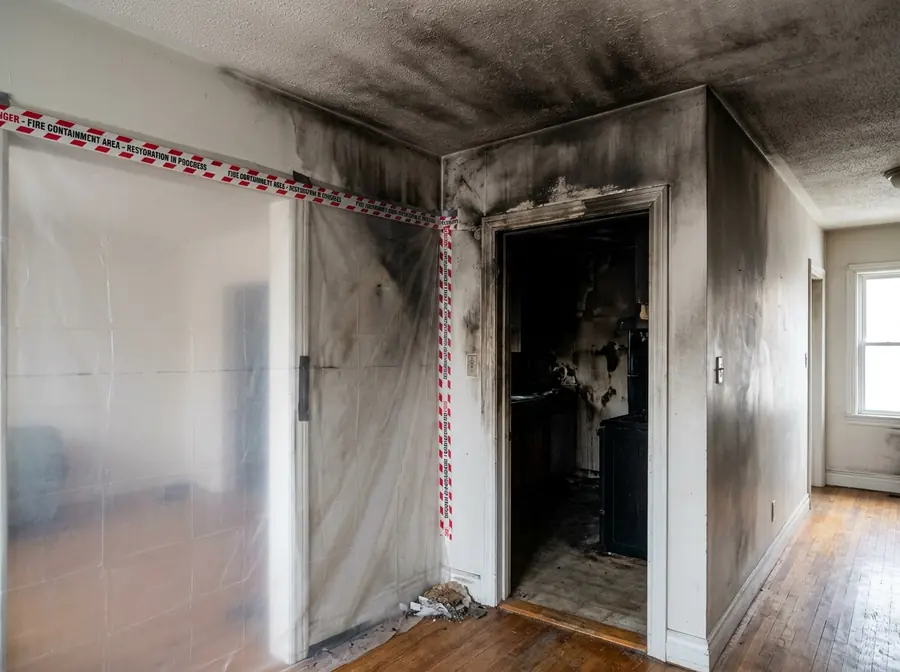
First priority after a kitchen fire: safety and official clearance
Do not re-enter the property until the fire department or responsible authority has said it is safe. A kitchen may contain damaged electrical circuits, hot appliances, gas connections, broken glass, weakened cabinets, or ceiling materials affected by heat. Smoke can irritate the eyes and respiratory system, and soot or fire debris may contain hazardous residues. Keep children and pets away from the affected area.
If you suspect a gas leak, leave the building and contact emergency services or the gas utility from a safe location. Do not operate switches or appliances where gas may be present. If electrical equipment is wet or visibly damaged, do not touch it. A qualified electrician should evaluate affected circuits and appliances before they are used again.
Once access is permitted, photograph the kitchen and adjoining spaces before moving items. Keep receipts for emergency purchases and record conversations with your insurer. Avoid discarding damaged appliances, cabinets, or contents before documenting them, unless an item presents an immediate safety or sanitation concern. Ask your insurer how it wants damaged property documented.
How a kitchen fire damages surfaces and building materials
Cabinets, drawers, and countertops
Cabinet doors and frames can be affected by direct heat, smoke deposits, and firefighting water. Particleboard and other composite materials may swell when wet, while adhesives, laminates, and finishes can blister or separate under heat. Smoke residue can collect inside drawers, hinges, shelves, and concealed corners. A surface that appears intact from the front may still have heat or moisture damage behind it.
Countertops require material-specific evaluation. Natural stone, engineered surfaces, solid-surface counters, laminate, and tile respond differently to heat and cleaning products. Cracks, discoloration, weakened adhesive, or damage around seams may affect whether a counter can be cleaned and retained or needs repair or replacement.
Appliances and electrical connections
Ranges, ovens, microwaves, refrigerators, dishwashers, and small appliances may be exposed to heat, smoke, soot, or water. External cleaning does not establish that an appliance is electrically or mechanically safe. Internal wiring, insulation, controls, motors, and electronic components may be affected even if the exterior looks normal. Have qualified appliance or electrical professionals determine whether equipment can be tested, repaired, or should be replaced.
Walls, ceilings, and ventilation
Smoke can travel above cabinets, into ceiling spaces, through open doorways, and toward return-air pathways. Painted drywall may hold residue or odor, while insulation and concealed framing may require inspection if heat or smoke entered a cavity. Range hoods and exhaust systems can collect grease and smoke deposits. A qualified HVAC or ventilation specialist may need to assess affected equipment and ductwork.
Flooring and nearby rooms
Water used to extinguish a fire can move under cabinets, into floor joints, beneath appliances, and into adjoining rooms. Hardwood, laminate, carpet, tile assemblies, and subfloors have different moisture tolerances. Smoke may also settle in dining areas, hallways, and nearby living spaces. Restoration should consider the path of both smoke and water rather than treating the kitchen as an isolated room.
Grease fires and residue: why the cleanup approach matters
Cooking oils and fats can create stubborn deposits when heated and burned. The residue may be oily, sticky, or bonded to nearby surfaces. Ordinary household cleaners may not be suitable for every finish, and aggressive scrubbing can damage cabinet coatings, stainless steel, painted walls, and appliance surfaces. A professional assessment helps distinguish soot from grease deposits and identify a safe cleaning method for each material.
Never pour water onto a grease fire. If a cooking fire is active, follow fire-safety guidance and call emergency services when necessary. Do not attempt to move a burning pan. After the incident, do not reuse an appliance or hood until it has been checked as appropriate. The restoration phase is not the time to experiment with chemical combinations or improvised degreasers.
What professional kitchen fire restoration may involve
The work begins with an inspection of the visible fire area and adjoining spaces. Technicians discuss how the fire started, how long it burned, what firefighting methods were used, and whether the property has been released for entry. They document visible damage and identify areas that may need further evaluation by an electrician, plumber, appliance technician, roofer, or building professional.
The restoration plan may include protecting unaffected areas, separating salvageable contents, removing loose debris, cleaning soot from suitable surfaces, and arranging specialist treatment for appliances or delicate belongings. If materials are charred, structurally compromised, or impossible to clean adequately, removal and replacement may be necessary. Demolition should be controlled and should account for concealed utilities and any suspected hazardous materials.
Where firefighting water has entered building materials, moisture checks and drying may be needed. Water can remain behind toe kicks, under flooring, inside wall cavities, and beneath appliances. Appropriate extraction, air movement, dehumidification, and monitoring may be used when conditions allow. The method and equipment depend on the building and the extent of water intrusion.
After cleaning and drying, repairs may involve cabinets, drywall, insulation, flooring, counters, paint, or trim. Structural, electrical, plumbing, gas, and permitted construction work must be completed by appropriately qualified and authorized specialists. Restoration coordination does not replace those specialist approvals.
Smoke odor can remain after visible kitchen cleanup
Removing visible soot does not always resolve smoke odor. Odor compounds can remain in porous materials, cabinet interiors, insulation, fabrics, and concealed spaces. Heat may also alter plastics and finishes. If a kitchen still smells smoky after initial cleaning, the affected materials and air pathways should be assessed before applying fragrances or sealing products.
Our smoke odor removal page explains why odor can persist and why treatment needs to match the materials affected. For surface residue, see soot cleanup in Haltom City. If contents need separate attention, visit our fire-damaged contents cleaning page.
Kitchen fire restoration for Haltom City homes and businesses
Kitchen layouts vary. A home may have an open-plan living area, a compact galley kitchen, or a separate utility space. A restaurant or commercial kitchen may include cooking lines, extraction hoods, refrigeration, storage, and shared ventilation. The fire's location and the building's layout influence where smoke and water travel and which systems need inspection.
Home Mold Water Fire Damage serves Haltom City, including the 76117 area, and nearby communities listed on our service areas page. We approach each property according to its actual condition rather than assuming that all kitchen fires require the same cleaning or replacement work.
Questions about kitchen fire cleanup
Can I use my kitchen after a small stove fire?
Do not assume the kitchen is safe because the flames were brief. Wait for official clearance where emergency responders attended, and have affected electrical equipment, gas connections, appliances, and ventilation evaluated as needed. Smoke residue and hidden heat damage may remain.
Do cabinets always need to be replaced after a kitchen fire?
No. Some cabinet materials and finishes may be cleanable, while others may be warped, charred, delaminated, or contaminated beyond practical restoration. The decision depends on material, heat exposure, smoke residue, and water damage.
Will firefighting water cause additional damage?
It can. Water may enter cabinet bases, flooring, wall cavities, and adjoining rooms. Moisture inspection helps identify where extraction and drying may be necessary.
Can smoke odor be removed from kitchen cabinets?
Sometimes, but the outcome depends on the cabinet material, finish, construction, and depth of contamination. Interior surfaces, joints, and porous components may need more attention than visible exterior faces.
Should I clean soot from appliances myself?
Do not use an appliance that may have been exposed to heat, smoke, or water until it has been checked as appropriate. External cleaning cannot confirm internal electrical or mechanical safety.
Does insurance cover kitchen fire restoration?
Coverage depends on the policy wording, cause of fire, exclusions, limits, and insurer decision. Document the damage and speak directly with your insurer. Our insurance claims help page provides general guidance.
Talk with Home Mold Water Fire Damage about kitchen fire damage
If a kitchen fire has affected your Haltom City property, Home Mold Water Fire Damage can help you understand the restoration steps that may be appropriate. Our team offers 24/7 emergency response and experience with fire, smoke, and water damage. Contact us to discuss the visible damage, the rooms involved, and any immediate access or safety restrictions. We can help outline the restoration scope and identify where specialist trades may be required.
For assistance, visit our contact page or learn more about our complete fire and smoke damage restoration services.