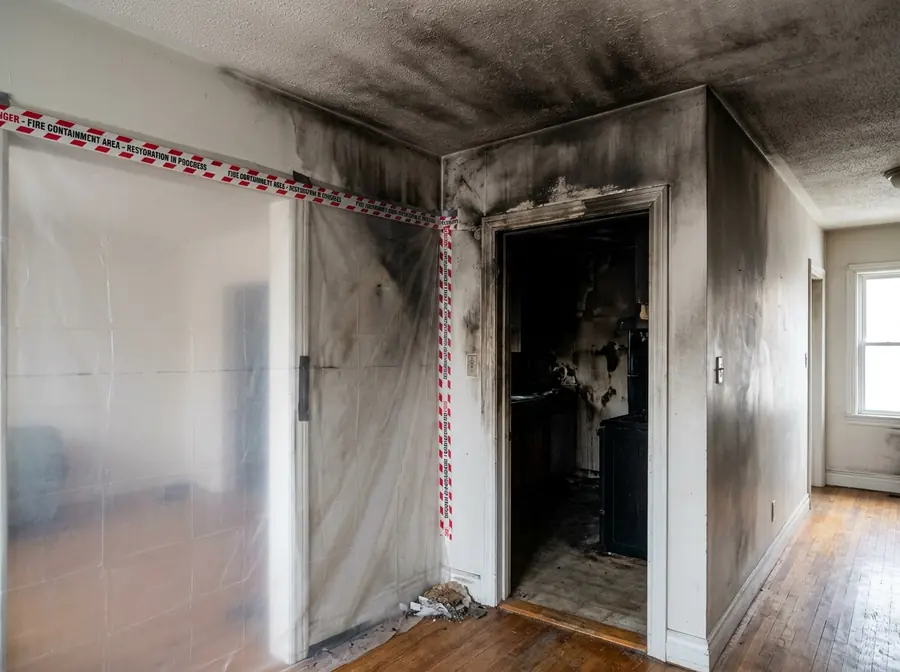
Why smoke smell can remain after a fire
Smoke is a mixture of gases and fine particles produced during combustion. Its composition varies with the materials involved and the conditions of the fire. Smoke can travel through doors, hallways, ceiling cavities, stairwells, ductwork, and other openings. It may affect rooms that were not touched by flames. Residue can settle on surfaces and contents, while odor can be absorbed by porous materials such as fabrics, upholstery, insulation, and some unfinished wood.
Ventilation and air movement during or after the incident can change where smoke travels. Fire suppression and later cleanup can also affect the pattern of residue. A room with little visible soot may still have odor, while a surface with visible residue may need cleaning before any deodorizing treatment is considered. The building should be assessed as a connected space rather than assuming the odor is limited to the room where the fire started.
Smoke odor is not a reliable way to identify the source material or measure exposure. Do not use smell alone to decide that an area is safe or that the cleanup is complete. If the fire department or another authority has not released the property for entry, stay out until it is safe.
Safety comes before odor treatment
Do not enter a fire-damaged building until the fire department or appropriate authority has said it is safe. Hidden hot spots, damaged wiring, unstable ceilings, compromised floors, and structural concerns can remain after flames are extinguished. Smoke residues and damaged contents may also require appropriate protective measures. Keep children and pets away from affected areas.
Do not run central HVAC, fans, or portable air cleaners in a way that could spread soot or residue into unaffected rooms before the system and building conditions are assessed. Do not use household vacuums on soot unless the equipment is designed and approved for the material and situation. Avoid dry wiping or scrubbing unknown residues; some soot can smear and become harder to remove.
Do not mix cleaning chemicals or use strong fragrances to mask the smell. Never mix bleach with ammonia, acids, or other cleaners. If electronics, appliances, or electrical equipment were exposed to smoke or water, do not power them on until they have been evaluated by an appropriate professional.
Find the source of the odor before choosing a treatment
A smoke odor assessment considers the fire origin, materials burned, smoke movement, affected rooms, visible soot, contents, and ventilation pathways. The source material matters because residue from cooking oils, plastics, synthetic furnishings, wood, paper, and other materials can behave differently. The time since the incident and previous cleaning attempts can also affect the approach.
Odor can remain in porous items even after nearby hard surfaces have been cleaned. Upholstery, carpet, drapes, bedding, clothing, insulation, and some unfinished wood may retain odor. If a building's HVAC system operated during the incident, filters, coils, ducts, and internal components may need evaluation by a qualified HVAC professional. Do not assume that changing a filter alone resolves every system-related issue.
A written scope should identify the rooms and contents included, the cleaning work planned, any specialist treatment being considered, and any areas that require another contractor. If additional affected areas are discovered, ask how the scope will be updated before extra work is performed.
Cleaning soot and smoke residue is not the same as deodorizing
Cleaning removes residue from surfaces and contents. Deodorizing addresses odor that may remain after appropriate source removal and cleaning. These tasks are related but not interchangeable. Applying a deodorizer to a sooty wall does not remove the soot. Similarly, painting over smoke residue without proper preparation can trap contamination or lead to finish problems.
Different surfaces require different cleaning methods. Hard, sealed surfaces may be cleaned using an appropriate method for the residue and finish. Porous surfaces may require more specialized treatment or removal. Electronics, artwork, documents, upholstery, and clothing may need specialist contents restoration. The method should be selected based on the material and the type of residue, not a one-product approach.
Our soot cleanup page explains why residue assessment and surface-specific cleaning matter. For the wider fire loss, visit the fire and smoke damage restoration hub.
Smoke odor in carpets, rugs, upholstery, and clothing
Soft goods can absorb smoke particles and odor. Carpet and pad may retain residue, especially where smoke settled or where firefighting water added moisture. Upholstered furniture has multiple layers of fabric, padding, and framing that can be difficult to inspect. Drapes, bedding, clothing, and rugs may need professional cleaning or other specialist handling. The ability to restore an item depends on the material, exposure, residue, and treatment options.
Do not place smoky clothing or rugs in a clean closet or vehicle before they are evaluated. That can transfer odor to other items. Keep affected contents separate from unaffected belongings where safe. Photograph and inventory items for insurance purposes, and ask the insurer whether it wants to inspect them before disposal.
Some items may be restored through specialist cleaning; others may be too damaged or may continue to hold odor. Avoid promising yourself that repeated home washing or fragrance products will solve every problem. Ask what can realistically be attempted and what the limitations are.
Smoke odor in walls, ceilings, and building cavities
Smoke can deposit residue on walls and ceilings and may enter gaps around trim, fixtures, and service penetrations. Odor can remain in porous finishes or hidden cavities. The appropriate treatment depends on the material and the extent of exposure. Some finishes may be cleaned; others may need sealing or replacement after proper preparation. Any coating or sealant should be part of an informed scope, not a shortcut that hides unremoved residue.
Insulation and other concealed materials may be affected if smoke entered an attic, wall cavity, or ceiling space. Accessing these areas can involve electrical wiring, framing, and potentially hazardous older building materials. Do not open a wall or ceiling as a DIY odor investigation. A qualified professional should determine whether selective opening or specialist inspection is appropriate.
Where structural materials were directly exposed to heat, a structural professional may need to assess them. Odor treatment does not repair charred framing, compromised connections, or damaged electrical systems.
HVAC systems and smoke odor
If the heating or cooling system was operating during the fire, smoke may have moved through return-air pathways or settled on system components. A filter can capture some particles, but it does not necessarily address residue on coils, blower components, duct surfaces, or other parts of the system. The HVAC equipment should be evaluated by a qualified technician before it is returned to normal operation if smoke contamination is suspected.
Do not run the system to “air out” a smoky building without understanding the contamination pathway. That may spread residue into rooms that were previously less affected. The restoration and HVAC professionals should coordinate about whether the system should remain off, whether components need cleaning or replacement, and how to protect clean areas during the work.
For a commercial building, the system may serve multiple suites or floors. Building management should identify which zones were operating and which tenants may be affected. The restoration scope should not assume that one filter replacement is a complete solution for a shared HVAC system.
Odor treatment methods and why one method does not fit all
Professional odor treatment may use different methods depending on the materials and contamination. Some approaches target airborne odor; others are intended for surfaces or contents. The treatment choice should follow cleaning and removal of the odor source where possible. It should also account for occupants, pets, sensitive equipment, ventilation, and the manufacturer's safety instructions.
Some deodorizing technologies require the building or treatment area to be unoccupied during use. If a contractor proposes such a method, ask what product or technology is being used, why it is appropriate, what preparation is required, how long the area must remain unoccupied, and what steps are needed before re-entry. Do not operate or purchase ozone-generating devices for occupied spaces; ozone can irritate the lungs and is not a substitute for removing smoke residue.
Odor results can vary. The source material, depth of contamination, building assembly, previous cleaning, and whether affected contents remain all influence the outcome. No responsible provider should guarantee that every odor will be eliminated in every circumstance.
Residential and commercial smoke odor projects
In a home, odor may affect bedrooms, closets, kitchens, living rooms, soft furnishings, and personal belongings. The project should identify which areas can be occupied, what items need specialist handling, and whether the HVAC system should remain off. Families should keep children and pets away from affected areas until the responsible professionals say they can return.
In a business, smoke odor can affect customer spaces, inventory, offices, production areas, and employee facilities. A property manager may need to coordinate tenants, building access, ventilation, and temporary closures. Some products or materials may be sensitive to odor and residue. A commercial plan should account for business operations without compromising safety or skipping necessary cleaning.
Haltom City and nearby service areas
Home Mold Water Fire Damage's local focus includes Haltom City ZIP code 76117 and approved neighborhoods such as Browning Heights, Browning Heights East, Browning Park, Diamond Oaks, Diamond Oaks East, Diamond Oaks North, Fossil Beach, Fossil Ridge, Fossil Springs, Fossil Village, Haltom Acres, Meadow Oaks, North Eastridge, Oak Knoll, Oakview, Shady Dell, West Browning, Alta Vista Acres, Eastcliff, Eastridge, Golden Gardens, Heritage Village, Park View Hills, Springlake Park, The Trails, and Tri-County Estates.
The supplied service-area list also includes North Richland Hills, Hurst, Bedford, Colleyville, Fort Worth, Arlington, Burleson, Roanoke, Haslet, and other communities. Use the service areas page to review the broader list. Roads such as Denton Highway, Broadway Avenue, Beach Street, Haltom Road, and Northeast Loop 820 can help identify a general location, but the exact property address is needed to confirm current availability.
Do not assume that every property in a ZIP code has the same building layout or fire exposure. The scope depends on the actual incident and the materials affected.
Insurance documentation for smoke odor and fire damage
Coverage depends on the policy, the cause of the fire, exclusions, limits, and the insurer's investigation. Smoke, soot, contents, HVAC cleaning, temporary housing, water used during firefighting, and structural repair may be considered under different policy provisions. Ask the insurer to explain which parts of the loss are being evaluated and what documentation is required.
Photograph affected rooms and contents when safe, make an inventory, keep receipts for reasonable temporary measures, and save reports from restoration and HVAC professionals. Ask before disposing of items that the insurer may want to inspect, unless they create a safety or sanitation risk. A restoration contractor can document the physical work but cannot guarantee claim approval. See our insurance claims help guide.
Questions about smoke odor removal
Will opening windows remove smoke odor?
Ventilation may help in some circumstances after the property is safe, but it does not remove soot or odor absorbed into porous materials. Follow professional guidance about HVAC and airflow so residue is not spread.
Can I use an air freshener or scented candle?
Fragrance may mask an odor temporarily but does not remove smoke residue. Do not burn candles in a property with unresolved fire or electrical concerns.
Does ozone remove smoke odor?
Ozone-generating devices should not be used in occupied spaces. Any proposed specialized treatment should be explained, including safety controls and re-entry requirements. Cleaning and source removal remain important.
Will smoke odor disappear after painting?
Not necessarily. Surfaces must be assessed and cleaned appropriately before any coating is considered. Paint is not a substitute for removing residue or addressing affected materials.
Can smoke odor be removed from furniture and clothes?
Some contents may be restored through specialist cleaning, while others may be too affected to retain. The material, exposure, and residue determine the options.
Talk with Home Mold Water Fire Damage about smoke odor
If smoke odor remains after a fire at your Haltom City home or business, contact Home Mold Water Fire Damage to discuss the incident, affected rooms, contents, and any cleanup already attempted. Our team has more than 13 years of restoration experience, trained technicians, professional equipment, and 24/7 emergency response. The property must be released as safe for the proposed work before restoration activity begins.
For the full fire cleanup service, visit the fire and smoke damage restoration hub. You can also read about soot cleanup, review our restoration process, or use the contact page.