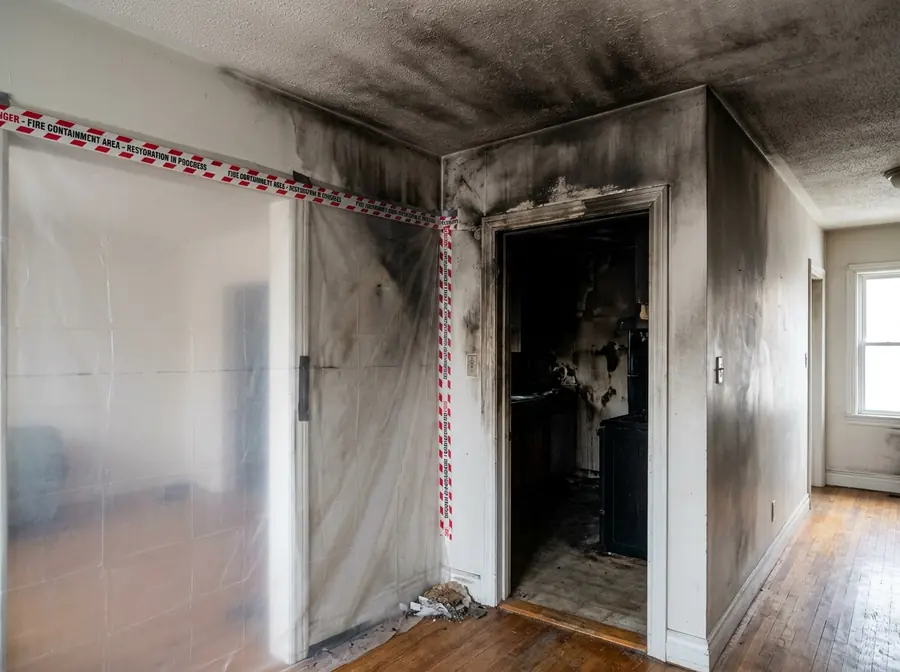
Why soot cleanup needs more than ordinary household cleaning
Soot is a fine residue created by incomplete combustion. A fire can produce different kinds of deposits depending on the fuel, temperature, oxygen supply, and burning conditions. Some deposits are dry and powdery. Others are greasy, smeary, or strongly bonded to a surface. A residue that looks similar from a distance may respond very differently to cleaning.
Dry wiping with an ordinary towel can spread loose particles across a larger area. Adding water too early can turn certain deposits into a smear that is harder to remove. Aggressive scrubbing can scratch paint, dull metal, damage wood finishes, or push residue deeper into fabrics. Household sprays may react with the surface or leave another layer that complicates later restoration. A careful plan starts by identifying the affected material and testing an appropriate method in a small area.
Smoke and soot also travel. Air movement, open doors, stairwells, ductwork, and pressure differences can carry residue away from the room where the fire began. A property owner may see obvious blackening in one room while a thin film has settled on remote surfaces. Restoration assessment should therefore consider adjacent rooms, upper surfaces, closets, contents, and relevant HVAC components rather than focusing only on the visible burn area.
What to do before soot removal begins
Wait until the fire department or other responsible authority has confirmed that entry is permitted. A fire-damaged building may contain unstable ceilings, weakened floors, damaged wiring, hot spots, broken glass, and contaminated water. Do not enter an unsafe structure to retrieve belongings or begin cleaning. If the building has been released for limited access, follow any restrictions and keep children and pets away from affected areas.
- Photograph visible damage from a safe location before moving or cleaning items.
- Avoid touching soot-covered surfaces unless necessary for immediate safety.
- Do not switch on HVAC equipment if smoke residue may have entered the system.
- Do not use a household vacuum, leaf blower, or ordinary fan to disperse dry residue.
- Keep food, medicines, cosmetics, and other exposed consumables separate until their condition is assessed.
- Do not mix cleaning chemicals or apply bleach, ammonia, or solvents to unknown residues.
If electrical systems are wet or damaged, leave them alone and contact a qualified electrician or utility provider. Structural concerns belong with the appropriate building professional. Restoration cleaning should begin only when the property and work area can be accessed safely.
How soot affects different building materials
Painted drywall and ceilings
Painted surfaces may show streaks, shadows, yellowing, or dark deposits. Whether they can be cleaned depends on the paint finish, age, porosity, soot type, and severity. A test area can help determine whether residue lifts without damaging the coating. If smoke has penetrated the paper facing, insulation, or wall cavity, surface cleaning alone may not address the full impact. Removal or replacement may be considered where materials are damaged or cannot be cleaned adequately.
Wood, cabinetry, and trim
Finished wood may be cleanable, but porous, unfinished, cracked, or heat-damaged wood presents a different challenge. Cabinet interiors, drawer runners, hinges, and joints can hold residue. Cleaning must account for the finish and construction so moisture or harsh chemicals do not create swelling, discoloration, or corrosion. Charred or structurally compromised components need evaluation before refinishing.
Metal, glass, tile, and hard fixtures
Nonporous materials can sometimes be easier to clean, but residue may still cling to textured surfaces, grout lines, seams, and hardware. Metal fixtures can corrode if deposits or cleaning agents remain. Glass may develop film or etching, while tile grout can retain staining. The appropriate process depends on the material and the residue rather than a single all-purpose cleaner.
Carpet, upholstery, and soft contents
Fibers can trap fine particles and smoke compounds. Dry particulate removal, specialized cleaning, or other treatment may be considered depending on the item and level of exposure. Items that are heavily burned, heat-deformed, or contaminated beyond reasonable restoration may need to be documented for disposal. Valuable or delicate textiles may require a specialist with the right equipment and experience.
Professional soot cleanup: assessment, testing, and treatment
A restoration visit typically begins with a discussion of the fire, the rooms affected, and any actions already taken. Technicians inspect visible deposits, identify material types, note possible smoke pathways, and look for related damage such as water from firefighting. The findings help separate surfaces that may be cleaned from materials that may require removal, specialist evaluation, or reconstruction.
Where appropriate, a technician may test a small, inconspicuous area before selecting a cleaning method. Methods can include controlled dry removal, specialized vacuum filtration, surface-specific cleaning agents, wet cleaning, or professional contents treatment. Not every method is suitable for every residue. The goal is to remove contamination while avoiding unnecessary damage, not to force every surface back to its original appearance.
Containment and controlled work practices may be needed to limit the movement of dust and residue into unaffected areas. Protective equipment is selected according to the conditions and hazards identified. If the fire involved chemicals, unusual materials, or extensive contamination, additional specialist guidance may be appropriate. Electrical, structural, roofing, and regulated hazardous-material work should be handled by qualified professionals within their respective scopes.
After cleaning, the affected areas can be reviewed for remaining visible residue, staining, corrosion, and odor. Some surfaces may need sealing or refinishing after cleaning; others may require replacement. A clean-looking surface is not by itself proof that all fire-related impacts have been resolved, particularly where smoke entered concealed spaces or mechanical systems.
Haltom City properties and nearby communities
Homes and businesses in Haltom City include different layouts, surface finishes, storage areas, and mechanical arrangements. A kitchen fire in a single-story home may affect adjoining living areas, while smoke in a multi-level property can travel through stairwells and openings. Commercial premises may have larger ceiling voids, storage rooms, equipment, and shared ventilation routes. These differences affect inspection and cleanup planning.
Home Mold Water Fire Damage serves Haltom City, including the 76117 area, and nearby communities listed on our service areas page. The exact scope and scheduling for a project depend on the property, damage, access, and current workload. We do not assume that every building has the same construction or that every fire produces the same residue.
How soot cleanup relates to the rest of fire restoration
Soot removal is one part of a wider recovery plan. Heat may damage framing, wiring, windows, roofing, and finishes. Smoke odor may remain in porous materials after visible deposits have been removed. Water used to extinguish the fire can affect flooring, wall cavities, insulation, and contents. These conditions should be evaluated together so one phase of work does not hide or worsen another problem.
For persistent odor, visit our smoke odor removal page. If the fire affected cooking areas, our kitchen fire restoration page explains grease, appliance, cabinet, and room-specific concerns. Where an opening needs temporary protection, learn about emergency board-up services.
Questions property owners ask about soot removal
Can I wipe soot off walls with a damp cloth?
It is better not to begin broad wiping before the residue and surface have been assessed. Some soot smears when moisture is applied, and scrubbing can damage finishes. A small test by a trained professional can help identify a suitable approach.
Does soot only affect the room where the fire started?
No. Smoke can move through doorways, stairwells, ceiling spaces, and ventilation pathways. Adjacent rooms and stored contents may have residue even when they show no direct flame damage.
Will cleaning remove every stain?
Not always. Soot may permanently discolor paint, porous materials, plastics, textiles, or finishes. The realistic outcome depends on the surface, the deposit, and how deeply it has penetrated.
Should I run my air conditioner after a fire?
Do not operate equipment if smoke or soot may have entered the HVAC system until it has been appropriately assessed. Running contaminated equipment can move residue into other areas. A qualified HVAC professional may be needed for system inspection and cleaning.
Can soot cleanup be done while repairs are underway?
Some work can be coordinated with repairs, but the sequence matters. Cleaning, demolition, containment, drying, and reconstruction should be planned so later work does not re-contaminate completed areas.
Will insurance pay for soot cleanup?
Coverage depends on the policy, cause of loss, exclusions, limits, and the insurer's decision. Keep photographs, records, and estimates, and speak with your insurer about the claim. Our insurance claims guide explains general documentation considerations.
Arrange a soot cleanup assessment
If a fire has left soot on your Haltom City property, avoid rushing into do-it-yourself cleaning that could spread residue or damage surfaces. Home Mold Water Fire Damage offers 24/7 emergency response for restoration needs in Haltom City and surrounding communities. Contact our team to discuss what happened, where residue is visible, and what areas may need inspection. We can help you understand the likely cleanup scope and how soot removal fits into the wider fire, smoke, and water restoration plan.
Call Home Mold Water Fire Damage when you are ready to discuss professional fire and smoke damage restoration, or use our contact page to request assistance.