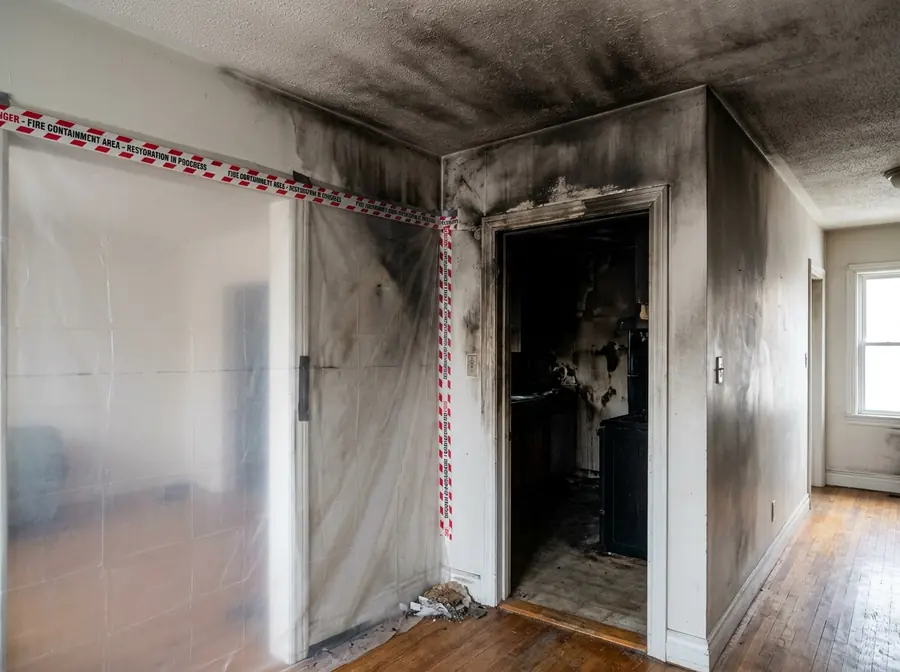
Call emergency services before arranging cleanup
If a fire is active or anyone may be in danger, call 911 and follow emergency personnel instructions. Do not re-enter the building to retrieve belongings, inspect damage, or operate utilities. Fire can weaken floors, roofs, stairs, and walls, while smoke and combustion residues may create hazards in rooms that do not show visible flame damage.
The Arlington Fire Department is a public safety agency with responsibilities that include fire suppression, special operations, training, medical operations, fire inspections and investigations, education, emergency management, and 911 communications. The department's work is distinct from private property restoration. Firefighters and other officials address the emergency and scene safety; a restoration contractor addresses an authorized cleanup and mitigation scope after access is permitted.
Wait for the appropriate authority to release the property or relevant work area. Do not assume that the departure of fire apparatus means the building is safe to occupy. Electrical, gas, structural, ventilation, and other concerns may require evaluation by officials or qualified trades. In a rental, apartment, or commercial building, coordinate access with the owner or facilities manager.
For official information about local emergency response and department divisions, see the Arlington Fire Department and its department overview. A restoration provider cannot release a scene or replace an official investigation.
Different types of fire-related property damage
Direct fire damage includes burned, charred, melted, or heat-affected materials. The visible burn area may not show the full extent of heat exposure. Nearby wiring, plastics, cabinetry, finishes, insulation, and structural components may need evaluation. Do not assume a component is safe because it looks intact; a qualified building or trade professional may need to inspect it.
Smoke can move beyond the room where the fire started. It may pass through doorways, hallways, ceiling spaces, stairwells, and ventilation routes, then settle on walls, ceilings, furniture, clothing, electronics, appliances, and stored items. The actual pattern depends on the fire, airflow, building design, and ventilation conditions. A clean-looking room may still need assessment.
Soot is a residue from combustion, and its properties vary with the materials burned and conditions of the fire. Some deposits are dry and powdery; others may be oily, sticky, or bonded to a surface. Aggressive wiping, dry brushing, or using the wrong cleaner can smear residue, damage finishes, or push particles into porous materials. Avoid broad DIY cleaning before the surfaces have been assessed.
Fire suppression may also introduce water damage. Water can soak carpets, padding, flooring, drywall, insulation, and ceiling assemblies. In multi-level buildings it may affect lower floors and shared areas. A complete restoration scope may need to address both smoke/soot and water extraction or drying.
Arlington Fire Department and property recovery
The Arlington Fire Department's published overview describes divisions and services including suppression, special operations, training, medical operations, fire inspections, investigations, education, emergency management, and communications. These public services support emergency response and community safety. They do not determine the scope of a private cleanup contract or guarantee that a property can reopen by a particular date.
After a fire, owners may need to coordinate with fire officials, building officials, utilities, insurers, landlords, and property managers. A commercial site may have additional requirements related to fire protection systems, occupancy, access, or inspections before operations resume. A residence may need electrical, gas, structural, and building-envelope checks before re-occupancy.
Restoration work should be planned around the released work areas and any restrictions that remain. If the incident is under investigation, do not move or discard items that may be relevant without permission from the responsible authority or owner. A restoration provider should respect the scene and coordinate access rather than interfere with official work.
What to do once access is permitted
- Confirm the release. Follow fire department, building official, owner, and insurer instructions.
- Stay clear of hazards. Avoid unstable ceilings, damaged floors, exposed wiring, gas systems, and standing water.
- Arrange utility checks. Have electrical, gas, HVAC, and other systems assessed by qualified professionals where necessary.
- Notify responsible parties. Contact the property owner, landlord, facilities manager, and insurer as applicable.
- Document safely. Photograph only areas that are safe and released for entry; keep official reports and communications.
- Limit movement of contents. Soot can transfer from affected items to clean belongings and spaces.
- Discuss the work plan. Ask which rooms, materials, and contents need cleaning, drying, removal, or specialist attention.
Do not use ordinary household vacuums, dry brushes, or fans to spread soot. Do not mix cleaning products. Avoid discarding contents before the owner or insurer has advised how they should be documented. Food, medication, cosmetics, and other consumables exposed to smoke, heat, or suppression water should not be assumed safe to reuse.
Fire and smoke damage inspection
A restoration assessment starts with the incident details and the areas released for inspection. The team may ask where the fire began, which rooms were involved, whether smoke travelled into adjoining areas, whether the HVAC system was operating, and whether firefighting water was used. The building type, occupancy, contents, and access restrictions also affect the work plan.
The inspection may separate direct fire damage, soot deposits, smoke odor, water damage, and contents concerns. Different surfaces need different decisions. Painted drywall, wood, metal, stone, plastic, fabrics, insulation, and electronics respond differently to cleaning and restoration. Some items may be suitable for specialist cleaning; others may be too damaged or contaminated to retain.
A written scope should identify the areas to be addressed and the tasks included. Depending on the loss, work may involve debris handling, soot assessment, surface cleaning, contents evaluation, odor-treatment planning, water extraction, structural drying, and repair coordination. Electrical, plumbing, HVAC, roofing, and structural repairs may require separate qualified trades.
Soot removal and cleaning methods
There is no universal soot-cleaning product or technique. The appropriate method depends on the residue, surface, porosity, finish, and extent of contamination. A process suitable for metal may damage painted drywall, raw wood, textiles, or electronic components. Testing and specialist guidance may be appropriate before treating a large area.
Some residues may be addressed with dry cleaning methods, while other conditions require carefully selected wet cleaning or specialist products. Excess moisture can damage finishes or spread contamination. Abrasive scrubbing may leave permanent marks or push soot deeper into porous materials. The work should follow appropriate safety controls and material guidance.
Contents need separate evaluation. Furniture, clothing, rugs, documents, electronics, appliances, and business inventory may require different handling. Some items can be cleaned by a specialist, while others may need to be discarded after owner or insurer review. Keep a contents record and avoid moving soot-covered items through unaffected rooms.
Smoke odor and contamination in other rooms
Smoke odor can remain after visible residue has been removed because odor-causing compounds may remain on surfaces or within materials. Soft furnishings, carpet, insulation, unfinished wood, wall cavities, and HVAC components may retain contamination. Fragrance or air freshener can mask an odor temporarily without addressing its source.
A source-based treatment plan may include cleaning affected surfaces, evaluating contents, removing porous materials that cannot be restored effectively, and considering whether HVAC components or concealed spaces need specialist attention. Any treatment method should be appropriate for the building, materials, and occupancy, with equipment and products used according to their instructions.
No responsible contractor should promise complete odor elimination before assessing the property. Ask what source materials will be cleaned or removed, whether occupants need to leave during any treatment, and how the proposed work will be evaluated. Our smoke odor removal guide explains this topic further.
Firefighting water and structural drying
Water used during fire suppression can soak flooring, carpet padding, drywall, insulation, cabinets, and structural materials. It may travel into rooms below the fire area or spread along floor assemblies. The water can mix with soot and debris, so materials should be assessed before ordinary cleaning or drying begins.
When the property is safe, extraction may remove standing water. Moisture checks can help identify affected materials and guide a structural drying plan. Controlled air movement and dehumidification may be used with monitoring to determine how materials respond. Equipment should not be operated before electrical and other safety concerns have been addressed.
Some materials may be suitable for drying and cleaning; others may need removal if they cannot be restored appropriately. The decision depends on the material, water exposure, contamination, and project requirements. Reconstruction is a later stage and may involve drywall, insulation, flooring, cabinetry, paint, and qualified trade work.
Insurance records and repair coordination
Coverage for fire, smoke, and related water damage depends on the policy, cause of loss, exclusions, limits, endorsements, and insurer decision. Contact the insurer or agent and follow the policy's reporting and documentation requirements. A restoration estimate is not a guarantee of coverage or reimbursement.
Keep incident reports, official instructions, safe photographs, contents records, estimates, work authorizations, invoices, and communications. Ask the restoration provider to explain the scope and how additional damage will be documented. If concealed damage is discovered after work begins, request an explanation and updated scope before authorizing additional tasks.
Our insurance claims help page provides general information about organizing a property claim. Questions about coverage should be directed to the insurer or a qualified insurance professional.
Frequently asked questions about Arlington fire restoration
Can restoration begin before the property is released?
Do not assume so. Access and work must follow instructions from the fire department and other authorities responsible for the scene and building safety.
Can smoke damage areas away from the fire?
Yes. Smoke may travel through hallways, openings, ceiling spaces, and ventilation routes. The affected area should be assessed based on the building and fire conditions.
Can I wipe soot off walls myself?
Aggressive wiping can smear residue or damage finishes. Avoid dry brushing and household vacuuming of extensive soot until the residue and surface have been assessed.
Does fire restoration include water removal?
It may, when suppression water has affected the building. Confirm whether extraction, moisture checks, drying, and material removal are included in the scope.
How long does restoration take?
Timing depends on clearance, damage extent, contents, materials, odor concerns, drying, specialist repairs, and reconstruction. A schedule can be discussed after assessment.
Arrange fire and smoke damage restoration in Arlington
If a fire has affected your Arlington home, apartment, rental, or business, first confirm that the property has been released for entry and that immediate hazards have been addressed. When you contact Home Mold Water Fire Damage, explain the property type, which rooms were involved, whether smoke travelled beyond the fire room, and whether firefighting water was used. We have more than 13 years of restoration experience, trained technicians, professional equipment, local operations serving communities across our coverage area, and 24/7 emergency response. We can discuss the next restoration step and confirm availability for your address.
Explore our Arlington restoration services page, the fire and smoke damage restoration hub, the water damage restoration hub, and the contact page. For an active fire or immediate danger, call emergency services first.