Protect people before attempting water removal
Do not enter standing water if electrical outlets, wiring, appliances, or the service panel may be affected. Never touch downed wires or operate electrical equipment in a wet area. If you notice a gas odor, structural instability, or another immediate danger, leave and contact emergency services or the appropriate utility provider. Keep children and pets away from wet floors, damaged ceilings, and potentially contaminated water.
If an active plumbing leak has a safely accessible shutoff valve, closing it may limit additional damage. Do not enter a hazardous space to reach a valve or attempt repairs beyond your training. A qualified plumber, appliance technician, or building professional should address the failed source. If water may contain sewage or outdoor contaminants, avoid direct contact and arrange suitable professional handling.
The category of water matters. A clean supply-line leak is not the same as a sewer backup or outdoor floodwater. Water quality affects safety, cleaning decisions, and whether porous materials can be retained. Do not use household vacuums, fans, or electrical tools in a wet or unsafe area.
Common sources of water damage in Arlington buildings
Plumbing failures may occur at supply lines, fixtures, toilets, sinks, tubs, showers, water heaters, and drain connections. A sudden pipe break can release water quickly, while a slow leak may remain inside a wall or cabinet for some time. Water can travel along framing and appear in a different room or on a lower floor.
Appliance connections are another source. Washing machines, dishwashers, refrigerators with water dispensers, and water heaters rely on hoses, valves, drains, and fittings. A loose connection can wet flooring and cabinetry. Once the source is isolated safely, a qualified plumber or appliance technician may need to repair the component.
Rainwater can enter through damaged roofing, flashing, windows, doors, siding, and other exterior openings. Wind-driven rain may reach attic insulation or ceiling cavities before a stain becomes visible. Do not climb onto a wet roof or unstable ladder to investigate. Arrange a qualified roofer or building professional to inspect and repair the exterior.
Overflowing fixtures, blocked drains, and sewage backups need careful handling. Water from a sewer line may contain contaminants and should not be treated as clean water. Keep people and pets away and arrange qualified cleanup. See our guides to burst pipe cleanup, flood water extraction, and sewage backup cleanup.
How Arlington's public stormwater system works
The City of Arlington's Public Works Department manages a public stormwater system that collects and conveys runoff from developed and undeveloped property. The city's published information describes a network that can include man-made channels, detention ponds, underground storm drain pipes, curb inlets, flumes, roadside ditches, and culverts. These components move runoff through the public system and help manage drainage across the city.
The city distinguishes public infrastructure from privately maintained areas such as apartment complexes, shopping centers, and homeowners associations. Its stormwater reporting guidance explains that the city cannot perform repairs or other work in those privately maintained areas. This is important when an owner or manager is trying to determine who should address a clogged private inlet, drainage channel, or pond serving a development.
Arlington also provides flood information services and elevation-certificate assistance. City stormwater staff can provide general guidance about local drainage issues, known flood risks, flood depth information, historic flooding, and flood mapping, and may offer site-specific advice for property protection. An address-specific question should be directed to the city's official resources rather than inferred from a neighborhood name or nearby water feature.
Arlington's public drainage system is separate from its sanitary sewer system. Stormwater runoff moves through a network of inlets, pipes, channels, and related components toward natural waterways; sanitary wastewater from kitchens and bathrooms is collected and sent for treatment. A private sewer backup and surface-water entry are therefore different events and may involve different responsible parties.
For official information, see the city's stormwater reporting guidance and flood information services. A public drainage program does not replace restoration assessment inside a private building.
Local drainage projects are not a property-level flood assessment
Arlington's Public Works Department has documented drainage improvement projects in specific locations. For example, the city announced completion of the Marquis Circle drainage improvements in West Arlington in September 2026. The project included storm drain work and replacement of a failing outfall to Lake Arlington, among other infrastructure improvements. The city described the project as reducing flood risk for homes in that defined project area.
That project is a useful example of how municipal drainage work can be location-specific. It does not mean that every property near Lake Arlington, every home in West Arlington, or every address in the city has the same flood exposure. Flood risk depends on parcel elevation, drainage design, local waterways, grading, building construction, and other site conditions. Use official flood mapping and city guidance for a property-specific question.
If water has entered a home or business, the restoration assessment should focus on the actual entry point and affected materials. A municipal project or flood map does not determine whether a private building needs extraction, drying, material removal, or reconstruction.
Water extraction and the concealed footprint
When the area is safe and the water category is understood, extraction may remove standing water from floors and accessible surfaces. The method depends on the volume, floor type, access, and water quality. A clean plumbing leak on tile differs from a larger event affecting carpet, padding, wood flooring, cabinets, drywall, and insulation.
Water may remain beneath carpet, under floating floors, inside cabinet bases, behind baseboards, and within subfloor or wall assemblies. Removing the visible puddle does not prove that the full assembly is dry. A restoration evaluation may inspect adjoining rooms and concealed areas to understand how far the water travelled. Decisions about drying or removal depend on the material, water category, exposure, and condition.
Do not use an ordinary household vacuum or electrical appliance to remove water from a wet or unsafe area. Do not handle sewage or contaminated floodwater without appropriate training and equipment. If electrical systems may be affected, wait for the necessary safety checks before operating equipment.
Moisture checks, structural drying, and monitoring
After extraction, drywall, insulation, framing, flooring, and other materials may retain moisture internally. A surface that feels dry is not proof that the entire assembly has dried. Moisture measurement can help identify affected locations and guide a plan for drying or removal. The readings should be considered in relation to material type and building conditions.
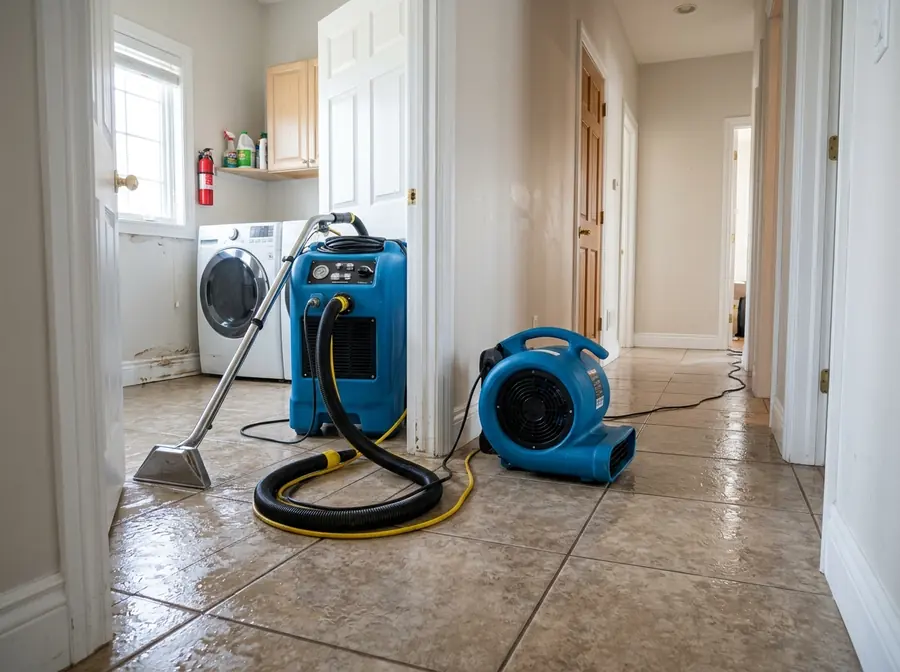
Structural drying may use controlled air movement and dehumidification. Equipment placement depends on the materials, room layout, temperature, humidity, and extent of saturation. A plan should consider occupancy, pets, electrical safety, access, and whether the building is residential or commercial. Equipment should not be operated where it creates a safety risk.
Monitoring helps determine whether materials are drying as expected. A technician may take readings at selected locations and adjust equipment as conditions change. Drying time varies with the water source, building materials, construction, weather, and amount of concealed moisture. There is no fixed timeline for every Arlington property.
Read our structural drying and dehumidification guide and carpet and hardwood floor drying guide for more about these decisions.
Homes, apartments, commercial sites, and managed properties
Arlington has a broad range of building types and property arrangements. A single-family home may have one owner coordinating repairs, while an apartment complex may involve a tenant, landlord, property manager, and neighboring units. Water from an upper floor can affect lower units, shared corridors, and common service spaces. The restoration scope should identify each affected area rather than assuming the problem is limited to the room where the leak began.
Commercial properties may contain inventory, records, computers, production equipment, food-service areas, and specialized machinery. Water near electrical rooms, HVAC equipment, or machinery should be evaluated before systems are restarted. Some contents may need a specialist or manufacturer assessment. The provider should distinguish its extraction and drying tasks from repairs that require licensed trades.
In shopping centers, apartments, and HOA communities, public and private drainage responsibilities can differ. Confirm who maintains the specific private system and who can authorize access. A city drainage report does not automatically assign responsibility for water that entered an individual suite or building.
What to do before restoration help arrives
- Check for immediate danger. Leave areas with electrical hazards, unstable ceilings, gas odors, or contaminated water.
- Stop the source if safe. Use a reachable shutoff only if it does not require entering a hazardous area.
- Restrict access. Keep people and pets away from wet floors and damaged materials.
- Notify the responsible party. Contact the owner, landlord, building manager, HOA, or facilities representative as applicable.
- Record the event. Note when water was discovered, the likely source, and which rooms or units are affected.
- Take safe photographs. Do not enter a dangerous area to document the damage.
- Arrange source repair. A plumber, roofer, appliance technician, or other qualified trade may be needed.
- Ask about the work plan. Clarify extraction, moisture checks, drying, monitoring, and material removal.
Do not climb onto a wet roof, operate electrical tools in standing water, or disturb materials that may contain asbestos or lead-based paint. If a ceiling is sagging or a wall appears unstable, keep away and arrange a qualified inspection.
Water damage and mold prevention
Wet building materials can create conditions for mold growth if moisture remains. Not every water loss leads to mold, but water should not be considered fully addressed simply because standing water is gone. Drywall, insulation, wood, carpet backing, and flooring assemblies can retain moisture below the surface.
The EPA recommends drying wet or damp materials within 24 to 48 hours when possible to reduce the chance of mold growth. This is a practical prevention target, not a guarantee. The source needs to be corrected, and concealed materials should be checked where the loss suggests water may have travelled beyond the visible area.
If growth or a persistent musty odor appears after a leak, further assessment may be appropriate. Texas regulates mold assessment and remediation as distinct activities. See our mold removal and remediation hub and mold after water damage guide for more information.
Insurance and restoration documentation
Water damage coverage depends on policy language, cause of loss, exclusions, limits, endorsements, and the insurer's decision. Sudden plumbing discharge, long-term seepage, surface water, groundwater, roof leaks, and sewer backup may be treated differently. Contact your insurer or agent and follow the policy's notice and documentation requirements.
Keep safe photographs, repair invoices, inspection notes, communications, and work authorizations. Ask the restoration provider to explain the scope, equipment, material decisions, and how additional damage will be documented. If concealed moisture is discovered after opening a wall or floor, request an explanation before authorizing more work. A restoration estimate does not guarantee insurance payment.
Our insurance claims help page provides general information about organizing records after a loss. Coverage decisions should come from the insurer or a qualified insurance professional.
Frequently asked questions about Arlington water damage
Does Arlington Public Works repair drainage inside apartments or shopping centers?
The city distinguishes its public stormwater system from privately maintained areas such as apartment complexes, shopping centers, and HOAs. Confirm who maintains the specific private drainage feature.
Does a nearby drainage project mean my property is in a flood area?
No. A project is specific to its defined location and does not establish parcel-level flood risk elsewhere. Use official flood mapping and city guidance for an address-specific question.
Is stormwater the same as sewage?
No. Arlington describes separate public stormwater and sanitary sewer systems. The water source affects safety and cleanup requirements.
How long does structural drying take?
It depends on materials, saturation, building conditions, and concealed moisture. Monitoring helps determine progress; there is no universal schedule.
Will insurance cover the water damage?
Coverage depends on the policy, cause, exclusions, limits, and insurer decision. Contact the insurer for guidance.
Arrange water damage restoration in Arlington
If water has entered your Arlington home, apartment, rental, or business, explain what caused it, when it happened, whether the source has been stopped, and which areas appear affected. Home Mold Water Fire Damage has more than 13 years of restoration experience, trained technicians, professional equipment, local operations serving communities across our coverage area, and 24/7 emergency response. We can discuss the appropriate next step and confirm availability for your property.
Explore our Arlington restoration services page, the water damage restoration hub, and the contact page. For public drainage or floodplain questions, consult Arlington's official Stormwater Management resources as well.