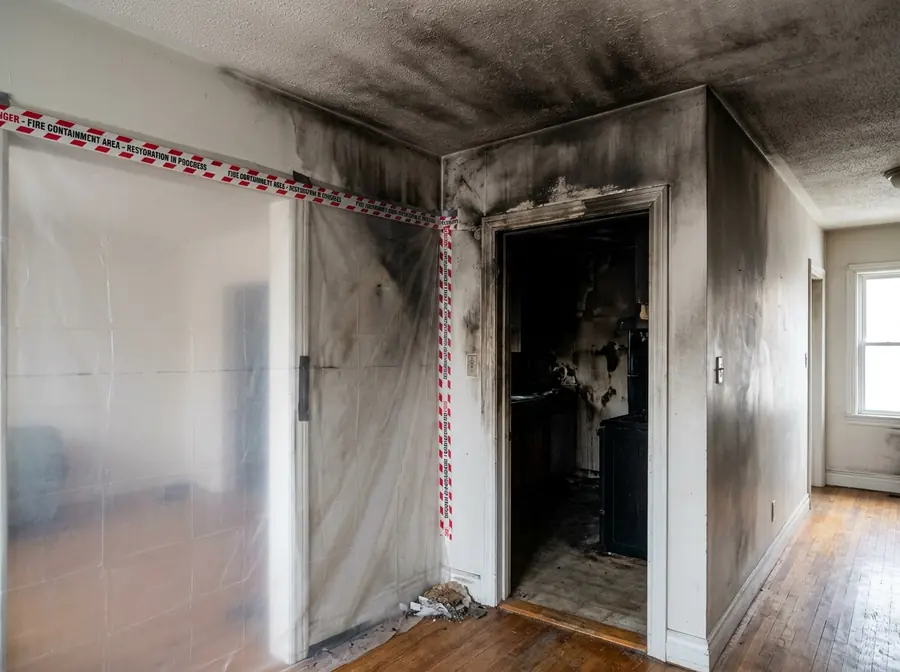
Wait for official clearance before entering
If a fire is active, call 911 and follow emergency personnel instructions. Do not go back inside to retrieve possessions, inspect damage, or shut down equipment. Fire can weaken floors, roofs, stairs, and walls, and smoke can leave hazardous residues even in areas without visible flame damage. Electrical, gas, and structural hazards may remain after the flames are extinguished.
The Bedford Fire Department's Operations Division responds to fire suppression, rescue, emergency medical calls, hazardous-material emergencies, and severe-weather operations. The department also supports fire prevention, education, inspections, emergency management, and fire cause determination. These public safety functions are separate from the work of a private restoration contractor.
Bedford's Fire Marshal's Office conducts building and facility inspections, public education, plan reviews, and investigations of suspicious or accidental fires and unauthorized hazardous-material releases. The city's published information also describes the Bedford Arson Bureau's role in fire investigations. A restoration contractor should not interfere with an investigation, move evidence, or imply that it can release a property for occupancy.
Wait for the appropriate authority to confirm that entry is permitted. If the property is a rental, apartment, commercial unit, or managed building, contact the owner or manager to coordinate access and approval. A fire scene may remain restricted while officials complete their work or utilities and structural systems are evaluated.
Understanding the different types of fire loss
Direct fire damage includes materials that burned, charred, melted, or were otherwise affected by heat. The extent can vary from a contained room to multiple spaces or building systems. Even where the fire was limited, heat may affect nearby finishes, wiring, plastics, cabinets, and other components. A qualified structural or trade professional may need to assess materials that cannot be judged safely by appearance alone.
Smoke damage can extend farther than the area of direct flame. Smoke may pass through doorways, hallways, ceiling voids, stairwells, and ventilation routes. Residue can settle on walls, ceilings, furniture, textiles, electronics, appliances, and contents stored in closed rooms. The distribution depends on fire conditions, airflow, building layout, ventilation, and how the incident was controlled.
Soot is not one uniform substance. Its texture and behavior depend on what burned and the conditions of combustion. Some residue may be dry and powdery, while other deposits can be oily, sticky, or strongly attached. A cleaning method that is suitable for one surface can smear residue or damage another. Avoid using ordinary household cleaners or abrasive wiping across unknown soot deposits.
Water from firefighting can create a separate water damage problem. It may travel into lower rooms, soak carpet and padding, collect beneath flooring, or enter wall and ceiling assemblies. A restoration scope may therefore include both fire cleanup and water extraction or drying. The water damage restoration hub explains how extraction and moisture control may fit into a combined loss.
Bedford fire prevention and property inspections
The Bedford Fire Marshal's Office describes its work as reducing the risk of life and property loss through code enforcement, inspections, public education, development plan review, and fire investigation. The city also states that annual fire safety inspections are conducted for businesses and multi-family dwellings. These activities are part of municipal fire prevention and should not be confused with post-loss cleaning or reconstruction.
After a fire, owners may need to coordinate with the Fire Marshal, building officials, the insurer, utilities, property management, and qualified repair trades. The exact requirements depend on the property and the incident. A commercial building may have occupancy or system inspections to complete before reopening, while a residence may need electrical, gas, structural, or building-envelope evaluations.
For official instructions about inspections, plan review, or investigation, use the city's Fire Marshal information. Restoration providers can explain their proposed cleaning and mitigation work, but they do not replace public authorities or determine whether a building meets every code or occupancy requirement.
First actions after the property is released
- Confirm access. Follow instructions from the fire department, Fire Marshal, building official, owner, and insurer.
- Keep clear of hazards. Avoid damaged ceilings, unstable floors, exposed wiring, standing water, and areas with heavy residue.
- Arrange utility checks. Have electrical, gas, HVAC, and other systems assessed by qualified professionals before use where needed.
- Notify the owner and insurer. Establish who can authorize inspection, emergency work, and contents handling.
- Document the condition. Take photographs only where entry is permitted and safe; preserve relevant communications and reports.
- Limit movement of contents. Soot can transfer from one item to another, so avoid carrying contaminated belongings through clean areas.
- Discuss the work scope. Ask which areas need soot cleaning, odor assessment, contents handling, water extraction, or repairs.
Do not use a household vacuum, dry brush, or ordinary fan to spread soot around the property. Do not mix cleaning products. Avoid discarding damaged items before the owner or insurer has provided instructions about documentation. Food, medication, cosmetics, and other consumables exposed to heat, smoke, or suppression water should not be assumed safe to reuse.
How a fire restoration inspection is organized
The inspection begins with the known incident details and the areas that have been released for entry. A restoration professional may ask where the fire started, which rooms were affected by heat, whether smoke moved through the building, whether suppression water was used, and whether the HVAC system was operating during or after the event. Building use, occupancy, access, and the presence of sensitive contents also matter.
The assessment may separate direct fire damage, soot deposits, smoke odor, water damage, and contents concerns. Each material needs a suitable decision. Painted drywall, unfinished wood, metal, stone, plastics, fabrics, insulation, and electronics respond differently to cleaning and restoration methods. Some items may be suitable for specialist cleaning; others may be damaged beyond practical restoration.
A written scope should describe the areas to be addressed and the tasks included. Depending on the loss, work may involve debris handling, surface cleaning, contents evaluation, odor-treatment planning, water extraction, structural drying, and repair coordination. Roofing, electrical, plumbing, HVAC, structural, and other specialist repairs may require separate qualified trades. Ask which party is responsible for each part of the work.
Soot cleanup and contents care
Cleaning should be selected according to the residue and the surface. Dry soot may require a different method from oily or bonded deposits. A cleaning agent that is compatible with tile or metal may damage painted drywall, wood finishes, textiles, or electronic components. Testing and specialist evaluation may be appropriate before a larger area is treated.
Do not scrub unknown residue aggressively. Wiping can push soot into porous materials or create permanent streaks. Strong chemicals can damage finishes and may create additional hazards if mixed. Restoration technicians should use appropriate methods and controls for the material, contamination, and work area.
Contents should be reviewed item by item or by sensible categories. Furniture, clothing, rugs, documents, electronics, appliances, and business inventory may need different cleaning or disposal decisions. Some items may require a specialist cleaner or manufacturer guidance. Keep a record of damaged contents and follow the owner's or insurer's instructions before disposal.
Smoke odor and contamination beyond the fire room
Smoke odor can persist because odor-causing compounds may remain on surfaces or within porous materials. Soft furnishings, carpet, insulation, unfinished wood, wall cavities, and HVAC components may retain residue. Opening windows or using fragrance can change the smell temporarily without removing the source.
A suitable odor-treatment plan begins with cleaning and identifying materials that cannot be effectively restored. The work may include cleaning surfaces, evaluating contents, removing unsalvageable porous materials, and considering whether ventilation or concealed spaces require specialist attention. Any equipment or product used must be appropriate for the building and its occupants.
No provider should guarantee complete odor removal before assessing the building and its contents. Ask what source materials will be cleaned or removed, whether occupants need to leave during any treatment, and how the proposed work will be evaluated. See our smoke odor removal guide for additional information.
Fire suppression water and drying needs
Water from fire suppression may soak floors, carpets, padding, drywall, insulation, cabinets, and structural materials. In a multi-level building it can travel into spaces below the fire area. The water may mix with soot and debris, so the affected materials should be assessed before ordinary cleaning or drying begins.
When conditions are safe, extraction may remove standing water, followed by moisture checks and a drying plan. Structural drying can use controlled air movement and dehumidification, with monitoring to assess how materials respond. Equipment should not be operated before electrical and other safety concerns are addressed. Drying duration depends on the materials, saturation, building conditions, and extent of concealed moisture.
Water damage may require removal of materials that cannot be cleaned or dried appropriately. Other materials may be retained if they can be restored safely and effectively. The decision should be explained in the project scope. Reconstruction, including drywall, insulation, flooring, cabinetry, and painting, is a later stage and may require licensed trades or permits.
Insurance, investigation records, and restoration estimates
Fire, smoke, and related water damage coverage depends on the policy, cause of loss, exclusions, limits, endorsements, and insurer decision. Contact the insurer or agent and follow the policy's notice and documentation requirements. A restoration estimate does not determine whether the insurer will approve the claim or reimburse a particular expense.
Keep incident reports, official instructions, photographs taken safely, estimates, contents records, work authorizations, invoices, and communications. Ask the restoration provider to explain the work sequence and how additional damage will be documented. If the scope changes after concealed damage is discovered, request a written explanation before approving extra work.
Our insurance claims help page explains general ways to organize information after property damage. For coverage interpretation, contact the insurer or a qualified insurance professional.
Frequently asked questions about Bedford fire restoration
Can a restoration contractor release the property after a fire?
No. Follow the fire department, Fire Marshal, building official, and other authorities responsible for scene access and safety. A restoration provider cannot replace their clearance or investigation roles.
Can smoke affect rooms that were not burned?
Yes. Smoke can travel through openings, hallways, ceiling spaces, and ventilation routes. The affected areas depend on the building and fire conditions.
Should I wipe soot from furniture?
Avoid aggressive wiping or household vacuuming. Different residues and materials need different methods, and unsuitable cleaning can spread or set the residue.
Does fire restoration include water removal?
It may, when firefighting water has affected the property. Confirm whether extraction, moisture checks, structural drying, and material removal are part of the proposed scope.
How long does restoration take?
Timing depends on official clearance, damage extent, materials, contents, odor concerns, drying, specialist repairs, and reconstruction. A project-specific schedule can be discussed after assessment.
Arrange fire and smoke damage restoration in Bedford
If a fire has affected your Bedford home, apartment, rental, or business, first confirm that the property has been released for entry and that immediate hazards have been addressed. When you contact Home Mold Water Fire Damage, explain the property type, which areas were involved, whether smoke spread beyond the fire room, and whether firefighting water was used. We have more than 13 years of restoration experience, trained technicians, professional equipment, local operations serving communities across our coverage area, and 24/7 emergency response. We can discuss the next restoration step and confirm availability for your address.
Explore our Bedford restoration services page, the fire and smoke damage restoration hub, the water damage restoration hub, and the contact page. For an active fire or immediate danger, call emergency services first.