Start with safety and the water source
Do not enter standing water if electrical outlets, wiring, appliances, or a service panel may be affected. Never touch downed wires or operate electrical equipment in a wet area. If there is a gas odor, structural instability, or another immediate threat, leave the property and contact emergency services or the appropriate utility provider. Keep children and pets away from wet rooms and damaged ceilings.
If an active plumbing leak has a shutoff valve that can be reached safely, closing it may limit additional water. Do not enter a hazardous space or attempt a repair beyond your ability. A qualified plumber or property maintenance professional should address the failed pipe, fixture, or appliance connection. If the water may contain sewage or outdoor contaminants, avoid direct contact and arrange appropriate professional handling.
The source matters because clean water from a supply line is not the same as wastewater, a sewer backup, or outdoor floodwater. The category of water affects safety precautions, cleaning decisions, and whether porous materials can be retained. A restoration plan should not treat every wet floor as the same type of loss.
Common causes of water damage in Bedford properties
Plumbing leaks can begin at supply lines, valves, toilets, sinks, tubs, showers, water heaters, and drain connections. A sudden pipe failure may release a large volume of water, while a small leak can remain hidden under a cabinet or behind a wall. Water may follow framing and emerge at a location that is not directly beside the original source.
Appliance failures are another common source. Washing machines, dishwashers, refrigerators with water dispensers, and water heaters rely on hoses, fittings, drains, and valves. A loose connection or worn component can wet flooring and cabinetry. After the source is isolated safely, an appliance technician or plumber may need to inspect the equipment and replace the failed part.
Rainwater can enter through damaged roofing, flashing, windows, exterior doors, siding, and other openings. Wind-driven rain may reach attic insulation or ceiling cavities before a stain appears. Do not climb onto a wet roof or unstable ladder to look for the opening. A qualified roofer or building professional can inspect the exterior and make the necessary repair.
Overflowing fixtures, blocked drains, and sewer backups need careful handling. Water from a sanitary sewer may contain contaminants and should not be treated as ordinary clean water. Keep people and pets away, avoid using household equipment to remove it, and arrange qualified cleanup. Our sewage backup cleanup guide explains the additional precautions.
Bedford Public Works and private property responsibilities
The City of Bedford Public Works Department oversees several municipal infrastructure functions, including water, wastewater, streets, traffic, and stormwater. The city's published information describes municipal water distribution and wastewater collection systems and provides separate contacts for public utility concerns. The department also identifies a monitored non-emergency dispatch channel for certain after-hours public works matters.
Those responsibilities should not be confused with every pipe or drain inside a private building. A water-main problem, municipal sewer concern, private service line, fixture supply hose, and interior drain blockage may involve different parties. If you suspect a public infrastructure issue, contact the city using its official Public Works information. If a fixture, appliance, interior pipe, or building component has leaked, the property owner may need a plumber or other qualified contractor.
Bedford's public works page also explains the scale of its water and wastewater infrastructure, including distribution lines, hydrants, sewer lines, and related facilities. That information provides useful context about city services, but it does not establish the cause of water inside an individual home. A restoration inspection should focus on the actual source and affected materials at the property.
For official municipal contacts and current procedures, refer to the City of Bedford Public Works page. Do not delay action on an active private leak while trying to determine which public office may be relevant.
Water extraction: removing more than the visible puddle
When the area is safe and the water category is understood, extraction may be one of the first restoration tasks. The approach depends on the amount of water, the floor surface, access, and whether the water is clean or contaminated. A small leak on tile differs from a large loss affecting carpet, wood flooring, cabinets, and wall cavities.
Removing standing water does not prove that all moisture has been removed. Water may remain in carpet padding, beneath flooring, inside cabinet bases, behind baseboards, and within subfloor or wall assemblies. A restoration evaluation may inspect adjoining rooms and concealed areas to understand the footprint. The decision to dry or remove a material depends on its type, condition, water exposure, and project requirements.
Do not use a household vacuum or other ordinary electrical appliance to remove water from a wet or unsafe area. Do not pump or handle sewage or contaminated floodwater without appropriate training and equipment. If electrical systems may be affected, wait for the appropriate safety assessment before operating equipment.
Our guides to flood water extraction and burst pipe cleanup explain two common types of water loss in more detail.
Moisture inspection and structural drying
After extraction, moisture can remain inside drywall, wood framing, insulation, flooring, and other building materials. A surface that feels dry does not necessarily mean the complete assembly has dried. Moisture measurement may help identify where water travelled and whether materials are responding to the drying plan.
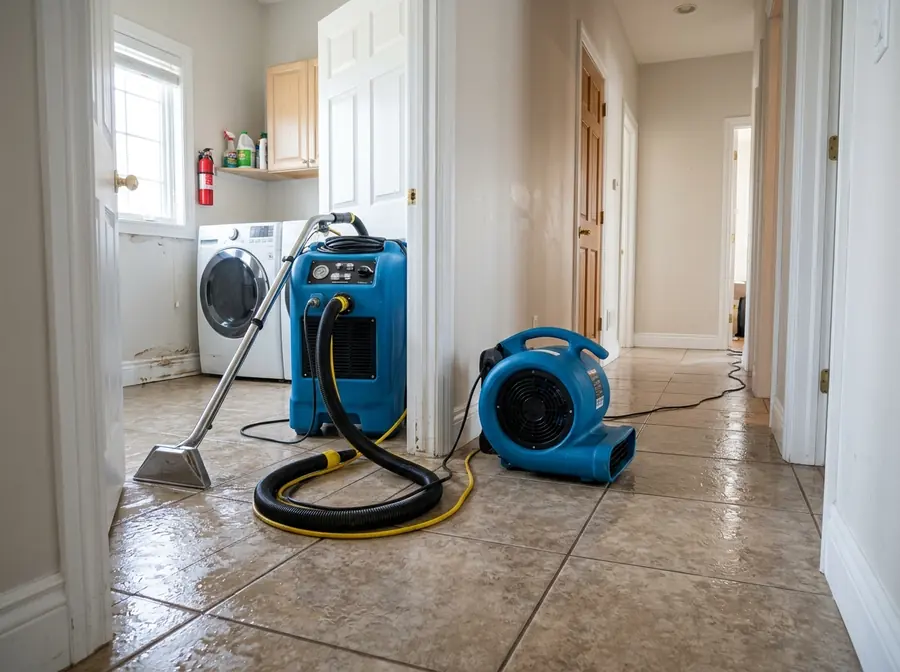
Structural drying may use controlled air movement and dehumidification. Equipment placement depends on the materials, room layout, temperature, humidity, and extent of saturation. A suitable plan considers occupants, pets, electrical safety, access, and whether the property is a home, rental, or commercial building. Equipment should not be placed or operated in a way that creates a safety hazard.
Monitoring is important because drying conditions change over time. A technician may take readings at selected locations and adjust equipment as materials respond. Drying duration varies with the water source, material, building construction, weather conditions, and extent of damage. No single timeline applies to every Bedford property.
Read our structural drying and dehumidification guide for more detail about this stage. If flooring is involved, the carpet and hardwood floor drying page discusses material-specific considerations.
Water damage in houses, apartments, and commercial buildings
In a detached home, the owner may coordinate the plumber, restoration provider, insurer, and repair trades. In a rental property, a tenant should notify the landlord or property manager promptly and follow the property's reporting procedures. If the leak comes from a shared pipe or an adjoining unit, access and responsibility may involve multiple owners or management representatives.
In multi-family buildings, water can travel between floors and affect ceilings, corridors, neighboring units, and shared service areas. A restoration scope should identify the units and materials affected rather than assuming the problem ends at the first wet room. Building management may need to coordinate access and notify occupants about restricted areas or equipment.
Commercial properties may contain stock, computers, records, machinery, food-service equipment, or other contents that need specialist evaluation. Water near electrical or mechanical systems should be assessed before the equipment is restarted. Some contents may be cleanable, while others may require manufacturer or specialist advice. A restoration provider should explain what is within its scope and which items require another service.
What Bedford property owners can do before help arrives
- Look for immediate hazards. Leave areas with electrical risks, unstable ceilings, gas odors, or contaminated water.
- Stop the source if safe. Use an accessible valve only if it can be reached without entering danger.
- Keep people away. Restrict access to wet floors, damaged ceilings, and rooms with uncertain water quality.
- Notify the responsible party. Contact the landlord, owner, building manager, or facilities contact as applicable.
- Record key details. Note when the water was discovered, the suspected cause, and the rooms or units involved.
- Photograph only safe areas. Do not enter a hazardous room just to take pictures.
- Arrange source repair. A plumber, roofer, appliance technician, or other qualified trade may need to stop the cause.
- Ask about the restoration scope. Clarify extraction, moisture checks, drying, monitoring, and any material removal.
Do not attempt to dry a large contaminated loss using household fans or vacuums. Avoid disturbing damaged materials that may contain asbestos or lead-based paint. If a ceiling is sagging or a wall appears unstable, keep away and arrange a qualified inspection.
Water damage and later mold concerns
Wet materials can create conditions for mold growth if moisture remains. Not every water loss results in mold, but water should not be considered fully addressed just because standing water has been removed. Drywall, insulation, wood, carpet backing, and flooring assemblies may hold moisture beyond the surface.
The EPA recommends drying wet or damp materials within 24 to 48 hours when possible to reduce the chance of mold growth. This is a practical prevention target, not a guarantee. The water source must be corrected and concealed materials should be checked where the loss suggests moisture may have travelled.
If visible growth or a persistent musty odor appears after a leak, further assessment may be appropriate. Texas regulates mold assessment and remediation as distinct activities. Ask who will perform each regulated role and verify current credentials through TDLR. For more information, see our mold removal and remediation hub and mold after water damage guide.
Insurance and records after a water loss
Water damage coverage depends on the policy, cause of loss, exclusions, limits, endorsements, and the insurer's decision. Sudden plumbing discharge, long-term seepage, surface water, groundwater, roof leaks, and sewer backup may be treated differently. Contact your insurer or agent for instructions and review the policy rather than assuming every water event is covered.
Keep photographs, repair invoices, inspection notes, communications, and signed work authorizations. Ask the restoration provider to explain the proposed scope, equipment, material decisions, and how changes will be documented. If additional damage is found after opening a wall or floor, request an explanation before authorizing additional work. A contractor cannot guarantee insurance approval or reimbursement.
Our insurance claims help page provides general information about organizing a restoration claim. Coverage decisions should come from the insurer or a qualified insurance professional.
Frequently asked questions about Bedford water damage restoration
Does the City of Bedford repair every water leak?
No. Public Works maintains municipal infrastructure, while private plumbing fixtures, appliances, interior piping, and building components may be the property owner's responsibility. Contact the city for a suspected public-system issue and a qualified trade for private property repairs.
Can a small leak damage materials behind a wall?
Yes. Water can travel along framing or remain inside a wall cavity even when the visible area is small. The likely path depends on the source and building layout.
Should I run a fan after water enters?
Do not operate electrical equipment in a wet or unsafe area. Follow professional instructions, especially if the water may be contaminated or the airflow could spread debris.
How long will drying take?
It depends on the materials, saturation, building conditions, and extent of concealed moisture. Monitoring helps assess progress; there is no universal drying schedule.
Will insurance pay for water restoration?
Coverage depends on policy wording, cause, exclusions, limits, and the insurer's decision. Keep records and contact your insurer promptly.
Arrange water damage restoration in Bedford, Texas
If water has entered your Bedford home, apartment, rental, or business, explain what caused it, when it happened, whether the source has been stopped, and which areas appear affected. Home Mold Water Fire Damage has more than 13 years of restoration experience, trained technicians, professional equipment, local operations serving communities across our coverage area, and 24/7 emergency response. We can discuss the appropriate next step and confirm availability for your address and project.
Explore our Bedford restoration services page, the water damage restoration hub, and the contact page. For an active municipal water or sewer concern, use the official City of Bedford Public Works information as well as the appropriate private-property repair contact.