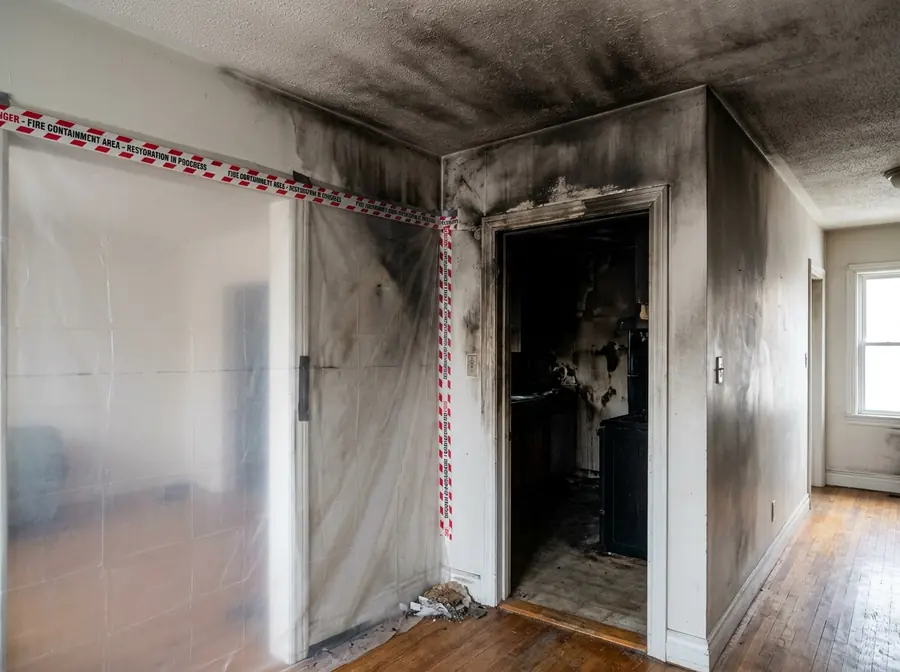
Call 911 and wait for official clearance
If a fire is active, smoke is spreading, or anyone may be in danger, call 911 and follow the instructions of emergency personnel. Do not re-enter a building to retrieve belongings, inspect rooms, open windows, or switch utilities. Fire can weaken roof structures, floors, stairs, walls, and electrical systems. Smoke and combustion residues may also create hazards in areas that were not directly burned.
The Burleson Fire Department provides fire suppression, emergency medical services, special operations, and related public safety functions. The city's emergency management operation coordinates response resources during larger incidents and severe weather. These public agencies address the emergency, life safety, and scene control. A private restoration contractor does not replace the fire department, conduct the official investigation, or decide when a building is safe to enter.
Wait until the fire department or appropriate authority has released the property or the relevant work area for access. The departure of fire apparatus does not by itself prove that every room is safe. Electrical, gas, structural, ventilation, and other concerns may require separate evaluation. In a rental, apartment, or commercial building, access may also need approval from the owner, manager, or facility representative.
Burleson residents can review the city's Fire Department information, Fire Department divisions, and Emergency Management resources. These sources explain public response functions; they are not a substitute for instructions from emergency personnel at an active incident.
Understand the different kinds of fire-related damage
Direct flame and heat damage
Flames can char or consume framing, cabinets, doors, flooring, insulation, roofing, and personal belongings. Heat may also affect nearby materials that were not directly burned. A surface can appear intact while adhesives, finishes, wiring, or concealed components have been compromised. Do not assume that a room is structurally or electrically safe based on a visual check from the doorway.
Smoke migration
Smoke can move through hallways, stairwells, open doors, ceiling voids, and other pathways. The extent of smoke impact depends on the fire, ventilation, building layout, pressure differences, and materials. A room that did not contain flames may still have residue or odor. HVAC equipment and ductwork should not be operated simply to air out the building before their condition has been considered; doing so may spread particles into additional areas.
Soot and residue
Soot is not one uniform substance. The residue can differ depending on what burned and the conditions of the fire. Dry wiping or using an ordinary household cleaner may smear residue, drive it deeper into porous surfaces, or damage finishes. Different materials—painted walls, natural stone, fabrics, electronics, metal, and wood—may require different cleaning decisions. A professional assessment helps determine what can be cleaned and what may need replacement.
Firefighting water
Suppression water can soak carpets, floors, drywall, insulation, contents, and lower levels. This water loss may require extraction, moisture checks, drying, and possibly removal of materials. The water may have mixed with debris or other contaminants, so the correct handling depends on the site. Fire restoration and water restoration often overlap, but they are separate parts of the scope and should be documented accordingly.
First steps for Burleson property owners after the scene is released
- Follow the release and access instructions. Do not enter a restricted area or remove items before the relevant authority permits it.
- Keep people away from hazards. Avoid damaged ceilings, unstable floors, exposed wiring, sharp debris, and areas with heavy smoke residue.
- Do not start broad cleaning. Avoid dry brushing soot, running fans through contaminated spaces, or applying household chemicals to unknown residues.
- Protect records and document visible damage safely. Take photographs only when access is allowed and safe. Record the incident date, affected rooms, and any instructions received from officials.
- Notify the property owner or manager. Tenants and employees should use the established reporting process and avoid authorizing structural work on their own.
- Contact the insurer as required by the policy. Ask what documentation is needed and keep copies of all communications.
- Arrange a restoration assessment. Explain the fire location, visible smoke migration, contents concerns, and any water used during suppression.
If the building has an odor of gas, electrical damage, or signs of structural instability, keep away and contact the appropriate emergency service or utility. Do not turn electrical systems back on or operate appliances until they have been checked by qualified personnel.
How fire and smoke restoration may be organized
Initial walkthrough and scope development
Once access is permitted, the restoration team can review the affected areas, building use, visible residue, contents, and suppression water. The walkthrough should distinguish direct fire damage from smoke impact and water damage. It should also identify areas that remain restricted or require an electrician, engineer, roofer, plumber, or other specialist before cleanup can proceed.
Temporary protection and contents decisions
If windows, doors, or roof sections are damaged, temporary protection may be needed to limit weather exposure or unauthorized entry. Board-up and temporary covering must be appropriate for the structure and any official restrictions. Contents may be inventoried and separated into items that can potentially be cleaned, items that need specialist evaluation, and items that are not suitable for restoration. Do not discard important belongings before documenting them and checking insurer requirements.
Debris removal and residue cleaning
Cleanup methods should be selected for the type of residue and the surface. Some items may be HEPA-vacuumed or cleaned with a material-appropriate method; others may require controlled removal. Porous contents can absorb smoke, while electronics and appliances may need specialist inspection before use. Aggressive scrubbing, household fragrance products, and unapproved chemical mixtures can make the condition worse.
Odor treatment
Smoke odor may remain in porous materials, concealed spaces, and contents after visible residue is removed. Odor treatment should follow source removal and appropriate cleaning rather than attempt to mask the smell. The method depends on the materials and occupancy conditions. No contractor should promise that every odor can be eliminated in a fixed number of hours or that all contents can be restored.
Water extraction and structural drying
Where suppression water has entered the building, the project may include extraction, moisture mapping, drying equipment, and monitoring. The approach depends on water category, materials, and the extent of wetting. Wet insulation, ceiling materials, flooring, and contents may require different decisions. A qualified plumber or other trade should address any damaged water system that needs repair.
Repair and reconstruction
After cleanup and drying, repairs may involve drywall, insulation, flooring, framing, paint, cabinetry, doors, roofing, or electrical components. These activities may require licensed specialists, inspections, or local permits depending on the work. The restoration contractor should explain what is included in its scope and which trades or approvals are separate.
Fire restoration for homes, rentals, and commercial properties
A single-family home may have a kitchen fire with smoke migration into adjoining living spaces. The restoration plan may need to consider cabinets, appliances, ceiling assemblies, soft furnishings, and the rooms above or below the fire area. A small visible burn area does not automatically mean the rest of the house is unaffected.
In an apartment or multi-family building, smoke can move through shared corridors, shafts, or adjoining units. Property managers may need to coordinate access, occupant notices, building systems, and temporary relocation. Residents should follow management and public safety instructions and should not attempt to clean shared spaces or enter another unit without permission.
Commercial properties can contain stock, food, documents, machinery, computers, customer areas, and specialized ventilation. A fire in one work area can affect business continuity even if the main structure remains standing. A facility manager should identify critical equipment, inventory, security requirements, and any operations that may continue safely outside the affected zone. Restoration planning should account for both the physical cleanup and controlled reopening.
Insurance records and restoration estimates
Fire damage restoration costs vary with the affected area, structural condition, smoke migration, residue type, contents, suppression water, access, temporary protection, and repair requirements. A kitchen fire that affects one room is different from a loss involving several floors, ductwork, or a commercial inventory. A reliable scope should identify what is being cleaned, removed, protected, dried, or repaired and should distinguish mitigation from reconstruction.
Insurance coverage depends on the policy, cause of fire, exclusions, limits, endorsements, and the insurer's decision. Keep the fire incident information, photographs, inventories, restoration reports, estimates, receipts, and communications. Do not assume that every item or temporary expense will be covered. Ask the adjuster what documentation is required and obtain approval where the policy or insurer process calls for it.
Home Mold Water Fire Damage can explain the restoration work being proposed, but cannot guarantee coverage or claim approval. Our insurance claims help guide offers general information about documentation and communication. The insurer remains responsible for its coverage decision.
Burleson emergency planning and local context
The City of Burleson's emergency management function coordinates the Emergency Operations Center and works with fire, police, public works, and public information staff during significant incidents. The city describes its severe-weather coordination and public alerting resources, including outdoor warning sirens and emergency notifications. These systems are intended for community safety and do not replace a property's own evacuation plan or a call to 911 during an active fire.
Burleson's fire department also lists special operations and emergency medical functions. This is useful context for understanding why emergency response may involve multiple agencies. Restoration begins later, once the property is released for appropriate access and the scope can be developed. A contractor should never interfere with emergency operations or represent itself as an emergency authority.
For additional local context, see the city's official Emergency Management and Fire Department pages. For other service information, visit the Burleson service-area guide.
Frequently asked questions about fire and smoke restoration in Burleson
Can I clean soot from walls myself?
Do not begin broad cleaning before the property is released and the residue is understood. Dry wiping or ordinary cleaners can smear soot and damage surfaces. A material-specific method is important.
Does a room without flames still need attention?
Possibly. Smoke can travel beyond the fire room, and suppression water may affect other spaces. The scope should be based on an inspection rather than the visible burn area alone.
Can I turn the HVAC system back on to remove smoke?
Do not assume it is safe or helpful. Operating the system may spread particles or expose equipment to contamination. Have the system evaluated as appropriate before restarting it.
Will insurance cover smoke damage?
Coverage depends on the policy and circumstances. Keep records and ask the insurer about its requirements; the carrier makes the coverage decision.
Can my business reopen after cleanup?
Reopening depends on safety, required inspections, building condition, utilities, and any applicable public-health or regulatory requirements. A restoration contractor cannot independently authorize occupancy.
Discuss fire and smoke damage restoration in Burleson
If your Burleson property has experienced a fire, smoke migration, soot contamination, or suppression-water damage, first follow emergency personnel instructions and wait for authorized access. Once the site is released, describe the affected areas, building use, contents concerns, and any visible water damage. Home Mold Water Fire Damage brings more than 13 years of restoration experience, trained technicians, professional equipment, and 24/7 emergency response. We can discuss the cleanup and drying work that may apply and identify where a specialist trade or permit may be required.
Read our fire and smoke damage restoration hub, the Burleson service-area page, and related smoke odor removal information. For help arranging a discussion, visit Contact Home Mold Water Fire Damage.