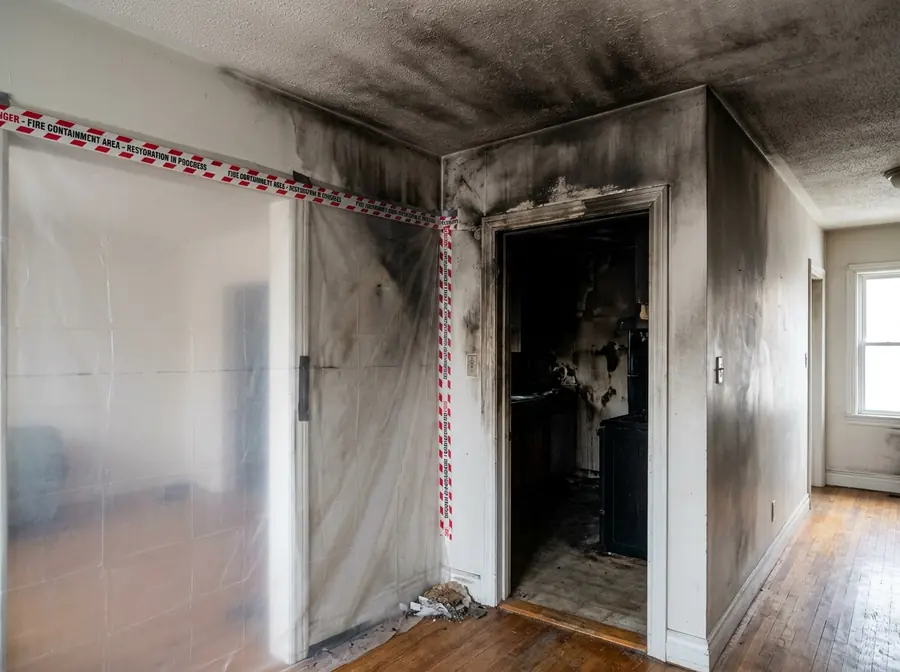
What fire and smoke restoration covers
Fire restoration is not simply washing black marks from walls. Heat, combustion residues, smoke particles, firefighting water, and the condition of the building all influence the work. A kitchen fire may leave concentrated residues around cabinets and ceilings, while smoke can travel into adjoining rooms or shared building spaces. A larger fire may affect structural components, electrical systems, insulation, roof assemblies, and personal belongings. The scope should be based on an inspection and the incident conditions.
Restoration commonly involves documenting visible conditions, identifying materials that may be salvageable, separating affected contents where appropriate, removing debris within the authorized scope, cleaning suitable surfaces, addressing smoke residues, and managing any water damage. Structural repairs, electrical work, HVAC repairs, roofing, and other regulated trades must be handled by appropriately qualified professionals. A restoration contractor should not represent that cleaning alone makes a fire-damaged building safe for occupancy.
First steps after a fire in Fort Worth
- Follow emergency personnel instructions. Do not re-enter until the fire department or other authority responsible for the scene says it is safe and access is permitted.
- Do not operate damaged utilities. Leave gas, electrical, and structural concerns to the appropriate utility, electrician, engineer, or other qualified professional.
- Protect people from smoke residue. Avoid touching soot-covered surfaces or handling damaged contents without appropriate protection. Keep children and pets away from affected areas.
- Document from a safe location. Photograph visible damage when permitted, make a list of affected rooms and contents, and retain incident information supplied by authorities.
- Contact your insurer. Ask about claim reporting, emergency mitigation, documentation, and any approval process before non-urgent work begins.
- Arrange a restoration assessment. Once access is authorized, a qualified restoration team can help identify cleanup priorities and separate fire, smoke, soot, and water-related tasks.
Do not sweep dry soot, use an ordinary household vacuum on unknown residues, or apply cleaning products to every surface. Some residues smear when wiped, some materials are heat-damaged even when they look intact, and some items may require specialist handling. Avoid switching on HVAC equipment until it has been assessed; moving air through a smoke-contaminated system may spread residue to additional spaces.
Understanding smoke and soot damage
Smoke migration
Smoke follows air movement and pressure differences. It can pass through open doors, gaps around penetrations, stairwells, return-air pathways, and other routes. In a multi-room home, the room farthest from the fire may still have a smoke odor or fine residue. In an apartment or commercial building, shared corridors and adjoining suites may require careful evaluation. The presence of odor alone does not establish exactly which materials are affected, so inspection should consider surfaces, contents, and building systems.
Soot deposits
Soot is a residue from combustion. Its characteristics vary with the fuel, temperature, ventilation, and materials involved. A dry powdery deposit may respond differently from a sticky or oily residue. Rubbing the surface without knowing the residue type can spread it, drive it into porous materials, or make later cleaning more difficult. Cleaning methods should be selected for the affected material and residue rather than applied as a one-size-fits-all treatment.
Heat and corrosive residues
Heat may warp plastics, damage finishes, weaken materials, and affect electrical components. Some combustion by-products and residues can be corrosive to metals and sensitive equipment. Electronics, appliances, instruments, and specialty contents may need evaluation by qualified restoration or repair specialists before they are used again. A surface that appears clean does not prove that an item is safe or functional.
Firefighting water can create a second restoration problem
Water from hoses or suppression systems may collect on floors, travel through wall and floor assemblies, and affect rooms below the fire area. It should be assessed separately from smoke and soot. The water category and exposure conditions matter; not all water at a fire scene should be treated as clean. Where water may have contacted contaminated materials, debris, or other hazards, cleanup requires appropriate procedures.
Once access is authorized, a restoration plan may include water extraction, moisture checks, removal of unsalvageable materials, and controlled drying. A plumber, electrician, roofer, or structural specialist may need to address damage outside the restoration contractor's scope. The goal is to avoid treating a fire loss as a single cleanup task when it may involve several different hazards and trades.
Fort Worth emergency response and scene access
The City of Fort Worth Fire Department describes its mission around education, prevention, preparedness, and response, and its operations include fire calls and other emergency incidents. The city's Bureau of Fire Prevention oversees fire-code compliance, while fire investigations and incident records are handled through official city processes. These public functions are separate from private restoration services.
A restoration company does not decide when an emergency scene is released, determine the cause of a fire, or override instructions from fire officials, law enforcement, utilities, or building authorities. If a property is taped off, structurally unsafe, or awaiting investigation, wait for the responsible authority to permit access. The city may also require permits or inspections for certain reconstruction and building work. The property owner or project manager should confirm the requirements that apply to the specific repair.
Fire restoration for Fort Worth homes and businesses
Residential projects may involve kitchens, bedrooms, garages, attics, utility spaces, and personal belongings. The decisions often include which contents can be cleaned, which materials need removal, how to protect unaffected rooms, and whether the home can be occupied during work. Families should not assume that a room is safe because it is outside the visible burn area. The building and its systems need to be evaluated according to the incident and official access conditions.
Commercial losses may affect offices, retail premises, restaurants, warehouses, workshops, and multi-tenant buildings. Business owners may need to coordinate with property management, tenants, equipment vendors, building engineers, and insurers. A restoration plan can identify work zones and contents priorities, but business continuity, fire-system repairs, electrical certification, and reopening approvals may involve other parties.
Fort Worth covers a large geographic area and includes many property types and building arrangements. The relevant access route, utility provider, fire jurisdiction, and building requirements can differ by address. Confirm the exact property location when arranging service rather than assuming that all nearby communities have identical municipal arrangements.
Cleaning smoke-affected contents and surfaces
Contents decisions should consider material, value, contamination, heat exposure, and the likelihood of successful cleaning. Hard, nonporous items may sometimes be cleaned using an appropriate method. Upholstery, paper, unfinished wood, insulation, and other porous materials can be more difficult because smoke particles and odor may penetrate beyond the surface. Some items may need specialist contents restoration; others may be uneconomical or unsuitable to restore.
For building surfaces, a professional may test a small area or select a method based on the type of residue and finish. Cleaning may involve dry removal, controlled wet cleaning, specialized products, or removal of damaged materials. Aggressive scrubbing, household fragrance sprays, and untested chemicals can create additional damage or conceal rather than resolve an odor source.
Smoke odor treatment and HVAC considerations
Smoke odor can remain in porous materials, cavities, contents, and ventilation components after visible soot is removed. Effective odor work starts with locating and addressing the source. Cleaning, removing affected materials, and treating suitable surfaces may be necessary before any specialized deodorization method is considered. No responsible provider should guarantee complete odor elimination without assessing the building and the materials involved.
HVAC systems deserve particular attention. Filters, coils, ducts, returns, and equipment may have been exposed to smoke. Do not run a system simply to see whether the smell clears. Have the system assessed by a qualified HVAC professional and coordinate any cleaning or replacement with the restoration scope. This helps prevent residues from being redistributed after the main room cleanup.
Insurance documentation after a fire
Notify your insurer promptly and ask what records are required. Keep the fire incident details, photographs, inventory of damaged contents, mitigation records, estimates, receipts, and communications. Do not discard potentially relevant items before checking whether the insurer needs to inspect them, unless leaving them in place creates a safety or sanitation concern. If urgent work is required to protect the property, document the condition and the reason for the action as clearly as possible.
Policy coverage depends on the cause of loss, policy wording, exclusions, limits, deductibles, endorsements, and the insurer's decision. Fire, smoke, water, debris removal, temporary protection, and contents treatment may be considered under different policy provisions. Home Mold Water Fire Damage can describe observed conditions and the work performed, but cannot promise claim approval. Read our insurance claims help guide for general documentation suggestions.
How Home Mold Water Fire Damage organizes a Fort Worth fire-loss project
After confirming that access is authorized, we discuss the incident, inspect the affected areas that can be safely accessed, and identify the visible categories of damage. The proposed scope may separate debris handling, soot and surface cleaning, contents decisions, odor source work, and water mitigation. We explain which activities are within the restoration scope and which require a licensed trade, engineer, utility, or specialist vendor.
Our company has more than 13 years of restoration experience, trained technicians, professional equipment, and 24/7 emergency response. Project conditions differ, so the sequence and duration are not identical for every property. We aim to communicate what has been observed, what remains uncertain, and what needs to happen before reconstruction or re-occupancy decisions are made by the responsible parties.
Frequently asked questions about fire and smoke restoration
Can I enter my property after firefighters leave?
Only when the authority responsible for the scene has permitted access and the building is safe to enter. A contractor cannot release a scene or overrule an official restriction.
Does smoke damage rooms that were not burned?
It can. Smoke may travel through openings and air pathways, and residue may settle away from the fire room. An inspection helps determine which spaces and contents need attention.
Should I clean soot from walls myself?
Do not rub or wet-clean unknown soot deposits. Some residues smear or penetrate surfaces. Wait for an appropriate assessment and cleaning method.
Can smoke odor be removed from an HVAC system?
That depends on the exposure and system condition. Have HVAC equipment and ductwork assessed by a qualified professional before operating or treating the system.
Will insurance cover smoke and firefighting-water damage?
Coverage depends on your policy and the cause and circumstances of the loss. Your insurer makes the coverage decision.
Arrange fire and smoke damage restoration in Fort Worth
If your Fort Worth property has experienced a fire, follow official instructions, keep people away from unsafe areas, and document visible damage only when access is permitted. When the scene is released, Home Mold Water Fire Damage can discuss smoke, soot, contents, and related water-restoration needs. Read our fire and smoke restoration service guide, learn about smoke odor removal, or visit the Fort Worth service-area page.
For questions about service availability or the next step, use our contact page. Call 911 for an active fire, immediate danger, or a medical emergency.