Protect people before attempting cleanup
Do not enter standing water if electrical outlets, appliances, wiring, or the service panel may be affected. Do not operate a pump, wet vacuum, fan, or extension cord in a wet area when electrical safety is uncertain. Never touch downed wires. If there is a gas odor, a sagging ceiling, structural movement, or another immediate danger, leave the area and contact the appropriate emergency service or utility.
If a shutoff valve is accessible without entering a hazardous space, closing it may limit further water release. Do not walk through a flooded room to reach a valve or attempt plumbing repairs beyond your training. A licensed plumber should address plumbing work that requires a plumbing license. A qualified appliance technician or roofer may be needed for other sources. Restoration work addresses the resulting water and building materials; it does not replace the trade responsible for repairing the failed component.
Keep children and pets away from wet flooring, damaged ceilings, and water that may contain sewage or outdoor contaminants. Avoid contact with uncertain water sources. Sewage backup and contaminated floodwater require different precautions from a clean supply-line leak.
Common causes of water damage in Haslet
Plumbing failures and burst pipes
Leaks can occur at pipe fittings, shutoff valves, toilet connectors, sinks, showers, and concealed supply lines. A sudden failure may spread water across several rooms, while a small leak can remain hidden behind cabinets or inside a wall. The visible stain may be some distance from the actual source because water follows framing, pipes, and openings through the structure.
Appliance and water-heater leaks
Washing machines, dishwashers, refrigerators with water lines, and water heaters can release water into nearby rooms. A failed hose or valve may wet cabinets, baseboards, flooring, and adjoining spaces. Repairing the appliance or connection is only one part of the response; the surrounding materials still need to be checked for moisture.
Roof leaks and rainwater entry
Rainwater can enter through damaged shingles, flashing, roof penetrations, windows, siding, or poorly sealed exterior joints. Water may travel along framing and appear in a ceiling or wall away from the opening. A qualified roofing or building-envelope contractor may be needed to correct the exterior defect. The restoration scope should consider insulation, drywall, framing, and contents that may have become wet.
Overflow and drainage events
An overflowing fixture, blocked drain, or sewer backup can affect flooring and lower building materials. Water entering from outside may carry soil or other contaminants. The water category influences handling, cleaning, and material decisions. Do not assume that a wet floor can be safely cleaned with household equipment.
Haslet Public Works and private-property responsibilities
The City of Haslet Public Works Department describes responsibilities that include streets, sidewalks, water supply, water mains, water services, meters, sewer systems, and related municipal infrastructure. The city's engineering and construction functions also include drainage, utility inspection, water distribution, and wastewater collection. These public responsibilities are important when a problem involves a municipal system, but they do not automatically include every private pipe, appliance, roof, gutter, or interior finish.
If you suspect a water-main or city water-service problem, contact the city using its published Public Works information. Haslet also publishes a separate process for water or wastewater emergencies, including an after-hours contact. A private leak inside a home, a failed washing-machine hose, a leaking water heater, or a roof opening generally requires the property owner and the appropriate qualified trade. When the source is uncertain, it may be necessary to contact both the relevant public utility and a private specialist.
Drainage responsibilities also vary. City-maintained streets and drainage infrastructure are not the same as a private property's gutters, grading, foundation drainage, or yard features. The city provides floodplain and permit information, but a map or citywide description cannot establish the condition of an individual parcel. A site-specific review should identify the entry point, the affected building materials, and the party responsible for correcting the source.
Useful official resources include Haslet's Public Works Department, water or wastewater emergency information, and Engineering and Construction page. For public hazards, follow official city instructions and use 911 when life or safety is at risk.
What water extraction and structural drying mean
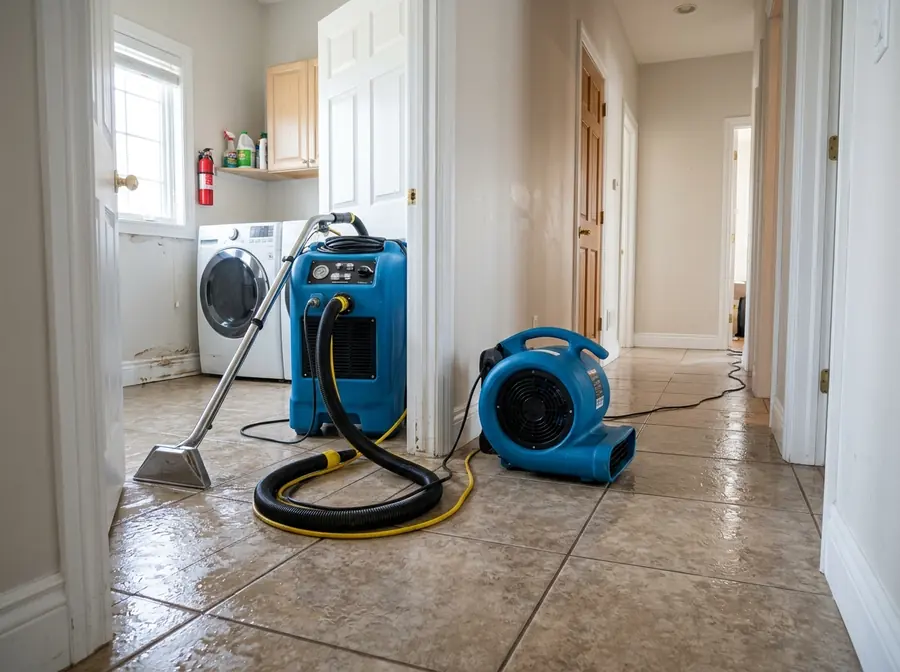
Water extraction removes standing or pooled water from accessible areas. The equipment and method depend on the floor surface, amount of water, water category, and site conditions. Extraction does not prove that the building is dry. Moisture may remain in carpet backing, pad, hardwood, subfloor, drywall, insulation, cabinets, and framing after the visible water is gone.
Structural drying aims to reduce moisture in building materials and monitor whether conditions are improving. Professional equipment may include air movers and dehumidification systems, but the setup should be based on the building, materials, and moisture conditions. Placement and operation may change as the project progresses. A universal number of drying days cannot be promised for every property.
Some materials may be suitable for drying and retention; others may need controlled removal. Carpet, hardwood, laminate, tile, drywall, insulation, and cabinetry respond differently to water. Contaminated water can change the decision even if a material looks intact. A clear work scope should explain which materials are being dried, cleaned, or removed and why.
Steps to take after a Haslet water loss
- Check for immediate danger. Keep away from electrical hazards, unstable ceilings, gas concerns, and contaminated water.
- Control the source safely. Use an accessible shutoff only if it can be reached without risk. Contact the relevant plumber, appliance technician, roofer, or utility.
- Record the event. Note when water was discovered, where it appeared, and what may have caused it. Photograph visible damage only from safe locations.
- Notify the owner or manager. Tenants and employees should use the property's reporting process and keep a written record.
- Contact the insurer as required. Ask what photographs, estimates, and other records are needed under the policy.
- Arrange a restoration inspection. Share the known source, affected rooms, water category if known, and any repairs already made.
- Review the work plan. Ask what will be extracted, monitored, dried, cleaned, or removed and how progress will be documented.
Restoration needs in homes, rentals, and commercial properties
In a single-family home, water may affect a kitchen, bathroom, laundry room, garage, attic, or a room below an upstairs fixture. The inspection should consider cabinetry, flooring transitions, insulation, wall cavities, and the possibility that water travelled beyond the first visible area. If a ceiling stain appears, the source may be above the stain or along a roof or plumbing pathway.
Haslet includes established homes, newer residential subdivisions, and properties with different layouts and utility connections. The same type of leak can produce different damage depending on flooring, building materials, access, and whether the water reached a concealed space. Do not assume that a property in a particular subdivision has a specific water-damage history. The condition of the individual building is what matters.
Rental and multi-unit properties may involve shared plumbing, common walls, upper-floor leaks, and property-management approval. Tenants should report water promptly and keep a written record. Owners and managers should coordinate access, source repair, restoration, and communication with affected occupants. A tenant should not remove drywall or authorize extensive work without permission.
Commercial and industrial premises may contain stock, machinery, computers, documents, and equipment that need protection. A facility manager should identify critical assets, operational constraints, and areas that must remain accessible. The restoration plan should account for the building's use and should separate affected work zones from occupied spaces where appropriate.
Insurance, estimates, and project costs
Water damage restoration costs depend on the source, water category, area affected, materials, access, extraction requirements, drying complexity, contents handling, and repairs. A small leak on tile is different from a loss involving multiple rooms, wet insulation, hardwood, or a ceiling assembly. A written estimate should identify the proposed work, assumptions, exclusions, and any separate trade services.
Ask whether the scope covers mitigation, reconstruction, or both. Clarify whether a plumber, roofer, electrician, or other specialist will be engaged separately. Ask how moisture will be monitored and what conditions will guide decisions about retaining or removing materials. Avoid relying on a guaranteed completion date before the source and affected materials are understood.
Insurance coverage depends on the policy, cause of loss, exclusions, limits, endorsements, and the insurer's decision. Sudden plumbing discharge may be treated differently from floodwater, sewer backup, long-term seepage, or deferred maintenance. Do not assume that every water-related cost is covered. Keep photographs, invoices, reports, and communications, and read our insurance claims help guide for general information.
Preventing repeat water problems
After the immediate loss, arrange repair of the failed component and consider whether maintenance could reduce the chance of another event. Have plumbing defects repaired by the appropriate licensed professional. Ask a roofer to correct exterior openings. Keep gutters and downspouts in serviceable condition and direct runoff in accordance with applicable property requirements. Check accessible areas around water heaters, sinks, toilets, and appliance connections for recurring moisture.
Prevention cannot eliminate every storm or equipment failure, but it can reduce the time a leak goes unnoticed. If a stain or musty odor keeps returning, investigate the source rather than repeatedly painting or replacing the same finish. A repair should address the reason materials became wet.
Water damage and mold concerns
Materials that remain damp may develop mold growth. Source correction and appropriate drying are therefore important parts of water restoration. If growth appears, do not identify it by color or disturb extensive affected materials. Texas regulates mold assessment and remediation, and the roles are generally separate on the same project subject to a narrow statutory exception. See our mold removal and remediation hub and mold after water damage guide for more information.
If the water came from a sewer backup, review our sewage backup cleanup page. For a storm or roof opening, see storm and roof leak water damage.
Frequently asked questions about water damage restoration in Haslet
Should I call the city or a plumber?
It depends on the source. Haslet Public Works handles municipal infrastructure and utility responsibilities. A private interior leak generally requires the property owner and a qualified trade. If the source is unclear, contact the relevant city department and arrange a building inspection.
Can I use a household fan to dry the room?
Do not operate electrical equipment in a wet area when safety is uncertain, and do not circulate air through potentially contaminated water or materials. A professional can determine the appropriate equipment and controls.
Can hardwood floors be dried after a leak?
Sometimes, depending on the flooring, installation, water category, exposure time, and condition. A site-specific assessment is needed before deciding whether to dry, repair, or replace the floor.
How long will the drying process take?
It varies with materials, water category, building conditions, and extent. Moisture should be monitored rather than relying on a universal timeline.
Will insurance cover the damage?
Coverage depends on the policy and cause. The insurer makes the coverage decision. Keep records and ask what documentation is required.
Arrange water damage restoration in Haslet
If water has entered a Haslet home, rental, or business, describe the source, affected rooms, and whether the leak has been stopped. Home Mold Water Fire Damage brings more than 13 years of restoration experience, trained technicians, professional equipment, and 24/7 emergency response. We can discuss water extraction, moisture checks, structural drying, and the specialist trades that may be needed to repair the cause. Confirm current availability for the exact property address before arranging service.
Read our Haslet service-area guide, the water damage restoration hub, and related pages for burst pipe cleanup, appliance leak cleanup, and structural drying and dehumidification. For service questions, visit Contact Home Mold Water Fire Damage.