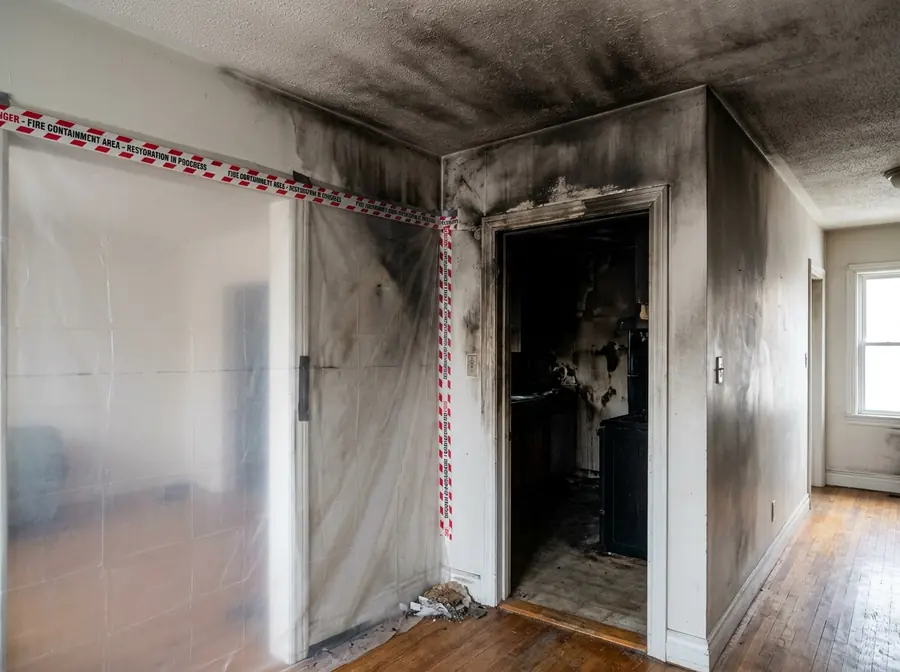
Emergency response comes before property restoration
If a fire is active or anyone may be in danger, call 911 and follow instructions from emergency personnel. Do not re-enter a building to retrieve belongings, inspect damage, switch off equipment, or take photographs. Fire can weaken floors, ceilings, roof structures, stairs, and walls even when the visible damage seems limited. Smoke and combustion by-products may also make indoor air unsafe.
The Hurst Fire Department provides fire operations, emergency medical response, rescue, hazardous-material response, fire prevention, and public education. Its Fire Prevention and Education Programs are directed by the Fire Marshal's Office, while Fire Operations includes suppression and emergency response functions. These public safety responsibilities are separate from private restoration work. A restoration contractor does not replace firefighters, investigators, building officials, or utility personnel and cannot authorize a resident to re-enter a restricted scene.
Wait until the fire department or other responsible authority has released the property and any relevant building, electrical, gas, or structural concerns have been addressed. If the property is a rental, apartment, business, or managed facility, notify the owner or property manager and establish who can authorize cleanup. Access may be restricted while an investigation or safety evaluation is underway.
What fire, smoke, soot, and suppression water can affect
Flame damage is often the most obvious part of a loss, but it may not describe the full restoration scope. Heat can warp plastics, damage finishes, affect wiring, crack or discolor surfaces, and compromise materials near the fire. The condition of a material cannot always be judged from its appearance alone. A qualified building professional may need to evaluate structural or mechanical concerns before repair decisions are made.
Smoke behaves differently from flame. It can move through doorways, gaps, stairwells, ceiling spaces, and ventilation pathways. Residue may settle in bedrooms, closets, hallways, offices, storage rooms, and other spaces that were not directly burned. The pattern depends on the fire, airflow, building layout, ventilation, and how the event was controlled. A room that looks clean may still have residue or odor concerns.
Soot is a deposit left by combustion. Its composition and behavior vary with the materials burned and the conditions of the fire. Some residues are dry and powdery; others may be oily, sticky, or strongly bonded to surfaces. Rubbing the wrong residue with a cloth or household cleaner can smear it, push it deeper into porous materials, or damage paint, stone, metal, plastic, and electronics.
Fire suppression can create a separate water-loss problem. Water may collect in flooring, wall cavities, ceilings, insulation, and lower levels. In a multi-story property, it can travel downward and affect rooms away from the original fire. The restoration plan may therefore need both fire cleanup and water extraction or structural drying. Our water damage restoration hub explains the drying side of a combined loss.
Hurst property considerations after a fire
Hurst includes single-family homes, apartments, rental properties, retail premises, offices, and other occupied buildings. A fire in a detached home may require a different access and contents plan from a fire in a multi-unit building where smoke or water may affect neighboring units and shared corridors. Commercial properties may also have stock, records, food-service equipment, machinery, or customer areas that need separate evaluation.
For multi-family and commercial premises, coordinate with the owner, management company, facilities team, and any relevant safety official. Shared ventilation, fire doors, corridors, electrical rooms, and service spaces can influence where smoke or water travelled. Do not assume that damage is limited to the unit where the fire began. A careful inspection should identify the areas that may require cleaning, drying, repair, or specialist evaluation.
Hurst's Fire Prevention and Education Division provides public education and fire-safety functions, and the department also conducts inspections and other prevention work. Those municipal programs help reduce risk and support public safety; they do not determine the private restoration scope for an individual claim. For official fire-safety or scene-related instructions, follow the city and emergency personnel rather than relying on a restoration company's general guidance.
First steps once the property has been released
- Confirm that entry is permitted. Follow the instructions of the fire department, building official, utility provider, property owner, and insurer where applicable.
- Keep people away from unsafe areas. Avoid damaged ceilings, unstable floors, exposed wiring, standing water, and areas with strong smoke contamination.
- Do not operate utilities yourself. Have gas, electrical, HVAC, and other systems evaluated or restored by qualified professionals where necessary.
- Notify the responsible parties. Contact the property owner, landlord, management company, insurer, and any facilities representative who must approve work.
- Document safely. Take photographs only when entry is authorized and safe. Keep notes about the incident, visible damage, and instructions received.
- Protect undamaged areas. Avoid moving soot-covered items through clean rooms or using ordinary fans that could spread residue.
- Discuss the work scope. Ask which rooms, contents, and building materials require inspection, cleaning, drying, removal, or repair.
Do not use household vacuums, dry brushes, or ordinary cloths to aggressively clean soot. Do not mix cleaning chemicals. Do not discard potentially important damaged items before the owner or insurer has advised how they should be documented. If a food, medicine, or personal-care item has been exposed to smoke, heat, or suppression water, seek appropriate manufacturer or safety guidance rather than assuming it can be cleaned for reuse.
How a fire and smoke restoration assessment works
A restoration assessment begins with the known incident details and the areas that have been released for inspection. The team may ask where the fire began, which rooms were involved, whether smoke moved through the property, whether suppression water was used, and whether any utilities remain disconnected. The type of building, occupancy, access restrictions, and presence of sensitive contents also affect planning.
The inspection may separate direct fire damage, smoke residue, odor concerns, water damage, and contents issues. Different surfaces require different methods. Painted drywall, unfinished wood, stainless steel, fabrics, electronics, stone, and insulation do not respond to the same cleaning process. Some items may be suitable for specialist cleaning, while others may be too damaged or contaminated to restore safely or economically.
The proposed scope should identify the areas to be addressed and explain what is included and excluded. It may distinguish emergency stabilization, debris handling, soot cleaning, contents evaluation, odor-treatment planning, water extraction, structural drying, and reconstruction. Electrical, plumbing, HVAC, roofing, structural engineering, and other regulated work may require separate qualified trades. Ask for clarification before authorizing work that falls outside the restoration provider's scope.
Soot removal and surface cleaning
Soot cleaning is not a one-product process. The method depends on the residue, substrate, level of contamination, and whether the surface is porous or nonporous. A cleaning approach that works on a washable hard surface may be unsuitable for a painted wall, fabric, raw timber, or delicate finish. Testing a small area may help determine whether a method is compatible, but extensive fire residue should be handled by trained personnel using suitable controls.
Dry cleaning methods may be considered for some residues, while other conditions call for carefully selected wet cleaning or specialist products. Excess moisture can damage certain finishes or drive contaminants into porous materials. Strong rubbing can spread residue and create scratches or permanent staining. The restoration plan should account for the surface and the material manufacturer's guidance where available.
Contents require similar care. Furniture, clothing, rugs, documents, electronics, appliances, and business inventory may each need a separate decision. Some items can be cleaned by an appropriate specialist; others may need to be discarded after owner or insurer review. Keep contents organized and documented rather than moving everything into a single pile where residue can transfer between items.
Smoke odor assessment and treatment planning
Smoke odor can remain after visible residue has been removed because odor-causing compounds may be present on or within materials. Soft furnishings, insulation, unfinished wood, carpet, wall cavities, and HVAC components may retain contamination. Opening windows or applying fragrance may temporarily change how a room smells without resolving the source.
Odor treatment should follow a source-based inspection and appropriate cleaning. The work may involve removing unsalvageable porous materials, cleaning surfaces, evaluating contents, and considering whether HVAC components or concealed spaces require specialist attention. The correct method depends on the type of fire, the materials affected, occupancy requirements, and the manufacturer's safety instructions for any equipment or products used.
No responsible contractor should promise complete odor elimination before understanding the property and its materials. Ask what source materials will be cleaned or removed, what treatment is proposed, whether occupants must leave during any process, and how the work will be evaluated. Our focused smoke odor removal guide discusses the topic in more detail.
Firefighting water and structural drying
Water used to control a fire can spread through the building and create a secondary restoration need. Water may soak carpet and padding, hardwood, subfloors, drywall, insulation, cabinetry, and ceiling assemblies. In a commercial space it may reach stockrooms, electrical areas, equipment bases, and concealed service spaces. The water category and any contaminants must be considered before selecting an extraction or drying method.
After the area is safe, water extraction and moisture checks may help determine the affected footprint. Structural drying may use controlled air movement and dehumidification, with monitoring to assess how materials respond. Equipment should not be operated in unsafe electrical conditions or before the appropriate safety checks. Drying time varies with material, saturation, temperature, humidity, and building construction.
If water has entered wall or ceiling cavities, visible surface drying alone may not be enough. The team may need to inspect adjoining areas and discuss whether materials can be dried in place or should be removed. The plan should distinguish water mitigation from later reconstruction, which may involve replacement drywall, flooring, insulation, trim, paint, or other finishes.
Insurance records and project communication
Fire coverage and the handling of smoke or water damage depend on the policy, the cause of loss, exclusions, limits, endorsements, and the insurer's decision. Contact the insurer or agent and follow the policy's notice and documentation requirements. A restoration estimate does not determine coverage, and a contractor cannot guarantee that a claim will be approved or reimbursed.
Keep incident details, photographs taken safely, emergency instructions, inspection notes, estimates, work authorizations, invoices, and communications together. Ask the restoration provider to explain the proposed scope, the sequence of work, the handling of contents, and how additional damage will be recorded. If the scope changes after concealed damage is found, request an explanation before authorizing additional work.
For more information about documentation and the claim process, visit our insurance claims help page. It provides general guidance only; coverage questions should be directed to the insurer or a qualified insurance professional.
Frequently asked questions about fire restoration in Hurst
Can I enter my home after firefighters leave?
Do not assume that the property is safe or released simply because emergency vehicles have departed. Follow explicit instructions from the fire department, building officials, property owner, and utility providers. Structural, electrical, gas, and air-quality concerns may remain.
Does smoke damage rooms that were not burned?
It can. Smoke may move through openings, corridors, ceiling spaces, and ventilation pathways. The actual pattern depends on the fire and building conditions, so affected areas should be assessed rather than judged only by visible flame damage.
Can I wipe soot off walls myself?
Aggressive wiping can smear residue or damage finishes. Avoid dry brushing and household vacuuming of extensive soot. Ask a qualified restoration professional to identify the residue and compatible cleaning method.
Will the restoration include water removal?
It may, if firefighting water has affected the building. The scope should identify whether extraction, moisture checks, drying, and removal of damaged materials are included or require separate arrangements.
How long does fire restoration take?
Timing depends on safety clearance, damage extent, materials, contents, odor concerns, drying needs, specialist trades, and reconstruction. A realistic schedule can be discussed after assessment.
Arrange fire and smoke damage restoration in Hurst
If a fire has affected your Hurst home, rental, apartment, or business, first confirm that the property has been released for entry and that immediate hazards have been addressed. When you contact Home Mold Water Fire Damage, explain the property type, which areas were involved, whether smoke spread beyond the fire room, and whether suppression water was used. We have more than 13 years of restoration experience, trained technicians, professional equipment, local operations serving communities across our coverage area, and 24/7 emergency response. We can discuss the appropriate restoration next step and confirm availability for the address.
Read our Hurst restoration services page, the main fire and smoke damage restoration hub, and the contact page. Emergency services remain the first call for an active fire or immediate danger.