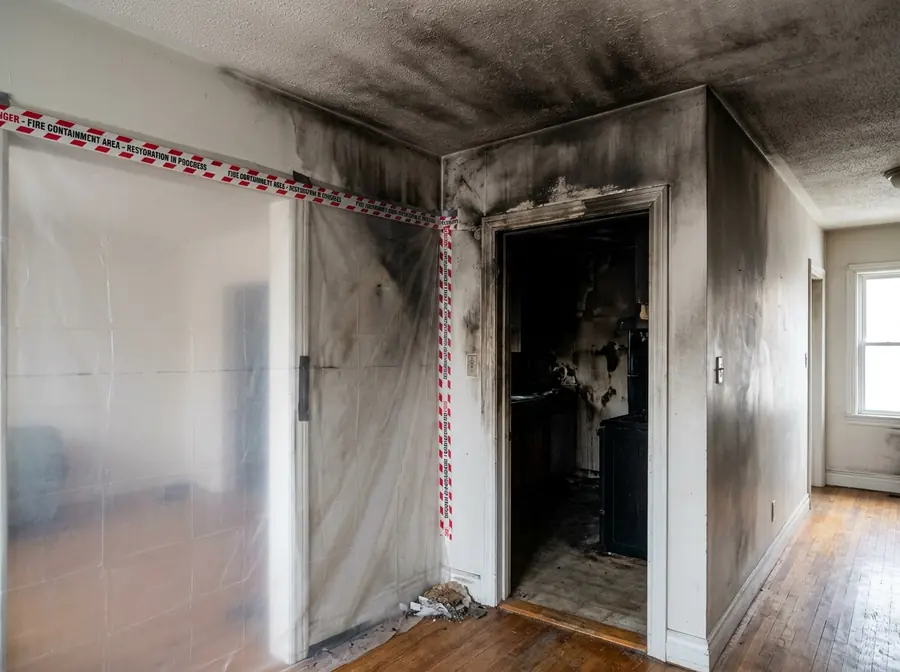
Fire safety and site access come first
Do not enter a fire-damaged property until the fire department or appropriate authority has confirmed that the site is safe for the intended access. Fire can weaken roof components, ceilings, floors, framing, stairs, and other building elements. Electrical systems may be damaged, debris may contain sharp materials, and hidden hot spots or gas-related concerns may remain. If the property is unstable or an immediate hazard exists, stay away and contact emergency services.
After access is released, keep children and pets out of the affected areas. Do not switch on electrical circuits, appliances, or HVAC equipment that may have been exposed to heat, soot, or water until a qualified professional has evaluated them. Do not attempt to clean broad areas of soot with household tools. Residue may be powdery, oily, or sticky, and wiping it with the wrong method can spread it or damage the finish.
Make safety decisions based on the instructions of authorities and qualified professionals, not on the appearance of the room. A space that looks less damaged may still contain smoke residue, water, electrical hazards, or structural concerns. Restoration planning should begin after safe access is established.
Lake Worth local context and service coverage
The approved service-area list associates Lake Worth with ZIP code 76135 and includes Lake Worth North, Lake Worth South, East Lake Worth, Greenfield Acres, Shady Oaks Manor, and North Lake Worth. These place names are included to help residents identify their location when arranging service. They do not indicate a fire history or a specific property hazard.
Lake Worth has residential properties, rental homes, commercial spaces, and buildings with different access and occupancy needs. A house may have smoke affecting bedrooms, closets, and soft furnishings. An apartment or managed property may require coordination with the owner, manager, neighboring units, and authorized contractors. A business may need to protect stock, equipment, files, or customer areas. The restoration scope should match the property and the actual incident.
When requesting service, provide the full address, building type, whether authorities have released the property, where the fire began if known, what smoke or soot you have noticed, and whether firefighting water is present. Clarify who can authorize work if the property is leased or managed. Confirm service availability for the exact address.
Smoke, soot, and residue outside the burn area
Smoke can travel through openings, corridors, stairways, and ventilation pathways depending on building layout and conditions during the fire. Soot may settle on surfaces and contents in rooms that were not directly burned. Smoke odor may remain even after visible residue is removed. A restoration assessment should consider the affected area, material type, and residue condition rather than assuming that only the origin room needs cleaning.
Different materials require different cleaning decisions. Painted walls, sealed wood, glass, metal, tile, upholstery, carpet, electronics, unfinished wood, and paper products may respond differently. Some soot is dry and loose; other residue can be oily or sticky. An unsuitable cleaner or aggressive wiping can smear deposits, damage finishes, or move residue into porous materials. Avoid broad cleaning until a suitable method has been identified.
Odor treatment depends on the source, affected materials, and project scope. Some items may be cleaned; others may require specialist treatment or removal. No responsible restoration plan can guarantee that every odor will be eliminated or every item returned to its prior condition. The scope should explain what is proposed and what limitations remain.
Firefighting water and moisture mitigation
Water from firefighting can affect flooring, cabinets, walls, ceilings, insulation, contents, and rooms below. It may contain soot, debris, or other residues, so the cleanup may differ from an ordinary plumbing leak. Fire restoration and water mitigation may be related parts of one loss, but the scope should describe both clearly.
After safe access is allowed, a technician may review wet materials, identify water paths, remove accessible standing water, and consider drying and moisture monitoring. Water may have traveled into concealed areas or down through building penetrations. The property may need both residue cleaning and moisture management. The sequence depends on the conditions and the agreed scope.
Photograph damage where safe and keep a contents inventory. Ask your insurer what should be documented or retained for inspection before disposal, unless an item presents a safety or sanitation risk. Keep records for fire damage, water damage, and temporary protection when useful. Coverage depends on policy terms, the cause, exclusions, limits, endorsements, and the insurer's determination.
Securing the property after a fire
Fire can leave openings in doors, windows, roof sections, or exterior walls. Temporary board-up or weather protection may help reduce exposure to rain or unauthorized entry while permanent repairs are arranged. The appropriate method depends on the opening, remaining structure, weather, access, and safety. Do not climb onto a damaged roof or attempt to secure unstable masonry or framing yourself.
Ask what temporary protection is included and what permanent work remains. Roofing, structural repair, windows, electrical work, plumbing, HVAC, and reconstruction may need separate qualified trades, permits, or inspections. The written scope should distinguish emergency protection from repair and rebuilding. Temporary protection is not a guarantee that the building is fully secure or restored.
Contents affected by smoke, heat, or water
Belongings may include furniture, clothing, rugs, documents, electronics, appliances, kitchenware, business inventory, and personal keepsakes. Their condition depends on heat, smoke, soot, water, material type, and how long exposure occurred. Some items may be appropriate for specialist cleaning, some may require further evaluation, and others may not be restorable. Do not assume every item can be cleaned or that all items must be discarded.
When the site is safe, create an inventory and take photos before moving items if possible. Record each item or group, the room where it was located, visible condition, and useful age or purchase information. Ask your insurer whether items need inspection before disposal. Avoid carrying residue-covered belongings through clean rooms or using ordinary cleaners on delicate contents.
Contents restoration should be clearly defined. Ask whether packing, transport, cleaning, storage, and return are included, and what limitations apply. Important documents, electronics, and valuables may need specialized providers. The restoration company should explain its scope and avoid promising an outcome for every item.
Residential fire and smoke restoration
Homeowners often need to understand which rooms can be accessed, how belongings will be protected, and whether the property can be occupied during any part of the work. Once safe access is confirmed, the scope may include evaluation of smoke-affected areas, soot cleaning, contents handling, temporary protection, water mitigation, and coordination of repair trades. Ask which rooms are included, what equipment may be used, and which areas should remain restricted.
Do not assume an apparently unaffected room is safe. Smoke, soot, water, and damaged building components can extend beyond the visible burn area. Follow the authorities' and qualified professionals' instructions about occupancy. If temporary accommodation is necessary, contact your insurer to ask about applicable coverage and documentation rather than assuming reimbursement.
Fire restoration for rental and commercial properties
Rental properties may require the owner or property manager to coordinate authorization, access, tenant communication, contents decisions, and repairs. If shared areas or neighboring units may be affected, management may need to arrange further inspection. Clarify who has authority to approve each part of the work before contractors begin.
Commercial buildings may contain inventory, records, equipment, staff spaces, customers, and mechanical systems. Offices, retail, workshops, and warehouses can have different restoration requirements. The scope should address access restrictions, contents protection, work schedules, communication, and any separate professional evaluation needed for equipment or building systems. Food-related, industrial, or regulated facilities may need additional guidance from qualified specialists or authorities. Cleanup does not guarantee a reopening date.
Typical steps in a fire restoration project
- Confirm safe access: Follow fire officials and confirm the proposed work area is released.
- Share incident details: Provide the property address, fire area, smoke movement, water, contents, and restrictions.
- Evaluate conditions: Review surfaces, materials, contents, moisture, odor, and specialist needs.
- Agree on the scope: Identify cleaning, contents handling, temporary protection, water mitigation, and separate repairs.
- Carry out authorized work: Select methods appropriate to residue and materials within the approved scope.
- Review and document: Discuss completed tasks, remaining repair needs, and project records.
Different incidents may require different sequences. A small cooking fire and a larger structural fire cannot be assigned the same scope or schedule. Ask the provider to explain its plan, limitations, and how changes will be authorized.
Estimates and insurance documentation
Ask for a written estimate describing the affected areas, cleaning tasks, equipment, contents handling, temporary protection, and water mitigation. Confirm whether plumbing, electrical, roofing, structural repairs, HVAC, and reconstruction are included or separate. Ask how additional damage found during work will be recorded and approved.
Contact your insurer or agent for claim instructions. Coverage depends on policy wording, the cause of loss, exclusions, limits, endorsements, deductibles, and insurer determination. Keep photos, communications, receipts, inventory, and work authorizations. Restoration providers can describe their proposed work and document observed conditions, but cannot guarantee coverage or payment.
Frequently asked questions about Lake Worth fire restoration
Can I wipe smoke residue from surfaces?
Wait until the property is released for safe access and the correct cleaning method is selected. Some soot can smear or damage surfaces when handled incorrectly.
Does smoke travel into other rooms?
It can. Smoke may move through the building and leave deposits on surfaces and contents beyond the fire area. The affected area should be evaluated.
Will restoration remove all smoke odor?
Odor treatment depends on the materials, exposure, and scope. Some items may not be restorable, and no universal odor-removal guarantee applies to every fire loss.
Can water from firefighting be extracted and dried?
Where access is safe, water mitigation may include extraction, drying, and moisture monitoring. The water condition and materials affect the methods used.
Do you serve North Lake Worth and Greenfield Acres?
These areas appear in the approved Lake Worth service-area inventory along with Lake Worth North and South, East Lake Worth, and Shady Oaks Manor. Confirm service availability for your address.
Will insurance pay for fire damage restoration?
Coverage depends on your policy and the loss circumstances. Contact the insurer and keep records. A contractor cannot guarantee the claim decision.
Contact Home Mold Water Fire Damage after a fire in Lake Worth
If a fire, smoke, soot, or firefighting-water incident has affected your Lake Worth home, rental, or business, contact Home Mold Water Fire Damage after the site is cleared for the proposed work. Share the address, building type, areas affected, known hazards, and access restrictions. Our company has more than 13 years of experience, trained technicians, professional equipment, and 24/7 emergency response. We can discuss the appropriate scope and current availability for the property.
Read the Lake Worth restoration services page, the main fire and smoke damage restoration hub, or our contact page. For water or mold damage, see the separate local guides to water damage restoration and mold removal and remediation.