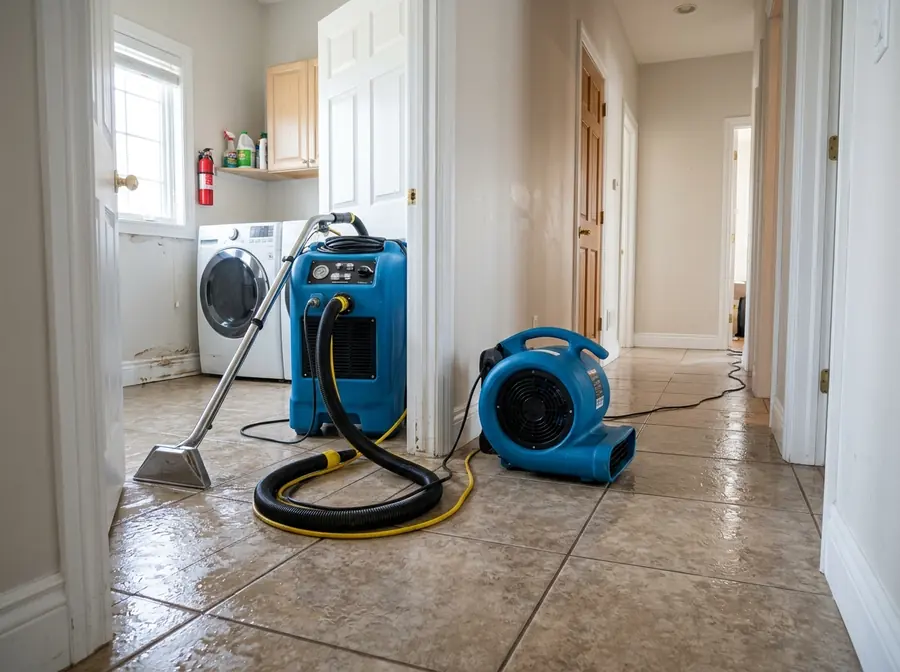
Water safety comes before cleanup
Do not enter standing water if electrical outlets, appliances, wiring, or the service panel may be affected. Do not operate a pump, wet vacuum, fan, or extension cord in a wet area when electrical safety is uncertain. Never touch a downed wire. If there is a gas odor, structural instability, or another immediate threat, leave the property and contact the appropriate emergency service or utility.
If a water shutoff can be reached safely, closing it may limit further damage. Do not walk through a flooded room to reach a valve or attempt repairs outside your training. A licensed plumber should address plumbing work that requires a license. An appliance technician, roofer, or other qualified specialist may be needed depending on the source. A restoration contractor handles the resulting water and building-material condition; it does not replace the professional responsible for repairing a failed utility or building component.
Keep children and pets away from wet flooring, damaged ceilings, exposed electrical equipment, and water that may contain sewage or outdoor contaminants. If the water source is uncertain, avoid contact until it has been assessed. Sewage backup and contaminated floodwater require different precautions from a clean supply-line leak.
Where water damage can start
Supply lines and plumbing connections
Water can escape from a pipe, fitting, valve, toilet connector, sink supply, or concealed line. A sudden failure may affect multiple rooms, while a slow leak can remain hidden behind cabinetry or within a wall. A water stain may show up away from the actual leak because water follows framing, pipes, and openings through the building.
Appliances and water heaters
Washing machines, dishwashers, refrigerators with water dispensers, and water heaters all connect to water or drainage systems. A failed hose or valve can wet the floor and move beneath nearby cabinets or into an adjacent room. The appliance may need specialist repair, but the building materials still need to be checked for moisture after the source is corrected.
Roof and exterior openings
Rain can enter through roof penetrations, flashing, damaged shingles, windows, doors, siding, or poorly sealed joints. Water may follow rafters or wall framing before it appears inside. A roof leak can affect insulation and ceiling materials even after the weather clears. A qualified roofer or building-envelope contractor should address the exterior defect while the restoration plan considers interior moisture.
Overflow and drainage events
A blocked drain, overflowing fixture, or sewer backup may introduce water with different contamination concerns. Water entering from outdoors may also carry soil and debris. The source and water category influence which materials can be retained, how the work area should be controlled, and what protective measures are appropriate. Do not assume that every wet floor is a clean-water event.
Roanoke's local context: public alerts and private property
The City of Roanoke provides an opt-in Alert Roanoke notification system for emergency and community messages. Its published information describes alerts for severe weather, public safety concerns, service emergencies, and other conditions affecting residents. This is a public communication resource, not a property inspection service. A city alert can help residents stay informed, but it does not determine whether a specific home has water intrusion or whether a private building component needs repair.
Roanoke's Fire Department and emergency management functions also support public safety and emergency coordination. During a serious incident, follow instructions from emergency personnel and local officials. A private restoration contractor should not interfere with emergency response or advise residents to enter a restricted area. Once the property is safe and access is permitted, a restoration inspection can focus on the source, water category, affected materials, and required trades.
For official notifications and local emergency information, consult Alert Roanoke. The city's published contact information identifies 9-1-1 for emergencies and a separate non-emergency number for the Fire Department. Always use 911 when life or safety is at risk rather than relying on a restoration company to dispatch public responders.
Public infrastructure and private building systems must also be distinguished. A municipal water-service issue, public roadway drainage concern, or city alert is not the same as a leaking interior pipe, private gutter, roof, or appliance. Contact the appropriate city department or utility for a suspected public-system problem, and arrange a qualified inspection for the private property.
Water extraction and structural drying explained
Water extraction removes standing or pooled water from accessible surfaces. The method depends on the flooring, water category, amount of water, and site conditions. After extraction, moisture may remain in carpet backing, padding, subfloor, hardwood, drywall, insulation, cabinets, and framing. A surface can feel dry while hidden materials remain damp, so the restoration plan should consider concealed pathways and not only visible puddles.
Structural drying aims to reduce moisture in building materials and monitor whether conditions are improving. Professional equipment may include air movers and dehumidification systems, but the setup should be based on the building and the materials involved. Equipment placement, operation, and duration may change as moisture readings and site conditions change. No single drying schedule applies to every property.
Some materials can be dried and retained; others may need controlled removal. Carpet, hardwood, laminate, tile, drywall, insulation, and cabinetry respond differently to water. Contaminated water may make removal necessary even when the material appears intact. The work scope should explain the reason for each material decision and how the project will be monitored.
What to do after water enters a Roanoke property
- Make sure people are safe. Stay clear of electrical hazards, damaged ceilings, unstable structures, and contaminated water.
- Stop the source if it is safe. Use an accessible shutoff only if there is no need to enter a hazardous area. Contact the correct specialist for repair.
- Record the event. Note when water was discovered, where it appeared, what may have caused it, and which rooms or contents were affected.
- Photograph visible conditions safely. Do not delay emergency action to take pictures or enter a restricted space.
- Notify the owner or manager where applicable. Tenants and employees should report the issue through the property manager or facility process.
- Contact the insurer as required. Ask what information and documentation the policy or claim process requires.
- Arrange a professional inspection. Share the water source, water category if known, and any repair already completed.
Restoration considerations for Roanoke homes and businesses
Single-family homes may experience water damage in kitchens, bathrooms, laundry rooms, garages, attics, or rooms below a second-floor fixture. The inspection should consider cabinetry, flooring transitions, wall cavities, insulation, and the possibility that water travelled beyond the first visible area. If a ceiling stain is present, the source may be above it or elsewhere along the roof or plumbing pathway.
Rental homes and multi-unit properties can involve shared plumbing, common walls, upper-floor leaks, and access coordination. Tenants should notify the landlord or property manager promptly and keep a written record. Owners and managers should coordinate the source repair, restoration access, and communication with affected occupants. A tenant should not remove building materials or authorize extensive remediation without permission.
Commercial properties may contain stock, machinery, documents, electronics, customer areas, and equipment that cannot simply be moved without a plan. A facility manager should identify critical operations, access restrictions, and items that need protection. A restoration scope should account for the building's use and the possibility of keeping unaffected spaces operational where safe and practical.
Costs, estimates, and insurance questions
Water damage restoration costs vary with the source, water category, affected area, material type, access, extraction, drying complexity, contents handling, and repairs. A minor appliance leak on tile is different from a multi-room loss involving wet insulation, hardwood flooring, and ceiling materials. A written estimate should explain what is included, what may change after further inspection, and which work belongs to a separate trade.
Ask how the contractor will document moisture, what equipment may be used, whether materials may need removal, and how progress will be reviewed. Clarify the difference between mitigation and reconstruction. A plumber may need to repair a pipe; a roofer may need to fix an opening; an electrician may need to assess affected wiring. Those scopes should not be blurred together.
Insurance coverage depends on the policy, the cause of loss, exclusions, limits, endorsements, and the insurer's decision. A sudden plumbing discharge may be treated differently from surface flooding, sewer backup, long-term seepage, or neglected maintenance. Do not assume that all water damage is covered. Preserve photographs, reports, invoices, and communications, and use our insurance claims help guide for general information.
Preventing a repeat water loss
After the immediate damage has been addressed, consider what maintenance or repair could reduce the chance of a similar event. Have the failed plumbing or appliance connection repaired by the right professional. Ask a roofer to correct the exterior opening. Keep gutters and downspouts in serviceable condition and make sure water is directed away from the building in accordance with applicable property requirements. Check accessible areas around water heaters, washing machines, sinks, and toilets for signs of recurring moisture.
Prevention does not mean that every leak or storm event can be avoided. It means correcting known defects, responding to warning signs, and keeping a record of maintenance. If the building has a recurring moisture issue, ask a qualified specialist to identify the cause rather than repeatedly repainting or replacing the same finish material.
Water damage and mold prevention
Materials that remain damp can develop mold growth. Drying and source correction are therefore important parts of a water-loss response. If visible growth or a persistent musty odor develops, do not identify the material by color or disturb extensive growth. Texas regulates mold assessment and remediation, and the roles are generally separate on the same project subject to a narrow statutory exception. Review our mold removal and remediation hub and mold after water damage guide for more information.
For a sewage backup, use the dedicated sewage backup cleanup page. For storm or roof-related water entry, see storm and roof leak water damage.
Frequently asked questions about water damage restoration in Roanoke
Can I use a wet vacuum to remove water?
Only if the equipment is rated for the task and the area is confirmed electrically safe. Do not use electrical equipment in standing water or when the water may be contaminated.
Does a water stain mean the ceiling must be replaced?
Not automatically. The source, material condition, moisture, and any structural or electrical concerns need to be evaluated before deciding whether to dry, clean, repair, or remove it.
How long does structural drying take?
It varies with materials, water category, extent, building conditions, and equipment setup. A contractor should monitor the actual conditions rather than promise a universal timeline.
Does Alert Roanoke tell me whether my property is flooded?
It provides public alerts and notifications, not a parcel-level building inspection. Check official alerts and arrange an assessment of the property itself.
Will insurance pay for the cleanup?
Coverage depends on the cause and policy. Contact your insurer and retain documentation; the carrier makes the coverage decision.
Arrange water damage restoration in Roanoke
If water has entered a Roanoke home, rental, or business, describe the source, affected rooms, and whether the leak has been stopped. Home Mold Water Fire Damage has more than 13 years of restoration experience, trained technicians, professional equipment, and 24/7 emergency response. We can discuss extraction, moisture checks, structural drying, and the specialist trades that may be needed to correct the cause. Confirm current availability for the exact property address before arranging service.
Read the Roanoke service-area guide, the water damage restoration hub, and related pages for burst pipe cleanup, appliance leak cleanup, and structural drying. For service questions, visit Contact Home Mold Water Fire Damage.