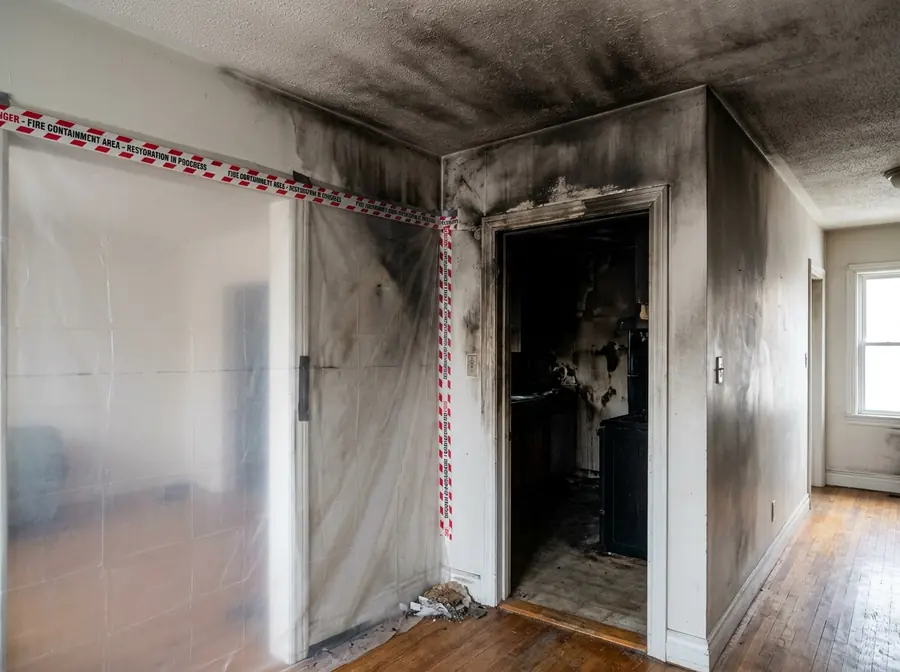
When a property may need emergency board-up
Board-up services may be appropriate when an opening leaves the building exposed or creates an access hazard. Common situations include:
- Windows broken by heat, impact, firefighting activity, or debris.
- Exterior doors damaged or unable to close and secure properly.
- Openings created during emergency fire suppression or safety operations.
- Sections of exterior wall or other openings that require temporary weather protection after professional evaluation.
- Ground-level openings that create an immediate security concern.
- Damage that leaves contents or interior areas exposed to rain and wind.
Not every opening should be covered in the same way. The building's condition, opening size, material, location, weather exposure, ventilation needs, and any remaining hazards all matter. A temporary barrier must be suitable for the situation and should not conceal a condition that needs urgent structural attention.
Safety comes before securing the opening
After a fire or major impact, wait for emergency officials to confirm when and how the property may be entered. Fire-damaged roofs, ceilings, floors, stairs, and walls can be unstable. Electrical wiring may be exposed, utilities may be damaged, and hot spots may remain. Do not climb onto a damaged roof, lean a ladder against an unstable wall, or attempt to cover an opening from an unsafe position.
If an opening is associated with a gas leak, electrical hazard, structural movement, or active fire risk, contact emergency services or the relevant utility from a safe location. Keep people away from broken glass, hanging materials, loose masonry, and damaged overhead components. A board-up crew should not be expected to replace a structural engineer, electrician, utility provider, or fire official.
Once access is authorized, the condition of the opening and surrounding structure can be assessed. Temporary protection should be planned around the building's stability and the work area. If the opening is part of a larger structural failure, a qualified building professional may need to evaluate it before any temporary covering is installed.
What to expect during a professional board-up visit
Initial discussion and access review
The team needs to understand what happened, which openings are affected, whether the fire department or other authority has released the property for access, and whether any known hazards remain. Photographs or a safe exterior description can help explain the situation before a site visit. The scope may change after the opening and surrounding materials are inspected.
Inspection of the opening and surrounding materials
Technicians consider the opening's dimensions, frame condition, nearby masonry or siding, access height, and exposure to weather. A window frame distorted by heat may not provide a reliable fixing point. A damaged door frame may require a different temporary security approach. If the wall, roof, or supporting components appear unstable, work may need to pause until a qualified professional evaluates the structure.
Temporary protection and controlled installation
Where appropriate, suitable temporary materials are secured to help reduce exposure and restrict unauthorized access. The method depends on the opening and the property's condition. Work should avoid damaging intact building components unnecessarily and should not obstruct required emergency access or violate instructions from authorities. A temporary covering is not a substitute for a code-compliant permanent window, door, roof, or wall repair.
Documentation and next steps
Photographs and a description of the temporary work can help the owner keep track of the emergency response. The property owner should understand what has been protected, what remains damaged, and which repairs or specialist inspections are still outstanding. The board-up phase may be followed by debris removal, soot cleaning, water extraction, drying, contents evaluation, and reconstruction, depending on the loss.
Board-up after a fire: weather, security, and restoration coordination
Fire damage often creates several simultaneous problems. Broken windows may expose the interior to rain, while smoke residue affects surfaces and firefighting water affects floors or wall cavities. Temporary protection can help limit additional exposure, but it should be coordinated with the restoration plan. For example, a temporary covering should not trap moisture in a way that worsens an existing damp condition, and ventilation requirements should be considered where appropriate.
Security is another concern. A damaged door or ground-floor window may make a property easier to enter. Temporary protection can reduce access through the affected opening, but owners should not assume that a board-up guarantees complete security. Check with your insurer about property protection requirements and keep records of the steps taken.
Weather conditions in North Texas can change quickly. Rain entering an open roof or window can affect materials that were not damaged by the original event. If water has entered, see our water damage restoration service and the focused structural drying and dehumidification page.
Board-up versus permanent repair
Emergency board-up is a temporary measure. It is intended to protect an opening while a longer-term repair decision is made. Permanent work may involve replacing windows and doors, repairing framing, rebuilding exterior walls, restoring roofing, or completing other construction. The permanent scope depends on the damage and may require permits, inspections, licensed trades, or engineering input.
A restoration company can help coordinate the sequence and document affected areas, but regulated trade work must be performed by appropriately qualified professionals. Electrical, plumbing, gas, roofing, structural engineering, and permitted construction tasks should be assigned to specialists with the right authorization. Temporary protection should never be represented as proof that the building is structurally sound or ready for occupancy.
Board-up services for Haltom City homes and businesses
Residential properties may need temporary protection for a broken bedroom window, a damaged entry door, or a fire-related opening. Commercial properties may have storefront glazing, service doors, loading areas, or larger openings that need a different assessment. The building's use, public access, neighboring tenants, and security needs influence the plan.
Home Mold Water Fire Damage serves Haltom City, including the 76117 area, and surrounding communities listed on our service areas page. Availability and scope depend on access, site conditions, and the nature of the emergency. We provide 24/7 emergency response, but do not promise a fixed arrival time or a particular installation method before the site is assessed.
Questions about emergency board-up
Does board-up make my property safe to enter?
No. A temporary covering protects an opening; it does not certify the building, electrical system, roof, or structure as safe. Follow instructions from emergency officials and obtain any required professional inspections.
Can I board up a broken window myself?
Do not attempt work if the opening is high, the surrounding structure is damaged, glass is unstable, or electrical or fire hazards may be present. Even apparently simple work can involve ladders, sharp edges, and compromised frames. Professional assessment is the safer option after a serious incident.
Will board-up stop all rain from entering?
Temporary protection is intended to reduce exposure, but it is not a guarantee of a weather-tight permanent enclosure. The effectiveness depends on the opening, materials, installation, and weather conditions.
Can a board-up remain in place until repairs are complete?
It may remain temporarily, but it should be monitored and replaced with permanent repairs as soon as practical. The owner should follow any insurer, authority, or contractor instructions about inspection and maintenance.
Does insurance pay for emergency board-up?
Some policies may include reasonable emergency measures, but coverage depends on policy wording, cause of loss, limits, exclusions, and the insurer's decision. Contact your insurer and retain photographs, invoices, and work records.
Can board-up be arranged before the full restoration estimate?
Temporary protection may be a separate immediate need while the full scope is still being evaluated. The exact arrangement depends on the site and authorization. Ask for the emergency work and any later restoration work to be documented clearly.
Request emergency property protection
If a fire or other emergency has left an opening in your Haltom City property, keep people away from unsafe areas and contact the appropriate emergency authority first. Once access is permitted, contact Home Mold Water Fire Damage to discuss temporary protection and the next steps in the restoration process. Our team offers 24/7 emergency response for property restoration needs in Haltom City and nearby communities.
Learn more about our fire and smoke damage restoration services, or use our contact page to request assistance.