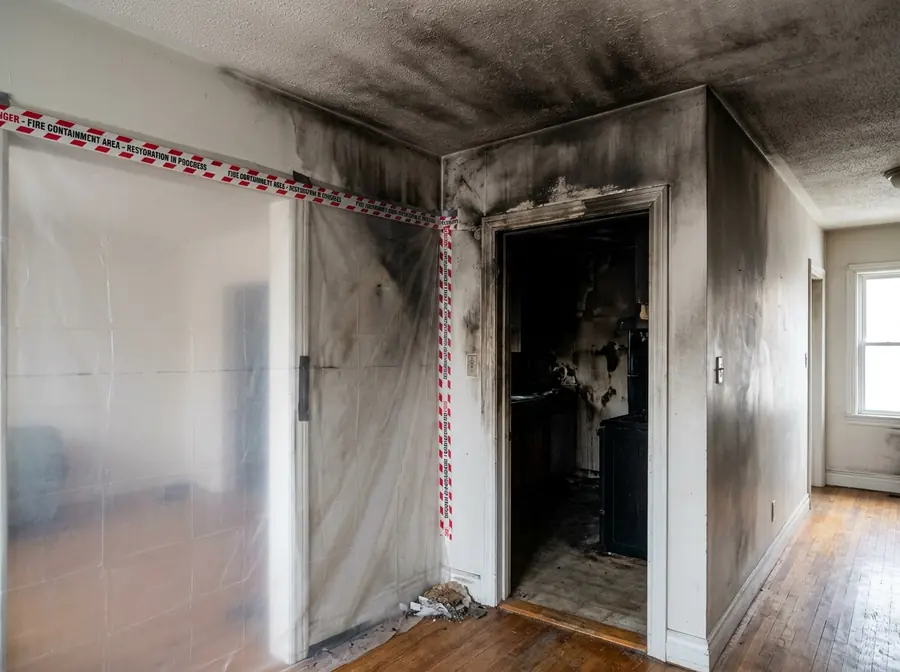
Safety comes before fire damage cleanup
Do not enter a fire-damaged property until the fire department or responsible authority has confirmed that access is safe. A building may have damaged framing, weakened stairs, unstable ceilings, exposed wiring, broken glass, sharp debris, gas-related concerns, or hidden hot spots. Even if flames are extinguished, hazards may remain. If there is an immediate threat, contact emergency services rather than attempting to arrange private cleanup.
After access is permitted, keep people and pets away from affected areas until the safety conditions and scope of work are understood. Do not switch on electrical circuits, appliances, or HVAC equipment that may have been affected by fire, smoke, heat, or water. Electrical systems should be evaluated by a qualified professional where needed. Avoid sweeping ash or vacuuming soot with ordinary household equipment, as the wrong method may spread particles or damage surfaces.
Fire residue is not uniform. Soot may be dry, powdery, oily, or sticky depending on what burned and how the fire developed. Applying a household cleaner or scrubbing with an ordinary cloth can smear residue into a surface or make cleaning more difficult. Leave unknown residues undisturbed until a suitable cleaning method is selected.
Everman service-area context
The approved local service-area list includes Everman North, Everman South, Garden Acres, Alta Mesa East, Hanna Ranch, and Royal Crest, with ZIP code 76140 associated with Everman. These names can help identify a property when requesting service, but they do not indicate that any neighborhood has experienced a specific fire or has a particular building risk. A restoration scope is based on the incident and property, not on neighborhood assumptions.
Fire-related losses can occur in homes, rentals, offices, retail spaces, workshops, and other buildings. The needs of a family home may include contents decisions, temporary protection, and planning which rooms can be used. A business may need to protect inventory, equipment, records, or neighboring tenant spaces. If the property is managed or leased, coordinate access and authorization with the owner or property manager before work begins.
When contacting a restoration provider, share the exact address, building type, whether authorities have released the site, the room where the fire began if known, any smoke spread, and whether water from firefighting is present. These details are more helpful than a neighborhood name alone and can support an initial conversation about scope and availability.
How fire, smoke, and soot affect different materials
Heat may damage finishes, framing, wiring, glazing, and other components even when visible charring is limited. Smoke can move into rooms that were not directly burned, leaving residue on ceilings, walls, closets, furnishings, and contents. Odor may remain after loose residue is removed because particles or compounds have reached porous materials. A cleaning plan should distinguish direct flame damage, smoke deposits, heat effects, and water-related damage.
Painted walls and sealed hard surfaces may respond differently from unfinished wood, upholstery, carpet, insulation, or paper products. Electronics, documents, food, medicine, and personal belongings may require separate evaluation. Some items can be cleaned by specialists; some may be unsafe or beyond practical restoration. Do not assume a single cleaning product or method is appropriate for all materials.
Smoke may move through openings and airflow pathways, but its distribution depends on the fire, building layout, doors, ventilation, and conditions at the time. A restoration inspection may consider adjoining rooms and contents instead of focusing only on the burned area. HVAC equipment should not be operated in an affected building until its condition and the appropriate cleaning or inspection needs have been assessed.
Firefighting water may create a separate restoration scope
Water used to extinguish a fire can affect flooring, wall assemblies, ceilings, cabinets, insulation, contents, and rooms below. The water may mix with soot, debris, or other residue, so it should not automatically be treated as an ordinary clean plumbing leak. The restoration plan should identify both fire-related cleaning and moisture-related needs.
Depending on the conditions, work may include water extraction, moisture checks, drying equipment, and monitoring. A property with fire damage may need coordination between fire cleanup and water mitigation. If water has reached concealed areas or another floor, the affected materials may require additional evaluation. The sequence will depend on safety, the extent of damage, and the approved scope.
Keep documentation of the fire damage and water damage separately where practical. Photographs, an inventory of affected items, notes about the event, and insurer communications can help explain what happened. Coverage depends on the policy terms, the cause of loss, exclusions, limits, and the insurer's decision; a restoration contractor cannot guarantee claim payment.
Temporary protection and securing openings
Fire can leave damaged windows, doors, roof openings, or exterior sections exposed to weather and unauthorized entry. Temporary board-up or protection may help limit additional damage, but it is not the same as permanent repair. The appropriate approach depends on the opening, remaining structure, weather, access, and safety requirements. Do not climb onto a damaged roof or try to secure unstable masonry or framing yourself.
A temporary protective measure should be clearly described, including what it covers and what remains to be repaired. Permanent roof work, window replacement, structural repair, electrical work, and reconstruction may require qualified trades, inspections, or permits. Confirm whether these tasks are included in the restoration agreement or need separate arrangements.
Contents cleaning and inventory after a fire
Belongings can be affected by soot, odor, heat, water, or debris. Furniture, clothing, rugs, documents, electronics, kitchenware, and business inventory all require different handling. The restoration team may discuss which items can be cleaned, which should be sent to a specialist, and which may not be suitable for restoration. Avoid rubbing residue into fabric or using untested cleaners on valuable items.
Make a list of damaged belongings when it is safe. Include a general description, room or location, visible condition, and any information about age or purchase that you can reasonably provide. Take photos before moving items when possible. Ask your insurer whether it needs to inspect items before disposal, unless the item presents a safety or sanitation hazard. Keep salvageable and affected items separated only when it is safe and the project instructions allow.
Documents, photographs, sentimental objects, and electronics may need specialized cleaning or handling. Ask what services are available and what limitations apply. Do not expect every item to be restored, and do not assume every item must be discarded without evaluation.
Residential fire restoration planning
For homeowners, fire cleanup is often a sequence of safety decisions, contents protection, and coordination of work. Start with the authority's clearance, then understand which areas can be accessed and which should remain restricted. Ask the restoration provider to explain the cleaning and mitigation scope, the equipment that may be used, the rooms affected, and whether any separate trade is needed before restoration can continue.
If the property is partially usable, do not assume that an unaffected room is automatically safe for occupancy. Smoke, soot, water, electrical hazards, or structural concerns may extend beyond the visible fire area. The appropriate safety determination should come from qualified authorities and professionals. If temporary accommodation is needed, contact your insurer to ask about any applicable policy provisions rather than assuming reimbursement.
Commercial fire and smoke cleanup
Businesses may face concerns beyond the physical building, including inventory, staff access, customer safety, operating equipment, records, and neighboring tenants. A restoration plan for a retail unit, office, workshop, or warehouse should clarify restricted zones, access control, work scheduling, contents handling, and coordination with the building owner or facility manager.
Commercial sites may have mechanical systems, process materials, food inventory, specialized equipment, or records that require a separate qualified professional. Do not operate equipment affected by fire, heat, water, or soot until it has been evaluated. Any requirements related to food, safety, regulated materials, or reopening should be confirmed with the appropriate authority or specialist. Restoration service does not guarantee a reopening date or the return of every item to pre-loss condition.
How an Everman fire restoration project may proceed
- Confirm site release and safety: follow fire officials' instructions and identify any access limits or hazards.
- Discuss the loss: describe the building, fire area, smoke movement, contents, and firefighting water.
- Evaluate the affected area: review surfaces, materials, contents, odor, and any conditions needing specialist assessment.
- Agree on scope: clarify cleaning, debris handling, water mitigation, temporary protection, and separate trade work.
- Perform authorized restoration: use methods appropriate to the residue, material, and project requirements.
- Review documentation: discuss completed work, remaining issues, and any next steps for repair or specialist services.
The steps may overlap or change. A smaller incident and a large structural loss have different requirements. A written scope helps everyone understand the work, responsibilities, exclusions, and how changes will be handled.
Estimate, insurance, and records
Ask for an itemized scope describing the areas, services, equipment, contents handling, and temporary protection included. Confirm which work may require a separate electrician, plumber, roofer, HVAC contractor, structural professional, or reconstruction contractor. Ask how additional damage discovered during cleanup will be documented and approved.
Contact your insurer or agent to report the loss and ask what documents or inspections are needed. Coverage depends on policy wording, cause, exclusions, limits, endorsements, and the insurer's determination. Keep photographs, communications, receipts, inventory, and work authorizations. A restoration company can explain its proposed services and document observed conditions, but cannot promise coverage or a claim outcome.
Frequently asked questions about Everman fire and smoke damage
Can I start wiping soot off the walls?
Wait until the property is released for safe access and the cleaning method is understood. Some soot smears when wiped or treated incorrectly. Broad cleaning may make restoration harder.
Does smoke affect rooms that did not burn?
It can. Smoke may move into adjoining rooms and leave deposits on surfaces or contents. The affected areas should be evaluated rather than assumed based only on visible flames.
Can fire cleanup include water removal?
Yes, when firefighting water has affected materials and the site is safe. Water mitigation may be a separate but related part of the scope, and contaminated water needs appropriate handling.
Will you rebuild the property?
Restoration cleanup and temporary protection are not automatically the same as reconstruction. Permanent building, electrical, roofing, or structural repairs may require separate trades, permits, and inspections. Confirm the agreed scope.
Do you serve Garden Acres or Royal Crest?
The Everman service-area list includes Garden Acres, Royal Crest, Everman North and South, Alta Mesa East, and Hanna Ranch. Confirm current service availability for the address.
Can insurance cover smoke or soot cleaning?
Coverage varies by policy and loss circumstances. Contact your insurer, review the policy, and keep records. No contractor can guarantee the insurer's decision.
Arrange fire and smoke restoration in Everman
If your Everman property has fire, smoke, soot, or firefighting-water damage, contact Home Mold Water Fire Damage after authorities have made the site safe for the proposed work. Share the address, building type, areas affected, any known hazards, and whether temporary protection is needed. Our team has more than 13 years of experience, trained technicians, professional equipment, and 24/7 emergency response. We can discuss current availability and the restoration services appropriate to the situation.
Visit the Everman restoration services page, the main fire and smoke damage restoration hub, or our contact page. For water or mold concerns, explore the separate Everman pages for water damage restoration and mold removal and remediation.