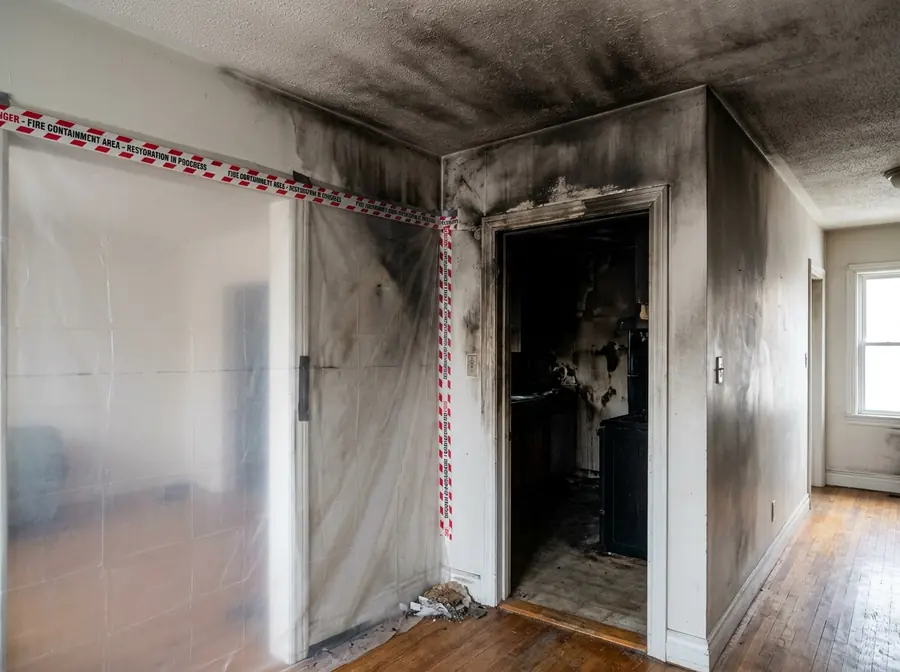
Fire damage extends beyond burned materials
Flames can damage structural and finish materials, but heat and smoke may affect rooms that were not directly involved in the fire. Smoke can move through hallways, ceiling spaces, door gaps, and other openings. Soot may deposit on walls, ceilings, furniture, textiles, appliances, and stored belongings. Odor can remain in porous materials even after visible residue is removed.
The type of residue depends on what burned and how the fire developed. Some deposits are dry and powdery; others are oily, sticky, or difficult to remove. A cleaning method that works on one surface may smear soot or damage another. Avoid wiping every surface with a household cleaner before the residue, finish, and material condition have been assessed.
Fire suppression can introduce a second category of damage. Water may travel into lower rooms, under flooring, behind cabinets, or into wall cavities. If moisture remains, materials can swell, corrode, deteriorate, or develop microbial growth. A complete restoration review should consider fire, smoke, soot, odor, and water rather than treating only the visible burn marks.
Wait for official clearance before entering
Do not enter a fire-damaged property until the fire department or other responsible authority confirms that entry is permitted and safe for the proposed activity. Fire can weaken floors, roof framing, stairs, and ceilings. Electrical systems, gas lines, damaged appliances, sharp debris, hot spots, and smoke residues may also present hazards. A property can remain dangerous after flames are extinguished.
For an active emergency, injury, or immediate threat, call 911. Follow instructions from emergency personnel and do not re-enter to retrieve belongings. Do not operate switches, appliances, electrical panels, or gas equipment if they may have been affected. Structural, electrical, and gas concerns should be evaluated by qualified professionals.
Forest Hill's Fire and EMS Department describes responsibilities that include emergency response, fire prevention, fire safety inspections, pre-fire planning, hydrant maintenance, fire and arson investigations, and coordination of the city's emergency management plan. These are public-safety functions. A private restoration contractor does not replace fire officials or determine when a building is released for occupancy.
First steps after the scene is released
- Confirm permitted access. Ask the fire authority or building official whether any areas remain restricted and whether an investigation is ongoing.
- Document the condition. Photograph the affected rooms, visible soot, damaged contents, and water intrusion when it is safe to do so.
- Notify the insurer. Ask how to report the loss, whether an adjuster needs to inspect, and what temporary protection or mitigation is authorized.
- Secure the property. Broken doors, windows, and roof openings may need temporary protection, but only when the structure is safe and the work will not interfere with official requirements.
- Inventory belongings. Record furniture, clothing, electronics, tools, documents, and business stock. Keep receipts and communications.
- Explain all known hazards. Tell the restoration provider about fire location, smoke spread, firefighting water, structural concerns, and access restrictions.
Do not discard items that may be needed for an investigation or insurance inspection unless they create an immediate hazard. If something must be removed for safety or sanitation, photograph it first where practical and follow the instructions of the responsible authority.
What professional fire restoration may involve
Assessment and scope definition
The initial review should identify the property address, building type, fire location, visible damage, smoke migration, water intrusion, and safety status. The scope should distinguish emergency protection and cleanup from permanent structural repair, electrical work, roofing, plumbing, and reconstruction. Those activities may require separate licensed trades, permits, or inspections.
Soot cleanup
Soot should be evaluated by its type, location, and interaction with the affected surface. Cleaning may involve specialized dry methods, wet cleaning, or other surface-specific techniques. Some materials can be restored; others may be too damaged or contaminated to retain. The plan should explain which surfaces will be cleaned and which will be removed or replaced. Do not assume that a single chemical or wiping method is appropriate throughout the property.
Smoke odor management
Odor may remain in porous contents, textiles, insulation, cavities, and other materials. Effective odor management starts with removing the source of odor and cleaning affected materials. Treatment methods depend on the building and the items involved. A promise of complete odor elimination before inspection would be unreliable; the contractor should explain the proposed method, limitations, and any areas that require further work.
Contents handling
Furniture, clothing, documents, electronics, and personal items may need separate evaluation. Some can be cleaned on site, some may require specialist contents restoration, and others may not be salvageable. Keep an inventory and ask how items will be identified, packed, stored, and returned if contents services are included. Sentimental or irreplaceable belongings should be discussed before decisions are made.
Water extraction and drying
Firefighting water can affect materials that show no visible soot. Depending on the volume and path, mitigation may include extraction, moisture checks, drying equipment, dehumidification, and monitoring. Water that has mixed with soot or debris should not be handled as an ordinary clean-water leak. The water source and condition influence protective measures and material decisions.
Forest Hill local context and public responsibilities
The approved service-area inventory identifies Forest Hill ZIP code 76119 and includes Forest Hill Village, Forest Hill East, Forest Hill South, Bluebonnet Hills, Heritage Heights, and Forest Oaks. These area names help residents identify a general location. They do not establish that a specific neighborhood has experienced a fire or that buildings in the area share the same construction or risk profile.
The city's Fire and EMS Department provides emergency response and fire-prevention functions. The city's Public Works Department describes responsibilities for water, sewer, and streets and publishes information about its stormwater management program. These municipal functions may become relevant after an incident if a public utility or street issue is involved, or if rain threatens a fire-damaged property with an exposed roof or broken opening.
If a public water or sewer issue is suspected, contact the appropriate city department. If the loss involves a private plumbing line, roof assembly, electrical system, or structural component, the property owner or manager may need a separate qualified trade. A restoration contractor should explain the boundary between cleanup and work requiring another professional.
Rainwater can enter a building through damaged roofing, windows, doors, or other openings after a fire. Temporary protection may help limit further damage, but it should be installed only after the structure is safe and the relevant authority has allowed the work. Do not climb onto a damaged roof or attempt a repair in unsafe conditions.
Planning for homes, rentals, and businesses
Single-family homes
Homeowners may need to make decisions about temporary accommodation, medication, pets, clothing, important documents, and access to unaffected rooms. Do not assume that rooms away from the burn area are safe. Smoke can travel, and structural or electrical hazards may extend beyond visible damage. Ask which areas are restricted and whether the property can be occupied during any part of the restoration.
Rental and multi-unit properties
Tenants should follow emergency instructions and notify the landlord or property manager after the scene is safe. A fire in one unit can affect shared corridors, adjacent units, roof spaces, and common systems. Management may need to coordinate inspections, access, utilities, temporary relocation, security, and communication with residents. Keep records of notifications and instructions.
Commercial properties
Businesses may need to protect stock, equipment, records, customer areas, and employee access. A restaurant, retail store, office, or warehouse can have different contents and safety requirements. The restoration plan should identify restricted zones, any specialist cleaning, inventory priorities, and the parties authorized to approve work. Food, industrial, healthcare, and other regulated premises may require additional professional or agency guidance.
Insurance records after a fire
Report the loss promptly and ask the insurer what documentation is needed. Photograph damage after the property is safe to enter, prepare an inventory of affected belongings, and keep receipts for temporary repairs or emergency expenses. Ask whether damaged items should remain available for inspection before disposal. For a commercial property, identify the person authorized to speak for the business or building owner.
Coverage depends on policy language, cause of loss, exclusions, limits, endorsements, and the insurer's investigation and decision. Smoke, fire, contents, temporary accommodation, debris removal, and water from firefighting may be addressed under different provisions. Home Mold Water Fire Damage can explain its proposed restoration scope but cannot promise that a claim or expense will be approved. See our insurance claims help page for a practical documentation checklist.
Related Forest Hill restoration services
- Forest Hill water damage restoration — extraction and drying after firefighting water or a separate leak.
- Forest Hill mold removal and remediation — moisture-related concerns after a water event.
- Fire and smoke restoration hub — broader information about fire cleanup.
- Smoke odor removal — source removal, cleaning, and odor-treatment planning.
- Soot cleanup — surface-specific residue decisions.
- Contact Home Mold Water Fire Damage — discuss the property and current availability.
Frequently asked questions about fire restoration in Forest Hill
Can I enter the property once the fire is out?
Only after the responsible authority confirms that entry is permitted and safe for the activity proposed. Hidden structural, electrical, gas, and debris hazards may remain after the flames are extinguished.
Can smoke damage areas beyond the room where the fire started?
Yes. Smoke can travel through a building and leave residue or odor in adjoining rooms, hallways, and contents. The affected area should be assessed rather than judged only by the visible burn area.
Should I wipe soot from furniture?
Do not assume wiping is safe. Some soot smears or bonds to a surface, and household cleaners can damage finishes. Document the condition and ask about suitable cleaning methods.
Does firefighting water require drying?
It may. Water can enter flooring, walls, insulation, and contents. Moisture checks help determine what needs extraction, drying, removal, or repair.
Will my insurer cover every restoration expense?
Coverage depends on policy wording and the insurer's decision. Ask about the specific cause, exclusions, limits, and any required approvals.
Does Home Mold Water Fire Damage offer 24/7 response?
Yes. Home Mold Water Fire Damage offers 24/7 emergency response. Call to discuss the property, current safety status, and service availability. No fixed arrival time is guaranteed.
Contact Home Mold Water Fire Damage after a Forest Hill fire
If a fire, smoke, soot, or firefighting-water incident has affected your Forest Hill property, contact Home Mold Water Fire Damage once emergency authorities have released the site for the proposed work. Share the address, building type, affected areas, known hazards, and any access restrictions. Our company brings more than 13 years of experience, trained technicians, professional restoration equipment, and 24/7 emergency response.
For related local guidance, read about Forest Hill water damage restoration and Forest Hill mold remediation, or use the contact page to discuss next steps.