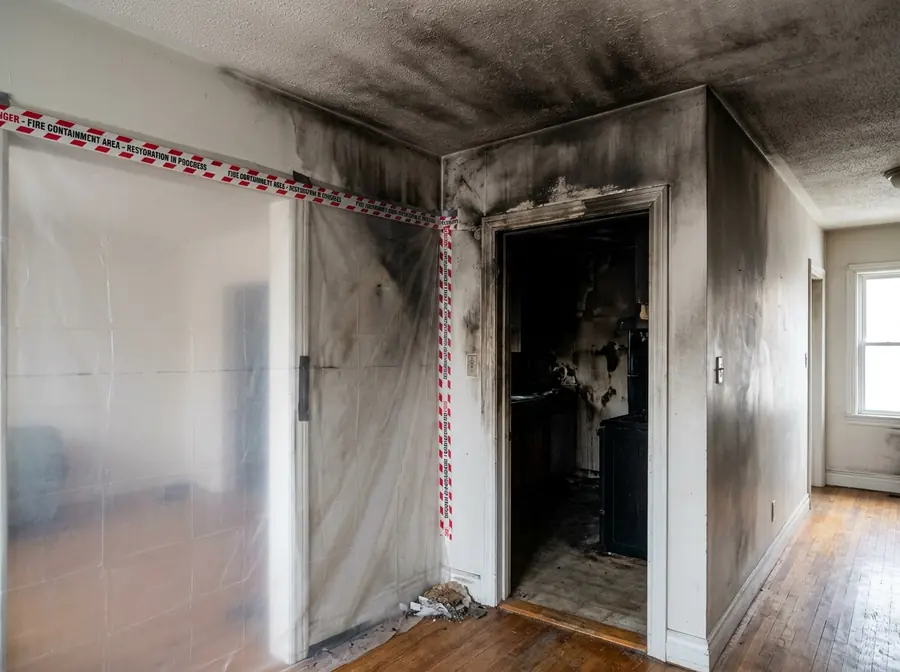
Safety comes before fire damage cleanup
Do not enter a building after a fire until the fire department or other responsible authority has confirmed that it is safe to do so. A structure can look stable from outside while containing weakened roof framing, damaged floor systems, unstable ceilings, compromised stairs, or electrical hazards. Hidden hot spots and damaged utility connections may also remain. If authorities have restricted access, follow their instructions and wait for clearance.
If the fire is active, smoke is increasing, someone is injured, or there is an immediate threat to life or property, call 911. A restoration company is not a substitute for emergency response. Do not attempt to extinguish a growing fire, investigate a suspected gas leak, or re-enter to retrieve belongings. Keep children, pets, and visitors away from the scene.
Once the property has been released for access, remain alert to hazards. Wear appropriate protection if you must briefly enter an area to meet an authorized professional, but do not handle charred debris, damaged wiring, chemicals, or unstable building materials. Do not turn electrical circuits or appliances back on unless a qualified electrician or other authorized professional has confirmed that it is safe.
How fire, smoke, soot, and firefighting water affect a property
Fire damage is not a single condition. Direct flame and heat can char, warp, crack, blister, or weaken building materials. Smoke carries a mixture of gases and fine particles that can travel into adjoining rooms and settle on surfaces. Soot is the visible residue left by incomplete combustion; its composition and cleaning requirements depend on what burned and how the fire developed. Firefighting water can soak insulation, flooring, drywall, cabinets, and contents, sometimes in areas that were not directly exposed to flames.
Smoke migration can be difficult to judge by sight alone. A closed room may still be affected through gaps, door undercuts, ductwork, or pressure changes. Odor may remain after visible residue has been removed, while some surfaces may appear clean but retain fine deposits. A restoration evaluation should consider the whole affected area rather than focusing only on the charred point of origin.
Different fuels and materials produce different residues. A cooking fire, electrical equipment fire, furniture fire, or commercial equipment incident can leave different combinations of soot, oily deposits, and odor. The correct cleaning method depends on the surface and residue. Aggressive scrubbing or using an unsuitable household chemical can drive soot deeper into porous materials or damage finishes.
Fire and smoke restoration in Haltom City homes
Residential fire losses can affect kitchens, garages, utility rooms, bedrooms, living areas, and attached spaces. A kitchen fire may leave residues on nearby cabinets, counters, appliances, and soft furnishings. A garage fire can involve stored materials, vehicles, tools, and building components. A small fire may still spread smoke into hallways and rooms through normal air movement.
For a home, restoration planning should account for the people who live there, the rooms that remain safe to occupy, and the belongings that may need careful handling. Owners should ask which areas must remain closed, whether HVAC equipment should stay off pending inspection, and how unaffected rooms will be protected during work. If a property is rented or part of a multi-unit building, coordinate access and communication with the landlord, property manager, or association.
Contents may include clothing, furniture, photographs, documents, electronics, kitchen items, and personal keepsakes. Some items can be cleaned using suitable methods; others may require a specialist or may not be restorable. Do not assume that every item with smoke odor is automatically lost, and do not assume that every item can be safely cleaned. Document contents and follow insurer instructions before discarding items when practical and safe.
Our wider fire and smoke damage restoration hub explains the overall service. If the main concern is odor after the visible cleanup, see smoke odor removal for a more focused discussion.
Commercial fire restoration and business interruption
Commercial properties can have additional coordination needs after a fire. A restaurant, retail unit, office, warehouse, workshop, or multi-tenant building may contain specialized equipment, inventory, records, customer areas, and shared mechanical systems. Smoke can affect neighboring suites or common corridors even when flames remain in one unit. Firefighting water may reach lower floors or adjacent spaces.
Before restoration begins, the owner or authorized representative should confirm the building's access status, identify any areas restricted by fire officials, and determine who can approve work. Tenants may need to coordinate with a property manager, building engineer, insurer, and specialist trades. Business owners should preserve relevant records and avoid making public statements about the cause of the fire before the appropriate investigation is complete.
Commercial cleanup may involve separating affected inventory, documenting equipment condition, evaluating HVAC pathways, cleaning appropriate surfaces, and arranging repairs by qualified trades. Some items may need specialist electronics, food-service, document, or machinery assessment. A restoration provider can explain the work within its scope, but structural certification, electrical repairs, fire-system work, and other regulated tasks must be handled by the appropriately qualified professionals.
Haltom City's Fire / Rescue Department describes fire prevention activities that include commercial and multi-family inspections, public education, occupancy and follow-up inspections, plan reviews, and fire investigations. These are municipal fire-safety functions; they do not replace the property owner's responsibility to arrange post-loss cleanup and repair. A restoration project should respect any instructions from the fire authority and should not interfere with an active investigation.
What a professional fire restoration visit may include
The first discussion usually establishes the incident type, the date and approximate time, whether the fire department has released the property, which areas were affected, and whether water was used during suppression. The team may ask whether utilities have been isolated, whether there are known structural concerns, and who is authorized to approve access and work. These details help determine whether an on-site evaluation can proceed safely.
An evaluation may include a visual review of affected rooms, the identification of materials with direct heat or smoke exposure, and an initial outline of areas requiring further specialist attention. Where appropriate, the restoration team may document visible conditions and discuss contents handling, surface cleaning, debris removal, odor concerns, and water-related drying. The exact scope is property-specific and should be explained before work is authorized.
Work may involve protecting unaffected areas, separating salvageable contents, removing debris where authorized, cleaning compatible surfaces, and addressing moisture left by firefighting. Some materials may need removal because they are charred, structurally compromised, or cannot be cleaned adequately. Other materials may be retained after an appropriate cleaning process. The decision should be based on condition, safety, material type, and the project plan rather than a blanket promise that every surface can be restored.
When a project includes reconstruction, plumbing, electrical, HVAC, roofing, or structural tasks, the restoration scope should identify where a licensed or otherwise qualified trade is needed. A restoration provider should not present itself as authorized to perform every trade simply because it coordinates the project.
Smoke residue and odor: why the source matters
Smoke odor is not just a fragrance problem. Odor-causing residues can remain on surfaces, within porous materials, and in contents. Applying a deodorizing product without removing the underlying residue may mask an odor temporarily rather than address its source. The right approach depends on the type of smoke, the materials affected, the extent of contamination, and whether the building's air-handling system was involved.
Cleaning should be matched to the material. Hard, nonporous surfaces may tolerate methods that would damage fabrics, unfinished wood, painted drywall, or delicate belongings. Some contents can be treated off-site by specialists. HVAC filters and components may require inspection and service by a qualified HVAC professional if smoke entered the system. Do not run a system simply to circulate air through a smoke-affected property before it has been evaluated.
Odor treatment may be considered after appropriate cleaning and source removal. No single method is suitable for every property, and no responsible provider should promise complete odor elimination before the affected materials and conditions have been assessed. The goal is to select a suitable process, explain its limitations, and verify the result as work progresses.
Firefighting water and secondary water damage
Water used to extinguish a fire can create a separate restoration need. It may collect on floors, soak insulation, enter wall cavities, or move to rooms below. If water remains, materials may swell, finishes may detach, and moisture-sensitive contents may be affected. A fire restoration plan should therefore consider both smoke and heat damage and the moisture conditions created during suppression.
Do not operate electrical equipment in a wet area or enter standing water where outlets, wiring, or appliances may be involved. Keep away from ceilings that are sagging and floors that feel unstable. If the source of water is a damaged pipe or roof opening, have the appropriate trade address the source when safe. Restoration drying can address affected materials but does not replace plumbing or roof repairs.
Where water extraction and drying are needed, the team may use suitable extraction equipment, air movement, and dehumidification, with monitoring to evaluate progress. Learn more about these related services in the water damage restoration hub and the structural drying guide.
Local coordination and fire safety information in Haltom City
Haltom City's official Fire / Rescue information identifies separate functions for fire administration, emergency management, fire services, and fire suppression. The city describes fire services as handling activities such as commercial and multi-family inspections, public education, occupancy and follow-up inspections, plan reviews, and fire investigations. Fire suppression is responsible for emergency fire, rescue, EMS, and hazardous-material response. These distinctions matter because emergency response, official clearance, investigation, and property restoration are different stages of a fire incident.
The city's emergency management office coordinates planning, mitigation, preparedness, response, recovery, and volunteer coordination. It also manages public emergency notifications. Residents can use official city channels to learn about alerts and preparedness information. During an incident, follow instructions from emergency personnel and use 911 for immediate danger.
Haltom City is identified in this website's approved service-area information with ZIP code 76117. Local references such as Broadway Avenue, Haltom Road, Denton Highway, Beach Street, and Northeast Loop 820 may help orient a caller, but a road name or neighborhood does not determine the scope of a fire loss. Each address needs its own access, safety, and damage review. We do not infer a fire history for any particular street or neighborhood.
What to do in the hours after a fire
- Follow emergency instructions. Stay outside until officials say the building is safe to enter.
- Protect people and pets. Arrange a safe place to stay if the property is not suitable for occupancy.
- Do not operate utilities. Leave electrical, gas, and mechanical systems to the appropriate qualified professionals.
- Keep the scene undisturbed. Avoid moving debris or cleaning materials that may be relevant to an investigation or insurance documentation.
- Record visible damage when permitted. Photograph conditions only when access is safe and authorized.
- Contact your insurer. Ask about documentation, temporary repairs, contents handling, and the claim process.
- Arrange a restoration discussion. Share the incident details and ask what evaluation and services may be appropriate.
Insurance and documentation after a fire
Fire coverage is governed by the actual insurance policy, endorsements, exclusions, limits, deductible, and facts of the loss. Contact your insurer or agent and ask how to report the claim, what documentation is required, and whether temporary protective work needs prior approval. Keep copies of photographs, reports, invoices, communications, and signed work authorizations.
A restoration company may document observed conditions and describe work performed within its scope. It cannot guarantee that a claim will be approved, determine the insurer's final coverage decision, or promise reimbursement for every proposed item. If the insurer requests an estimate or additional information, ask the provider to explain the basis for its scope and how any changes will be recorded.
Do not discard damaged contents before checking the insurer's documentation requirements when it is safe and practical to wait. If an item creates an immediate health or safety concern, prioritize safety and document the reason for its removal as best you can without exposure.
Frequently asked questions about fire restoration in Haltom City
Can smoke damage rooms that did not burn?
Yes. Smoke can move through openings and building pathways, and fine residue may settle on surfaces and contents outside the room where the fire started. The affected area should be evaluated rather than assuming that only visibly burned materials need attention.
Should I clean soot from walls myself?
Do not begin broad cleanup before the property is cleared and the residues and surfaces are understood. An unsuitable sponge, cleaner, or scrubbing method can spread soot or damage finishes. Ask a qualified restoration professional to assess the material and recommend an appropriate method.
Does firefighting water require water damage restoration?
It may. Water can soak building materials and contents even when the original fire damage is limited. The property should be checked for moisture, and any necessary extraction and drying should be coordinated with the overall fire restoration plan.
Can you guarantee smoke odor will be eliminated?
No honest assessment can guarantee an outcome before the residues, materials, and affected air pathways are known. Odor work should follow appropriate source removal and cleaning, and the method should be selected for the specific conditions.
Can you start before the fire department releases the property?
No. Access must follow the instructions of the fire department and any other authority controlling the scene. A restoration visit can be arranged for the appropriate time after access is permitted.
Will insurance cover every part of the cleanup?
Coverage depends on the policy and the facts of the loss. Speak with your insurer, keep documentation, and do not rely on a contractor's promise of claim approval.
Arrange fire and smoke restoration in Haltom City
If your Haltom City property has experienced a fire, smoke contamination, soot deposits, or firefighting-water damage, start by confirming that the site is safe and released for access. When you contact Home Mold Water Fire Damage, explain what burned, whether the fire department has cleared the building, which rooms appear affected, and whether water was used during suppression. Our team has more than 13 years of restoration experience, trained technicians, professional equipment, and 24/7 emergency response. We can discuss the next evaluation and confirm availability for the address and scope.
For broader service information, visit our fire and smoke restoration hub. You can also explore restoration services in Haltom City, our service areas, and the contact page.