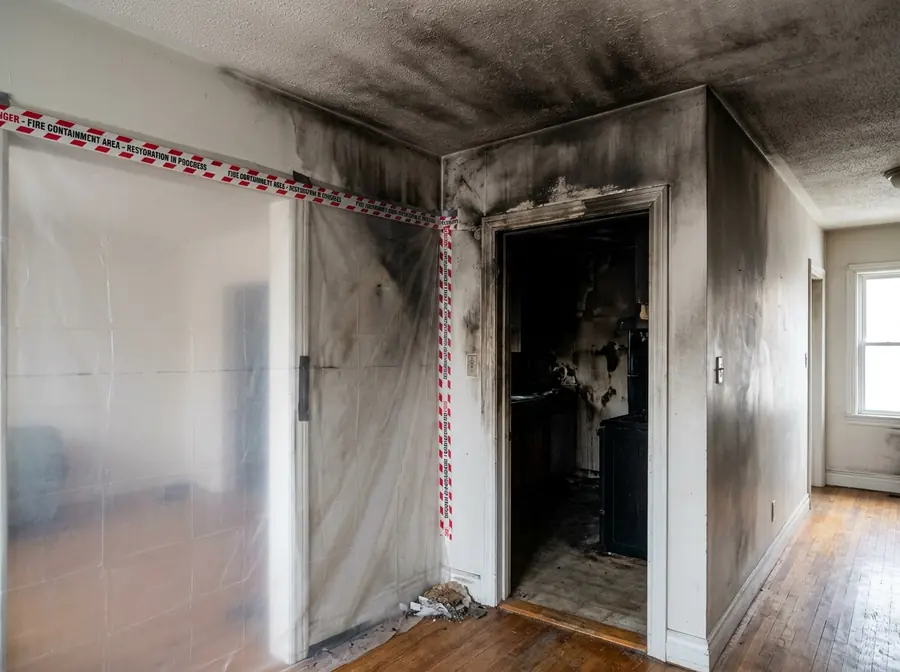
Emergency response and restoration are different stages
If a fire is active, smoke is spreading, someone is injured, or there is immediate danger, call 911 and follow the instructions of emergency personnel. A restoration company does not replace the fire department, emergency medical services, installation security, or other responsible authorities. Do not re-enter a building to retrieve personal belongings or investigate the cause.
Wait until the fire department or other authority responsible for the property confirms that entry is permitted. Fire can weaken roof framing, floors, stairs, ceilings, and wall assemblies. Electrical wiring, gas lines, appliances, and utility systems may also be damaged. Smoke and soot residues can create additional exposure concerns, and water may leave floors slippery or conceal electrical hazards.
After clearance, continue to avoid unstable areas, exposed wiring, damaged utilities, and sagging ceilings. Do not operate electrical circuits, HVAC equipment, or appliances until the appropriate qualified professional confirms that they are safe. If the building is on an active military installation, installation access and work restrictions must also be followed.
Confirm installation access before arranging a visit
Naval Air Station Joint Reserve Base Fort Worth is an active military installation with controlled access. A property inside the installation is different from a civilian address in the surrounding community. Contractor entry may require visitor sponsorship, identification, an escort, advance approval, work authorization, or other site-specific procedures. A listing on a service-area page does not grant permission to enter a controlled installation.
When requesting restoration help, explain whether the property is inside the installation, in nearby civilian housing, or elsewhere in the broader 76127 service area. If the property is inside the installation, contact the appropriate housing office, property manager, facilities representative, or sponsoring contact to establish what permissions are required. Confirm whether photographs, equipment, debris removal, deliveries, and work hours are subject to restrictions.
Do not assume that permission to visit one building authorizes access to another. The restoration provider should follow the current instructions of the installation and the property owner. If access is not approved, work must wait until the required arrangements are complete.
How fire, smoke, soot, and heat affect buildings
Direct flame and heat may char wood, blister paint, crack finishes, distort plastics, damage electrical components, and weaken structural materials. The extent depends on the fire's temperature, duration, ventilation, location, and the materials involved. A room with obvious burn damage may require removal or repair, while nearby rooms may need cleaning because smoke travelled beyond the fire area.
Smoke contains gases and fine particles that can move through doorways, hallways, gaps, ceiling spaces, and ventilation pathways. Residue can settle on walls, ceilings, furnishings, clothing, electronics, and other belongings. Odor may remain in porous materials even after visible soot has been removed. A room that looks unaffected should not automatically be considered clean without an appropriate evaluation.
Soot is not a uniform substance. Its characteristics depend on what burned and the conditions of combustion. Some deposits are dry and powdery; others are oily or smear easily. The cleaning method must be matched to the residue and the surface. Ordinary wiping or aggressive scrubbing can spread soot or damage paint, textiles, wood, and other finishes.
Residential fire restoration and contents handling
Residential fire losses may involve kitchens, bedrooms, living rooms, garages, utility spaces, and adjoining rooms. A cooking fire can affect cabinets and nearby soft furnishings. A garage fire may involve stored materials, tools, vehicles, and building components. Smoke may move into sleeping areas or shared corridors even when flames remain in one part of the property.
Before cleanup, occupants should know which rooms are safe to access and whether the property is suitable for continued occupancy. If the residence is part of managed housing or a multi-unit building, notify the responsible housing or property-management contact. Shared walls, common corridors, mechanical systems, and neighboring units may need evaluation or coordination.
Contents should be assessed individually. Clothing, furniture, photographs, documents, electronics, kitchen items, and keepsakes may require different handling. Some can be cleaned by a restoration provider or specialist; others may need a dedicated contents, electronics, textile, or document professional. Do not assume that every item is lost because it smells of smoke, and do not assume that every item can be restored. Follow insurer and property-owner instructions before discarding items when safe and practical.
Fire restoration for offices and operational facilities
Workplaces and operational facilities can contain equipment, records, sensitive materials, inventory, mechanical systems, and restricted spaces. A fire may affect one room while smoke or water reaches adjoining areas. Business or facility representatives may need to coordinate with safety personnel, property managers, security, insurers, and specialist contractors before restoration can proceed.
Work may include documenting affected areas, identifying salvageable contents, cleaning suitable surfaces, evaluating smoke migration, addressing water from suppression, and arranging repairs. Equipment may require assessment by the manufacturer or a qualified service provider. Electrical, HVAC, structural, fire-suppression, and other regulated tasks should be handled by appropriately qualified specialists.
Any site-specific rules concerning access, escorts, photography, equipment, waste, deliveries, and work hours must be confirmed before mobilization. A restoration contractor should not assume that ordinary commercial-site procedures apply to a controlled installation or government-related facility.
Smoke damage and odor beyond the fire room
Smoke can move beyond the point of ignition through open doors, corridors, stairwells, ceiling voids, and ventilation pathways. Fine particles may settle on surfaces and contents in rooms without visible charring. Odor may be noticeable in a different room from where residue is most concentrated. The evaluation should consider the likely movement of smoke and the materials involved.
Cleaning methods should be selected for each surface. Hard nonporous materials may tolerate a process that would damage textiles, unfinished wood, painted drywall, insulation, or electronics. Some contents may be better handled off-site by specialists. If smoke entered the HVAC system, a qualified HVAC professional may need to inspect filters, ducts, and components before the system is operated normally.
Odor treatment should follow appropriate source removal and cleaning. Applying a deodorizer without addressing residues may only mask the problem. No single treatment is suitable for every material or property, and no responsible provider should promise complete odor elimination before the affected conditions are understood. Our smoke odor removal guide explains this narrower part of restoration.
Firefighting water and secondary moisture damage
Water used during fire suppression may collect on floors, soak insulation, enter wall cavities, and move into rooms below. Water damage may appear after the fire is out, especially where moisture is concealed beneath flooring or behind cabinets. A restoration plan should consider extraction and drying as well as heat, smoke, and soot damage.
Do not operate electrical equipment in wet areas or enter standing water where wiring or appliances may be affected. A restoration evaluation may identify materials that need extraction, drying, removal, or further specialist inspection. Equipment placement and monitoring depend on the building materials, access conditions, and safety requirements.
If a fire has damaged a pipe, roof, or other building component, a qualified plumber, roofer, electrician, or building professional may need to repair the source. Restoration work should distinguish cleanup from specialist repairs. The water damage restoration hub and structural drying guide explain related services.
What a restoration assessment may cover
The first discussion should establish the incident date, the type of property, whether emergency authorities have released the site, what materials burned, which areas show smoke or soot, and whether firefighting water was used. The team may also ask who can authorize work, whether installation access is required, and whether any rooms or systems remain restricted.
An authorized on-site evaluation may document visible conditions, identify smoke migration, note water-affected materials, and outline the restoration work that may be appropriate. Contents handling, debris removal, surface cleaning, odor treatment, and drying may all be considered depending on the conditions. Structural, electrical, HVAC, fire-system, or other specialist input may be needed before certain work proceeds.
Once the scope is understood, the team can discuss protection of unaffected areas, separation of contents, cleaning methods, removal of damaged materials, and any water-related drying. Changes discovered during work should be explained and documented. The owner or authorized representative should understand the proposed scope and approve relevant changes.
Practical steps after the incident
- Follow emergency instructions. Do not enter until the responsible authority releases the property.
- Protect occupants. Arrange safe accommodation if the property is not suitable for use.
- Confirm site access. For an installation property, contact the responsible housing, facilities, or sponsoring authority about contractor procedures.
- Leave utilities alone. Do not restore power, gas, or HVAC operation without qualified clearance.
- Preserve the scene. Avoid moving debris or cleaning materials that may be relevant to an investigation.
- Document safely and lawfully. Take photographs only where permitted and without entering unsafe or restricted areas.
- Contact the insurer or property authority. Ask about reporting, temporary protection, contents, and documentation.
- Discuss restoration scope. Explain what happened and ask which services and specialist trades may be required.
Insurance and project responsibility
Insurance coverage depends on the policy, the cause of loss, exclusions, limits, deductible, endorsements, and the insurer's decision. The responsible claim process may also differ if the property is government-owned, leased, part of privatized housing, or managed under a separate agreement. Contact the insurer or property authority and ask what documentation and approvals are required before work begins.
Keep records of the incident, photographs where permitted, fire department or property reports, contents lists, invoices, communications, and work authorizations. Ask the restoration provider to explain its estimate, the assumptions behind the scope, and how additional work will be documented. A contractor can describe observed conditions and work within its scope, but cannot guarantee claim approval or determine who is legally responsible for the loss.
Frequently asked questions about NAS JRB fire restoration
Can you enter the installation to inspect a fire-damaged property?
Entry depends on current installation procedures and authorization. Confirm sponsorship, visitor, escort, and contractor requirements with the responsible installation or property contact before arranging a visit.
Can smoke damage rooms that were not burned?
Yes. Smoke can move through building openings and ventilation pathways, leaving residue or odor on surfaces and contents beyond the room where flames were present.
Should I clean soot before the restoration team arrives?
Avoid broad cleanup until the property is released and the residues and surfaces have been evaluated. Incorrect cleaning can spread soot or damage finishes.
Can firefighting water require drying?
Yes. Water may soak flooring, walls, insulation, and contents. The property should be checked for moisture, and extraction or drying may be needed based on the materials and conditions.
Can you guarantee that smoke odor will be removed?
No. Results depend on residues, materials, smoke pathways, and the effectiveness of source removal and cleaning. The appropriate approach and limitations should be discussed after evaluation.
Will insurance pay for the restoration?
Coverage depends on the policy or property arrangement and the facts of the loss. Contact the insurer or responsible property authority and keep documentation.
Discuss fire and smoke restoration for the NAS JRB area
If a fire has affected a property connected with Naval Air Station Joint Reserve Base Fort Worth, first confirm that emergency authorities have released the site and that any required installation access has been approved. When contacting Home Mold Water Fire Damage, explain whether the address is inside the installation or in the surrounding community, what burned, whether smoke reached adjoining areas, and whether firefighting water was used. Our company has more than 13 years of restoration experience, trained technicians, professional equipment, local operations serving communities across our coverage area, and 24/7 emergency response. We can discuss the next evaluation and confirm whether the property and access arrangements can be accommodated.
Explore our NAS JRB Fort Worth restoration services page, the fire and smoke damage restoration hub, and the contact page. For installation-specific requirements, rely on official Navy and property-management channels.