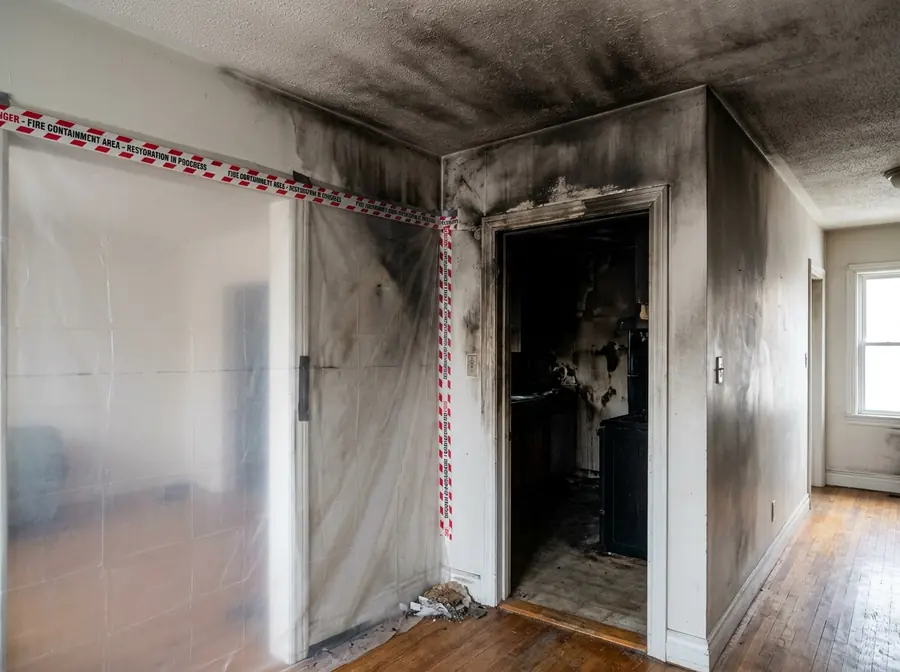
Do not enter until the property is cleared
Fire-damaged buildings can contain hazards that are not obvious from the entrance. Heat may weaken roof framing, floor joists, stairs, ceilings, and wall assemblies. Electrical wiring, outlets, service equipment, gas lines, and appliances may be damaged. Smoke and soot residues can also create exposure concerns, and water may make floors slippery or conceal electrical hazards.
Wait until the fire department or other responsible authority confirms that entry is permitted. If the fire is active, smoke is spreading, someone is injured, or there is immediate danger, call 911. Do not re-enter to retrieve belongings or switch utilities back on. Keep children, pets, and visitors away from the scene and follow any instructions about restricted areas.
After clearance, continue to treat the site cautiously. Do not walk beneath sagging ceilings, step onto damaged stairs, handle exposed wiring, or move unstable debris. Electrical systems should be evaluated by a qualified electrician before being used. Gas and other utility concerns should be addressed by the appropriate provider or trade.
What fire and smoke can do to a building
Direct flame and heat may char wood, blister paint, crack finishes, distort plastic, damage wiring, and weaken building components. The level of damage depends on the fire's temperature, duration, location, ventilation, and the materials involved. A room with visible charring may require more than surface cleaning, while an adjoining room may have smoke residue without direct flame damage.
Smoke is a mixture of gases and fine particles produced during combustion. It can travel through open doors, hallways, ceiling spaces, gaps around penetrations, and sometimes ventilation pathways. Fine particles may settle on walls, ceilings, furniture, clothing, electronics, and other contents. Odor can remain in porous materials after visible soot is removed.
Soot is not one uniform substance. Its characteristics depend on what burned, the fire conditions, and the materials involved. Some residues may be dry and powdery; others may be oily or smear easily. The cleaning method should match the surface and residue. Rubbing with an ordinary cloth or applying the wrong household cleaner can spread contamination or damage finishes.
Residential fire restoration in North Richland Hills
In a home, a fire may begin in a kitchen, garage, bedroom, utility space, fireplace, or electrical component. Even a contained incident can affect nearby cabinets, appliances, textiles, wall finishes, and personal belongings. Smoke may pass into bedrooms or living areas that are not visibly burned. Firefighting water can affect floors below the incident or collect behind cabinets and baseboards.
Before cleanup, the homeowner should understand which rooms are safe to access, whether any utilities remain isolated, and whether the building can be occupied. If a home is part of a homeowners association or a managed community, additional coordination may be required for common areas, shared walls, or exterior repairs. Rental properties may require the landlord or property manager to authorize work and communicate with tenants.
Contents should be handled carefully. Clothing, furniture, electronics, documents, photographs, and keepsakes may have different cleaning requirements. Some items can be cleaned by a restoration provider or specialist; others may need evaluation by a contents, electronics, textile, or document professional. Do not discard everything based solely on odor, but do not assume every item can be restored. Keep an inventory and follow insurer instructions when practical.
For the wider service overview, visit the fire and smoke damage restoration hub. If lingering odor is the main concern, the smoke odor removal guide explains why odor treatment follows source removal and suitable cleaning.
Commercial fire cleanup and property management
North Richland Hills businesses may include offices, shops, restaurants, warehouses, service premises, and multi-tenant buildings. A fire can interrupt operations, damage inventory, affect equipment, and create access concerns for employees and customers. Smoke can move between suites or through shared mechanical spaces, while firefighting water may affect lower levels or neighboring units.
The property owner or authorized representative should establish who can approve access and restoration work. Tenants may need to coordinate with the landlord, building manager, insurer, and facilities team. Keep fire department instructions and any scene restrictions in view. If the cause of the fire is under investigation, avoid disturbing relevant materials or making assumptions about the origin.
Commercial restoration may include documenting affected spaces, identifying salvageable contents, cleaning compatible surfaces, addressing soot and smoke residue, evaluating water damage, and coordinating repair trades. Businesses with specialized machinery, refrigeration, food preparation equipment, electronics, records, or regulated operations may need additional specialists. A restoration provider should explain what it can perform and where an electrician, HVAC contractor, roofer, engineer, or other licensed professional must take over.
North Richland Hills fire prevention and emergency coordination
The North Richland Hills Fire Department describes fire prevention activities that include fire-safety education, inspections, investigations, code guidance, and efforts to reduce property damage and risk to life. The city's Fire Operations Division describes emergency medical services, fire suppression, public-safety education, special operations, and training among its responsibilities. These public-safety roles are separate from private post-fire restoration.
The city's Office of Emergency Management coordinates mitigation, preparedness, response, and recovery planning, including emergency communications and coordination among city departments. During an emergency, follow instructions from responders and use official city channels for public alerts. A restoration provider should not interfere with emergency operations, fire investigation, or official access restrictions.
North Richland Hills also provides official mapping resources that include streets, parks, municipal facilities, zoning, and floodplain information. Those resources can help residents orient themselves and investigate address-specific public information, but they do not establish the condition of a fire-damaged building. A restoration evaluation is still needed to identify the materials and rooms affected by the incident.
Smoke damage beyond the room where the fire started
Smoke can spread through a building even when the fire remains in one room. Open doorways, return-air pathways, stairwells, ceiling voids, and ordinary pressure differences can carry particles into adjoining spaces. A room may have little visible soot yet still have odor or residue on contents. Conversely, an odor noticed in one area does not automatically prove that every surface in the building needs the same treatment.
A proper evaluation considers the source material, the path smoke may have travelled, the surfaces and contents involved, and whether the HVAC system operated during or after the incident. Do not run the heating or cooling system simply to air out a smoke-affected property. A qualified HVAC professional may need to inspect equipment, filters, ducts, and components before normal operation resumes.
Cleaning should be material-specific. Hard nonporous surfaces, painted walls, textiles, unfinished wood, electronics, and insulation do not respond to identical methods. A restoration plan may separate items for off-site cleaning, identify materials for removal, and protect unaffected rooms. No single deodorizing treatment should be assumed to resolve every odor condition.
Firefighting water and the need for drying
Fire suppression can introduce a significant amount of water into a property. It may collect on floors, enter wall cavities, soak insulation, and travel to rooms below. Water damage may become visible only after responders leave, particularly where moisture is concealed beneath flooring or behind cabinets. The fire restoration plan should therefore consider water extraction and drying as well as soot and smoke cleanup.
Do not use household electrical equipment in a wet area. Avoid standing water where wiring or appliances may be affected. A restoration evaluation may include checking the affected materials, extracting water where safe and appropriate, and using controlled drying and dehumidification. The equipment and monitoring plan depend on the building materials and the conditions found.
Water restoration may also require a plumber or roofer to repair the original source if the fire damaged a pipe or roof assembly. Our water damage restoration hub and structural drying guide explain the related moisture-control work.
What a fire restoration assessment may cover
The initial conversation should establish when the incident occurred, whether emergency authorities have released the property, what burned, which rooms appear affected, and whether firefighting water was used. The team may ask about access limitations, utility status, building occupancy, and who has authority to approve the work. If the property is a commercial unit or multi-family building, access may need to be coordinated with management.
An on-site review may document visible damage, identify areas with smoke or soot deposits, and note materials that require further evaluation. The restoration provider may discuss contents handling, cleaning, debris removal, odor concerns, and water-related drying. Some conditions may require an engineer, electrician, HVAC contractor, roofer, or other specialist before restoration proceeds.
Work may then be organized around the agreed scope. This can include protecting unaffected areas, separating contents, removing damaged materials where authorized, cleaning suitable surfaces, and addressing moisture. Progress and unexpected findings should be documented. If the scope changes, the owner or authorized representative should understand why and approve the change before additional work is performed.
Steps to take after the fire department leaves
- Respect the release conditions. Follow any restrictions and do not enter until officials say access is safe.
- Arrange a safe place to stay. Do not occupy a building with unresolved structural, utility, smoke, or air-quality concerns.
- Contact your insurer. Ask how to report the loss and what records or photographs are needed.
- Keep the scene intact. Avoid moving debris or cleaning materials that may be relevant to an investigation.
- Document only when safe. Photograph visible conditions from permitted areas without exposing yourself to hazards.
- Coordinate specialist repairs. Electrical, gas, structural, roofing, and HVAC concerns may require qualified trades.
- Discuss restoration scope. Ask what will be inspected, cleaned, removed, dried, and monitored.
Insurance and records after a fire
Insurance coverage depends on the policy wording, cause of loss, exclusions, limits, deductible, endorsements, and the insurer's decision. Contact your insurer or agent for claim instructions and ask before authorizing temporary protective work if the policy requires approval. Keep photographs, emergency reports, communications, receipts, contents lists, and signed work authorizations.
A restoration provider can explain the observed conditions and the work it proposes or performs within its scope. It cannot guarantee claim approval, promise reimbursement, or determine the insurer's final coverage position. Ask for a clear explanation of the estimate, the assumptions behind the scope, and how additional damage or changed work will be recorded.
Do not discard damaged contents before checking documentation requirements when it is safe and practical to wait. If an item creates an immediate hazard, prioritize safety and document the circumstances as best you can without handling dangerous materials.
Frequently asked questions about fire restoration in North Richland Hills
Can smoke affect a room that was not burned?
Yes. Smoke can travel through doorways, building cavities, and ventilation pathways. A room without direct flame damage may still have residue or odor on surfaces and contents.
Should I clean soot before the restoration assessment?
It is generally better to avoid broad cleanup until the property is safe and the residues and surfaces have been evaluated. Incorrect cleaning can spread soot or damage finishes. Follow the instructions of the appropriate professionals.
Does firefighting water need to be removed?
Water may remain in flooring, walls, insulation, and other materials after suppression. The property should be checked for moisture, and extraction or drying may be needed depending on the conditions.
Can you start work while the fire is still under investigation?
Work must respect any restrictions or instructions from the fire authority and investigators. Do not disturb the scene or begin cleanup in a restricted area. Access and permitted work should be confirmed first.
Can you promise that smoke odor will be gone?
No. Odor results depend on the materials, residues, smoke pathways, and the effectiveness of source removal and cleaning. The suitable method and its limitations should be explained after evaluation.
Will insurance cover fire restoration?
Coverage depends on the policy and the facts of the loss. Contact your insurer, keep records, and do not rely on a contractor's promise of payment.
Arrange fire and smoke restoration in North Richland Hills
If a fire has affected your North Richland Hills home, rental, or business, first confirm that the property has been released for access and that immediate hazards are controlled. When you contact Home Mold Water Fire Damage, explain what burned, whether smoke spread to other rooms, whether firefighting water was used, and what access restrictions remain. Our company has more than 13 years of restoration experience, trained technicians, professional equipment, local operations serving communities across our coverage area, and 24/7 emergency response. We can discuss the appropriate evaluation and confirm availability for your property.
For more information, visit our North Richland Hills restoration services page, the fire and smoke restoration hub, and the contact page. If water damage is also present, review the water damage restoration guide.