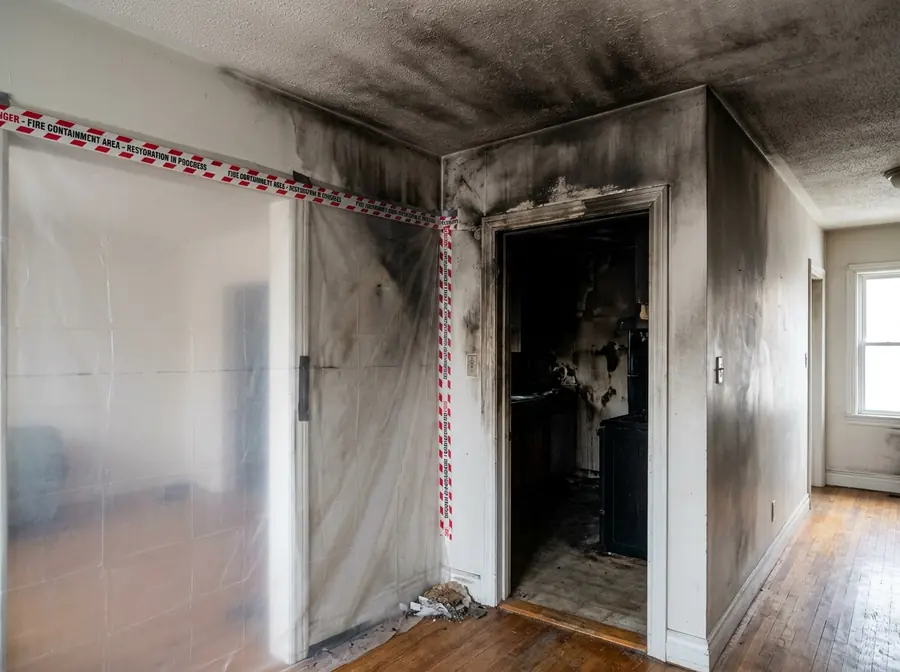
What fire and smoke damage can include
Fire losses are rarely limited to the material that burned. The heat plume, smoke movement, soot deposits, firefighting water, and emergency access can affect different parts of a building in different ways. A kitchen fire may leave visible charring around a cooking appliance while smoke residue reaches nearby cabinets, ceilings, hallways, and soft furnishings. A garage fire may affect stored belongings, connecting walls, overhead spaces, and items that were not directly burned.
Smoke residue varies with the materials involved and the conditions of combustion. Deposits may be dry and powdery, oily, sticky, or strongly bonded to a surface. Different residues require different cleaning approaches. A method that is suitable for one painted surface may damage an unsealed timber finish, fabric, electronics, or a delicate item. Avoid broad do-it-yourself cleaning until the residue and materials have been considered.
Firefighting water creates a separate moisture issue. Water may enter flooring assemblies, wall cavities, insulation, cabinets, and contents. If it remains, it can lead to swelling, deterioration, corrosion, or microbial growth. A restoration scope should therefore consider fire, smoke, soot, odor, and water together rather than treating them as unrelated problems.
Safety and official clearance come before cleanup
Do not enter a fire-damaged property until the fire department or other responsible authority has confirmed that entry is permitted and the area is safe for the activity proposed. A building may contain weakened floors, unstable ceilings, damaged electrical systems, gas hazards, hot spots, sharp debris, or contaminated materials. A property that looks quiet from the street may still present serious hazards inside.
If anyone is injured or there is an immediate danger, call 911. Follow instructions from emergency personnel and do not re-enter to retrieve belongings. Do not switch electrical equipment on, touch damaged wiring, operate appliances, or attempt to restore gas service. Electrical, gas, structural, and utility conditions should be reviewed by qualified professionals before restoration workers or occupants proceed.
White Settlement's Fire Department describes responsibilities that include fire protection, emergency medical services, hazardous-material safety, rescue operations, emergency management, and fire inspections. Those public-safety responsibilities are separate from private restoration work. The fire authority's release and any restrictions must take precedence over a property owner's preferred cleanup schedule.
What to do after the property is released
- Keep the scene controlled. Limit access to people who need to inspect, secure, or document the property. Keep children and pets away from affected rooms.
- Photograph conditions safely. Once entry is authorized, take overview and detail photographs before moving contents or discarding damaged items, unless an item presents an immediate safety or sanitation risk.
- Contact the insurer. Ask how to report the loss, whether an adjuster needs to inspect, and what emergency mitigation or temporary protection is authorized.
- Protect openings only when safe. Broken windows, doors, or roof openings may need temporary protection. Board-up or tarping must not create a new hazard or conflict with fire-investigation requirements.
- Make a contents record. List damaged furniture, clothing, electronics, stock, tools, documents, and other belongings. Keep receipts and communications.
- Arrange a restoration discussion. Explain the fire location, areas affected by smoke, any firefighting water, the building type, and current access restrictions.
Do not throw away potentially relevant evidence or damaged belongings before asking the insurer or investigator what should be retained. Perishable, hazardous, or unsafe materials may require prompt handling, but document them when practical and follow official instructions.
How professional fire and smoke restoration is planned
A useful initial discussion establishes the address, building type, fire location, date of loss, current safety status, and whether the fire department or investigator has imposed restrictions. The property review may then consider visible charring, heat effects, soot patterns, odor, affected contents, water intrusion, and the condition of materials in adjoining rooms. The findings help determine which work is appropriate and which issues need a separate specialist.
Documentation and work-area planning
Before cleaning begins, the project team should understand what areas are included, what must remain untouched, where occupants or business staff may safely enter, and how debris or contents will be handled. For multi-unit or commercial properties, the plan may need to coordinate with a landlord, facilities manager, tenants, security staff, and the insurer. Clear boundaries reduce the chance of disturbing an area that still requires investigation.
Soot and surface cleaning
Cleaning methods depend on the type of soot, the surface, and the condition of the material. Some items may be suitable for specialist cleaning; others may be too damaged, unsafe, or uneconomical to restore. Abrasive scrubbing, wet wiping, or ordinary household sprays can smear residue or cause staining. A professional scope should identify which surfaces are to be cleaned, what method is proposed, and which materials may need removal or replacement.
Odor treatment and contents decisions
Smoke odor can remain in porous materials and concealed spaces after visible residue has been removed. Odor treatment should follow source removal and appropriate cleaning, not substitute for them. Furniture, textiles, documents, electronics, and sentimental items each require an item-specific decision. Some belongings can be cleaned; some need specialist restoration; and some may not be salvageable. Ask how contents will be inventoried, packed, transported, stored, or returned if those services are part of the project.
Firefighting-water mitigation
Water used to extinguish a fire can affect materials far from the burn area. Depending on the amount and path of water, mitigation may involve extraction, moisture checks, drying equipment, dehumidification, and monitoring. Water that has mixed with soot, debris, or other contaminants should not be treated as an ordinary clean-water leak. The source and condition of the water influence handling and material decisions.
White Settlement context: fire services, utilities, and stormwater
The approved service-area information identifies White Settlement ZIP code 76108 and areas including Sunset Terrace, Meadow Park, Westpoint, Legacy, Silver Ridge, Chapel Creek, Vista West, and Western Hills. These names help residents explain where a property is located; they do not establish that a particular street has experienced a fire or that all buildings in an area share the same construction.
The City of White Settlement identifies its Fire Department as responsible for fire protection, EMS, hazardous-material safety, rescue operations, and emergency management functions. For an active emergency, residents should use 911 rather than a private restoration provider. A restoration contractor does not replace the fire authority, fire investigator, building official, utility provider, or emergency medical service.
The city's Public Works information describes municipal water and wastewater responsibilities, including water distribution and wastewater collection. If a fire event is accompanied by a water-main issue, sewer problem, or street-infrastructure concern, the relevant city department may need to be notified. Damage to private drywall, flooring, cabinetry, contents, and building finishes is a separate property-restoration matter.
White Settlement also publishes stormwater information explaining how rainwater flows over land into storm drains and local waterways. This is relevant to property owners planning temporary protection after a fire: damaged roof coverings, broken windows, or exposed openings can allow later rain to enter. A temporary cover should be installed only when the structure is safe and the work is authorized. Stormwater planning does not prove that any specific property has flooded.
Residential, rental, and commercial fire losses
Owner-occupied homes
Homeowners may need to make decisions about temporary accommodation, personal belongings, pets, medication, documents, and access to unaffected rooms. Do not assume that a room is safe because it is away from the visible burn area. Smoke and soot can travel, and the building may have hidden heat or electrical damage. Ask for a clear explanation of which spaces are suitable for entry and which remain restricted.
Rental homes and multi-family buildings
Tenants should follow instructions from the fire authority and notify the landlord or property manager as soon as practical. Management may need to coordinate access, temporary relocation, utilities, building security, and communication with neighboring units. Smoke and water can affect adjoining apartments or shared corridors, so the review may need to consider common areas as well as the unit where the fire began.
Businesses and commercial premises
A commercial fire can affect inventory, machinery, computers, customer areas, records, and the ability to trade. A warehouse may have stored materials or high-level surfaces; a retail property may need a secure perimeter; and an office may need to protect confidential records. The restoration plan should identify restricted zones, contents priorities, operating constraints, and any specialist cleaning or repair requirements.
Insurance documentation without coverage promises
Contact the insurer promptly and ask how the claim should be reported, what evidence is required, and whether the adjuster needs to inspect before items are removed. Keep copies of photographs, inventories, receipts, temporary-repair invoices, and communications. If the property is a rental or commercial building, confirm who is authorized to communicate with the insurer and approve work.
Insurance coverage depends on the policy wording, cause of loss, exclusions, limits, endorsements, and the insurer's investigation and decision. Fire damage, smoke cleanup, contents, temporary accommodation, debris removal, and water from firefighting may be treated under different policy provisions. Home Mold Water Fire Damage can explain the restoration work within its scope, but cannot guarantee that a claim or a particular expense will be approved. Our insurance claims help guide explains useful records and questions to ask.
Related restoration services in White Settlement
- Water damage restoration in White Settlement — extraction and drying after firefighting water, leaks, or other water events.
- Mold removal and remediation in White Settlement — moisture-related concerns that may arise after a water loss.
- Fire and smoke damage restoration hub — broader information about soot, odor, contents, and post-fire cleanup.
- Smoke odor removal — how odor treatment fits into a properly scoped restoration project.
- Soot cleanup — residue and surface-specific cleaning decisions.
- Contact Home Mold Water Fire Damage — discuss the property and current service availability.
Frequently asked questions about fire restoration
Can I begin cleaning as soon as the fire is out?
No. Wait until the fire authority has released the property for the proposed activity and hazards have been addressed. The building may still contain structural, electrical, gas, or air-quality risks.
Does smoke damage rooms that were not burned?
It can. Smoke may move through openings and building pathways, leaving odor or residue beyond the room where the fire started. The affected area should be assessed rather than judged only by visible charring.
Should I wipe soot from walls and furniture?
Avoid broad cleaning before the residue and surface are understood. Some soot smears when wiped and some finishes are easily damaged. Photograph conditions and ask about suitable cleaning methods.
Does firefighting water need to be dried?
Often, yes. Water can enter floors, wall cavities, insulation, and contents. The required mitigation depends on the amount, source, and condition of the water and the materials affected.
Will the insurer pay for all fire restoration work?
Not necessarily. Coverage is determined by the policy and insurer. Ask for the relevant policy provisions and confirm approval requirements before authorizing non-emergency work.
Does Home Mold Water Fire Damage provide emergency response?
Home Mold Water Fire Damage offers 24/7 emergency response. Contact the team to discuss the property, the safety status, and current availability. No fixed arrival time is guaranteed.
Discuss White Settlement fire and smoke damage with Home Mold Water Fire Damage
If a fire has affected your White Settlement home, rental property, or business, contact Home Mold Water Fire Damage after emergency authorities have made the site safe for the proposed work. Share the address, building type, areas affected by flames or smoke, any firefighting water, and current access restrictions. Our team brings more than 13 years of experience, trained technicians, professional restoration equipment, and 24/7 emergency response.
For related local information, read about water damage restoration and mold remediation, or use our contact page to discuss next steps.